

Pop Up Display Comparison Guide for Event Marketers
Posted by Deeder Dandenhorf on May 24th 2026
Pop Up Display Comparison Guide for Event Marketers
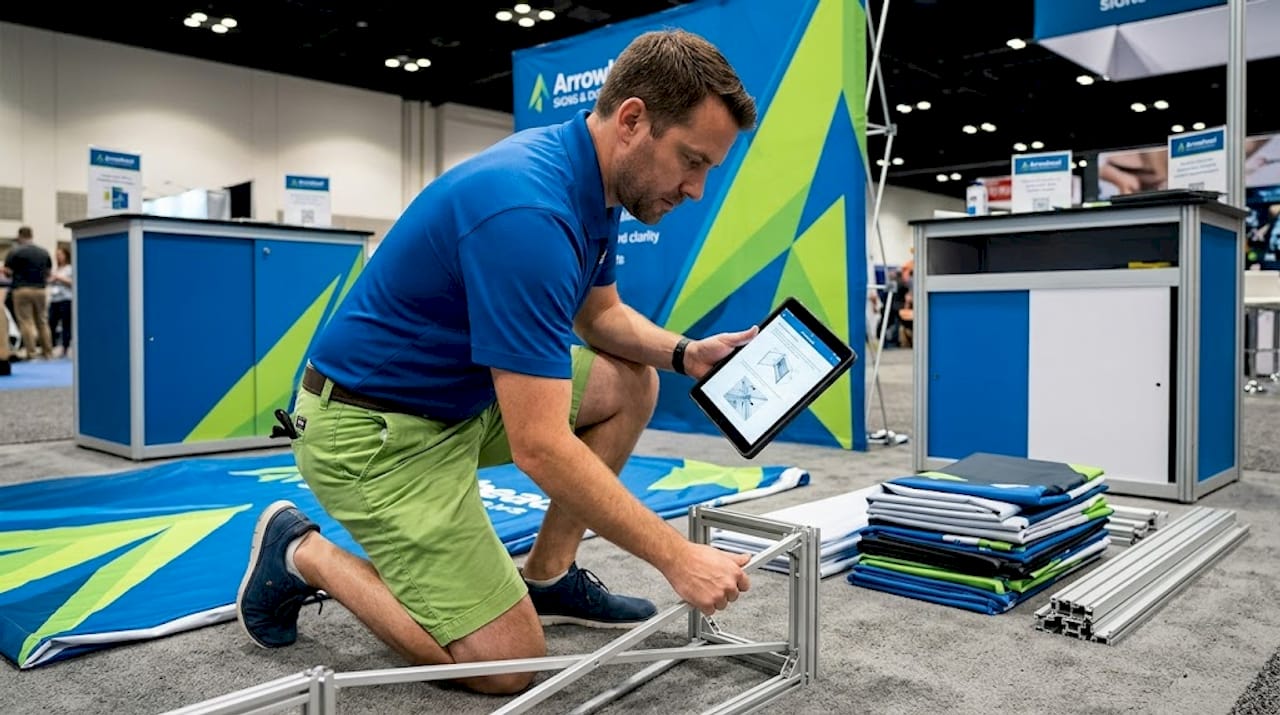
Choosing the right display for your next trade show feels straightforward until you’re staring at a dozen options with conflicting specs, wildly different price points, and no clear way to compare them. This pop up display comparison guide cuts through that confusion. Whether you’re a solo exhibitor working a regional expo or a marketing team managing a full event calendar, the difference between a display that stops foot traffic and one that blends into the background often comes down to three things: how fast it sets up, how easy it ships, and how sharp it looks from across the room.
Table of Contents
- Key takeaways
- 1. Key criteria for evaluating pop-up displays
- 2. Standard pop-up displays
- 3. Tension fabric (pillowcase-style) displays
- 4. Silicone edge graphic (SEG) displays
- 5. Head-to-head comparison
- 6. Situational recommendations and buying tips
- My honest take on choosing the right display
- Find the right display for your next event
- FAQ
Key takeaways
| Point | Details |
|---|---|
| Setup speed varies significantly | Pop-ups assemble in 2 to 5 minutes, while SEG displays can take 15 to 20 minutes for a 10ft booth. |
| Weight affects your shipping budget | Tension fabric displays ship at 20 to 40 lbs, making them the most affordable to transport. |
| Visual finish drives brand perception | SEG displays deliver a drum-tight, wrinkle-free look that no other format matches. |
| Lifespan differs by display type | SEG frames last 150 or more shows; pop-up frames hold up for 100 or more; tension fabric runs 50 to 75. |
| Match your display to your event frequency | Frequent exhibitors get better long-term value from SEG; occasional exhibitors do well with a standard pop-up. |
1. Key criteria for evaluating pop-up displays
Before you compare pop up displays side by side, you need a clear framework for what actually matters to your situation. The three main decision factors are setup speed, portability, and visual finish quality. Everything else flows from those.
Here are the core criteria to evaluate before you buy:
- Setup speed and ease. Can one person assemble it, or do you need a team? A display that takes 20 minutes and two people has real logistical costs at a busy show.
- Portability and shipping weight. Lighter displays cost less to ship and are easier to check as luggage for traveling exhibitors.
- Graphic quality and visual finish. Does the graphic look crisp and taut from 10 feet away? Wrinkles, visible frames, and sagging fabric hurt your brand perception.
- Frame durability and lifespan. A display you use four times a year needs to hold up across years of assembly and transport.
- Budget: upfront and long-term. The sticker price is only part of the story. Factor in graphic replacement costs, shipping, and storage.
- Special features. Backlighting, curved shapes, and modular configurations can set your booth apart, but they come with added cost and complexity.
Pro Tip: Before finalizing any display purchase, map out your event schedule for the next 12 months. If you’re doing more than six shows, the long-term cost of graphic replacements and shipping will matter more than the initial purchase price.
2. Standard pop-up displays
The standard pop-up is the workhorse of the trade show world. It uses a collapsible accordion-style frame that expands and locks into position, with graphics attached via Velcro, magnetic bars, or push-fit panels. The setup is intuitive enough that most exhibitors can handle it alone after one practice run.
Key specs for a standard 10ft pop-up display:
- Setup time: 2 to 5 minutes, the fastest assembly of any display type
- Weight: 30 to 50 lbs, including the carry case
- Price range: $500 to $3,000 depending on graphic quality and backlighting options
- Frame lifespan: 100 or more shows with proper care
- Backlighting: Available on select models with LED kits built into the frame
The standard pop-up works best for exhibitors who attend occasional shows, operate with a small team, or need a reliable display they can set up and break down quickly. The graphic quality is solid but not premium. You will typically see the frame outline through the fabric, and the graphic can develop slight waviness over time.
Pro Tip: If you go with a standard pop-up, invest in a hard-shell carry case rather than a soft bag. The frame is the most expensive component to replace, and a hard case dramatically extends its life.
3. Tension fabric (pillowcase-style) displays
Tension fabric displays use an aluminum tube frame that you assemble by connecting sections, then stretch a zippered fabric graphic over it like a pillowcase. The result is a cleaner look than a standard pop-up, with the option for curved or shaped frames that create visual interest.
Key specs for a tension fabric 10ft display:
- Setup time: 5 to 10 minutes, moderate complexity
- Weight: 20 to 40 lbs, the lightest category of the three
- Price range: $800 to $4,000 depending on frame complexity and graphic printing
- Frame lifespan: 50 to 75 shows, shorter than pop-up and SEG
- Shipping costs: Estimated $150 to $250 for a 10ft display, the most affordable to ship
The lightweight advantage is real. For teams that fly to shows or ship displays frequently, the reduced weight translates directly into lower costs. Curved frame options also give tension fabric displays a design edge over flat standard pop-ups.
The trade-off is the shorter frame lifespan and a visual finish that sits between standard pop-up and SEG quality. The graphic wraps tightly but can still show minor wrinkles at the edges, and the frame tubes are visible at the top and bottom. Solo assembly is feasible for most models, though curved configurations can take practice. Good graphic design execution matters here because the fabric’s stretch can slightly distort artwork if not designed with proper bleed and tension in mind.

4. Silicone edge graphic (SEG) displays
SEG displays are the premium tier. The graphic has a silicone bead sewn around its perimeter, which slides into a recessed channel in an aluminum frame. This mechanical tension system is what creates the drum-tight, wrinkle-free finish that makes SEG displays look so sharp in person and in photos.
Key specs for a 10ft SEG display:
- Setup time: 15 to 20 minutes, requires two people for most configurations
- Weight: 60 to 120 lbs, the heaviest option
- Price range: $1,500 to $8,000 or more for larger or backlit configurations
- Frame lifespan: 150 or more shows, the most durable of the three
- Shipping costs: $300 to $500 or more for a 10ft display
The SEG format creates a virtually frameless look because the graphic extends to the edge of the frame without visible borders or attachment hardware. For backlit applications, no other format competes. The silicone edge system eliminates the wrinkles and frame outlines that appear in traditional fabric displays, giving your booth a polished, high-end appearance.
Graphic replacement is also more practical than it sounds. One marketing team swapped twelve SEG graphics in under two hours, compared to nearly a full day for traditional fabric systems. If you update your messaging between shows, that efficiency adds up fast.
Pro Tip: SEG displays shine brightest in backlit configurations. If your booth budget allows for it, a backlit SEG display at a dimly lit convention hall will outperform any other format for sheer visual impact and foot traffic.
5. Head-to-head comparison
Here is a direct side-by-side view of all three display types across the factors that matter most for your buying decision.
| Factor | Standard pop-up | Tension fabric | SEG |
|---|---|---|---|
| Setup time | 2 to 5 minutes | 5 to 10 minutes | 15 to 20 minutes |
| Weight (10ft) | 30 to 50 lbs | 20 to 40 lbs | 60 to 120 lbs |
| Price range | $500 to $3,000 | $800 to $4,000 | $1,500 to $8,000+ |
| Frame lifespan | 100+ shows | 50 to 75 shows | 150+ shows |
| Shipping cost (est.) | $200 to $350 | $150 to $250 | $300 to $500+ |
| Visual finish | Good | Very good | Premium |
| Best for | Solo, quick setup | Lightweight travel | High-end branding |
| Backlighting | Limited | Moderate | Excellent |
One thing the numbers do not capture: the setup time figures assume a trained team and no missing components. Novice assemblers should expect longer times across all three formats, which is why rehearsal before your event is not optional. It is the single most practical thing you can do to protect your setup day.
6. Situational recommendations and buying tips
Matching the right display to your specific situation is where a pop up display buying guide earns its keep. Here is how to think through your decision based on real-world event needs.
- Solo exhibitors or small teams: A standard pop-up is your best starting point. The fast assembly and lower price point make it practical for businesses attending a handful of shows per year without dedicated event staff.
- Frequent travelers and multi-city events: Tension fabric is the smart pick. The lighter shipping weight keeps logistics costs manageable, and the creative frame options help you stand out without the SEG price tag.
- High-traffic booths and premium brand environments: SEG is worth the investment if you exhibit regularly and your brand positioning demands a polished look. The longer frame lifespan offsets the higher upfront cost over time.
- Tight budgets with growth plans: Start with a standard pop-up and supplement it with retractable banner stands for added vertical visibility. Retractable banner stands are compact, affordable, and easy to add to any booth layout without a major investment.
- Graphic care and longevity: Store fabric graphics rolled, not folded, to prevent permanent crease lines. For SEG graphics, keep the silicone bead clean and free of debris so it seats properly in the channel every time.
Pro Tip: Do a full trial assembly at home or in your office at least three days before your event. This gives you time to identify missing hardware, practice the setup sequence, and time yourself accurately so there are no surprises on show day.
My honest take on choosing the right display
I’ve seen exhibitors spend $3,000 on a display that looked worse in person than a $700 pop-up set up by someone who actually knew their booth. The display type matters, but preparation and execution matter just as much.
What I’ve learned from watching teams set up and break down displays across dozens of events is this: the biggest mistake is buying for the best-case scenario. People buy an SEG display imagining a polished two-person team with 30 minutes to spare. Then reality hits. They’re short-staffed, running late, and fighting with hardware they’ve never touched before.
My honest recommendation is to match the display to your actual team, not your ideal team. If you typically set up alone, a standard pop-up or tension fabric display will serve you better than an SEG you struggle to assemble under pressure. Visual quality matters, but a perfectly assembled mid-tier display beats a half-assembled premium one every time.
That said, I do think the industry is moving toward modular and backlit systems for good reason. As single-person assembly becomes a bigger priority for lean marketing teams, manufacturers are designing SEG-style systems that are lighter and faster to build. If you’re buying a display that needs to last five or more years, it’s worth looking at where the format is heading, not just where it is today.
— Dan
Find the right display for your next event
Whether you’ve landed on a standard pop-up, a tension fabric system, or an SEG display, the next step is getting it printed and shipped before your deadline.
Arrowheadsigncompany offers customizable pop-up displays and banner stands built for trade show performance, with most orders shipped within two business days. Their team provides expert guidance on graphic preparation, display selection, and local delivery across Arizona. If you want a display that shows up on time, looks sharp, and holds up across multiple events, Arrowheadsigncompany is a practical place to start your search.
FAQ
What is the fastest pop-up display to set up?
Standard pop-up displays are the fastest, with setup times of 2 to 5 minutes for a 10ft booth. They use a collapsible accordion frame that requires no tools and minimal training.
Which display type is best for shipping and travel?
Tension fabric displays are the lightest and cheapest to ship, weighing 20 to 40 lbs and costing an estimated $150 to $250 to ship a 10ft configuration. They are the top choice for exhibitors who travel frequently between events.
Are SEG displays worth the higher cost?
For frequent exhibitors who need premium visual quality, SEG displays offer the best long-term value. Their frames last 150 or more shows, and graphic swaps are faster than traditional fabric systems, making them cost-effective over time.
Can one person set up a pop-up display alone?
Yes, standard pop-up and most tension fabric displays are designed for solo assembly. SEG displays typically require two people due to their weight and the precision needed to seat graphics into the frame channels correctly.
How do I compare pop up displays for a limited budget?
Start by calculating your total cost of ownership: purchase price plus estimated graphic replacements and shipping over your planned number of shows. A standard pop-up with retractable banner stands often delivers the best value for exhibitors attending fewer than six events per year.