

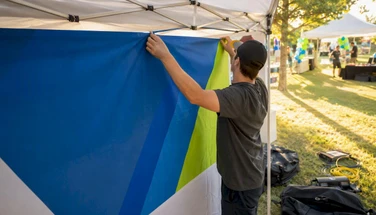
Choosing the Right Tent Backdrop for Your Next Event
Posted by Deeder Dandenhorf on Aug 22nd 2026
Choosing the Right Tent Backdrop for Your Next Event
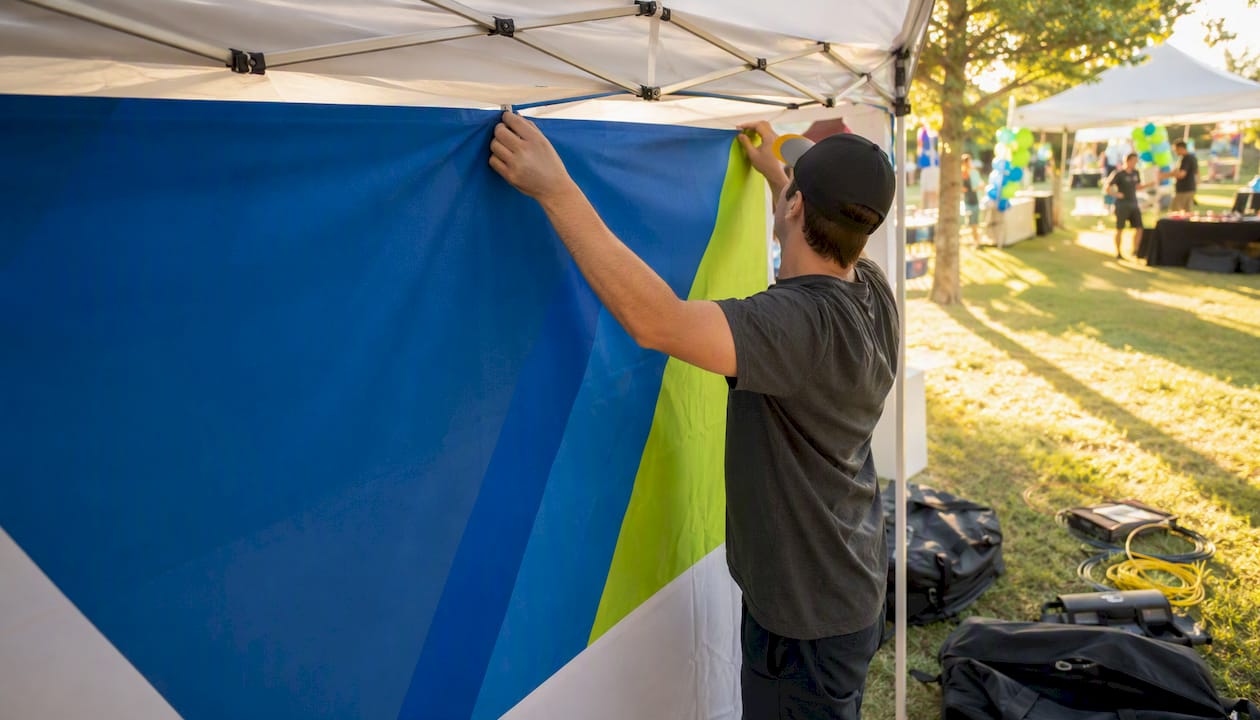
For most outdoor event tents, a custom-printed stretch fabric backdrop or a heavier solid vinyl backwall with reinforced grommets is the fastest, most durable choice. Fabric wins for photo booths and VIP branding because of its rich color and matte finish. Vinyl wins for weather protection and long-term outdoor use because of its resistance to wind, rain, and UV fading.
Here’s your sizing shortcut:
- 10x10 tent: backdrop width around 10 feet, height 7 to 8 feet
- 8x10 tent: width matched to the eight foot wall and height suitable to fill the visible wall interior
- 8x15 tent: width built for the 15 foot span, often produced in panels for easier handling and shipping (specific panels may vary by tent model)
If you already know your tent’s brand and footprint, browse the Arrowhead Sign Company - Signs, Banners and Trade Show Displays catalog for pre-sized options that ship fast and print to spec.
Key Takeaways
The right tent backdrop matches material and size to your specific job, whether that’s weather protection, photo quality, or branding visibility, and ordering from a fast-fulfillment supplier removes the biggest risk in the process: running out of time.
| Point | Details |
|---|---|
| Match material to job | Choose vinyl for weather protection and branding walls, stretch fabric for photo booths and VIP areas. |
| Size for your tent’s actual wall | Measure the internal frame, not the footprint, and add clearance for clips or grommets. |
| Confirm brand compatibility first | Proprietary systems like Pinnacle’s Pinn backdrops only fit their own clip lip; measure fixture points before ordering. |
| Check flame-retardant requirements | Ask your venue whether it requires NFPA 701 compliant fabric before finalizing your material choice. |
| Order Arrowhead Sign Company for speed | Most products ship within two business days, with Arizona venue delivery available for local customers. |
Table of Contents
- Types of Tent Backdrops and When to Use Each
- Choosing the Right Size for Your Tent Backdrop
- Materials, Durability, and Weather Considerations
- Attaching and Installing Backdrops in Pop-Up and Frame Tents
- Design and Print Specs to Send Your Vendor
- Ordering, Lead Times, and Budgeting
- Arrowhead Sign Company: Products That Solve Your Setup Problem
- How Long From Order to Installed Backdrop?
- Will This Backdrop Fit My Tent Brand?
- Modular Backdrops for Larger or Irregular Tent Setups
- Storage and Maintenance Tips to Extend Backdrop Lifespan
- What Most Buying Guides Get Wrong About Tent Backdrops
- Get Your Tent Backdrop Printed and Shipped Fast
- Sources
- FAQ
Types of Tent Backdrops and When to Use Each
Before you pick a material, get clear on direction. Sidewalls face outward, doing double duty as branding and weatherproofing for anyone walking past your booth. Backdrops face inward, built for the people already inside your tent, whether they’re browsing a trade show display or lining up for a photo. This distinction, laid out clearly in a buyer’s guide on tent sidewalls versus backdrops, solves a surprising amount of buyer confusion. Get it backward and you end up with a gorgeous interior wall nobody outside ever sees.
Once you know which direction you’re printing for, the material choice follows the job:
- Vinyl or poly tarp backdrops: best for weather protection and high-traffic branding walls, since they shrug off rain and wind
- Fabric or dye-sublimation stretch prints: best for photo booths and VIP areas, since the finish reads richer under camera flash and doesn’t glare under stage lighting
- Mesh backdrops: best for windy venues or rooftop events, trading some print vibrancy for airflow that keeps your tent standing
A vinyl backdrop tends to look flatter in photos because of its glossy sheen, while stretch fabric shows soft creases if it’s stored folded rather than rolled. Neither is a dealbreaker. It just means matching the material to whichever job matters most for your event: staying dry, looking sharp on camera, or surviving a gusty afternoon. Local rental outfits often combine draping with lighting for tent interiors, which works well for weddings but isn’t built for repeated trade show use the way a printed panel is.
Choosing the Right Size for Your Tent Backdrop
Getting the dimensions right the first time saves you a reorder and a scramble before load-in. Work through these steps before you submit an order:
- Measure your tent’s internal wall, not the footprint. A 10x10 pop-up typically needs a backdrop close to 10 feet wide and 7 to 8 feet tall to fill the visible wall without excess slack.
- Add clearance for attachments. Clips, Velcro strips, and grommet loops all eat into usable print area, so account for an inch or two of overlap on each edge rather than cutting your design edge to edge.
- Check model-specific dimensions if your tent uses a proprietary system. Pinnacle-series tents, for example, use dedicated printed Pinn backdrops sized at 8 feet by 10 feet and 8 feet by 15 feet, and those panels only fit that tent’s clip lip. A generic 8x10 panel from another supplier simply won’t hang right.
- Frame your focal point. If the backdrop doubles as a photo wall, keep your logo or key visual centered in the middle 60% of the panel so it isn’t cropped by people standing in front of it or by the tent’s top bar casting a shadow line.
- Confirm bleed and safe zone with your printer before finalizing. A backdrop that’s an inch short on any side will show gaps at the tent frame, which is the single most common sizing complaint after installation.
Materials, Durability, and Weather Considerations
Material choice determines how long your backdrop survives outdoor conditions, and getting it wrong usually shows up fast, within one windy afternoon rather than one season. Heavy-duty vinyl in the 13 to 22 ounce range is the standard recommendation for outdoor stage and backdrop tarps, balancing waterproofing with UV resistance so colors don’t wash out after repeated sun exposure. Mesh vinyl trades some of that visual punch for wind resistance, letting air pass through the panel instead of catching it like a sail.
A few durability details worth checking before you order:
- Reinforced hems and brass grommets spaced every 18 to 24 inches reduce tearing at stress points
- UV-stabilized inks resist fading faster than standard dye sets, especially on south-facing setups
- Heavier vinyl suits stage backdrops and semi-permanent installs, while lighter stretch fabric suits photography and indoor-feel tent interiors
Venue rules matter too. Many convention centers and outdoor event permits require flame-retardant fabric meeting the NFPA 701 standard for textiles used in public assembly spaces. Ask your venue for their specific fire code requirement before you print, not after, since a non-compliant backdrop can get you turned away at load-in.
Pro Tip: If your event location has a history of unpredictable wind, a mesh vinyl panel is worth the tradeoff in print vibrancy. It keeps your branding visible without turning your tent wall into a parachute.
Attaching and Installing Backdrops in Pop-Up and Frame Tents
Hardware compatibility is where a lot of otherwise great backdrops go wrong on-site. The most common attachment methods are spring clips that snap onto a tent’s frame bar, hook-and-loop fastener strips sewn into the panel edge, grommets paired with bungee cord for tensioned hangs, and zippers for sidewalls designed to join adjacent panels seamlessly.
Wind is the real enemy once your backdrop is up, not before. A few habits prevent sag, flapping, and torn grommets:
- Anchor the bottom edge with sandbags or stake-down straps rather than letting fabric hang loose
- Keep tension even across the top rail so the panel doesn’t bow in the middle
- Choose mesh or vented panels for any setup expected to face sustained wind above a light breeze
- Add extra grommets at midpoints on wider panels (anything over 10 feet) to distribute load evenly
When you request a quote, specify your tent’s brand and frame style so the hardware ships matched to your setup. Compatibility issues are almost always a mismatch between a generic backdrop and a proprietary clip system, so confirming this upfront saves an awkward on-site fix.
Design and Print Specs to Send Your Vendor
Getting your print file right the first time avoids the most expensive kind of delay: a reprint. Send your designer or vendor these specs before artwork is finalized:
- Resolution: 100 to 150 ppi at full print size is standard for large-format backdrops viewed from a few feet away
- Bleed: add at least 0.5 inches on all sides to prevent white edges after trimming
- Safe zone: keep logos and text at least 2 inches inside the trim line so nothing gets clipped by grommets or hems
- File format: PDF, TIFF, or EPS, all in CMYK color mode rather than RGB, since RGB files can shift color noticeably once printed
Legibility matters more at trade show distance than it does on your monitor. A logo that looks crisp at arm’s length can turn into a blur from 20 feet away. As a rule of thumb, keep primary text at least 3 inches tall for every 10 feet of expected viewing distance, and make sure your logo contrasts sharply against the backdrop’s base color rather than blending into it.
Finishing choices affect both price and durability. Single-sided printing costs less but limits you to one facing direction; double-sided works for backdrops visible from both inside and outside a tent. Hemming and reinforced grommets add a small cost but extend the panel’s working life significantly, especially for anything reused across multiple events per season.
Ordering, Lead Times, and Budgeting
Custom tent backdrops typically take one to two weeks to produce from a finalized file, though quick-ship options exist for tighter timelines at a modest rush fee. Building in buffer time for a proof review avoids a last-minute scramble.
Cost depends on a handful of variables you control directly:
- Size: larger panels (like an 8x15) cost more in material and printing than a standard 10x10
- Material weight: heavier vinyl runs higher than lightweight fabric
- Finishing: hemming, grommets, and double-sided printing each add incremental cost
- Quantity: ordering multiple identical backdrops for a multi-event season often brings the per-unit price down
Always request a digital proof before your file goes to print, and ask about sample swatches if color accuracy matters for brand consistency. A supplier with a fast fulfillment window gives you room to catch mistakes without blowing your event deadline.
Arrowhead Sign Company: Products That Solve Your Setup Problem
Your tent backdrop rarely stands alone. It works alongside signage that draws foot traffic before people ever step inside. Arrowhead Sign Company - Signs, Banners and Trade Show Displays built its catalog around exactly that combination:
- 10 ft stretch fabric display: a clean, wrinkle-resistant backdrop for photo booths, VIP areas, or a branded backwall inside your tent
- Outdoor Banner Frame - The Banner Bar: a rigid frame for mounting a banner outdoors when you need a sturdy standalone display next to or in front of your tent
- Signicade Deluxe A-Frame Sidewalk Sign: portable walk-by signage that catches attention before visitors reach your tent entrance
Arrowhead Sign Company ships most products within two business days, with local delivery available for Arizona-based customers who want their order dropped directly at the venue.
Pro Tip: Order your walk-by sign and your interior backdrop from the same vendor. Matching fonts and color treatment across both makes your booth look cohesive instead of assembled from three different print jobs.
How Long From Order to Installed Backdrop?
Plan on roughly one to two weeks between placing your order and having a finished backdrop ready to hang, assuming your artwork file is print-ready when you submit it. That window covers proofing, production, and standard shipping.
Rush production can compress that timeline to a few days for suppliers offering expedited service, though it usually comes with an added fee. Fulfillment speed varies significantly by vendor, and it’s one of the more underrated factors in choosing where to order. A supplier that ships most products within two business days, the kind of turnaround Arrowhead Sign Company - Signs, Banners and Trade Show Displays offers, gives you meaningfully more flexibility if your event date shifts or your artwork needs a last-minute revision.
Installation itself is quick once the backdrop arrives, typically under 30 minutes for a single panel with pre-installed grommets or clips, longer if you’re joining multiple panels across an 8x15 or larger footprint. Build a buffer into your event day schedule anyway. Wind, an unexpected frame configuration, or a delivery running an hour behind traffic can all eat into setup time you didn’t plan for.
If your event date is fixed and non-negotiable, order your backdrop at least three weeks out. That gives you room for a proof revision, a shipping delay, and a same-day fix if something arrives slightly off.
Will This Backdrop Fit My Tent Brand?
Compatibility is the detail buyers overlook most often, and it’s the one most likely to cause a frustrating surprise on setup day. Not every backdrop fits every tent. Some tent series use proprietary clip systems, meaning a backdrop built for one brand’s frame simply won’t attach to another’s, even if the dimensions look identical on paper.
Pinnacle-series tents are a clear example. Their printed Pinn backdrops use a specific clip lip position unique to that tent line, so a generic panel ordered elsewhere may be the right size but the wrong fixture. Before you order, measure your tent’s actual attachment points rather than assuming a standard fit based on footprint alone.
A few checks prevent a mismatched order:
- Note your tent’s brand and model number when requesting a quote
- Measure the distance between fixture points (clips, grommet rails, or Velcro strips) rather than relying on advertised tent size
- Ask your vendor directly whether their backdrop is compatible with your frame type, especially if you’re ordering from a different supplier than the one who sold you the tent
Most standard pop-up frames use a fairly universal grommet-and-bungee or clip system that accommodates backdrops from multiple vendors. Proprietary systems are the exception, but they’re common enough among premium tent lines that skipping this check is a real risk. When in doubt, send a photo of your tent’s frame attachment points to your vendor before finalizing your order.
Modular Backdrops for Larger or Irregular Tent Setups
Standard single-panel backdrops work fine for a straightforward 10x10 or 8x10 tent. Larger footprints, L-shaped booth configurations, or multi-tent event layouts usually call for a modular approach instead.
Modular backdrops split your design across multiple panels that join edge to edge, often using zippers or overlapping Velcro seams. This solves two problems at once. First, it lets you cover an irregular or oversized wall, like an 8x15 span or a corner booth, without needing an oversized single panel that’s awkward to ship and handle. Second, it gives you flexibility to reconfigure the same panels across different tent layouts at different events, rather than committing to one fixed size.
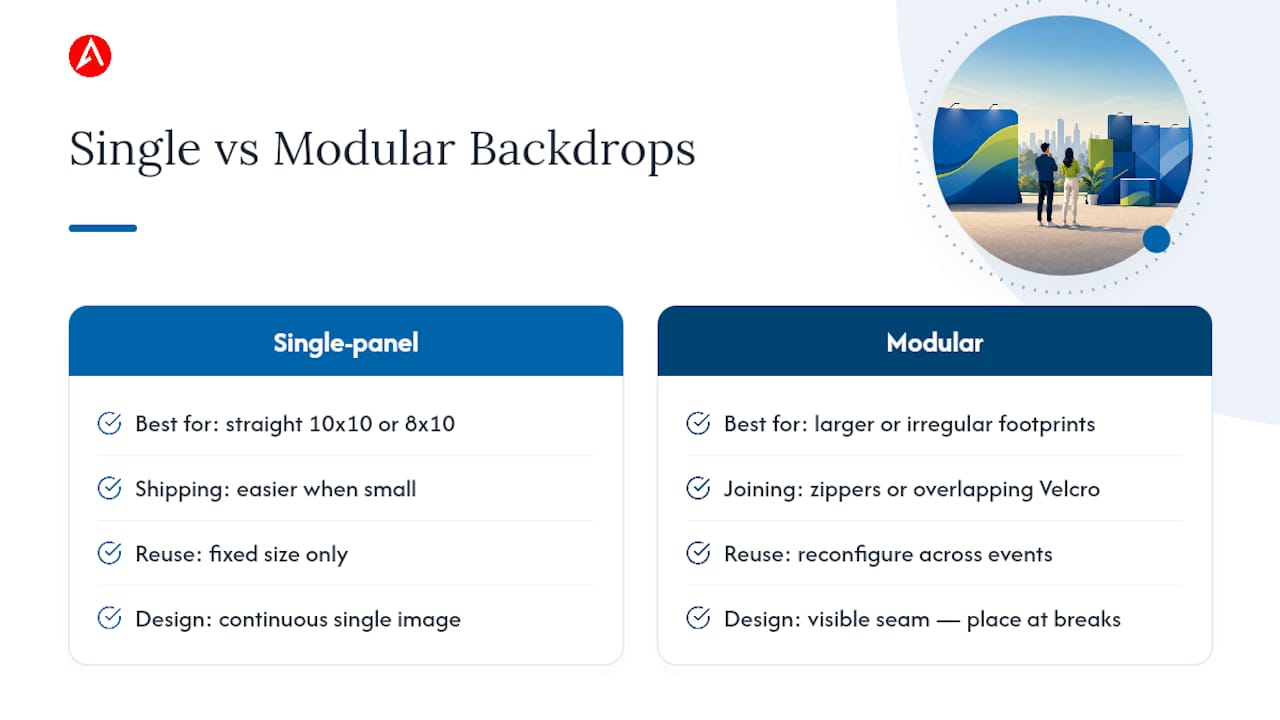
The tradeoff is a visible seam line where panels meet, which can interrupt a design that relies on a single continuous image, like a panoramic photo backdrop. Designers typically work around this by placing seams at natural break points, such as between logo repeats or at color block transitions, so the seam reads as intentional rather than accidental.
If you’re running a tent setup that changes shape from event to event, whether that’s a straight 10 foot wall one weekend and an L-shaped corner configuration the next, a modular backdrop system is worth the slightly higher upfront design cost. It pays for itself across multiple events instead of requiring a new custom panel every time your footprint changes.
Storage and Maintenance Tips to Extend Backdrop Lifespan
A well-made backdrop should last multiple seasons if you store and handle it correctly between events. Most damage happens in transit and storage, not during actual use.
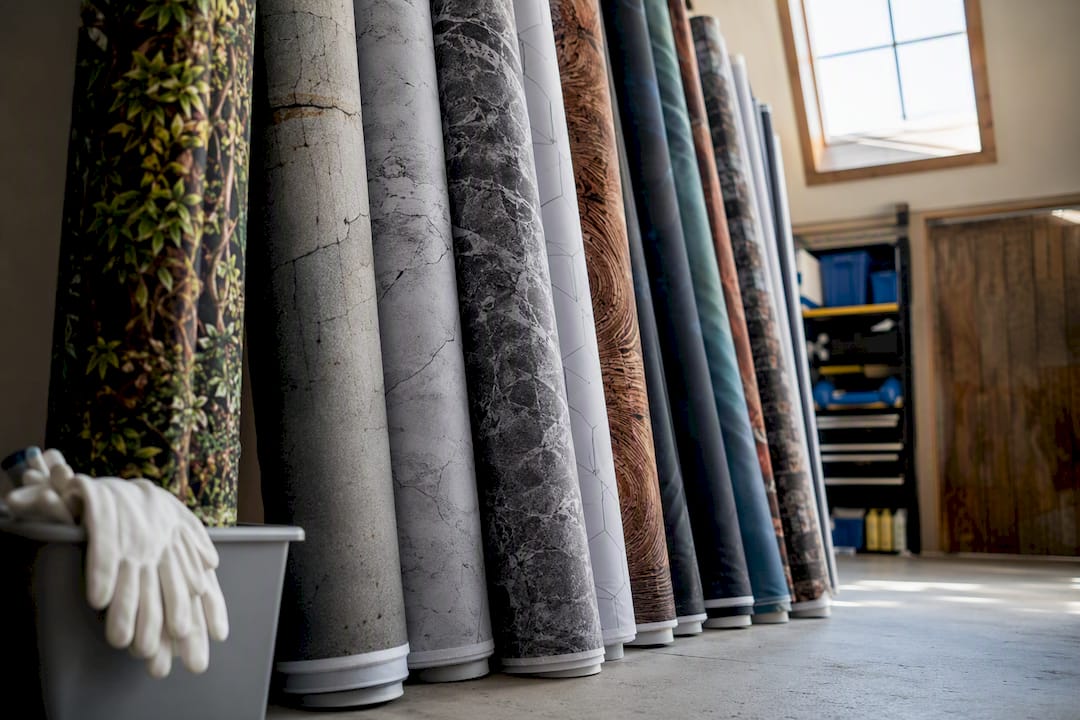
Roll fabric backdrops rather than folding them. Folding creates permanent crease lines that show up as shadows in photos, especially under direct light. Vinyl panels tolerate folding better but still benefit from rolling if you have the storage space, since it reduces stress on the material over time.
Clean backdrops before storing them. Dust, pollen, and grass stains set in faster than most people expect, particularly on lighter-colored prints. A damp cloth and mild soap handle most residue on vinyl; fabric panels typically need a gentler approach, so check your vendor’s care instructions before using anything abrasive.
Store backdrops flat or rolled in a dry space, away from direct sunlight and temperature swings. A garage that swings between freezing and 100 degrees across a year will degrade both vinyl and fabric faster than a climate-controlled closet. Moisture is the bigger threat, though. A backdrop stored damp can develop mildew within days, which is usually a total loss rather than something you can clean out.
Inspect grommets and hems each season before your first event. A small tear caught early is a quick repair. The same tear ignored through a windy setup can rip clean across the panel.
What Most Buying Guides Get Wrong About Tent Backdrops
Most advice on this topic treats backdrop shopping like a design decision. It isn’t, not primarily. It’s a logistics decision wearing a design costume. The research backs this up plainly: the number one failure point isn’t a bad print, it’s a mismatched fixture system that shows up for the first time at load-in, when there’s no time left to fix it.
The conventional wisdom tells you to start with your branding and work backward to a backdrop that fits your vision. I’d flip that order. Start with your tent’s actual fixture points, confirm compatibility, lock your size, and only then move to design. A gorgeous panel that doesn’t clip onto your frame is worthless at 6 a.m. on event day.
The other place generic advice falls short is fulfillment speed. Plenty of guides mention lead times in passing, then move on. Given that most people order too close to their event date, that deserves more weight than a footnote. Prioritize a vendor who can turn your order around fast, confirm brand compatibility before you submit artwork, and treat the design phase as the last step, not the first.
Get Your Tent Backdrop Printed and Shipped Fast
If you’ve made it this far, you already know what you need: the right size, the right material, and a vendor who won’t leave you waiting three weeks for a panel your event can’t wait for. Arrowhead Sign Company - Signs, Banners and Trade Show Displays built its process around exactly that gap, shipping most orders within two business days instead of the standard one to two week wait common across the industry.
![CTA Image]
Whether you need a 10 ft stretch fabric display for a photo booth wall, a rigid Outdoor Banner Frame for a standalone display, or a walk-by Signicade Deluxe A-Frame Sidewalk Sign to pull foot traffic toward your tent, the catalog covers the full setup, not just one piece of it. Arizona customers get local delivery straight to the venue, which cuts out the shipping wildcard entirely.
Start by browsing the full catalog and requesting a quote with your tent’s brand, model, and target event date. The sooner your specs are in hand, the sooner your backdrop is on a truck.
Sources
- Tent sidewalls vs backdrops: A buyer’s guide
- Stage backdrop tarps for outdoor events | Tarp Supply Inc.
FAQ
What size backdrop do I need for a 10x10 tent?
Aim for a backdrop close to 10 feet wide and 7 to 8 feet tall to fill the interior wall without leaving visible gaps at the frame edges.
What is a tent banner?
A tent banner typically refers to printed signage attached to a tent’s sidewall or frame for outward-facing branding, distinct from a backdrop, which faces inward for interior decoration or photography.
What should I decorate a tent with?
Common options include custom-printed backdrops for branding or photo walls, draping paired with lighting for a softer aesthetic, and mesh or vinyl sidewalls for weather protection along the tent’s exterior.
What material is best for a tent backdrop?
Heavy-duty vinyl in the 13 to 22 ounce range suits weather protection and long-term outdoor use, while stretch fabric with dye-sublimation printing suits photo booths and VIP branding where color richness matters more than waterproofing.
How fast can I get a custom tent backdrop?
Standard production runs one to two weeks from a finalized file, though suppliers offering rapid fulfillment, including Arrowhead Sign Company - Signs, Banners and Trade Show Displays, can ship most products within two business days.