

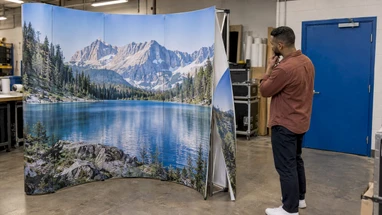
Pop Up Display Repair: Fix It, Re-Skin It or Replace It
Posted by Deeder Dandenhorf on Nov 12th 2026
Pop Up Display Repair: Fix It, Re-Skin It or Replace It

Most pop up display damage falls into three groups: a worn or torn graphic, a bent or loose frame, and a failed mechanism such as a latch, a hub or a retractable cassette. Graphics and small hardware problems you can often handle at your workbench. A frame that is kinked or cracked is better replaced than forced through another show. If a show is close, the fastest fix is usually a fresh part, and our most products ship within two business days, with direct venue delivery in Arizona.
This guide walks you through diagnosing the damage, making the repairs that are worth making, and deciding when a replacement saves you money and stress.
TL;DR
- Sort the damage first: graphic, frame, mechanism or case. Each has a different repair path and a different cost.
- Small tears, loose fasteners, dents you can see and stuck latches are workable. Kinked tubes, cracked hubs and failed retraction springs are not worth gambling on.
- Most damage happens during setup and teardown, so handling habits and a proper case prevent more repairs than any tool.
- When the show date is tight, ordering a new graphic or stand is often faster than chasing parts. Most Arrowhead products ship within two business days.
Table of Contents
- Start by finding out what actually broke
- Fixing a damaged or worn graphic
- Repairing the frame
- Retractable banner stands: why replacement usually wins
- Tension fabric displays: re-skin the frame, not the booth
- Pop up tents: frame, canopy and weights
- Repair or replace: a simple way to decide
- How to stop repeating the same repairs
- When the show is close: speed matters
- What we would do in your position
- Get your display ready again
- FAQ
Start by finding out what actually broke
A pop up display is a few simple systems working together. Before you reach for tape or glue, work out which system failed, because the repair for each is different.
| Symptom | Likely cause | Repair or replace? |
|---|---|---|
| Wavy, sagging or wrinkled graphic | Fabric stored damp, folded hard, or stretched unevenly | Usually fixable with care |
| Small tear or puncture in a graphic | Snagged during setup, shipping or a stray bump | Cosmetic patch for a back-of-booth fix, reprint for the front |
| Frame will not lock or stand square | Bent tube, loose connector, worn latch | Fix a loose connector, replace a bent tube |
| Magnets or hook-and-loop fasteners will not hold | Dust, wear, bent panel edge | Clean and re-seat, replace if worn |
| Retractable banner will not roll up | Jammed or weakened cassette | Replace the stand |
| Case zipper or wheels broken | Overpacking, rough transit | Replace the case |
Lay everything out on a clean floor in good light, assemble the display fully, and walk around it. Problems that hide when the display is folded show up quickly when it is standing.
Fixing a damaged or worn graphic
The graphic is what visitors read from across an aisle, so it is the first place wear shows. It is also the part most people can improve themselves.
Wrinkles and waves
Wrinkles come from storage and handling more than from use. Fabric that was packed while damp, jammed under heavy hardware or folded in a tight crease will hold that shape. Hang the graphic or lay it flat, let it come to room temperature and, if the fabric allows it, use a low-heat steamer or a cool iron on the back side. Always check the care instructions that came with your graphic first, since fabric, vinyl and laminated panels are treated differently. Never use high heat on printed surfaces.
Small tears and punctures
A tiny puncture in a panel that sits in a low-visibility spot can be patched from the back with a clear, flexible repair tape. Press it flat, rub from the center outward and let it settle before you pack the display. Be realistic about the result: a patch holds a tear from spreading, but it will not make the surface look new. A graphic that sits at eye level, carries your logo or your main message deserves a fresh print rather than a visible patch.
Scuffs, marks and dirt
Spot-clean while the mark is fresh. Start with a soft cloth and plain water, then a mild soap if needed, and work gently so you do not push the stain into the weave or rub the ink. Avoid bleach, solvents and abrasive scrubbers on any printed surface. Let the graphic dry completely before it goes back in its case.
When to reprint
Reprint when a tear is near the center of the design, when edges are fraying, when color has faded unevenly, or when your offer, phone number or website has changed. A new graphic on your existing frame is the most cost-effective way to refresh a booth. Our printed banners page lists a $35 standard banner layout fee, and Next Day Air is available for $10 when time is short.
Repairing the frame
The frame is what holds the shape of the display. Treat it more strictly than the graphic, because a weak frame can collapse or lean in a busy hall.
Loose connectors and fasteners
If a joint wobbles, check the obvious first: a missing screw, a connector that has backed out, or a clip that has slipped. Tighten fasteners snugly, not hard enough to strip them. If a small clip or connector is cracked, do not wrap it in tape and hope. Take the part out of service.
Dents, kinks and bent tubes
A light surface scratch on a tube is cosmetic. A kink, a flat spot or a visible bend is structural. Straightening metal that has already been bent weakens it further, and the repair usually fails at the worst moment, when the frame is under the tension of a stretched graphic. Replace the bent section or the frame.
Latches and locking points
Stiff or sticking latches are often just dirty. Wipe away dust and grit, check that nothing is bent, and operate the latch several times. If it still will not close with a firm, clean click, replace it. A latch that holds only part of the time is a risk to the whole display.
A quick stability test
Once you finish, build the display and give it a gentle push at shoulder height. It should flex slightly and return, not rack, twist or shift on the floor. Look at each joint and at the base. Any movement that was not there when the display was new tells you where to look next.
Retractable banner stands: why replacement usually wins
Retractable banner stands are sealed units. Inside the base, a spring-loaded cassette winds the graphic back in. When that mechanism jams, loses tension or stops retracting evenly, there is very little to repair. Opening the base risks injuring your hands and often leaves the stand worse than it was.
The practical fix is a new stand, and it costs far less in time than hunting down parts. If you need the same format again, our Banner Stands collection covers standard sizes, such as the standard retractable banner stand for graphics 24 to 33 inches wide and 81 inches tall, and wider options such as the Barracuda 850 stand for larger formats. Stand-only options mean you can reuse a graphic that is still in good shape when it fits the new base, so check your graphic dimensions before you order.
When you are choosing a replacement, pick a stand that matches your usage. A stand that goes to a show every month needs a sturdy base and a protective case. Our retractable banner stand cases are designed to keep the cassette and graphic protected between events.
Tension fabric displays: re-skin the frame, not the booth
Fabric tension displays, with a lightweight tube frame and a stretched printed fabric, are among the easiest displays to refresh. The structure stays the same and only the printed skin changes. If the fabric is damaged but the frame is straight and the connectors are sound, you can re-skin it rather than replace the full display.
When the frame itself has a bent or cracked tube, it is time to move up to a new system. Arrowhead carries EZ Tube tension fabric displays and Quick Ship Displays for exhibitors who cannot wait. For a tabletop or hall-sized booth, the 10 ft stretch fabric display is a ready option.

Pop up tents: frame, canopy and weights
Printed pop up tents follow the same logic. The canopy is the branded surface and the frame is the structure. A torn canopy panel or faded print is a graphic problem. A bent leg, a stiff scissor joint or a pin that will not seat is a frame problem.
Before every outdoor event, check the legs, the slider and the locking pins, and open the tent completely at home. Never use a tent with a bent or cracked leg in wind. Weights and stakes protect people and neighboring booths, so use them every time. If the frame is compromised or the canopy is beyond saving, replace it with a new printed pop up tent rather than gambling on a patched structure.

Repair or replace: a simple way to decide
Use these questions in order. Stop at the first yes.
- Is the damage structural? A kinked tube, cracked connector or broken retraction mechanism means replace.
- Does it affect how your brand looks at eye level? A visible tear, fade or stain in the main message area means reprint.
- Is the show less than a week away? Choose whatever can arrive and be tested in time, and do not wait on a part that may never ship.
- Will the repair hold up through one more setup and teardown? If you have doubts, the answer is no.
A repair is worth doing when it costs less than a replacement and brings the display back to a state you would be happy to put in front of customers. A repair is not worth doing when it leaves you wondering at 7 a.m. on show day whether the booth will stay upright.
How to stop repeating the same repairs
Most display damage is caused by handling, not by visitors. A few habits cut repair needs sharply.
- Inspect before you pack. Go over every piece in good light, and tag anything damaged so you remember to deal with it before the next show.
- Pack dry, pack flat. Let fabric and printed materials dry fully, then pack them without hard creases.
- Use the right case. A case that fits the display keeps tubes from bending and graphics from rubbing against metal.
- Label the parts. When every pole, connector and panel has a place, nobody forces a piece that does not belong.
- Train whoever sets up. Assemble and take down as a team, and walk new people through the first build.
- Do a dry run. Set up the entire booth at the office a week before the show so surprises appear while you still have time to fix them.
When the show is close: speed matters
The worst time to learn that a stand will not retract is the morning of the show. Time is the real cost of display damage, so build a short buffer into your plan. Check your equipment three weeks out, order replacements as soon as you see a problem, and keep your graphic files ready.
This is where fast fulfillment matters. Most of our products ship within two business days, and in Arizona we can deliver directly to your venue. Next Day Air at $10 is listed on our printed banners page for orders that need to move quickly.
What we would do in your position
We talk to exhibitors who all want the same thing: a booth that looks sharp and works on the day. Over time the pattern is clear. A display is a system, and the most expensive repair is the one that fails on show day.
Our advice is to decide early. If it is a graphic, reprint it and keep the frame. If it is a mechanism, replace the stand. If the frame is bent, replace the frame. Every repair that tries to push a damaged structural part through one more event ends up costing more in time than a fresh unit would have cost in money.
That is why we built our business around speed. Most of our products ship within two business days, our Arizona customers can have their display delivered right to the venue, and our range, from banner stands to tension fabric displays and printed tents, lets you swap just the piece that failed.
Dan
Get your display ready again
If your display needs more than a patch, you do not have to start from scratch. Arrowhead Sign Company offers retractable banner stands, tension fabric displays, Quick Ship Displays and printed tents, plus printed banners with a $35 standard banner layout and Next Day Air for $10. Most products ship within two business days, and customers in Arizona can have orders delivered directly to the venue. Browse our trade show products and displays to find the replacement that matches what you already own, or start with the Quick Ship Displays if your show is around the corner.
FAQ
Can I repair a torn pop up display graphic?
Small tears in low-visibility areas can be stabilized from the back with flexible clear repair tape. For a graphic at eye level, or a tear near your logo or message, a new print gives a far better result. Reprinting also lets you update contact details or offers at the same time.
Can a bent pop up display frame be straightened?
A light cosmetic scratch is harmless, but a kinked or visibly bent tube is structurally weakened. Straightening it usually fails under the tension of a stretched graphic. Replace the bent section or the frame so the display stays stable in a busy hall.
Why will my retractable banner not roll back up?
The spring-loaded cassette in the base has most likely jammed or lost tension, often after a hard drop or years of use. These bases are sealed and are not meant to be opened, so the dependable answer is a replacement stand. Check your graphic width first so the new stand fits it.
How do I keep my display from getting damaged between shows?
Inspect each piece before packing, let everything dry fully, and store the display in a fitted case. Most damage happens during setup and teardown, so label parts and teach everyone who handles the display the correct build order. A full dry run a week before the show catches problems while there is time to fix them.
How fast can I get a replacement before a trade show?
Most Arrowhead products ship within two business days, and our Arizona customers can have an order delivered straight to the venue. Printed banners can also be sent by Next Day Air for $10. Place the order as soon as you see the damage and leave time for a test build.