

What Is a Pop Up Display? Your Event Planner's Guide
Posted by Deeder Dandenhorf on May 28th 2026
What Is a Pop Up Display? Your Event Planner’s Guide
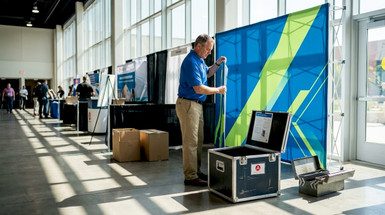
If you’ve been searching for answers on what is a pop up display, you may have already run into some confusion. Many people mix this term up with POP displays (point-of-purchase retail fixtures) or assume any portable banner qualifies. A pop up display is actually a specific format: a collapsible, accordion-style frame system paired with a large-format graphic panel, designed to set up fast and look polished at trade shows, marketing events, and promotional spaces. This guide covers everything from the physical components to setup tips and common questions.
Table of Contents
- Key takeaways
- What is a pop up display and how it works
- Core components and pop up display features
- Benefits of pop up displays over other options
- How to select and use pop up displays effectively
- Common misconceptions about pop up exhibits
- My honest take on pop up displays after years of event setups
- Get your custom pop up display from Arrowheadsigncompany
- FAQ
Key takeaways
| Point | Details |
|---|---|
| Pop up displays have a specific structure | They use a collapsible aluminum frame paired with a large-format graphic panel, not just any portable sign. |
| Setup is fast and tool-free | Most systems are ready to use in 2 to 5 minutes without any tools or professional help. |
| Fabric graphics outperform vinyl | Tension fabric delivers a wrinkle-resistant, seamless finish that reads as more professional at events. |
| Frames are reusable and cost-effective | You can replace graphics while keeping the same frame, which lowers your long-term cost per event. |
| Choose the right size for your space | Matching display dimensions to your booth footprint directly affects brand visibility and visitor engagement. |
What is a pop up display and how it works
A pop up display, sometimes called a pop up exhibit or pop up backdrop, is a self-supporting display system built around a flexible, accordion-style aluminum frame. When you expand the frame, it “pops” outward into a stable wall structure. A graphic panel then attaches to the front of that frame, creating a large, visually continuous backdrop.
The term gets confused with POP displays because the abbreviation sounds identical. But POP displays are a completely different product category. POP stands for “point of purchase.” Those are semi-permanent branded structures placed near checkout areas or shopper decision points inside retail stores. A pop up display, by contrast, is portable, event-focused, and assembled on demand.
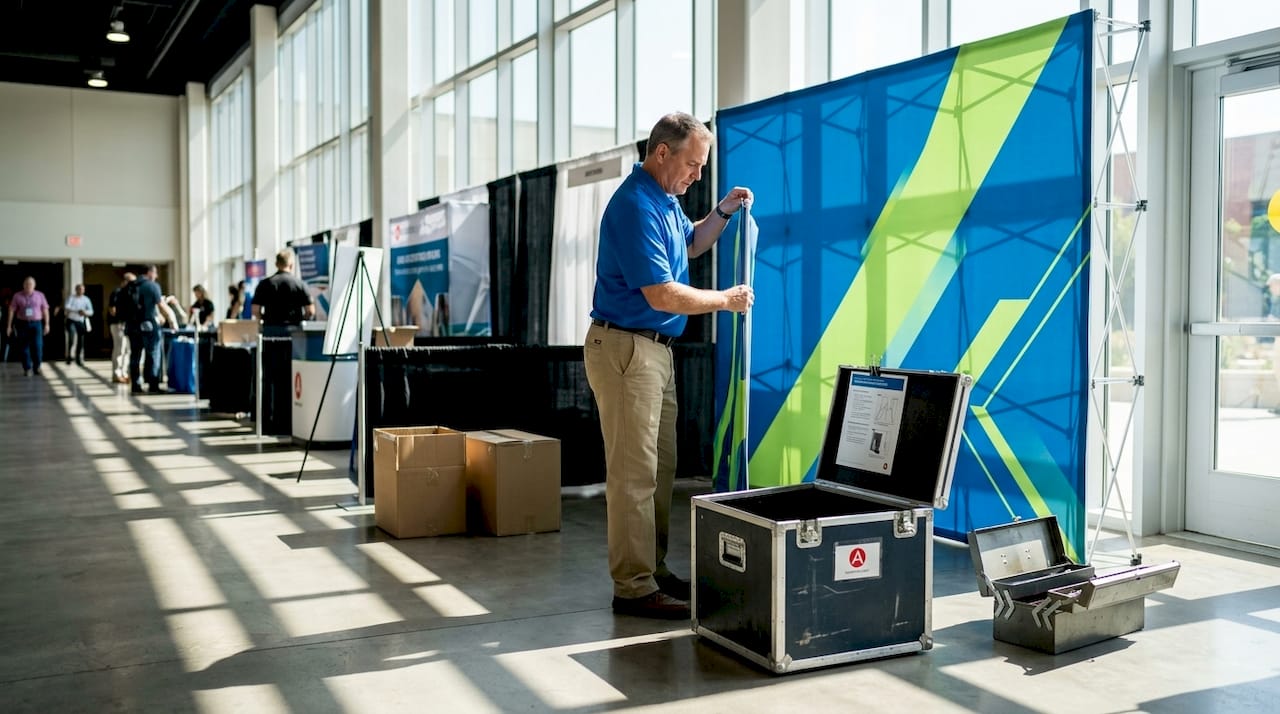
Pop up displays are used across a wide range of settings: trade show booths, corporate events, product launches, photo backdrops, job fairs, and community expos. They are equally relevant for an individual selling handmade goods at a weekend market and a national brand setting up a 20-foot exhibit wall at a convention center.
Core components and pop up display features
Understanding what goes into a pop up display helps you make smarter purchasing decisions. These systems consist of three main components: the collapsible frame, the graphic panel, and the transport case.
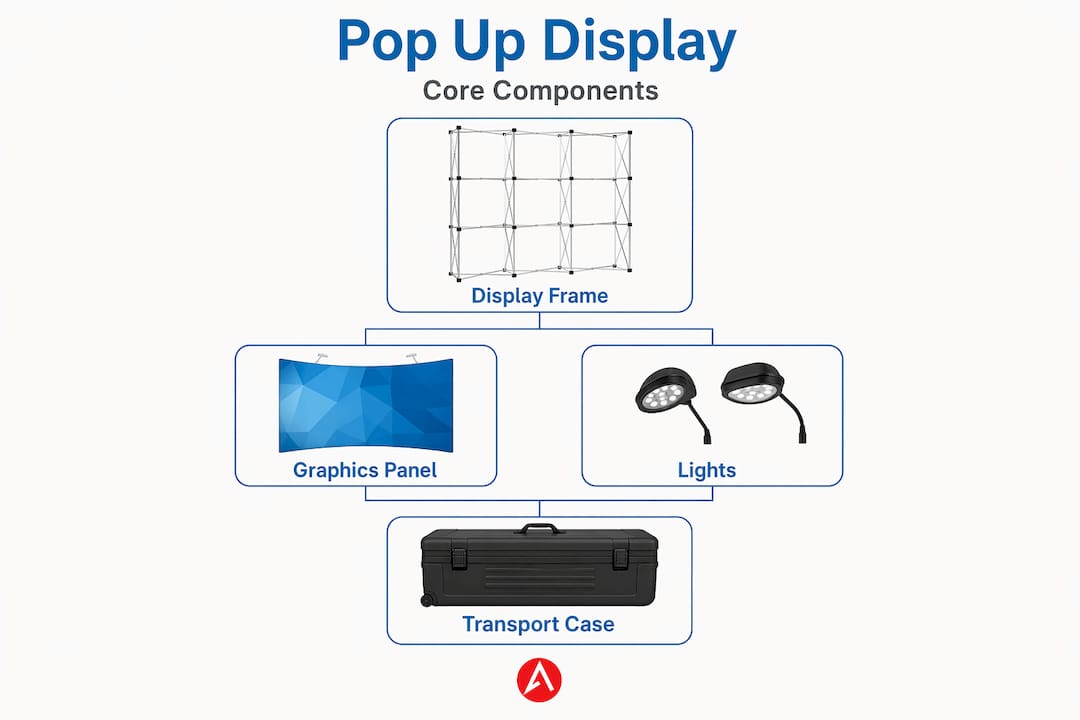
The frame is almost always made from lightweight aluminum. It folds flat using an accordion mechanism, meaning the entire structure compresses down to a fraction of its assembled size. This makes transport practical without sacrificing structural stability when set up.
The graphic panel is where your brand comes to life. You have two primary material options:
- Tension fabric: Printed using dye-sublimation, these graphics stretch over the frame and attach via silicone edge graphics (SEG) or integrated pockets. The result is a wrinkle-resistant, seam-free surface that holds vivid color. Tension fabric graphics are also washable, which extends their usable life.
- Vinyl panels: An older format where printed vinyl sheets attach to the frame using magnetic strips or Velcro. Vinyl can show seams where panels meet, which is why fabric has largely replaced it for professional use.
The transport case is often overlooked, but it adds real value. Many pop up display cases are engineered to convert into podiums at your event. That means your shipping case does double duty: protecting your display during transit and serving as a branded counter when you arrive.
Common sizes range from tabletop units (about 4 to 6 feet wide) up to full-wall configurations at 20 feet or more. Shapes include straight-panel systems and curved frames that create a more dynamic booth presence. Backlit options, where LED lighting illuminates the graphic from behind, add further visual impact in dimly lit exhibit halls.
Pro Tip: If you plan to exhibit at multiple events per year, choose a system with replaceable graphics rather than a single-use setup. You protect your frame investment and update your messaging as needed without starting from scratch.
Benefits of pop up displays over other options
The practical advantages of this format become clear the moment you compare it to alternatives like banner stands or modular exhibit systems.
| Feature | Pop Up Display | Retractable Banner Stand | Modular Exhibit System |
|---|---|---|---|
| Setup time | 2 to 5 minutes | 1 to 2 minutes | 30 to 90 minutes |
| Coverage area | Large backdrop wall | Single vertical panel | Full booth environment |
| Visual impact | High (seamless graphic) | Moderate | Very high |
| Portability | 15 to 30 pounds typical | Under 10 pounds | 50+ pounds per component |
| Cost over time | Lower (reusable frame) | Low initial, limited reuse | High upfront, modular upgrades |
Setup times typically range from 2 to 5 minutes for accordion-style pop up frames. That speed is a genuine advantage when you are working alone at an event, setting up before a show opens, or moving between multiple venue locations in a single day.
The visual benefit is equally significant. Large, bold graphics help attract attention even in crowded, competitive environments. A seamless fabric backdrop reads far more professionally than a collection of banner stands or a retractable unit with visible hardware framing your design.
Cost-effectiveness is a longer-term calculation. Pop up display frames are more cost-effective over time because you replace only the graphics as your messaging changes. The aluminum frame can last years with basic care, making the per-event cost drop substantially after the first few uses.
Pro Tip: Pair your pop up display with a matching retractable banner stand on each side of your booth. This creates visual depth and fills a 10-by-10-foot space without requiring a larger display unit.
How to select and use pop up displays effectively
Choosing the right pop up system and getting real value from it comes down to a few focused decisions. Here is a practical approach that applies whether you are an individual setting up at a local expo or an event planner managing multiple booth configurations.
-
Assess your event footprint first. Measure the available back wall space in your typical booth size. A 10-foot wide pop up display fills a standard 10-by-10-foot booth perfectly. Going larger without the space creates visual clutter. Going smaller leaves empty wall space that undercuts your brand presence.
-
Select your graphic material based on how you will use it. If you exhibit frequently, tension fabric is the stronger choice. It ships compactly, resists wrinkles, and holds color well over many events. Review the graphic design considerations that apply to large-format printing before you send your files, since resolution and bleed settings differ from print-on-paper standards.
-
Design for distance, not for close reading. Most attendees will see your display from 10 to 20 feet away before they approach. Your logo, headline, and a single supporting message should be legible at that distance. Detailed body copy, phone numbers, and URLs belong on a handout or table card, not your backdrop.
-
Practice your setup before the event day. Unfold the frame in your living room or garage, attach the graphic, and time yourself. This eliminates surprises on the show floor. Most people can handle a standard 10-foot unit alone in under five minutes after one practice run.
-
Store and transport with care. Always pack the graphic separately from the frame or in the designated carry bag to avoid tears. Clean fabric graphics by hand washing with mild soap when needed. Aluminum frames hold up well but avoid dropping the case on hard corners, which can bend the connectors.
For retractable banner assembly tips that translate directly to pop up setup habits, Arrowheadsigncompany has a useful reference for first-time exhibitors.
Pro Tip: Use your transport case podium as a literature holder or product display surface. Place a tablecloth over it that matches your brand colors. You gain an extra functional element without adding weight to your setup.
Common misconceptions about pop up exhibits
Even experienced exhibitors carry some incorrect assumptions about this format. Here are the ones that come up most often.
-
“Pop up display” and “POP display” are the same thing. They are not. As noted above, POP displays are retail merchandising tools placed near purchase decision points inside stores. A pop up display is an event backdrop system.
-
Pop up displays are only for indoor use. Most standard pop up displays are designed for indoor environments. Wind and moisture are real risks outdoors. If you need an outdoor backdrop, look specifically for systems rated for outdoor conditions, or use a tent with a printed canopy instead.
-
You need to replace the whole system to update your branding. Not true. The frame stays. You order a new graphic panel when your design changes. This is one of the strongest selling points for the format.
-
All pop up displays look the same. A what is a branded pop up display question often leads people to think customization is limited. In reality, you can choose custom sizes, straight or curved profiles, backlit configurations, fabric or vinyl, and fully customized artwork. Promotional backdrop options have expanded considerably and give you genuine design flexibility.
-
Pop up displays are fragile. Aluminum frames are lightweight, not weak. With proper storage and handling, a quality frame will support hundreds of setups over its lifespan. The graphic panels are the component that shows wear first, which is why replaceability matters.
My honest take on pop up displays after years of event setups
I’ve set up displays in every format you can name: modular systems, fabric tube frames, tension-fabric walls, retractable banks, and simple tabletop units. After all of it, my honest view is that the pop up display in its classic accordion-frame format is still one of the most underrated tools in an exhibitor’s kit.
What I’ve found is that people often prioritize aesthetics when choosing a display, and they end up with something that looks spectacular in the product photo but takes 45 minutes and two people to assemble on show day. Speed of setup matters more than most first-time exhibitors realize until they are scrambling with allen wrenches at 7 a.m.
The other thing I’ve seen consistently undervalued is graphic quality. I’ve watched exhibitors spend heavily on a premium frame and then send low-resolution artwork to the printer. The display looks dated within three feet. The frame is just the structure. The graphic is your brand. Put your time and budget there.
Where pop up systems fall short, I’ll be direct: if you need something that doubles as a full booth environment with counters, shelving, and overhead lighting, a pop up backdrop alone won’t get you there. Think of it as your primary visual anchor, not your complete booth solution. Combine it thoughtfully with other elements and it performs exceptionally well.
— Dan
Get your custom pop up display from Arrowheadsigncompany
You now have the knowledge to make a confident choice. The next step is finding a supplier that can deliver the quality, customization, and turnaround your event demands.
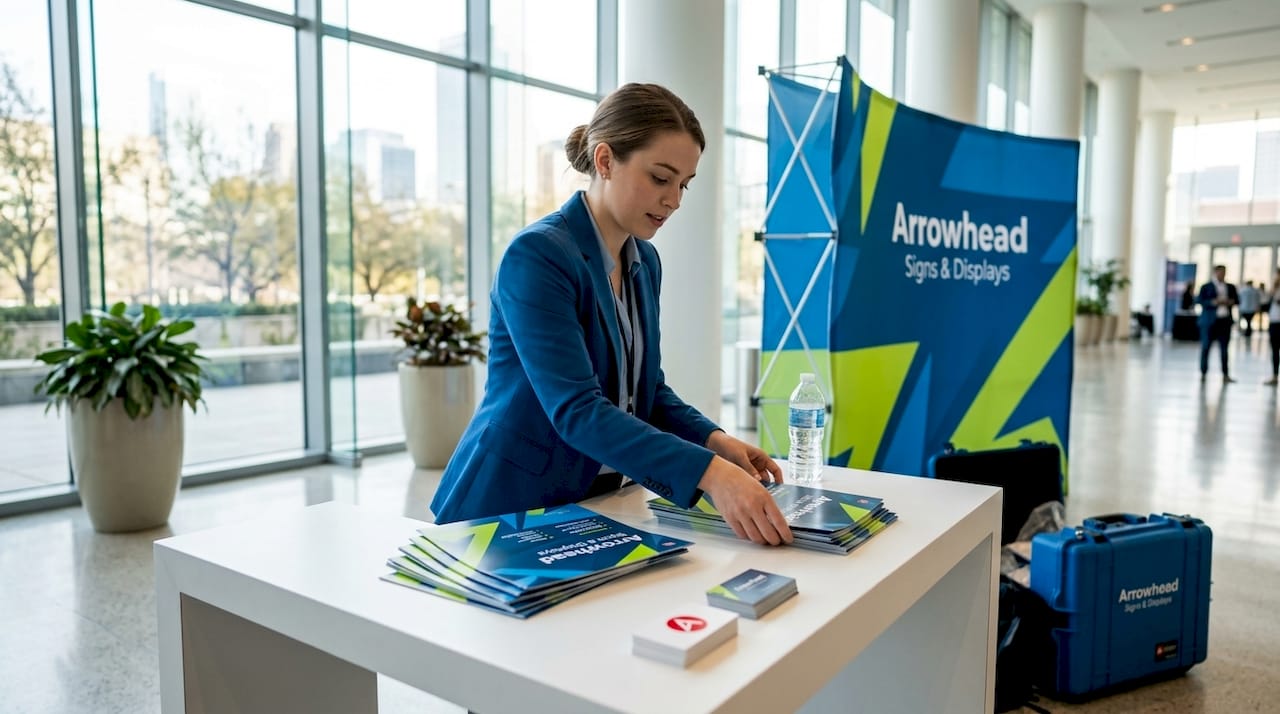
Arrowheadsigncompany specializes in custom pop up signs with fabric graphic printing, portable display systems, and the full range of trade show signage products. Their rapid fulfillment process ships most orders within two business days, which matters when event deadlines are tight. For clients in Arizona, they offer direct venue delivery so you receive your display exactly where you need it. Whether you are an individual preparing for your first expo or an event planner managing a seasonal schedule, Arrowheadsigncompany’s team makes the ordering process clear and straightforward. Explore their custom pop up signs and find the right configuration for your next event.
FAQ
What is a pop up display used for?
A pop up display is a portable backdrop system used at trade shows, expos, product launches, and promotional events to create a large, visually impactful brand presence. It functions as the primary visual backdrop for a booth or exhibit space.
How long does a pop up display take to set up?
Pop up display frames typically set up in 2 to 5 minutes without any tools, making them one of the fastest large-format display options available for events.
What is a fabric pop up display?
A fabric pop up display uses a dye-sublimated tension fabric graphic stretched over the collapsible frame instead of vinyl panels. The result is a wrinkle-resistant, seamless surface with vibrant color that holds up well across multiple events.
What is a branded pop up display?
A branded pop up display is any pop up system printed with your specific logo, colors, messaging, and visual identity. Custom artwork is printed directly onto the fabric or vinyl panel, turning the display into a marketing asset specific to your brand.
How long does a pop up display last?
The aluminum frame can last for hundreds of setups with proper care and storage. Graphic panels show wear over time but are replaceable without purchasing a new frame, which makes the format cost-effective for long-term use across many events.
Recommended
- Pop Up Display Comparison Guide for Event Marketers - Arrowhead Sign Company
- Custom Pop Up Signs | Outdoor Banner Stands | Retractable Banner Stands | Arrowhead Signs and Displays
- Types of Promotional Backdrop Displays: 2026 Guide - Arrowhead Sign Company
- How Trade Show Printing Works: A Planner’s Guide - Arrowhead Sign Company