

Banner Material Thickness: 13 oz Outdoors, but Check the Scrim
Posted by Deeder Dandenhorf on Oct 13th 2026
Banner Material Thickness: 13 oz Outdoors, but Check the Scrim

For most outdoor banners, 13 oz vinyl is the practical workhorse, while 10 oz suits indoor or short-term signage and 18 oz blockout material handles double-sided or heavy-duty jobs. The ounce rating describes weight per square yard, not the final banner’s weight. Construction details like scrim density and finishing often matter more than the number on the spec sheet.
TL;DR:
- The ounce rating measures material weight per square yard, not thickness; compare mil or GSM figures and scrim density to judge stiffness and durability.
- At the same ounce rating, higher denier scrim resists tearing and stretching better, so ask suppliers for scrim density on banners facing prolonged weather.
- For long term outdoor use, choose heat welded hems, reinforced corners, and grommets spaced every 18 to 24 inches to reduce tearing and pull through.
- For high wind exposure, ask about mesh or wind slits before upgrading to heavier vinyl, because airflow can reduce the force of gusts.
- Banners larger than about 10 feet may need two installers or extra rigging; check finished weight and hardware load limits before installation.
Table of Contents
- What “Oz” Actually Means and Why Weight Isn’t the Same as Thickness
- Common Weight Classes and What Each One Is Built For
- Construction Matters More Than the Ounce Number Alone
- How to Pick the Right Thickness for Your Situation
- Finishing and Installation Details That Interact with Thickness
- Estimating Total Banner Weight for Shipping and Mounting
- How We Approach Material Selection and Fast Turnaround
- Printed Banners and Displays Built Around Your Use Case
- FAQ
- Sources
What “Oz” Actually Means and Why Weight Isn’t the Same as Thickness
When a supplier lists a banner as “13 oz,” that number refers to the weight of the vinyl material per square yard, not the weight of your finished banner. A 3x6 foot banner and a 10x20 foot banner cut from the same 13 oz roll weigh very different amounts once they’re printed, hemmed, and grommeted.
Thickness, meanwhile, gets measured separately in mils (thousandths of an inch) or sometimes GSM. Two vinyls can carry identical oz ratings yet feel noticeably different in your hands. That’s because weight per square yard doesn’t account for how the material is woven, coated, or laminated. Some suppliers publish caliper or denier figures alongside the ounce rating precisely because that second number fills in what weight alone can’t tell you: how stiff the material feels, how opaque it prints, and how it handles in wind.
Common Weight Classes and What Each One Is Built For
Banner vinyl comes in a handful of standard weight classes, and each one tends to fit a particular job rather than every job equally well.
- 10 oz vinyl works well for indoor signage, short-term promotions, and events where the banner comes down within days.
- 13 oz vinyl is the most common choice for outdoor use, balancing durability, cost, and ease of handling for banners that stay up for weeks or months.
- 15 oz vinyl sits between the workhorse and the heavy-duty tiers, often chosen when a banner needs extra body without the full weight of blockout material.
- 18 oz blockout vinyl includes an opaque core layer that prevents light and ghosting from showing through, making it the standard pick for double-sided banners or anything facing years of outdoor exposure.
- Mesh vinyl trades some print density for airflow, which keeps banners from acting like sails on fences, scaffolding, and building wraps exposed to wind.
Heavier isn’t automatically better. A 13 oz banner with strong construction can outperform an 18 oz banner with weak scrim, so the weight class is a starting point, not the final decision.
Construction Matters More Than the Ounce Number Alone
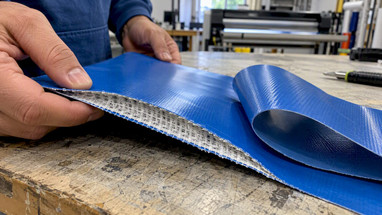
Two banners rated at the same weight can behave completely differently once wind, tension, or repeated handling come into play. The difference usually comes down to scrim, the woven polyester mesh embedded inside the vinyl, and its denier, which measures how dense that weave is. A higher-denier scrim resists tearing and stretching far better than a low-denier one, even when the PVC coating weight is identical on paper.

Coatings and surface finish also affect how a banner performs outdoors. A heavier coating can add stiffness and UV resistance, while a lighter coating keeps the material easier to roll and transport. For banners that need to survive seasons of sun and weather, it’s worth asking your supplier for the denier or scrim density rather than relying on the ounce rating by itself. That single question tells you more about long-term durability than the weight class does.
How to Pick the Right Thickness for Your Situation
Before ordering, run through a short set of questions: Will the banner live indoors or outdoors? How long does it need to last, days, months, or years? Does wind exposure matter at the install site? Does the design need to read on both sides?
For specific scenarios:
- Trade show backdrops usually call for 13 oz vinyl or a fabric display, since they’re handled repeatedly but rarely face weather.
- Storefront banners facing the street for months benefit from 13 oz to 15 oz vinyl with heat-welded hems.
- Short-term event signage can save money with 10 oz vinyl, since it won’t face repeated setup and teardown cycles.
- Long-term construction site banners justify 18 oz blockout vinyl with a high-denier scrim, given months of sun, rain, and wind.
Pro Tip: If your banner will see heavy wind, ask about mesh or wind slits before upgrading to a heavier vinyl, since airflow often solves the problem that extra weight can’t.
Spending more on heavier or higher-denier material makes sense when the banner faces years outdoors, double-sided viewing, or repeated high-wind conditions. For a weekend event or an indoor trade show, that extra cost rarely pays off. Our tips for choosing the right vinyl banners for trade shows walk through more scenario-specific guidance.
Finishing and Installation Details That Interact with Thickness
How a banner gets finished affects its real-world strength just as much as the material itself. Heat-welded hems are generally preferred for long-term outdoor banners because sewing needles create small perforations that weaken the material under tension, while welding keeps the hem intact without puncturing the vinyl.
Grommet placement and hem depth matter too. Heavier banners need multiple hem layers, not just one, to keep grommets from pulling through under wind load. As a general guideline, grommets spaced every 18 to 24 inches with reinforced corners hold up better than wider spacing or single-layer hems, which are common failure points on banners that come down early.
Wind slits are another finishing option worth asking about for larger outdoor banners, since they let gusts pass through rather than catching the full surface. Our guide to selecting finishes for custom printed banners covers hem and grommet choices in more depth, including how they pair with different weight classes.

Estimating Total Banner Weight for Shipping and Mounting
To estimate a banner’s finished material weight, multiply the material’s weight per square yard by the banner’s area in square yards. A 10x20 foot banner covers about 22.2 square yards, so a 13 oz vinyl banner that size comes out to a significant weight before hardware and finishing add their own weight.
That rough weight matters for more than curiosity. Banners larger than about 10 feet often need two people for installation or additional rigging, since the combined weight of material, grommets, and hems can climb into the dozens of pounds depending on the finishing chosen. Factoring that in ahead of time saves a scramble on install day, especially when hardware has its own load limits to respect.
How We Approach Material Selection and Fast Turnaround
When customers come to us trying to decide between weight classes, we start with the same questions outlined above: where the banner will hang, how long it needs to last, and whether it’s facing weather or foot traffic. Matching material to the actual use case, rather than defaulting to the heaviest option, keeps costs reasonable without sacrificing durability.
Because many products ship within two business days, customers who need a banner for upcoming events don’t have to choose between the right material and a fast deadline. We also offer local delivery services for nearby customers who’d rather skip the shipping step entirely.
— Dan
Printed Banners and Displays Built Around Your Use Case
Choosing the right weight class is only half the job. Our Printed Banners come in the finishes and material weights covered above, with a standard banner layout service and expedited shipping options available for customers with tight timelines.
For displays beyond flat vinyl, a few other product lines solve specific setup challenges:
- The Outdoor Banner Frame gives a lightweight banner the rigid, upright presentation a storefront or sidewalk location needs.
- The Signicade Deluxe A-Frame Sidewalk Sign works well for short-term, double-sided messaging that needs to move easily between locations.
- A 10 ft stretch fabric display suits trade show backdrops where a seamless, wrinkle-free look matters more than raw durability.
Browse our full Printed Banners lineup to find the weight and finish that fits your next event.
FAQ
How big is a 2 by 6 foot banner?
A 2 by 6 foot banner covers several square feet, making it small enough that heavier materials like 18 oz blockout vinyl remain manageable for one person to handle and install without extra rigging.
What material is used for flex banners?
Flex banners are typically made from PVC vinyl reinforced with a woven polyester scrim, the same core construction used across standard weight classes like 10, 13, and 18 oz vinyl. The scrim gives the material its tear resistance, while the PVC coating provides the printable surface and weather protection.
Is a YouTube banner 16:9?
That question applies to digital channel art rather than printed signage, so it falls outside the ounce ratings and vinyl weights covered here. Digital banner dimensions follow platform-specific pixel specifications rather than material thickness standards.
What are standard digital banner sizes?
Digital banner sizes are set by platform and ad network specifications in pixels, which is a separate standard from the oz-per-square-yard ratings used for printed vinyl banners. Printed banner sizing instead depends on the physical display space and the weight class chosen for that environment.
Sources
- 13 oz Vinyl Banner Thickness Explained: What Buyers Should Know
- How much will my vinyl banner weigh? - Derflex