

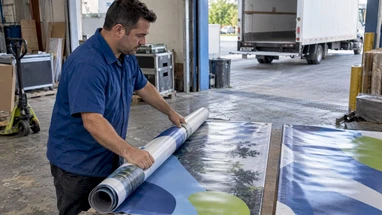
Laminated vs. Unlaminated Banners: Event Planners’ 3-Trip Test
Posted by Deeder Dandenhorf on Oct 9th 2026
Laminated vs. Unlaminated Banners: Event Planners’ 3-Trip Test

For a short indoor event or a single-use promo, unlaminated vinyl usually does the job and saves you money. For anything that gets handled repeatedly, rolled up often, or lives outdoors, choose a laminate matched to the media you’re printing on. Keep in mind that lamination protects the printed surface, but the banner’s actual outdoor lifespan still depends on the substrate and ink system underneath. Our checklist below walks you through the decision step by step.
TL;DR:
- If a banner will be rolled, unrolled, or transported more than three times, favor lamination, but confirm the media is rated for its hardware.
- Some economy media carry outdoor ratings of up to one year, while other films last multiple years; laminate protects the print, not the substrate.
- Vinyl generally accepts lamination, but mesh usually should remain unlaminated, and fabric or retractable media can curl or crease beneath heavy film.
- For outdoor orders, ask for the finished system’s rated life, including media and ink, and confirm hems, grommets, and mounting suit the exposure.
Table of Contents
- Laminated vs Unlaminated: Pros, Cons, and Best Uses
- Which Banner Materials Actually Work With Lamination?
- How Long Do Laminated and Unlaminated Banners Actually Last?
- What Drives the Price Difference Between Laminated and Unlaminated Banners?
- How to Decide: Your Banner Selection Checklist
- Why Arrowhead Sign Company Is Built for This Decision
- A Quick Field Rule for Choosing Your Finish
- Get Your Banner Printed and Ready to Ship
- FAQ
- Sources
Laminated vs Unlaminated: Pros, Cons, and Best Uses
Picking between the two comes down to how your banner will be touched, stored, and displayed. Lamination adds a protective layer, but that layer brings tradeoffs worth weighing before you order.
Laminated banners tend to offer these advantages:
- Better scratch and scuff resistance during setup, teardown, and storage.
- Easier to wipe down, which matters for banners that pick up dust or fingerprints at busy events.
- Reduced print fading in many outdoor or sun-exposed settings, according to Vanderbilt University printing guidance.
- A smart pick for banners you plan to reuse across multiple events or seasons.
Laminated banners also come with a few downsides. Gloss finishes can create glare under stage or booth lighting, the finishing step adds cost, and heavier laminates can clash with roll-up hardware if the media wasn’t built for it.
Unlaminated vinyl, on the other hand, costs less, flexes more easily for retractable stands, and holds up fine for a weekend trade show or a one-time indoor campaign.
Think about where the banner will actually live: a trade-show retractable stand that travels weekly benefits from a durable, well-matched laminate. An A-frame sidewalk sign facing daily foot traffic and weather leans the same direction. A banner zip-tied to a fence for one Saturday market rarely needs it.
Pro Tip: If you’re unsure whether your event qualifies as “repeated handling,” ask yourself if the banner will be rolled, unrolled, or transported more than three times. If yes, lean laminated.
Which Banner Materials Actually Work With Lamination?
Not every substrate takes laminate well, and matching the two wrong can cause problems you won’t notice until setup day.
- Vinyl generally laminates well. Blockout vinyl is worth considering for double-sided graphics, and scrim strength matters once you move into large tensioned signs.
- Mesh usually skips lamination because the material’s permeability is what lets wind pass through instead of tearing the banner. A liquid laminate is sometimes used in narrow cases, but it’s the exception, not the rule.
- Fabric and roll-up media can curl or crease under a heavy laminate. For retractable or roll-up stands, choose media specifically rated for that hardware rather than adding laminate to compensate, a point echoed in production guidance from Avery Dennison’s banner bulletin.
- Laminate width limits and specialty options, such as UV matte, gloss, or dry-erase finishes, vary by supplier and are worth confirming before you finalize a size, as listed in Washington State University’s large format printing guide.
Our mesh banners vs vinyl banners guide breaks down which substrate fits which setting in more detail.
How Long Do Laminated and Unlaminated Banners Actually Last?
Manufacturer guidance puts real numbers on this question. Some economy banner media carry an outdoor rating up to a year, while other films are rated for multiple years outdoor durability, according to Avery Dennison’s instructional bulletin. Lamination can protect the printed image during that window, but it often doesn’t stretch the substrate’s life beyond its original rating.
Lamination is surface protection, not a lifespan extension. Avery Dennison’s guidance notes that a laminated banner printed on one-year-rated media is still a one-year banner underneath the film.
UV exposure, temperature swings, airborne grit, and wind load all chip away at a banner’s working life faster than surface wear does. Installation specs for fixed exterior signage, such as those outlined in Georgia Tech’s wayfinding and fabrication standards, point to structural choices, mounting method, and warranty terms as the real drivers of long-term durability, not the laminate alone.
A mismatched laminate can curl or delaminate, and skipping proper hems, grommets, or wind relief often decides whether a banner survives its first storm regardless of finish. For a closer look at how these pieces come together during production, see our guide to how outdoor event banners are made.

What Drives the Price Difference Between Laminated and Unlaminated Banners?
Lamination adds a finishing step and material cost, but the premium varies widely from one supplier to the next. Several factors shape your final quote:
- Banner size, since larger laminate rolls and more material drive cost up.
- Laminate type, with matte, gloss, or specialty finishes like UV or dry-erase priced differently.
- Substrate choice, because vinyl, mesh, and fabric all carry different base costs.
- Quantity, as per-unit pricing typically drops with larger orders.
- Turnaround time, since rush production often carries its own fee.
When you request a quote, ask for the rated outdoor life of the complete system, media plus laminate together, rather than accepting a general “laminated means outdoor-proof” claim. That single question filters out vague promises fast.
How to Decide: Your Banner Selection Checklist
Four questions settle most laminate decisions: How long will the campaign run? How often will the banner be handled? Will it face outdoor exposure? And does it need to work with specific hardware?
- Short campaign, indoor, minimal handling: unlaminated vinyl is usually enough.
- Repeated transport or frequent rolling: choose media rated for roll-up hardware, with or without a light laminate matched to that media.
- Outdoor exposure beyond a few weeks: laminate matched to the substrate, paired with proper hems and grommets.
- Long-term fixed installation: structural specs and installation method matter more than lamination alone.
Before you order, ask your supplier for the media and ink rating, confirm roll-up compatibility if that applies, and get a straight answer on expected lifespan for the finished system. Watch for vague outdoor claims, a missing media rating, or hesitation about hardware compatibility. Those are signs to ask more questions before you commit.
Pro Tip: A trade-show retractable banner, a sidewalk A-frame sign, and a three-month outdoor fence banner each call for a different answer, so match your choice to the specific job rather than a one-size-fits-all rule.
For a deeper breakdown of matte versus gloss and other finish tradeoffs, our guide to selecting finishes for custom printed banners is worth a look. If you’re weighing fabrication partners more broadly, this guide to choosing a custom event fabrication company offers useful questions to bring to any supplier conversation.
Why Arrowhead Sign Company Is Built for This Decision
We print both laminated and unlaminated banners, and most products ship within two business days, so you’re not stuck waiting while your event date closes in. For customers based in Arizona, we also offer direct delivery to your venue, which takes one more task off your event-day list.
- We ship orders promptly.
- Local delivery options are available in Arizona.
- Customer feedback highlights timely turnaround and dependable service.
If you want material-specific advice before ordering, our vinyl banner durability guide and outdoor banner material guide cover the practical details that affect your choice.
A Quick Field Rule for Choosing Your Finish
In practice, the decision is simpler than it looks: short indoor use gets unlaminated vinyl, anything repeated or outdoor gets a laminate matched to the media. One handling tip worth remembering: roll your banner loosely rather than folding it. Folding creates crease points where ink and laminate both wear out first.
— Dan
Get Your Banner Printed and Ready to Ship
We make the laminated-versus-unlaminated decision easy by printing both, with most Printed Banners shipping within two business days once your file is approved. Current prices for a standard banner layout and expedited shipping options are listed on our pricing page.
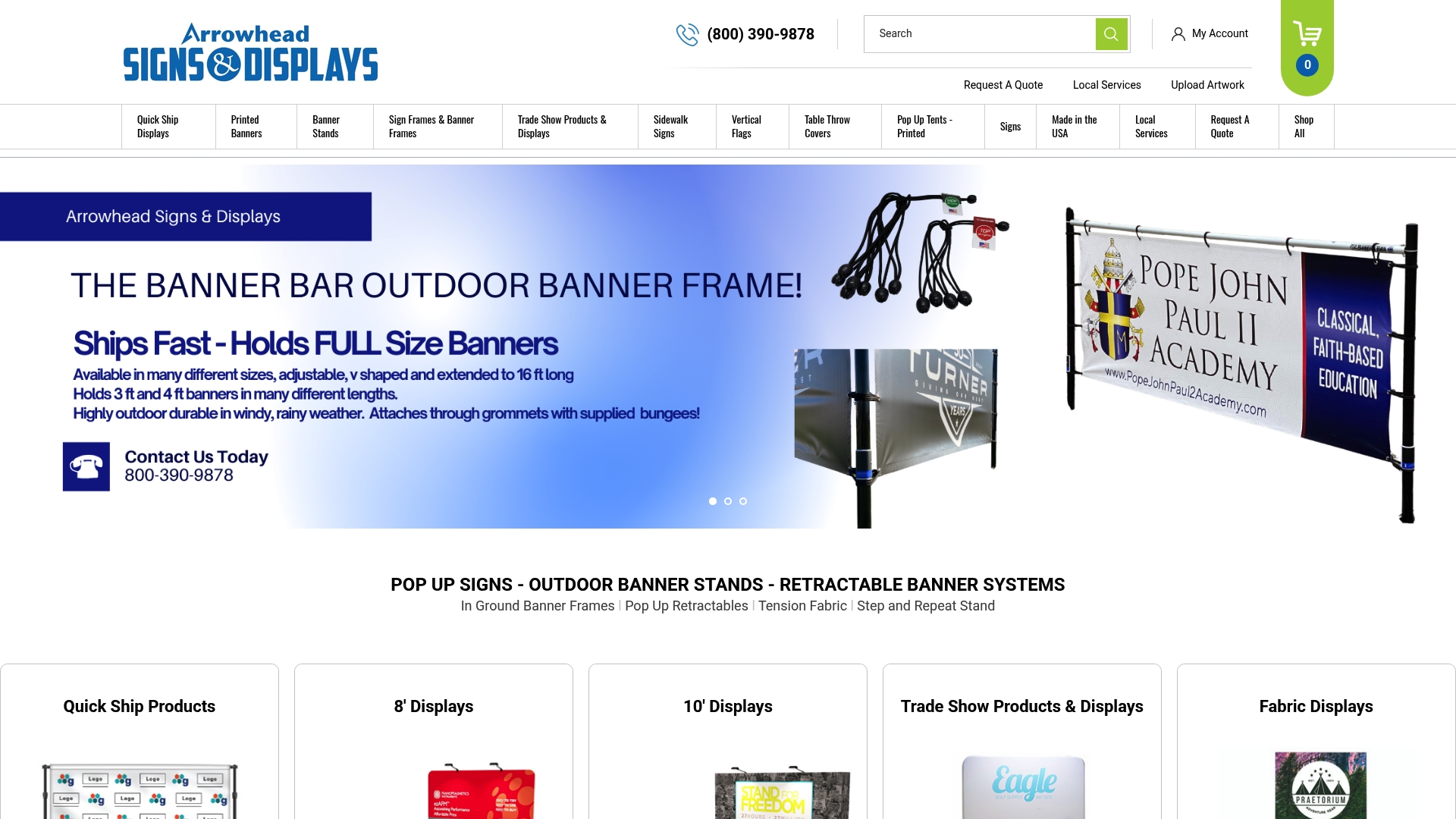
If you need hardware to go with your banner, our Outdoor Banner Frame, the Banner Bar, holds up to outdoor conditions, and the Signicade Deluxe A-Frame Sidewalk Sign is built for daily foot traffic and quick repositioning.
When you request a quote, tell us the laminate finish, media type, and installation details you need, so pricing reflects your actual setup rather than a generic estimate.
| Need | Recommended product | Why it fits |
|---|---|---|
| Fast indoor or outdoor banner print | Printed Banners | Ships within two business days |
| Outdoor frame for banner hardware | Outdoor Banner Frame, the Banner Bar | Built for outdoor display conditions |
| Sidewalk or storefront signage | Signicade Deluxe A-Frame Sidewalk Sign | Durable for daily foot traffic |
FAQ
What are the differences between laminated and non-laminated posters?
Laminated posters have a protective film that resists scratches, moisture, and fading, while non-laminated posters are more affordable but show wear faster with repeated handling. Choose lamination for posters that will be touched often or displayed for an extended period.
Can you laminate a banner?
Yes, most vinyl banners can be laminated, and the laminate should be matched to the specific media and intended use. Mesh banners are usually left unlaminated since their open weave is what lets wind pass through safely.
What are the differences between laminated and non-laminated stickers?
Laminated stickers resist water, scuffing, and sun fading better than non-laminated stickers, making them a better fit for outdoor or frequently handled items. Non-laminated stickers work fine for short-term indoor use where durability matters less.
What are the differences between laminated and non-laminated canvas?
Laminated canvas gains scratch and moisture resistance along with easier cleaning, while non-laminated canvas keeps a more natural, matte texture that some displays prefer. The choice usually comes down to how the piece will be handled and whether it faces exposure to moisture or touch.
Sources
- Sign Finishing and Display Hardware Options | Printing Services | Vanderbilt University
- IB 4.07 - Tips for creating digitally printed banners | Avery Dennison
- Large Format Printing - WSU Coug Prints Plus
- Signage standards and guidelines (example project spec)