


250–500 Cards: Business Card Quantities for Exhibitors Shipped Fast
Posted by Deeder Dandenhorf on Sep 22nd 2026
250–500 Cards: Business Card Quantities for Exhibitors Shipped Fast

Most printers sell business cards in set tiers: 50, 100, 250, 500, 1,000, and bulk runs of 5,000 or more by request. For most small businesses, 500 cards is the balanced default. Order a moderate quantity if you’re still testing a design or a new venture, and order a larger quantity if you exhibit often or run a multi-person team. Per-card cost drops fast as you scale up, but so does your flexibility if your contact details change.
TL;DR:
- Printing 250 to 500 cards offers the best balance between cost efficiency and flexibility for most small businesses.
- Per-card prices decrease significantly when moving from 100 to 250 and from 250 to 500, with the greatest value at 1,000 cards.
- Order smaller quantities if your contact details are changing soon or if you need cards quickly for an upcoming event.
- For multiple staff or ongoing needs, ordering 1,000 or more reduces the need for frequent reorders and saves money in the long run.
- Home printing is suitable only for small batches of up to 50 cards, while professional bulk printing requires planning at least two business days ahead.
Table of Contents
- What Are the Standard Business Card Quantity Tiers?
- How Does Order Quantity Affect Price Per Card?
- How Do You Pick the Right Quantity for Your Business?
- How Many Business Cards Fit on a Sheet, and How Fast Can You Get Them?
- What’s the Difference Between 14pt and 16pt Cards?
- Why Arrowhead Sign Company - Signs, Banners and Trade Show Displays Understands Event Printing Needs
- A Straight Answer on Quantities for Exhibitors
- Ready to Order? Here’s How to Get Your Cards and Displays Fast
- Sources
- FAQ
What Are the Standard Business Card Quantity Tiers?
Each quantity tier serves a different kind of buyer, and picking the wrong one usually means either running out at a networking event or throwing away a stack of outdated cards two years later.
- 50 cards: Best for a single quick need, like testing a new logo before committing further. Expect the highest per-card cost and the fastest turnaround.
- 100 cards: Common for last-minute events or personal use. Still pricier per card than larger runs, but useful when speed matters more than economy.
- 250 cards: The most popular single order for many professionals launching a new business or refining a design. It keeps total spend low while meaningfully lowering the per-card price.
- 500 cards: A dependable middle ground. This is often enough to cover a full year of regular networking for a solo business owner, and it’s the quantity many industry guides point to as the safest starting point.
- 1,000 cards: The strongest value tier for salespeople, teams, or anyone attending multiple events a year.
- 5,000+ (bulk): Built for distribution, mass marketing inserts, or franchise-level needs. Pricing at this level usually requires a direct quote from your printer.
Arrowhead Sign Company - Signs, Banners and Trade Show Displays sees the same pattern play out with exhibitors ordering event materials: the right quantity for a trade show depends heavily on how many events you’re working and how many staff are handing cards out.
How Does Order Quantity Affect Price Per Card?
Printers charge a fixed cost just to set up your job, review your files, and package the order. That fixed cost gets spread across however many cards you print, which is why small runs feel expensive per card and large runs feel cheap.
Setup and file prep costs the same whether you print 50 cards or 5,000 — so the more cards you print, the smaller that fixed cost looks on a per-unit basis. This is the core mechanism behind what drives business card pricing.
The break points where savings become noticeable are predictable:
- Jumping from 100 to 250 cards usually cuts the per-card price substantially.
- Moving from 250 to 500 delivers another meaningful drop.
- Going from 500 to 1,000 often provides the best value-per-dollar of any tier.
- Beyond a few thousand, savings taper off. You’re mostly paying for materials at that point, not overhead.
A rough rule of thumb: if you’re already ordering 250 and know you’ll use more within the next year, jumping to 500 or 1,000 almost always saves money in the long run compared to reordering twice.
How Do You Pick the Right Quantity for Your Business?
Four questions will get you to the right number faster than guessing, especially if you’re leveraging business development for professional services strategies.
- How many cards do you hand out per week or month? Multiply that by 6 to 12 months of activity. A business owner handing out five cards a week needs roughly 130 to 260 cards a year, which points toward the 250 or 500 tier.
- Is your contact information or offer likely to change soon? If you’re about to switch phone numbers, rebrand, or update your title, order smaller. A 100 or 250 print run limits how many outdated cards you’ll toss.
- Are you stocking cards for a team or multiple locations? If several employees or booth staff need cards, 1,000 or more is usually more efficient than ordering separate small batches per person.
- Is your timeline tight for an upcoming event? If you’re printing on a short deadline, a smaller quantity paired with a quick-ship option gets you covered without the wait tied to bulk production.
Pro Tip: If you’re unsure between two tiers, size up one level rather than down. The price difference is usually small, but running out of cards mid event costs you real opportunities.
How Many Business Cards Fit on a Sheet, and How Fast Can You Get Them?
A standard American business card measures 3.5 by 2 inches, with a 0.125 inch bleed built into the design file. That standard size fits exactly 10 cards on a single 8.5 by 11 inch sheet, which is useful math if you’re laying out a DIY print job. For a nonstandard card size, a cards-per-sheet calculator does the math instantly instead of you eyeballing a layout.
Printing at home works for very small runs, same-day mockups, or emergency reprints, but it can’t match professional finishes like matte coating or spot UV. Turnaround with a professional printer typically scales with quantity, so order earlier for large runs and lean on a quick-ship option when your event date is close.
- Home printing: fine for 25 to 50 cards, no special finishes
- Professional short runs: 1 to 3 business days is common for smaller quantities
- Professional bulk runs: production time increases with volume, so plan ahead
What’s the Difference Between 14pt and 16pt Cards?
“Pt” refers to caliper, meaning the actual thickness of the card stock measured in thousandths of an inch, not a paper weight like GSM or pound weight. Vendor-listed pt values are the number to trust when comparing stock, since weight labels don’t translate directly across print systems.
- 14pt measures about 0.014 inches thick. It’s the cost-efficient baseline most businesses default to.
- 16pt measures about 0.016 inches and feels noticeably firmer in hand, closer to a credit card.
- At small quantities, the price gap between the two is minor. At 1,000 or more, it becomes a real budget line item.
- Finishes like matte, gloss, soft-touch, and spot UV each shift perceived quality and price, regardless of thickness.
Why Arrowhead Sign Company - Signs, Banners and Trade Show Displays Understands Event Printing Needs
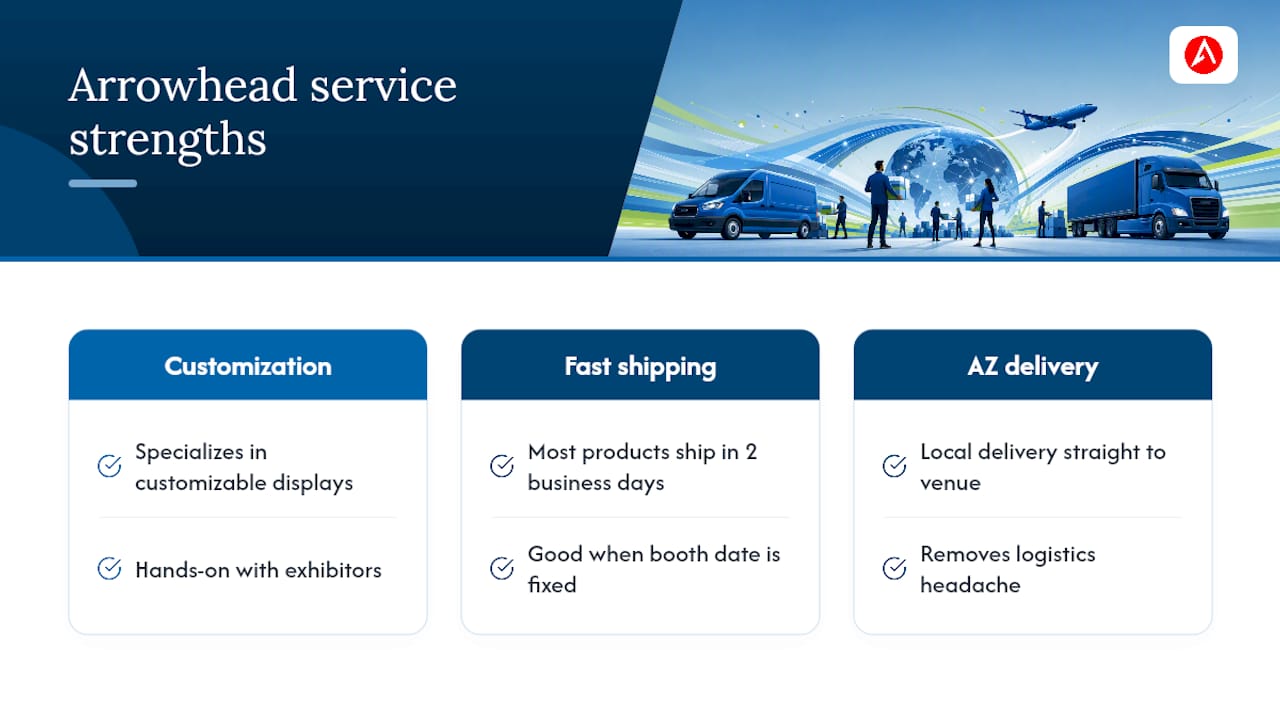
Arrowhead Sign Company - Signs, Banners and Trade Show Displays specializes in customizable trade show displays and signage, and that hands-on work with exhibitors shapes how it approaches printed materials too. Most products ship within two business days, which matters when your booth date is locked and your card order isn’t. For Arizona clients, local delivery straight to the venue removes one more logistics headache before doors open.
A Straight Answer on Quantities for Exhibitors
My honest recommendation: 250 to 500 cards covers most single-event exhibitors without waste. If you’re running a booth with multiple staff, jump to 1,000. Skip large orders entirely if your contact details or offer might shift in the next few months. Order early, and lean on quick-ship products when your event date is already close.
— Dan
Ready to Order? Here’s How to Get Your Cards and Displays Fast
Choosing a quantity is the easy part. Getting your materials in hand before your event date is where most vendors fall short. Many sign companies ship most products within two business days, so a decision you make this week can be in your hands well before your next show, with the option for direct delivery to your venue if you’re local.
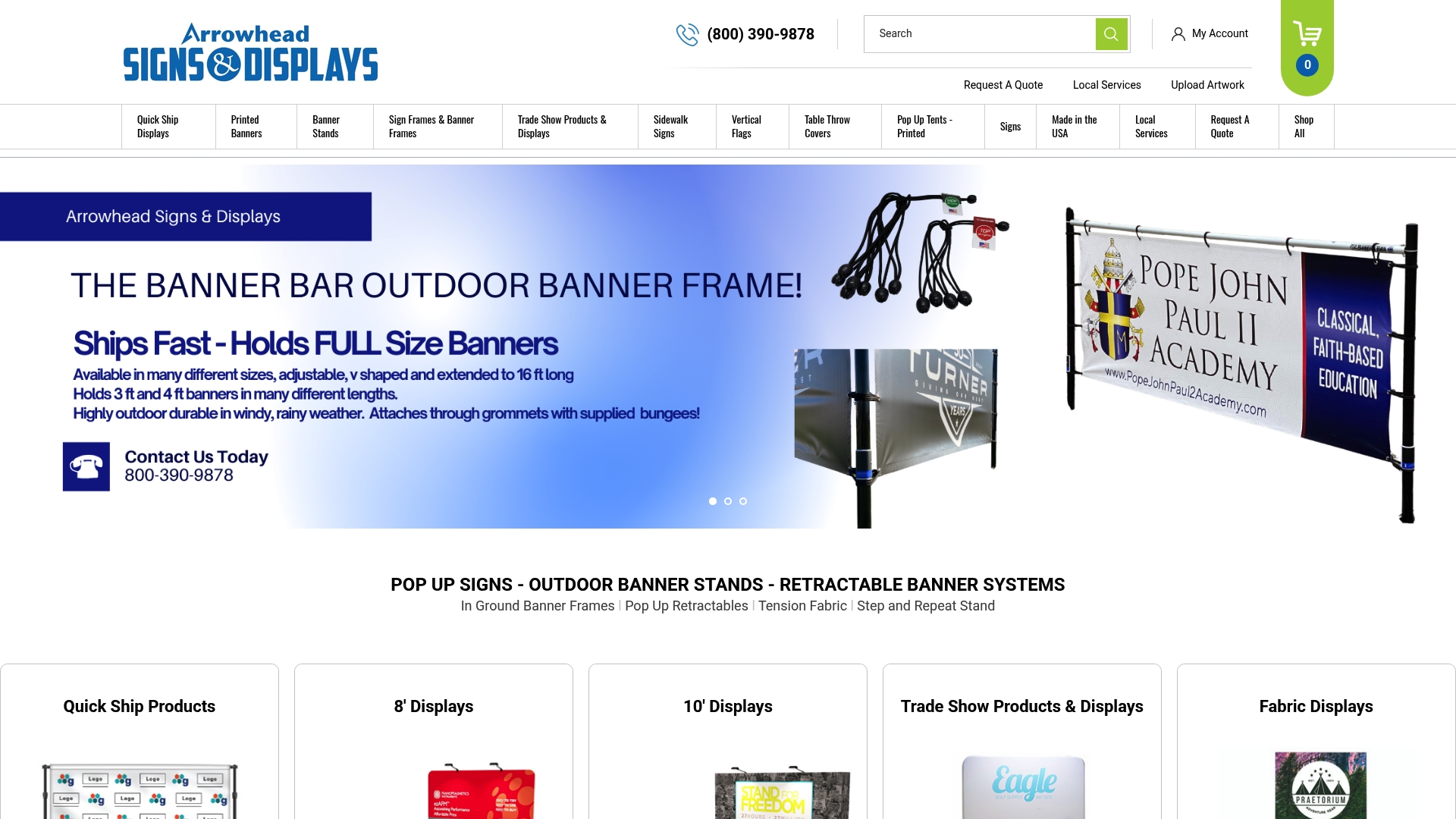
Start by browsing Printed Banners if your booth needs signage alongside your cards, or check the Quick Ship Displays collection when your event date is only days away. Exhibitors setting up a full booth often pair their card order with a 10 ft stretch fabric display for a cohesive look, or an outdoor banner frame to catch foot traffic before people even reach the table. If you’re setting up outside a storefront or event entrance, a Signicade Deluxe A-Frame Sidewalk Sign directs attendees right to your booth. Pick your product, select quick-ship if your timeline is tight, and request venue delivery at checkout if you’re local to Arizona.
Sources
Double check layouts with the cards-per-sheet calculator, and confirm standard card dimensions and bleed before submitting artwork.
- 4over4
- Calculator
- What Drives the Cost of a Business Card? | Jukebox Print
- How many business cards should you order? | TightDesigns
FAQ
Is 14pt or 16pt Business Card Stock Better?
Neither is universally better. 14pt is thinner and more cost-efficient, while 16pt feels sturdier and closer to a credit card, making it a common choice when a premium hand-feel matters more than price.
Are Business Cards 2x3 Inches?
No. The standard American business card measures 3.5 by 2 inches, not 2x3, and design files should include a 0.125 inch bleed for a finished document size of roughly 3.75 by 2.25 inches.
What Are the Measurements of a Typical Business Card?
A typical U.S. business card is 3.5 inches wide by 2 inches tall, the standard size accepted by virtually every printer and wallet or card holder.
How Many Business Cards Fit on an 8.5 x 11 Sheet?
A standard 3.5 by 2 inch card fits exactly 10 per 8.5 by 11 inch sheet, which is a useful number to know when planning a DIY print run or checking a printer’s layout.
What’s a Good Starting Quantity if I’m Not Sure?
Most small businesses do well starting with 250 to test a design, then scaling to 500 once their branding and contact details are locked in.