

Wrong Test, U.S. Permit Risk: Fire Retardant Canopy Certification
Posted by Deeder Dandenhorf on Oct 11th 2026
Wrong Test, U.S. Permit Risk: Fire Retardant Canopy Certification

Most event officials in the United States accept a manufacturer or approved-lab certificate tied to NFPA 701, or sometimes CPAI-84, as proof that a canopy meets fire safety requirements. That certificate needs to name the test method, the testing lab, the fabric covered, and the treatment date. Your local authority having jurisdiction makes the final call, and checking the canopy’s permanent label alongside your paperwork is the fastest way to confirm everything matches before a permit gets issued.
TL;DR:
- For heavier canopies, NFPA 701 Test Method 2 is commonly expected; a Method 1 certificate may fail inspection even when it names the correct standard.
- A valid certificate should identify the fabric, test standard, laboratory, and test or treatment date; the canopy’s permanent label must match those details.
- If the fabric was treated after purchase, prepare a signed affidavit naming the chemical, applicator, and treatment date, and bring paper copies when required.
- Ask your venue which code and document format it accepts; California requires permanent labels on small tents and may require licensed treatment for larger structures.
Table of Contents
- Which standards apply: NFPA 701 vs. CPAI-84 vs. ASTM and California Title 19
- What a valid flame-retardant certificate and permanent label must include
- How to verify a canopy at an event: a practical checklist for organizers and exhibitors
- Where to obtain certified documents and who issues them
- How event professionals reduce last-minute rejections
- Arrowhead Sign Company: event-ready tents and documentation support
- Author perspective: why documentation beats marketing claims
- FAQ
- Sources
Which standards apply: NFPA 701 vs. CPAI-84 vs. ASTM and California Title 19
NFPA 701 covers two distinct test methods, and knowing which one applies to your canopy matters more than just having “a certificate.” NFPA 701 Test Method 1 generally applies to lightweight fabrics, while Test Method 2 is commonly used for heavier materials like tents, awnings, and membrane structures. If your canopy fabric falls into the second category, a Method 1 certificate will not satisfy an inspector who knows the difference.
CPAI-84 plays a separate role. It is a specification for flame-resistant materials in camping tentage, and it often shows up on commercial canopy labels alongside NFPA 701 references. Here is where many exhibitors get tripped up: ASTM F3431-21 covers outdoor recreational camping tents, and its scope explicitly excludes products governed by NFPA 1, NFPA 101, or the International Fire Code. A camping-tent certificate built around ASTM F3431-21 is not automatically the right document for a trade-show or public-event canopy, even if the products look similar on a shelf.
State rules add another layer. California Title 19 requires small tents to carry a permanently affixed CPAI-84 label with a compliance statement and manufacturer identification, while larger structures may need a Certificate of Flame Resistance and treatment by a state fire marshal licensed applicator. The practical rule for any event: confirm which code your local AHJ has adopted and ask which certificate format they expect before you assume one standard covers you everywhere.

What a valid flame-retardant certificate and permanent label must include
A usable certificate names the product or fabric, states the standard tested to (NFPA 701 or CPAI-84), and identifies the testing lab by name. It also lists the test or treatment date and, when a treating firm applied the fire retardant after manufacture, that firm’s name and license information.
The permanent label on the canopy itself should match the certificate. California’s labeling rules require manufacturer identification, a compliance statement, and specific warning wording stitched or stamped directly onto the fabric, not printed on a separate sheet that can be lost or swapped.
Field-treated fabric differs from factory-certified fabric, and officials often ask for an affidavit in the first case. If your tent was flame-retardant treated after purchase rather than certified during manufacturing, expect to produce a signed statement covering the chemical used, the applicator, and the date of treatment. Some jurisdictions also require a paper copy of all this documentation kept on site during the event, not just a PDF on your phone.
How to verify a canopy at an event: a practical checklist for organizers and exhibitors
Verification does not need to be complicated, but it does need to happen before you arrive at the venue, not while an inspector is standing at your booth.
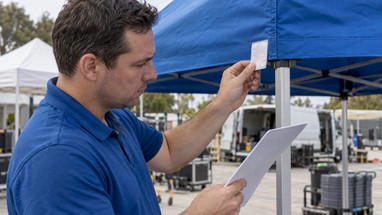
- Record the model number and fabric ID printed on the canopy and photograph the permanent label for your files.
- Request the manufacturer’s or lab certificate and confirm it names the correct standard, the testing lab, and an effective date that has not expired.
- Contact the venue or local fire marshal ahead of time to ask whether they require an affidavit, a state fire marshal label, or a formal lab certificate.
- Bring both printed and digital copies of every document, plus a short affidavit ready to sign if any part of your canopy was field-treated.
Pro Tip: Keep your certificate and label photos in one shared folder your whole team can access, since the person setting up the booth is rarely the one who ordered the tent.
A mismatch between the label and the certificate is one of the most common reasons event staff get flagged during walk-throughs, so a five-minute check before you load the truck can save a frustrating conversation later.
Where to obtain certified documents and who issues them
Start with your tent’s manufacturer or vendor. Most publish a fire certificate or product data sheet alongside the item, and that document is your first and easiest source. When that is not enough, an approved testing laboratory can issue a formal certificate; ask for the lab’s name and report number so your venue can verify it independently.
For California events, state fire marshal registration or a CSFM label often substitutes for a full lab certificate on smaller canopies, under California’s Title 19 framework. Other states may have their own submission steps, so a quick call to the local fire prevention office before the event saves time. If your fabric was treated after purchase rather than factory-certified, request a treatment affidavit listing the chemical, the applicator, and the date, since this is the document most often requested alongside IFC Chapter 31 permit filings.

How event professionals reduce last-minute rejections
The event teams that avoid permit holdups build one documentation packet, label photos, certificate, and a short affidavit if needed, and send it to the venue before setup day. Printed copies still matter, because some local authorities having jurisdiction want paper originals on site, not a link to a shared drive. Coordinating with your tent supplier early gives you time to request the right paperwork instead of scrambling. Documents settle inspections. Marketing language never does.
Arrowhead Sign Company: event-ready tents and documentation support
We build custom printed Pop Up Tents - Printed designed for exhibitors who need a canopy ready for inspection, not just ready to photograph. When you order, ask us for the model and fabric ID along with whatever flame-resistance documentation is available for that product, so you have it in hand well before your event date.
We also carry the broader lineup exhibitors tend to pair with a printed canopy:
- 10 ft stretch fabric display for a backdrop that sets up in minutes
- Signicade Deluxe A-Frame Sidewalk Sign for wayfinding at the entrance
- Outdoor Banner Frame, the Banner Bar for weather-ready outdoor signage
Most of our products ship within two business days, and we offer local delivery to client venues in Arizona, which matters when a permit review lands close to your event date. Browse our trade show products and displays to see what fits your next event, and check our guide to setting up printed pop-up tents outdoors for setup tips that pair well with your permit prep.
Author perspective: why documentation beats marketing claims
A tested fabric and a lab certificate are what actually clear an inspection, not a tag that says “fire retardant.” Preparing your paperwork ahead of the event, not the morning of setup, is what turns a stressful walk-through into a formality.
— Dan
FAQ
Where can I find a flame retardant certificate for my tent?
Start with your tent’s manufacturer or vendor, since most publish a fire certificate or product data sheet with the item. If that is not sufficient for your venue, request a formal certificate from an approved testing laboratory, naming the lab and report number so officials can verify it.
Is CPAI-84 the same as NFPA 701?
No. CPAI-84 is a specification for flame-resistant camping tentage materials, while NFPA 701 defines fire test methods for textiles and films used in products like tents, awnings, and banners. Many commercial canopy labels reference both, but they are separate standards with separate scopes.
What does NFPA 701 certified mean?
It means the fabric was tested under one of NFPA 701’s methods and met the flame-propagation criteria for that method. NFPA 701 Test Method 2 is the one most often applied to tents and membrane structures, so check which method your certificate references before assuming it covers your canopy.
How do I know if my canopy is fire retardant?
Check the permanent label stitched or stamped onto the fabric for manufacturer identification and a compliance statement, then match it against a certificate naming the test standard, lab, and treatment date. A camping-tent certificate under ASTM F3431-21 does not automatically satisfy requirements for a commercial event canopy, since that standard excludes products governed by adopted fire codes.
Does every state require the same canopy fire certificate?
No. California Title 19 sets specific labeling and state fire marshal registration rules that go beyond many other states, and IFC Chapter 31 requirements vary by what your local authority having jurisdiction has adopted. Always confirm the accepted document format with your venue or fire marshal before the event.
Sources
- CHAPTER 31 TENTS TEMPORARY SPECIAL EVENT STRUCTURES AND OTHER MEMBRANE STRUCTURE - 2024 INTERNATIONAL FIRE CODE (IFC)
- ASTM F3431-21 — Outdoor recreational camping tents (scope summary)
- California Code of Regulations Title 19 (CSFM tent labeling rules)