

Exhibitors: Tent Walls or Open Front, Avoid IAEE Flags, Ship in 2 Days
Posted by Deeder Dandenhorf on Oct 8th 2026
Exhibitors: Tent Walls or Open Front, Avoid IAEE Flags, Ship in 2 Days

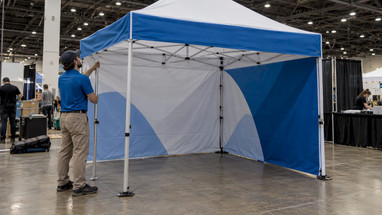
Use sidewalls when you need privacy, security, product protection, or weather coverage; leave your canopy open when your priority is foot traffic, sightlines, and impulse visits. IAEE display rules also factor in, since tall enclosures can block a neighbor’s visibility. Whichever direction you lean, order early: wall panels, zippers, and custom sizing all add production time.
TL;DR:
- Lock back and side panels overnight to protect equipment at multiday expos; half walls, mesh, and removable panels provide partial coverage without closing the frontage.
- IAEE display rules set height limits in 10 foot increments, so check the exhibitor manual and measure cubic content before ordering full walls.
- For open demos, keep cables and display stands clear of aisles; walled booths should have at least two unobstructed paths in and out.
- Next Day Air shipping costs $10 when available, but confirm the venue’s delivery window and drayage charges before relying on expedited delivery.
Table of Contents
- Quick pros and cons of walls vs open canopy tents
- When to choose walls: use cases and partial-wall strategies
- When to go without walls: events that reward an open front
- Practical setup and sightline rules to avoid problems
- Materials, branding, and ventilation tradeoffs
- Cost, lead time, and ordering considerations
- Safety considerations and crowd control
- A note from Dan on common exhibitor mistakes
- How we can help with tents, walls, and fast delivery
- FAQ
- Sources
Quick pros and cons of walls vs open canopy tents
Walls and open fronts each solve different problems at a trade show, and the right pick depends on what your booth needs to accomplish that day; for more insights on event promotion and venue-targeted advertising strategies, consult this trade show advertising checklist for marketers.
- Walls add security and weather protection: a locked back panel keeps demo equipment and inventory safe overnight, and side coverage blocks wind and rain at outdoor markets.
- Walls support private or ticketed demos: a VIP product reveal or a sensitive client conversation works better behind a closed panel than in full view of the aisle.
- Walls can hurt visibility: a fully enclosed 10x10 booth reads as closed off, and IAEE display rules warn that tall back walls can block sightlines to neighboring exhibitors, which organizers may flag due to sightline obstruction.
- Open tents invite impulse visits: attendees walking by can see your product table and staff without committing to step inside, which lowers the barrier to a first look.
- Open tents make demos harder to contain: without side coverage, a hands-on demo station can spill into the aisle or lose items to light-fingered foot traffic.
- Open tents offer no weather buffer: a sudden gust or afternoon rain shower at an outdoor festival hits an open booth directly.
When to choose walls: use cases and partial-wall strategies
Certain event types call for walls by default, and knowing which ones saves you from redesigning your booth on-site.
- Secured inventory or high-value equipment: lock a back and side panel overnight at multi-day expos so you are not repacking valuables each evening.
- Private or ticketed product demos: a closed-off area signals exclusivity and keeps casual passersby from interrupting a scheduled walkthrough.
- Cold, windy, or rainy outdoor markets: full or partial wall coverage keeps staff and product comfortable through a long outdoor shift.
- Sensitive client conversations: sales teams negotiating pricing or contracts benefit from a visual and acoustic buffer that an open tent cannot provide.
A full enclosure is not always necessary. Half-walls, mesh panels, and removable side panels give you weather resistance or privacy on one side while keeping a front sightline open for foot traffic. IAEE guidance frames sightlines as a first-order design constraint, so check your exhibitor manual before locking in a full wrap.
Pro Tip: Before ordering walls, ask the show organizer whether your booth size has a back-wall height limit, since violations can mean a last-minute teardown request.
When to go without walls: events that reward an open front
Retail markets, food festivals, and sampling events tend to perform better with a fully open canopy because curiosity drives the first step toward your table more than a printed message ever will.
- High-footfall retail and craft markets: an open front lets browsers see your product table from several yards away and walk in without a decision point.
- Sampling and giveaway booths: visitors grab a sample or flyer in passing, which is nearly impossible if a wall blocks the hand-off.
- Live demos meant to draw a crowd: a cooking demo or product reveal pulls in onlookers precisely because they can see it from the aisle.
Open tents also simplify staffing. One person can greet walk-up traffic from multiple directions instead of managing a single entry point, which shortens the time between a passerby noticing your booth and actually engaging with it. IAEE research on discoverability notes that open, visible layouts tend to increase impulse visits compared with closed-off booth fronts.
Practical setup and sightline rules to avoid problems
Before you print a single wall panel, confirm what your show allows. IAEE display guidelines outline standard rules in 10-foot increments, including back-wall height limits and restrictions on tall structures near neighboring booths, so a 10x10 space has different allowances than a 20x20 island.
- Read your exhibitor manual for back-wall height limits and any line-of-sight restrictions specific to your booth size.
- Measure your cubic content, meaning the total volume your display occupies, to confirm you stay under the organizer’s limit.
- Keep aisle-facing graphics unobstructed so your branding reads clearly from at least two directions.
- Walk your layout on paper against the show’s floor plan before ordering walls, since a corner booth has different sightline rules than an inline booth.
Canopies, towers, and lighting draw the most visitor attention of any booth element, according to attention-analysis research on booth design, which means your canopy and frontage often matter more for discovery than a dense back wall of text. For a deeper walkthrough of these checks, our trade show brand visibility checklist covers sightline planning step by step.
Materials, branding, and ventilation tradeoffs
The material you choose for your walls shapes both how your graphics look and how comfortable your booth feels over a long event day.
- Printed fabric panels fold compactly for transport and tend to show rich color on large graphics, making them a common pick for full back-wall branding.
- Vinyl panels hold up well in outdoor conditions and resist moisture better, though they weigh more and pack less easily than fabric.
- Mesh and vented panels let air move through a wall section, useful for warm-weather markets where a solid panel would trap heat.
- Clear window panels let staff see out and attendees see in during a seated demo or presentation, which keeps the booth from feeling sealed off.
Graphics placement matters as much as material. Keeping your logo and key message on a valance, a banner frame, or a freestanding sign in front of the tent preserves sightlines even if your side and back walls are fully enclosed. Our guide to designing eye-catching booth signage covers graphics placement in more detail.
Pro Tip: If you need both shade and visibility, order a solid back wall paired with mesh or open side panels rather than a full wrap on all three sides.

Cost, lead time, and ordering considerations
A few factors drive the price and timeline of wall additions: full-wrap printing across all sides, zippered door panels, and custom sizing for non-standard tent frames all add production steps beyond a basic open canopy. Plan backward from your event date, allowing time for design approval, printing, and a shipping buffer in case of delays.
A standard banner layout service runs $35 one-off for exhibitors who want a quick, professionally designed graphic rather than starting from a blank template, and Next Day Air shipping is available for $10 one-off when your event date is close. Many products ship within two business days, which helps when a wall order gets added late in the planning process.
Before you finalize your order, ask your show organizer about drayage charges and confirm your venue’s delivery window so your booth materials arrive on-site with time to spare.
Safety considerations and crowd control
Walls and open fronts each carry different safety implications worth planning for ahead of your event. A fully enclosed booth with a single entry point can create a bottleneck during busy hours, so if you choose walls, leave at least two clear paths in and out to avoid crowding at the door.
Open booths need their own safeguards. Cables, product displays, and signage stands should sit clear of the aisle so passing foot traffic does not trip over equipment, especially during peak hours when crowds move quickly between booths. Heavy items like banner stands or product shelving benefit from weighted bases regardless of wall configuration, since an open tent in particular is more exposed to wind gusts that can tip lightweight displays.
If your booth includes a demo station, mark a clear boundary between the audience area and your working space, whether that boundary is a half-wall, a rope stanchion, or simply furniture placement. This matters more in open setups, where a crowd gathering for a demo can spill into the aisle and block other exhibitors’ sightlines, which also risks the kind of line-of-sight conflict that IAEE guidelines ask exhibitors to avoid. A quick walkthrough with show security or your organizer’s floor manager before doors open is worth the five minutes it takes.

A note from Dan on common exhibitor mistakes
The most common mistake I see is exhibitors locking in full walls before checking their booth size against the show’s sightline rules, then scrambling to adjust once the organizer flags it. Measure your cubic content and read the exhibitor manual first. Most products ship within two business days, and local delivery is available in certain areas, which helps when wall decisions happen late. Our 10x10 booth layout guide is a good next stop for layout specifics.
— Dan
How we can help with tents, walls, and fast delivery
Whether you need an open setup for high-traffic sampling or a fully enclosed booth for a private demo, we carry both directions covered. For an open frontage that keeps sightlines clear, pair a Printed Pop Up Tent with an Outdoor Banner Frame from The Banner Bar for aisle-facing branding that does not block your neighbor’s booth. For an enclosed demo, order the same tent with full wall panels and a Quick Ship Display as a secondary backdrop.
| Buyer job | Recommended pairing |
|---|---|
| Open demo or sampling booth | Printed Pop Up Tent + Outdoor Banner Frame |
| Enclosed or private demo | Printed Pop Up Tent with full walls + Quick Ship Display |
- Most products ship within two business days, and local delivery services are provided in some regions.
- Browse our full trade show products and displays to compare options before your next event.
FAQ
Is a wall tent necessary for every trade show booth?
No, a wall tent is not necessary for every booth. Walls make sense when you need security, weather protection, or private demo space, while open fronts tend to perform better for high-traffic sampling and impulse visits, according to IAEE guidance on discoverability.
Do sidewalls block sightlines at a trade show?
Full-height sidewalls can block sightlines to neighboring booths, and IAEE display rules set specific height limits by booth size to prevent this. Checking your exhibitor manual before ordering walls helps you avoid a conflict with show organizers.
What is a good compromise between full walls and no walls?
Half-walls, mesh panels, and removable side panels offer a middle ground, giving you partial weather protection or privacy while keeping a front sightline open. This approach works well for outdoor markets where you want shelter without fully closing off your booth.
How far in advance should I order tent walls?
Order as soon as your booth design is finalized, since full-wrap printing, zippered panels, and custom sizing all add production time beyond a basic open canopy. Many of our products ship within two business days, which offers flexibility if your wall decision comes together late.
Does an open tent or a walled tent attract more foot traffic?
Open tents generally draw more impulse visits because passersby can see your product table and staff without committing to step inside. Attention-analysis research shows canopies and open frontage elements draw significant visitor gaze compared with closed-off booth designs.
Sources
- Guidelines for Display Rules and Regulations
- Designing for discovery: The Disney playbook your event is missing