

The Standard Retractable Banner Sizes for Every Event
Posted by Deeder Dandenhorf on Aug 26th 2026
The Standard Retractable Banner Sizes for Every Event
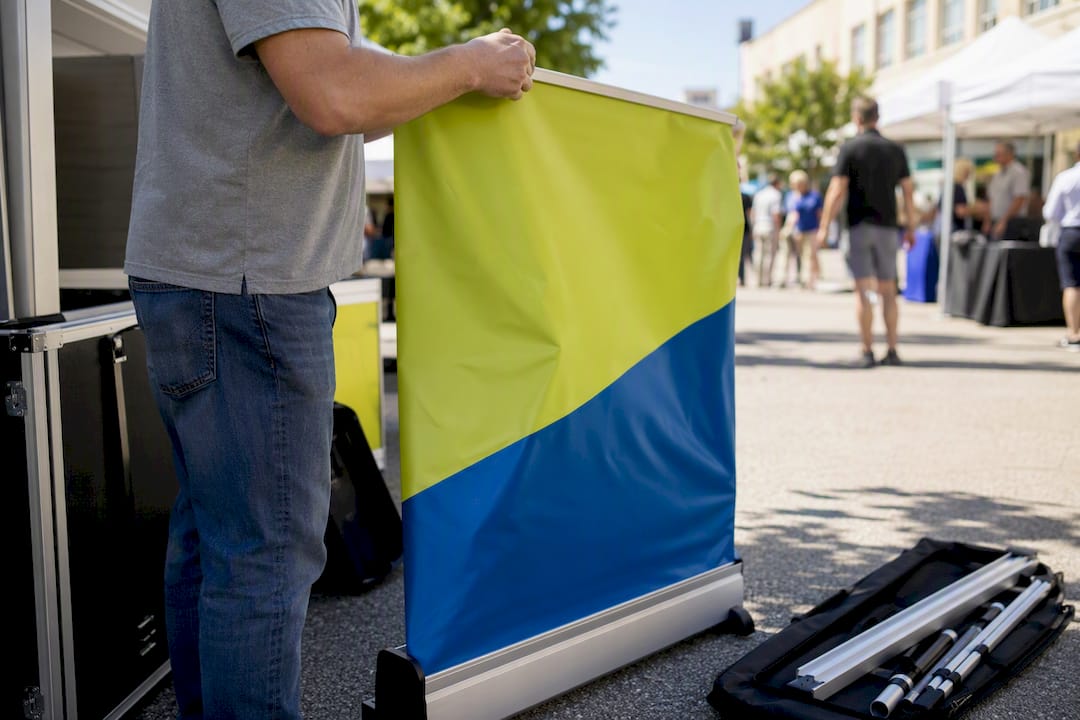
The most common retractable banner size is 33 x 79 inches (roughly 850 x 2000 mm), and it’s the right starting point for most trade shows, lobbies, and retail displays. If you’re not sure which size to order, this is it. Width is where the real decisions happen, and options typically run from compact to extra-wide widths, with height staying fairly consistent across the board.
Here’s the quick breakdown most exhibitors need:
- 24 inches wide — compact, good for tight corners or registration tables
- 31.5 to 33 inches wide — the standard retractable banner size for general trade show use
- 39 to 47 inches wide — wide to extra-wide, built for backdrops and high-traffic aisles
Quick take: go with 33x79 for general use, size up only when you need a bold visual statement or a backdrop, and size down when floor space is limited. Before you finalize artwork, always check your vendor’s visible graphic area against the printed panel dimensions. That gap catches more first-time buyers than any other spec on the sheet.
Key Takeaways
The 33x79 inch retractable banner remains the industry default because it balances visibility, portability, and cost better than any other single width.
| Point | Details |
|---|---|
| Default to standard width | Choose 33x79 in (850x2000 mm) unless your booth or budget calls for a different width. |
| Width drives the decision | Height stays near 79 inches across most models, so width is what actually changes performance. |
| Check visible vs printed area | Confirm the vendor’s visible graphic height, since several inches often feed into the cassette base. |
| Match size to viewing distance | Wider formats and larger type work better for booths viewed from across an aisle or hall. |
| Order from a fast-fulfillment printer | Arrowhead Sign Company ships most retractable banners and the Outdoor Banner Frame within two business days. |
Table of Contents
- Retractable Banner Dimensions: A Size Chart by Category
- How Do You Choose the Right Banner Size for Your Booth?
- Why Printed Panel Height Isn’t the Same as Visible Graphic Height
- Which Banner Size Works Best for Your Specific Event?
- Materials and Hardware: What Changes When You Size Up
- Where Arrowhead Sign Company Fits Into Your Sizing Decision
- What I’ve Learned About Balancing Impact and Portability
- Get Your Retractable Banner Sized, Printed, and Shipped Fast
- Templates and Additional Sizing Resources
- Sources
- FAQ
Retractable Banner Dimensions: A Size Chart by Category
Once you get past the standard 33x79 option, the rest of the retractable banner size chart falls into five practical categories. Height barely moves between them, typically close to 2000 mm, which means width is the variable that actually changes how a banner performs in a room.
A few things worth flagging as you compare rows:
- Height rarely changes between compact and extra-wide models, which is why width dominates the sizing conversation.
- Wider banners weigh more because the base cassette has to hold a longer roll of material, so factor that into shipping costs and how many people you’ll need to carry your gear.
- Tabletop units are the exception to the height rule entirely. They’re built for surfaces, not floors, so treat them as a separate category rather than a smaller version of a standing banner.
For exhibitions and larger conference floors, wider formats like 1000 x 2000 mm give you more visual reach across a crowded aisle, while 850 x 2000 mm remains the workhorse for receptions and most standard booths.
How Do You Choose the Right Banner Size for Your Booth?
Size decisions come down to three variables: your booth footprint, how far people stand when they read your banner, and what you’re trying to say. Get those three right and the size choice becomes obvious.
- Match width to booth footprint. A standard 10x10 booth pairs naturally with one 33-inch banner near the entrance. A 10x20 space or a full backdrop wall usually calls for 39 to 47-inch widths, or two to three linked 33-inch banners for flexibility.
- Account for viewing distance. The farther your audience stands, the bigger your type needs to be and the wider your graphic should read. A banner viewed from six feet away can carry more detail than one meant to catch attention from across a convention hall.
- Apply a text-size rule of thumb. Bigger type and fewer words consistently outperform dense copy on retractable banners, since most people process the message in under three seconds while walking past.
- Weigh portability against impact. Multiple standard-width banners are easier to pack, ship, and swap between events than one oversized stand, and they let you split messaging across two locations if needed.
Think about where the banner actually lives. A retail counter display rarely needs more than a 24-inch compact unit. A registration desk usually does fine with one 33-inch standard. But an 8-foot back wall at a regional trade show benefits from either a 47-inch extra-wide banner or a pair of 33-inch units set side by side, which also gives you a backup if one panel gets damaged in transit.
Pro Tip: If you exhibit at more than two or three shows a year, buy two standard 33x79 banners instead of one oversized display. You get more configuration flexibility, and if one gets scuffed in transit, you’re not stuck with a blank wall.
Why Printed Panel Height Isn’t the Same as Visible Graphic Height
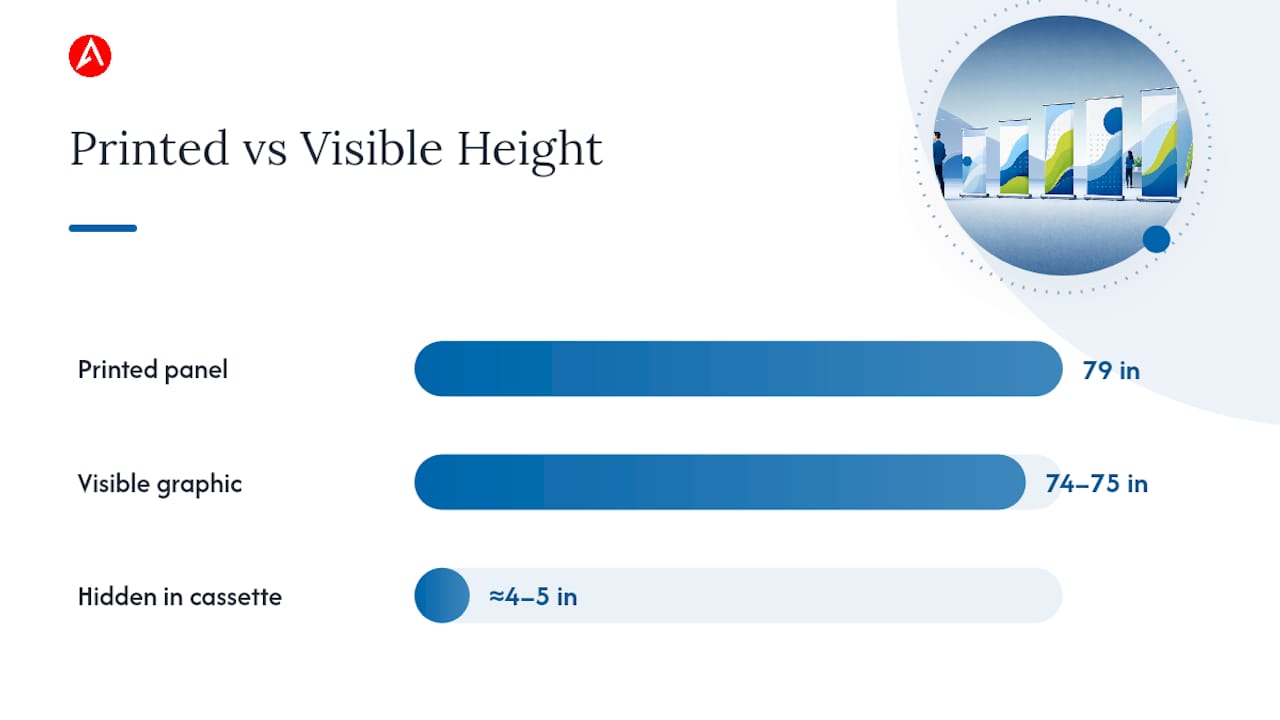
Here’s where a lot of first-time buyers get tripped up. The printed panel on a retractable banner is often taller than what people actually see once the stand is assembled. Several extra inches at the bottom feed directly into the cassette and never show above the base, so a banner listed at 79 inches printed might display closer to 74 or 75 inches of visible graphic.
Before sending final artwork to any vendor, confirm these specs on the template:
- Final file dimensions matching the actual printed panel, not just the “visible” number
- Safe zone margins that keep text and logos away from the edges
- Bleed of at least 0.25 inches on all sides
- Resolution between 150 and 300 DPI for sharp output at full size
- Color mode set to CMYK, not RGB, to avoid washed-out prints
- Vector logos and outlined fonts so nothing shifts or substitutes during output
Requesting a proof before your final order runs is the single easiest way to catch a visible-area mismatch before it becomes a $150 reprint.
Which Banner Size Works Best for Your Specific Event?
Matching size to scenario is faster than memorizing a spec sheet. Here’s how the categories map to common situations:
- Trade show single-rep demo: a 33x79 standard banner covers most booth needs without crowding the space around your table.
- Imagery-heavy or brand-forward booths: 39 to 47-inch widths, or two to three linked 33-inch banners, give logos and photography room to breathe.
- Retail counters and small footprints: a 24x63 compact or an 8 to 17-inch tabletop unit fits without overwhelming the display.
- Photo and video backgrounds: wider formats, or several standard banners set edge to edge, create a more seamless backdrop than one narrow panel stretched to fill a frame.
- Step-and-repeat walls and VIP lounges: these often call for custom, larger-format displays built specifically for continuous branding across a wide backdrop.
If your event calendar mixes small local pop-ups with larger regional shows, it’s worth owning both a compact and a standard size rather than trying to force one banner to do every job.
Materials and Hardware: What Changes When You Size Up
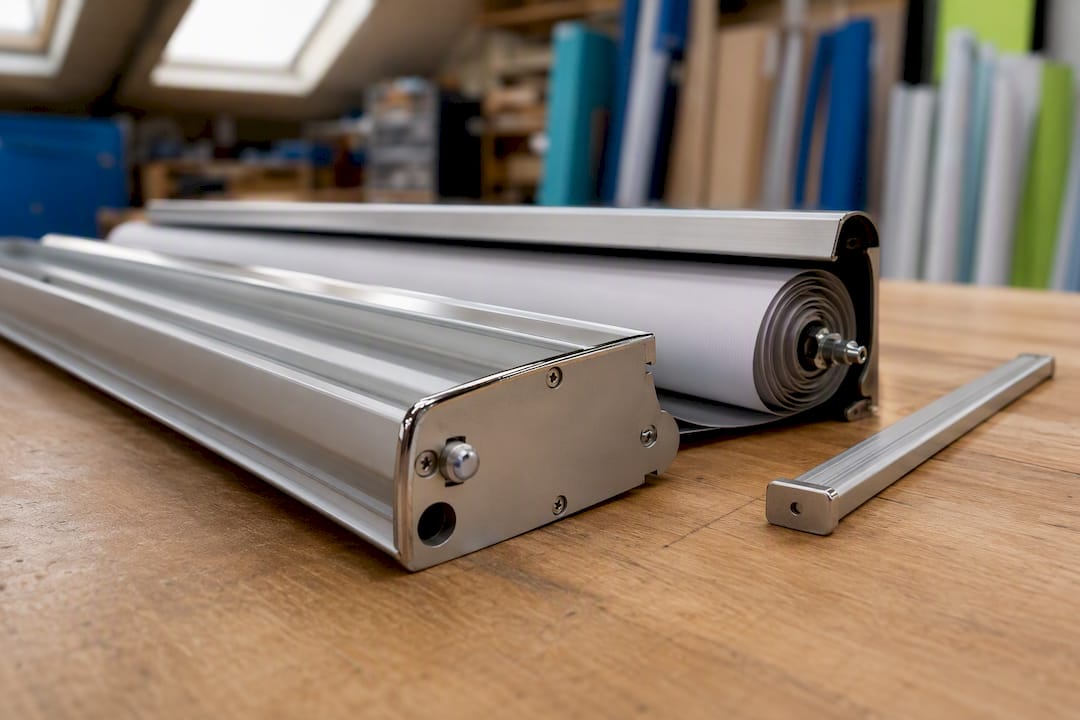
Width doesn’t just affect visibility. It changes what the banner is made of and how much the whole setup costs to build and ship.
Vinyl remains the most common substrate, and the weight you choose matters more as width increases:
- 13 oz vinyl is lighter, prints with a smooth matte finish, and travels well for frequent flyers hitting multiple shows a year.
- 18 oz vinyl is heavier and more durable, better suited to banners that stay mounted in one location for months.
- Fabric cuts weight further and rolls without wrinkling as easily, though it can affect color saturation and usually needs extra finishing to match vinyl’s punch.
Wider banners generally require heavier-duty cassettes to keep the roller mechanism stable, and that added hardware raises both material cost and shipping weight. If budget is tight, single-sided printing on 13 oz vinyl is the most cost-effective way to stay standard-sized without sacrificing print quality.
Where Arrowhead Sign Company Fits Into Your Sizing Decision
Arrowhead Sign Company - Signs, Banners and Trade Show Displays builds retractable banners across the full size range covered here, from compact 24-inch units to extra-wide 47-inch stands, with most orders shipped within two business days and direct delivery available for Arizona clients.
- Need a rigid, weatherproof option instead of a retractable stand? The Outdoor Banner Frame - The Banner Bar adjusts between 6 and 8 feet, making it a strong fit for outdoor booths, sidewalk sales, or venues where wind rules out a freestanding retractable unit.
- Dan, who covers banner sizing and display design for the Arrowhead Sign Company blog, draws on hands-on knowledge of what actually holds up at back-to-back events.
What I’ve Learned About Balancing Impact and Portability
Start with 33x79 unless you have a specific reason to go wider or smaller. That single rule covers most exhibitors better than any spec sheet, because it forces you to justify the exception rather than defaulting to “bigger is better.” In the field, two habits save more headaches than any size chart: pack your cassette base separately from the graphic to avoid scuffing, and always confirm your visible area with the vendor before the truck leaves the warehouse.
— Dan
Get Your Retractable Banner Sized, Printed, and Shipped Fast
You’ve got the sizes mapped out. The next step is turning that decision into a banner that actually ships in time for your event. Arrowhead Sign Company - Signs, Banners and Trade Show Displays is built for exhibitors who don’t have weeks to spare, with most orders leaving the shop within two business days and direct delivery available for Arizona-based clients who need a display dropped straight at the venue.
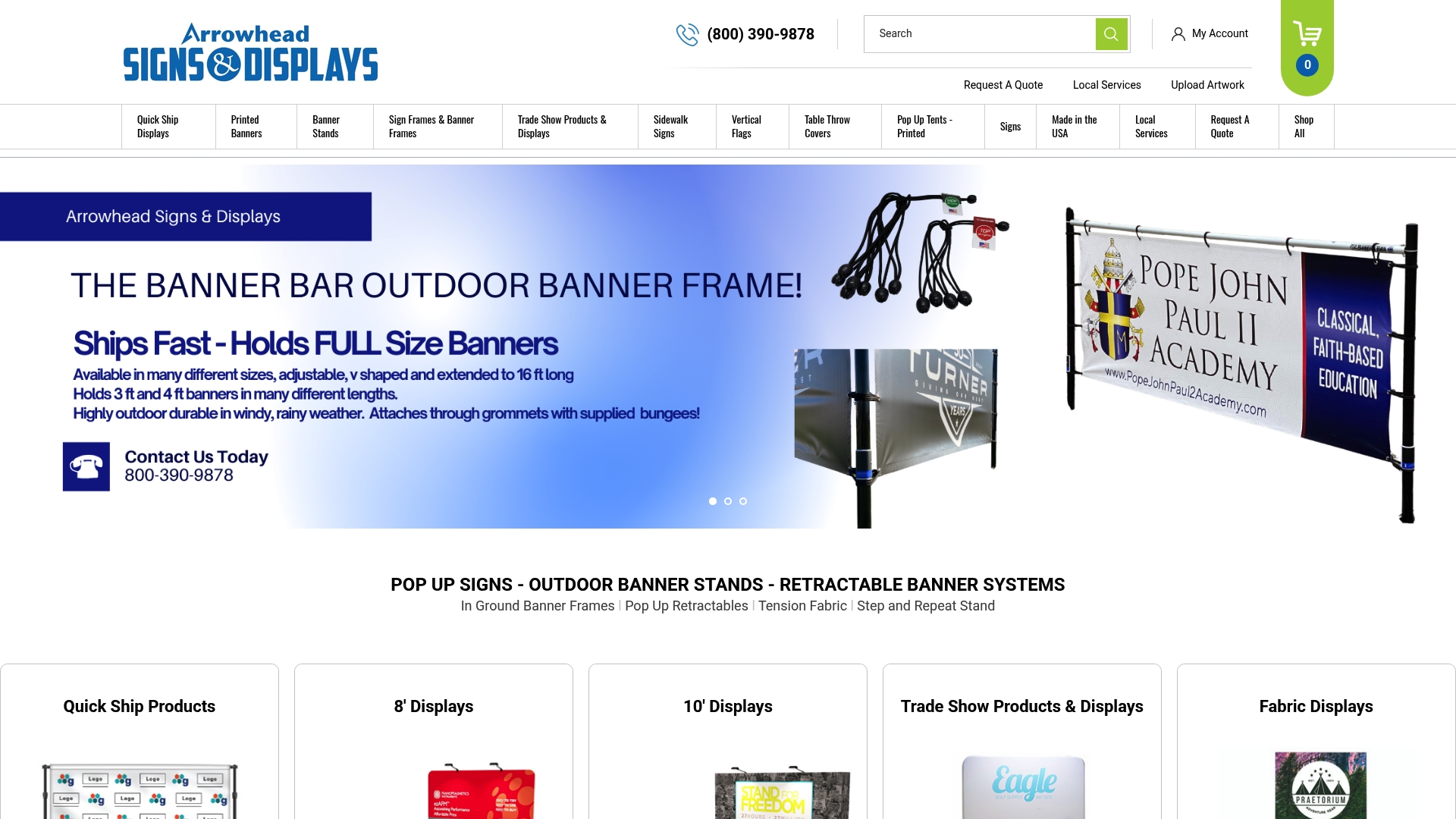
Whether you need a standard 33x79 for a single booth, a 47-inch extra-wide for a backdrop wall, or the outdoor banner frame for a sidewalk activation, the catalog covers every category in this guide. Browse the current lineup, upload your artwork against the visible-area specs you now know to check, and place your order with enough lead time to get a proof back before your event date.
Templates and Additional Sizing Resources
For deeper specs on printable versus visible dimensions, the Roll-Up Banner Sizes guide and VistaPrint’s design template hub both break down safe zones and bleed requirements in more detail. On the messaging side, short tagline ideas for booth signage pair well with the large-type approach standard banners require. For ordering guidance and design tips written for exhibitors, see Retractable Banner Design Best Practices and How Exhibitors Choose Banner Heights.
Sources
- Roll-Up Banner Sizes (2026): Standard Retractable Dimensions
- Roll Up Banner Sizes: Standard dimensions and how to choose the right format | Pixartprinting
FAQ
What Is the Standard Size for Retractable Banners?
The standard retractable banner size is 33 x 79 inches (about 850 x 2000 mm), which works for most trade show booths, lobbies, and retail displays.
What Is the Standard Size for Pull-Up Banners?
Pull-up banners follow the same sizing conventions as retractable banners, with 33x79 inches being the most common, and 24-inch compact or 39 to 47-inch wide options available for smaller or larger spaces.
What Are the Standard Sizes for Vinyl Banners in General?
Vinyl banner sizes vary far more than retractable stands since they’re often custom-cut, but common retractable widths range from 24 to 47 inches with height fixed near 79 inches, while flat vinyl banners can be ordered in nearly any dimension.
What Are the Different Types of Retractable Banners?
Retractable banners generally fall into compact, standard, wide, extra-wide, and tabletop categories, each distinguished mainly by width rather than height. Arrowhead Sign Company - Signs, Banners and Trade Show Displays stocks options across all five categories along with rigid alternatives like the Outdoor Banner Frame for outdoor and windy venues.
How Do I Know if I Need a Wider Banner Than Standard?
Choose a wider format, typically 39 to 47 inches, when you’re covering a backdrop wall, exhibiting in a high-traffic aisle, or need a display visible from a longer distance than a standard booth allows.
Recommended
- Retractable Banner Design Best Practices for Events - Arrowhead Sign Company
- What Is a Retractable Banner? Your Event Guide - Arrowhead Sign Company
- Standard Banner Sizes: A 2026 Guide for Marketers - Arrowhead Sign Company
- How Exhibitors Choose Banner Heights: Quick Sizing Guide - Arrowhead Sign Company