
Best Backlit Displays for Trade Shows: How to Choose
Posted by Deeder Dandenhorf on Nov 10th 2026
Best Backlit Displays for Trade Shows: How to Choose

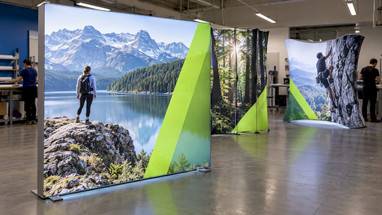
For most exhibitors, the best backlit display is a SEG (silicone edge graphic) fabric lightbox. It gives an even glow across the whole graphic, ships flat or compact, and goes up without tools. A backlit pop-up is the pick when setup speed and weight matter most. A tension fabric display with LED lighting suits a booth that needs a larger, sculpted look. Below, we compare each style by booth size, budget, setup and shipping, so you can match one to your next show.
TL;DR
- SEG fabric lightbox: the most popular choice for a seamless, evenly lit graphic and easy graphic swaps.
- Backlit pop-up (accordion style): the quickest to set up and usually the lightest to carry, a good fit for 8 ft and 10 ft inline booths.
- Tension fabric with LED: the right call for taller, curved or larger booth footprints.
- Budget beyond the display: shipping, drayage and show services add up, so plan the whole program, not just the booth.
- Short on time: we ship most products within two business days, and we deliver directly to venues in Arizona.
Table of Contents
- What a backlit display actually is
- Backlit display types compared
- SEG backlit fabric displays: the all-round pick
- Backlit pop-up displays: speed first
- Tension fabric with LED: the statement booth
- How to match a display to your booth and budget
- Graphics: what makes a backlit display work
- Setup and show-day checklist
- Our perspective
- Order a backlit display that ships fast
- FAQ
- Sources
What a backlit display actually is
A backlit display places LED lighting behind or around a translucent fabric graphic, so the artwork glows instead of simply reflecting the hall lights. Trade show floors are bright, crowded and visually noisy. A graphic that lights itself stands out from a distance, which is why backlit displays are a staple for exhibitors who want to be seen from the aisle.
In practice you will see three main constructions:
- SEG lightboxes. A slim aluminum frame holds a fabric graphic with a silicone bead sewn into its edge. The bead presses into a channel in the frame, which gives a clean, wrinkle-free face. LEDs sit inside the frame and light the fabric from behind.
- Backlit pop-up displays. A collapsible, accordion-style frame expands into a wall, with a lit fabric or panel graphic attached. Setup takes minutes.
- Tension fabric displays with lighting. A fabric sleeve or stretched graphic is pulled over a tube frame, and LED fixtures illuminate it. These designs make arches, towers and curved walls possible.
One research summary on lightbox frames notes that high-efficiency LEDs in lightbox displays can produce over 3,000 lumens per square meter and reduce power usage by 30 to 50 percent compared with conventional illuminated signs. That matters in practice: a display that draws little power is easier to plug into a standard booth outlet and cheaper to run across a multi-day show.
Backlit display types compared
Here is how the three styles line up on the points exhibitors ask about most.
| Feature | SEG fabric lightbox | Backlit pop-up | Tension fabric with LED |
|---|---|---|---|
| Look | Flat, seamless, even glow | Slightly curved or flat wall, bright | Sculpted, curved or tall shapes |
| Best booth size | 10x10 and up, often in multiples | 8 ft and 10 ft inline | 10x10 to 20x20 and beyond |
| Setup | Frame assembly, then fabric tucks in | Fastest: expand, attach, plug in | Frame plus fabric, a little more work |
| Portability | Compact when the frame is broken down | Lightest and easiest to carry | Compact fabric, longer frame pieces |
| Graphic changes | Easy, swap the fabric | Depends on panel type | Swap the fabric cover |
| Best for | Brand-forward booths, repeat shows | First-time or frequent travelers | Hero booths and larger footprints |
Use the table as a first filter. Once you know which category fits, the details of frame depth, graphic size and lighting layout decide the final model.
SEG backlit fabric displays: the all-round pick
If you want one answer, this is it. The silicone edge holds fabric taut, so the graphic looks printed on glass rather than hung on a frame. Light spreads evenly behind it. Your logo, product photography and fine text all stay crisp.
The case for SEG goes beyond looks. A trade publication summary of SEG frame selection reports that 80 percent or more of exhibitors prefer fabric systems, and 70 percent report shipping savings with SEG versus rigid panels. Fabric folds into a small bag, and that is where the savings come from.
We build SEG backlit displays in several formats, so you can start at the size that matches your booth:
- The 10ft SEG backlit fabric display with a slim frame is built for a standard 10x10 inline booth.
- The 8ft SEG backlit popup display suits smaller spaces and tabletop-adjacent setups where you want a lit backdrop without a big footprint.
- Our SEG backlit fabric stands are part of our quick ship range, designed to move from order to your booth fast.
- For a full look at the range, see our backlit SEG trade show displays page.
When SEG is the right choice
Choose a SEG lightbox when your brand imagery is the star. Photography-led graphics, gradients and logos with fine detail all benefit from the even glow. It also works well if you exhibit several times a year and want to change graphics between shows without buying a new frame. A new fabric print fits the same frame.
Backlit pop-up displays: speed first
An accordion-style pop-up unfolds in minutes, often with one person and no tools. That makes it a strong match for small teams, first-time exhibitors and anyone who is setting up alone before doors open. Pop-ups are typically the lightest of the three styles, which helps when you are flying with the display or carrying it through a long convention center.

The trade-off to plan around is graphic flexibility: many pop-ups use a fixed set of panels, so decide your messaging with the show calendar in mind. If your pitch changes often, a SEG frame with swappable fabric gives you more room. If the message stays steady, a pop-up is hard to beat for speed.
Our 8 ft SEG backlit popup combines both ideas: a pop-up frame with a fabric graphic and built-in lighting.
Tension fabric with LED: the statement booth
Tension fabric displays use a tube frame and a stretch fabric cover. With the right lighting fixtures, they glow like a lantern. They can reach heights and shapes that flat lightboxes cannot, such as arches, towers and curved walls. If you have a 10x20 or a larger island and want a hero element above eye level, tension fabric is the style to look at first.
We offer EZ Tube tension fabric displays for exhibitors who want the sculpted look with fabric that packs down small. If you want a simple, straight fabric wall, our 10 ft stretch fabric display is another option to consider.

How to match a display to your booth and budget
Start with three questions: how big is your space, how often do you exhibit, and who is setting up?
By booth size
- Table-top or 8 ft space: an 8 ft backlit pop-up or a compact SEG stand.
- 10x10 inline: a 10 ft SEG lightbox is the standard answer. A 10 ft backlit pop-up is the speed-first alternative.
- 10x20 or island: combine two SEG walls, or add a tension fabric tower to draw eyes from the aisle.
By budget
Do not judge the display price alone. A benchmark from a trade show planning guide shows that the most common budget mistake is modeling only the booth cost, which is 25 to 40 percent of the total. The same source places all-in program costs for modular backlit exhibits at major shows in the range of $4,000 to $12,000. Your own number will depend on the show, the city and your travel.
A display that ships compactly and sets up without a crew reduces the line items that surprise people later. That is a strong argument for fabric systems: lighter freight, fewer labor hours and simple graphic updates.
Shipping and drayage
Drayage, the cost of moving your freight from the dock to your booth, is billed by weight. The same guide reports that drayage runs about $100 to $180 per hundredweight at major union-city shows, and that a 20x20 architectural booth can generate $800 to $2,500 in drayage at a major Las Vegas or Chicago show. Lighter hardware means fewer hundredweight on your invoice. Always read the exhibitor manual for the show you are attending, since each venue sets its own rules and rates.
Graphics: what makes a backlit display work
The frame gets you on the floor. The graphic wins the conversation. A few habits help lit fabric perform:
- Keep one message. A single headline and a clear visual beat a crowded collage. Backlit graphics read from further away, so give them room.
- Design for light coming through. Rich, saturated colors and strong contrast hold up well. Very pale text on a light background can wash out, so test your layout on screen at full size before you print.
- Use high-resolution files. Large-format fabric shows soft images quickly. Supply artwork at the right size and resolution for your display.
- Think like a storyteller. A lit graphic should lead the eye from brand to benefit to next step. These visual storytelling tips apply directly to how you structure a booth wall.
For more on layout, our guide to designing eye-catching booth signage walks through headline, imagery and calls to action. Before you leave for the show, run through our trade show brand visibility checklist.
Setup and show-day checklist
No matter which style you pick, a short routine saves stress.
- Confirm your outlet. Backlit displays need power. Order electrical service through the show if your booth does not include it, and bring an extension cord and a power strip.
- Unpack and test at the office. Assemble the display once before you travel, so you know the order of parts and can see the lighting work.
- Pack the fabric last, and keep it clean. Fabric prints are easy to carry, but they are best kept in their bag away from sharp edges until the frame is ready.
- Label cases. Mark the display, the graphic and the lights, so booth labor or your own team can find them quickly.
- Plan your lighting angles. Position the display where overhead hall lights will not compete with the glow, such as at the back wall of the booth.
Timing your order
The biggest scheduling risk is waiting too long. Production, shipping and show deadlines all stack up. We ship most products within two business days, and our fabric lightbox displays carry 2 day fulfillment, which helps when your show is closer than you would like. If you are in Arizona, we can deliver straight to your venue.
Our perspective
We build trade show displays for small businesses, and the same story repeats: the show is on the calendar, the graphics are late, and the booth needs to look like a much bigger company.
That is why we lean on SEG backlit fabric. The glow draws people over, the fabric packs small, and the graphic can be refreshed for the next show without replacing the frame. For many of our customers, that mix of impact and simplicity is the whole point.
Our approach is to keep the process fast. Most products ship within two business days, and in Arizona we can bring the display to your venue. If you are choosing between styles, start with your booth size and your setup crew, then pick the lit display that makes those two things easy.
Dan
Order a backlit display that ships fast
If you already know your booth size, you can go straight to our range. We make customizable trade show displays and signage for small businesses, exhibitors and event planners, with fast fulfillment and nationwide shipping.
Browse our Quick Ship displays for options that move quickly, or see the full trade show products and displays collection. Need matching pieces for your booth? Our banner stands and printed table covers round out the setup. After the show, the right signage can also help you follow up with leads.
FAQ
What is the best backlit display for a 10x10 booth?
A 10 ft SEG backlit fabric display is the most common answer. It gives a seamless, evenly lit graphic across the full back wall, and the fabric can be replaced when your message changes. If setup speed is your top concern, a backlit pop-up is the alternative.
Are backlit displays expensive to run?
Not usually. LED lighting is efficient: research on lightbox displays reports power use 30 to 50 percent lower than conventional illuminated signs. You will still need an outlet in your booth, so check your show’s electrical ordering process.
Can I change the graphic on a SEG lightbox?
Yes. The graphic is a fabric with a silicone edge that presses into the frame channel, so you can swap in a new print without replacing the frame. That makes SEG a good fit if you attend several shows a year with different themes.
How fast can I get a backlit display?
We ship most products within two business days, and Arizona customers can have a display delivered directly to their venue. Check the product page for the display you want, and confirm your show’s move-in dates before you order.
Sources
- How to Choose the Right SEG Frame for a Modular Lightbox Display
- Trade Show Booth Budget Benchmarks: What Every Size and Stage Should Plan For