
Show LED Lights for Trade Show Booths: Best Options
Posted by Deeder Dandenhorf on Aug 14th 2026
Show LED Lights for Trade Show Booths: Best Options
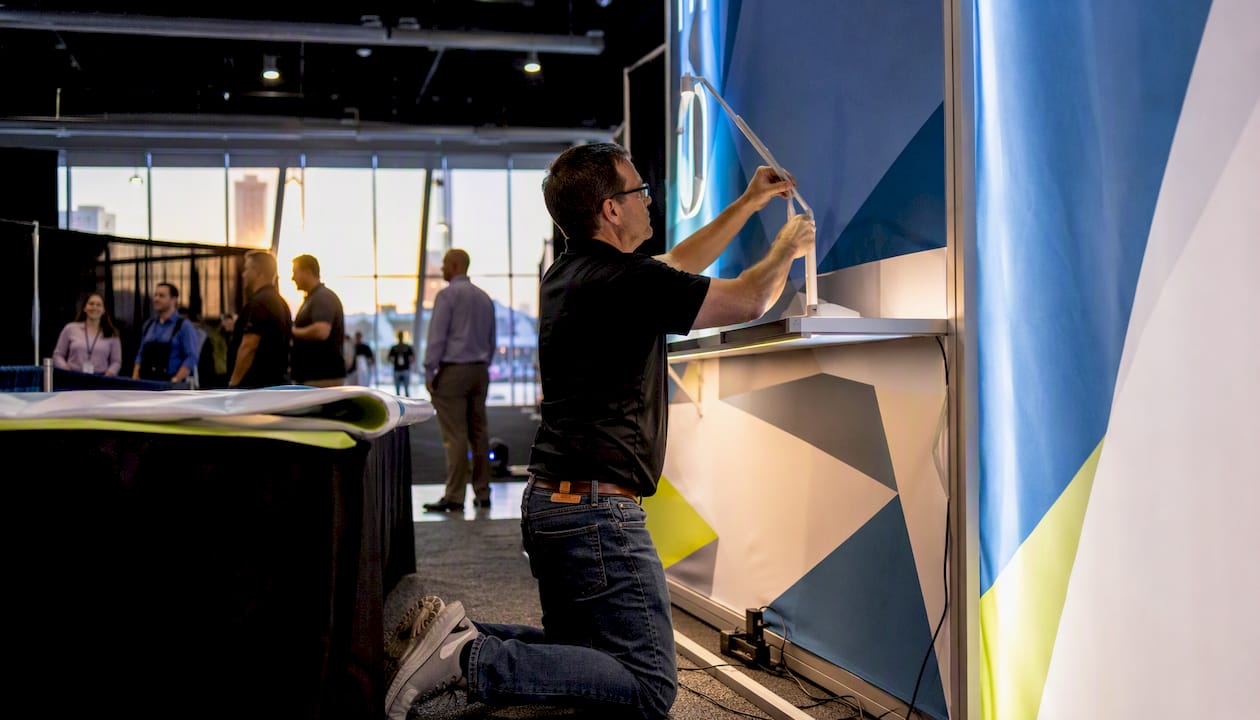
For most exhibitors, the right choice is an integrated backlit SEG or fabric lightbox display for your main brand graphic, supplemented by clip or arm lights over product zones. This combination delivers the highest visual impact per watt, the cleanest setup, and the lowest risk of venue compliance issues.
Quick trade-offs at a glance:
- Integrated backlit SEG/fabric panels: Higher upfront cost, single power connection, dramatically lower operating wattage (https://displayfactorywholesale.com/blogs/displayfactorywholesale-blogs/the-complete-guide-to-integrated-trade-show-lighting-benefits-drawbacks-decision-framework) than halogen, minimal onsite labor
- Arm/clip lights: Lower purchase cost, flexible aiming, require electrical safety certification (https://boothlights.com/pages/trade-show-lighting-guide) at most major U.S. venues, count toward your self-hang limit
- CRI 90+: The industry standard for accurate color rendering at shows; below this, product colors and brand graphics look flat under exhibit hall lighting
- Arrowhead Sign Company - Signs, Banners and Trade Show Displays: Supplies backlit fabric and SEG display options with fast fulfillment and local delivery in Arizona
Key Takeaways
Integrated backlit SEG and fabric displays are the most efficient and compliant LED lighting solution for most North American trade show booths, running on 100–150 watts for a 10×10 space.
| Point | Details |
|---|---|
| Prioritize integrated backlit panels | SEG and fabric lightboxes deliver brand visibility on 100–150W for a 10×10 booth. |
| Use arm lights for product zones | Two to three 25W–35W fixtures cover a 10×10; four to six 25W–35W fixtures cover a 10×20. |
| Always verify ETL or UL certification | Non-certified fixtures can be removed by venue electricians before the show opens. |
| Order 24-hour power proactively | Default venue power cuts off 30 minutes after show close; 24-hour power covers setup and teardown. |
| Arrowhead Sign Company for fast fulfillment | Ships most displays within two business days, with direct venue delivery available in Arizona. |
Table of Contents
- What types of show LED lights work best for exhibitors?
- How do you choose the right LED lights for your booth?
- What are the power and rigging rules at North American exhibit halls?
- Safety regulations and compliance for LED lighting at shows
- How heat output and ventilation affect your booth
- Integrating LED lights with AV systems and interactive displays
- Where to source LED lights and displays in North America
- What does a realistic ordering and setup timeline look like?
- What most exhibitors get wrong about show lighting
- Arrowhead Sign Company has the displays and speed you need
- Sources
- FAQ
What types of show LED lights work best for exhibitors?
Show LED lights fall into five practical categories. Each serves a different booth goal, and mixing two or three types is common for larger spaces.
SEG backlit frames and fabric lightboxes
Silicone Edge Graphic (SEG) frames hold a printed fabric graphic that is backlit by an internal LED array. The entire panel glows evenly, making your brand graphic visible from across the hall. A typical 10×10 backlit booth runs on roughly 100–150 watts total, and the frame often assembles in 10–15 minutes with a single power connection. This is the strongest choice for brand backdrops and island booth visibility.
LED arm and clip lights
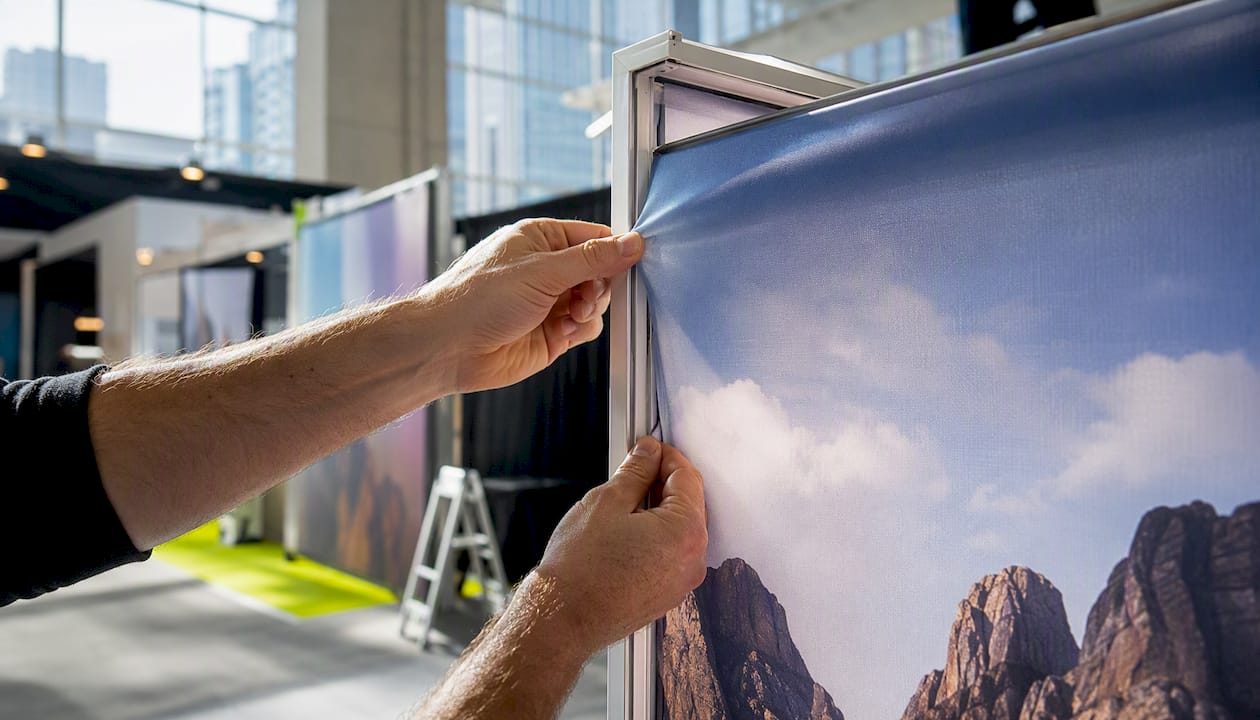
Arm lights clamp to shelving, counters, or display frames and aim a focused beam at a specific product or graphic panel. For a 10×10 booth, a few fixtures in the range common for their size are typically enough. For a 10×20, plan for four to six lights at 25W–35W each. These are the go-to option for product detail and shelving highlights.
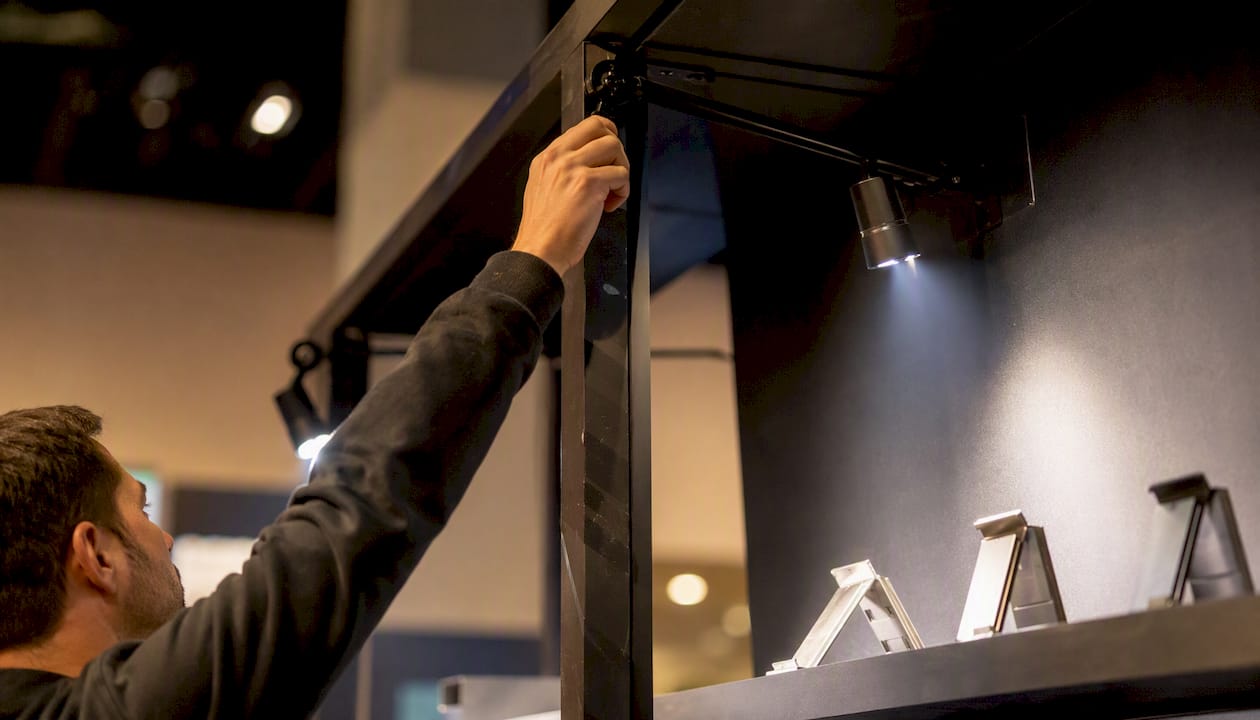
Linkable daisy-chain spotlights
Linkable fixtures connect in a chain from a single outlet, which is practical when floor power drops are limited. Some 21W linkable models support up to 10 lights per chain; 50W models chain fewer due to higher current draw. Always confirm the manufacturer’s maximum chain length before ordering power.
Linear and strip lights
LED strip lighting works well for counter edges, display case interiors, and under-shelf accents. Strips add ambient depth without consuming significant wattage, and they are easy to pack in a carry-on case.
LED mesh and curtain systems
LED mesh panels and curtain arrays create motion and ambient effects, most commonly used in large island booths or experiential activations. They require more planning for power and rigging but deliver a dramatic visual payoff for product launches or high-traffic shows.
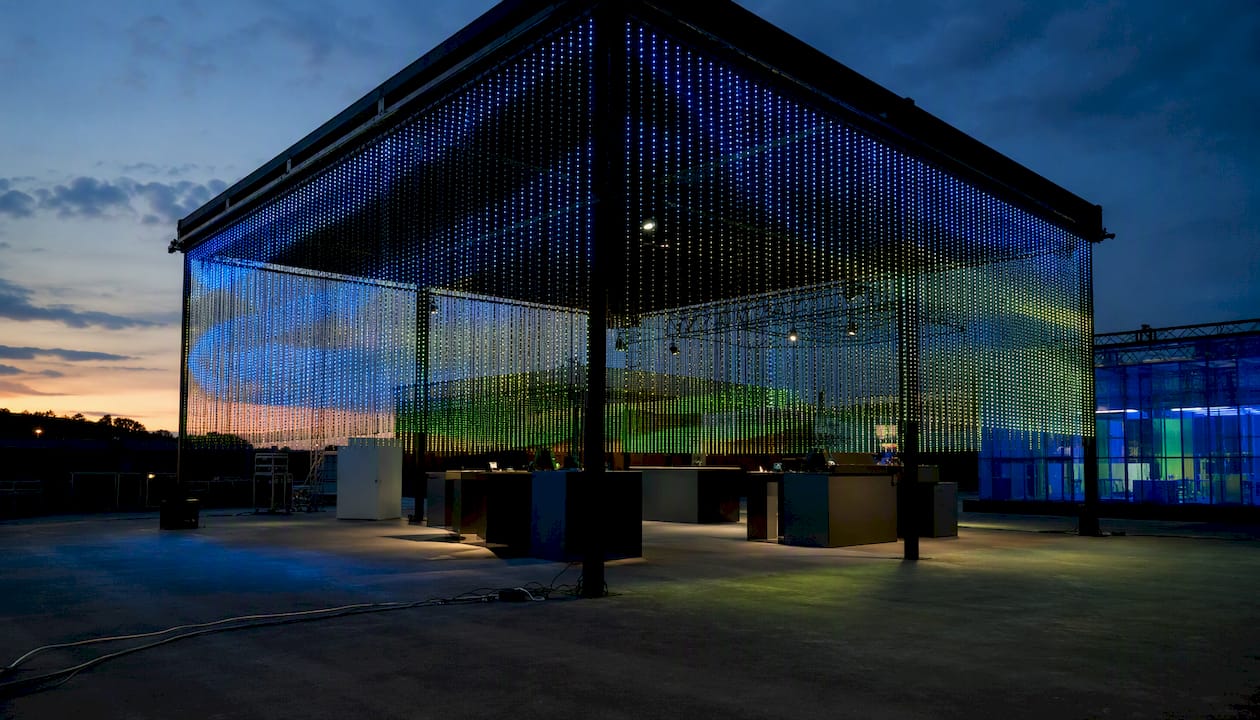
Pro Tip: When you need a polished booth fast with minimal onsite labor, prioritize an integrated backlit SEG or fabric lightbox. The single-connection setup reduces the chance of wiring errors and cuts the time your booth electrician spends on your space.
How do you choose the right LED lights for your booth?
Work through this checklist before placing any order.
- Define your booth size and goal. A 10×10 brand-backdrop booth needs different fixtures than a 20×20 island with product demo zones. Write down both dimensions and your primary visual goal (brand awareness, product highlight, or ambient effect).
- Select fixture types by goal. Brand backdrop: integrated backlit panel. Product zones: arm or clip lights. Ambient fill: strip or mesh. Motion effect: LED curtain.
- Estimate total wattage. Add up fixture wattages, then add 20% for line loss. A 10×10 backlit booth at 100–150W plus two 25W arm lights lands well under a standard 20-amp circuit.
- Check CRI and color temperature. Target CRI 90+ for accurate product color. Choose 3000K–3500K (warm white) for lifestyle and food products, 4000K–5000K (cool white) for technology and industrial goods.
- Confirm ETL or UL certification. Most major U.S. venues require it. Non-certified fixtures risk removal by the venue electrician on move-in day.
- Plan your daisy-chain layout. Map outlet locations from your power order and confirm chain limits with the manufacturer before finalizing fixture counts.
- Check your show manual for hanging limits. Self-hang rules vary by show contractor. Exceeding limits triggers paid booth work labor.
- Confirm lead time and shipping. Order at least two to three weeks before move-in. If you are shipping direct to the advance warehouse, confirm the freight deadline in your show manual.
Buy vs. rent guidance:
- Buy when you exhibit four or more times per year, need consistent branding, or use integrated backlit systems that are purpose-built for your display.
- Rent for one-off shows, rapid design changes between events, or when capital cost is a constraint.
Red flags to watch for:
- Fixtures with no ETL or UL listing
- Suppliers who cannot provide a spec sheet or warranty documentation
- Vague lead times with no confirmed ship date
- No local delivery option when you are exhibiting in a city with tight advance warehouse deadlines
Pairing your lighting plan with a solid booth signage strategy ensures your visuals work together rather than competing for attention.
What are the power and rigging rules at North American exhibit halls?
Venue electrical rules catch more exhibitors off guard than almost any other show-day issue. Here is what to expect.
- Standard outlet: Most exhibit halls provide 120V duplex outlets with a drop cord (TriPlex). This is your baseline power source for standard booth lighting.
- Default power schedule: Venue power is typically active 30 minutes before show hours and cut 30 minutes after closing. Order 24-hour power if you need lighting during setup, teardown, or for continuous demo equipment.
- Self-hang limits: Exhibitors may typically hang up to four arm lights and must stay under approximately 2,000 watts/20 amps for exhibitor-installed fixtures. Exceeding either limit requires paid booth work labor ordered through the show contractor.
- Island and peninsula booths: Rigging from overhead structures almost always requires the show contractor’s labor team. Budget for this in advance.
- Overestimate wattage: Always add a buffer when ordering power. Line loss and multiple fixtures running simultaneously can push actual draw above the nameplate total.
Show manuals document facility behaviors including HVAC levels during move-in and move-out (often reduced around half) and specify the in-house AV or production contractor for larger fixture rentals.
Pro Tip: Pack one small battery-powered spotlight or a compact UPS for sensitive demo equipment. Venue power fluctuations during peak move-in periods are common, and a brief outage during a live product demo is a costly surprise.
Safety regulations and compliance for LED lighting at shows
Every major North American exhibit hall enforces electrical safety standards, and LED fixtures are not exempt. The two certifications that matter most are ETL (Intertek) and UL (Underwriters Laboratories). Both confirm that a fixture has been independently tested to North American electrical safety standards. A CE mark alone, common on imported fixtures, does not satisfy most U.S. venue requirements.
Venue electricians have the authority to remove non-compliant fixtures from your booth before the show opens. Beyond certification, check that your power strips and extension cords are also rated for the load you are running. Daisy-chaining beyond a manufacturer’s specified limit is a fire risk and a code violation in most jurisdictions.
How heat output and ventilation affect your booth
LED fixtures run significantly cooler than halogen or incandescent alternatives, but heat management still matters in a tight booth space. Integrated backlit panels distribute heat across a large surface area, so they rarely create a hotspot. Arm lights and spotlights concentrate heat at the fixture head; position them so they are not aimed directly at heat-sensitive products, printed fabrics, or foam displays for extended periods.
Exhibit halls reduce HVAC during move-in and move-out, which means your booth can get warm during setup. If you are running multiple fixtures during a long move-in window, allow for airflow around enclosed display cases and monitor any equipment that has its own thermal limits.
Integrating LED lights with AV systems and interactive displays
LED lighting and AV technology share the same power budget, so plan them together. A 10×10 booth running a monitor, a tablet kiosk, and two arm lights can easily approach a 15-amp circuit. Map every powered device before you submit your electrical order.
For DMX-controlled LED fixtures, confirm that your AV contractor or lighting operator has the correct controller and that the show manual permits DMX use in your booth category. Some venues restrict wireless DMX frequencies in halls with dense wireless AV traffic. Linkable fixtures with 0–10V dimming are a simpler alternative that does not require a separate controller and integrates cleanly with most AV setups.
Check the trade show display trend ideas that pair motion graphics on monitors with static backlit panels for a layered visual effect without complex rigging.
Where to source LED lights and displays in North America
For integrated backlit SEG and fabric display systems, look for suppliers who provide spec sheets, ETL or UL documentation, and confirmed lead times. Arrowhead Sign Company - Signs, Banners and Trade Show Displays ships most products within two business days and offers local delivery to Arizona venues, which is a meaningful advantage when advance warehouse deadlines are tight.
For arm and clip lights, specialty trade-show lighting suppliers carry ETL-listed fixture lines with published wattage, CRI, and daisy-chain specs. Rental options are available through most general service contractors (GSCs) at major shows, including GES and Freeman, who also handle booth work labor and rigging.
What does a realistic ordering and setup timeline look like?
- 6–8 weeks out: Confirm booth size, finalize display and lighting plan, submit electrical order to show contractor.
- 3–4 weeks out: Order fixtures and displays. For custom backlit graphics, allow extra time for print production.
- 1–2 weeks out: Confirm advance warehouse address and freight deadline. Ship displays and fixtures to arrive before the cutoff.
- Move-in day: Set up integrated backlit panels first (they establish your booth footprint), then position arm lights and strip accents. Test all circuits before show hours.
- Teardown: Power down all fixtures before disassembling. Pack arm lights in padded cases to protect heads and clamps.
What most exhibitors get wrong about show lighting
The biggest mistake is treating lighting as an afterthought. Exhibitors who order power and fixtures in the final week before a show routinely face two problems: rush freight costs and non-certified fixtures that get pulled by the venue electrician.
The second mistake is choosing the brightest fixture rather than the most accurate one. A high-lumen spotlight with a CRI of 70 will make your product look washed out under exhibit hall ambient light. A 25W fixture with CRI 90+ will show your product’s actual color, which is what drives buyer confidence.
Integrated backlit systems solve both problems neatly. They ship as a complete kit, assemble quickly, and their power draw is predictable. For exhibitors running three or more shows per year, the consistency alone justifies the investment over renting arm lights at each event.
Arrowhead Sign Company has the displays and speed you need
When your show is two weeks away and you need a backlit display that arrives on time, Arrowhead Sign Company - Signs, Banners and Trade Show Displays ships most products within two business days, with local delivery available directly to Arizona venues. That speed changes the math on last-minute exhibit planning.
The 10 ft stretch fabric display (Shasta) is a strong starting point for exhibitors who want a clean, illuminated brand backdrop without complex rigging. For outdoor or entrance-point visibility, the Outdoor Banner Frame (The Banner Bar) and the Signicade Deluxe A-Frame pair well with LED uplighting to draw foot traffic before attendees reach your booth. Every product comes with spec documentation and warranty coverage. Request a quote or order directly at Arrowheadsigncompany.
Sources
- Electrical Services Frequently Asked Questions
- The Complete Guide to Integrated Trade Show Lighting: Benefits, Drawbacks & Decision Framework – Displayfactory
- How to Choose Trade Show Lighting: CRI, Wattage & Color Temperature Explained – BOOTH LIGHTS
FAQ
What do show LED lights look like in a trade show booth?
Show LED lights range from slim backlit fabric panels that glow evenly behind a printed graphic to small arm-mounted spotlights that clip onto shelving or display frames. The most common booth setup combines a backlit SEG backdrop with one or two focused arm lights over a product display.
What are the three main types of LED lights used at trade shows?
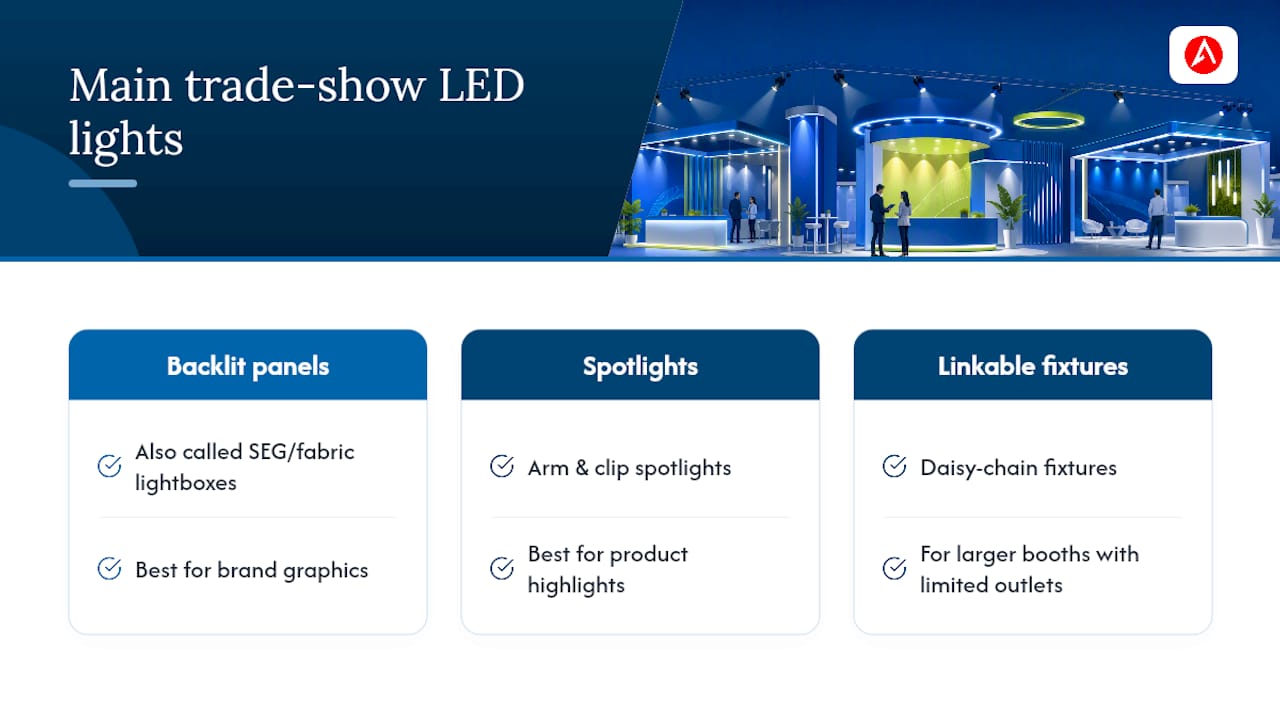
The three primary types are integrated backlit panels (SEG/fabric lightboxes), arm and clip spotlights, and linkable daisy-chain fixtures. Each serves a different purpose: backlit panels for brand graphics, spotlights for product highlights, and linkable fixtures for larger booths with limited outlet access.
What LED light colors work best for exhibit booths?
Warm white (3000K–3500K) suits lifestyle, food, and apparel products; cool white (4000K–5000K) works better for technology and industrial goods. Color temperature matters less than CRI: target CRI 90+ so product colors render accurately under exhibit hall ambient lighting.
Do I need UL or ETL certification for my booth lights?
Yes, at most major U.S. venues. ETL (Intertek) and UL (Underwriters Laboratories) listings confirm that a fixture meets North American electrical safety standards. Venue electricians can remove non-certified fixtures before the show opens, leaving your booth dark on day one.
How many LED lights do I need for a 10×10 booth?
For a 10×10 booth using arm lights, a few fixtures in the range common for their size is the standard recommendation. If you use an integrated backlit panel as your main backdrop, that panel typically handles the primary illumination on its own, and one or two arm lights cover any product zones.
Recommended
- Trade Show Booth Setup Fast: Your 2026 Buyer’s Guide - Arrowhead Sign Company
- Trade Show Display Types Explained for Marketers - Arrowhead Sign Company
- 2026 Trade Show Trend Display Ideas That Win Attention - Arrowhead Sign Company
- Signs Every Small Business Needs for Trade Shows - Arrowhead Sign Company