

Event Marketers: Fabric Lightbox Displays With 2 Day Fulfillment
Posted by Deeder Dandenhorf on Sep 18th 2026
Event Marketers: Fabric Lightbox Displays With 2 Day Fulfillment
A backlit SEG fabric lightbox is the right call whenever your booth needs to win a sightline battle on a crowded show floor. It delivers even, glowing illumination that a printed banner simply can’t match. If your team travels light or works solo booth setups, a tension fabric display without backlighting still earns its place. Either way, Many trade show display providers ship most trade show displays within two business days, so timeline pressure doesn’t have to force the decision.
TL;DR:
- Fabric lightboxes are best suited for shows where visual impact and color consistency from across the hall are critical, especially in large booth setups.
- Choosing the right display depends on booth size, travel frequency, LED density, and whether portability or permanence is more important for your team.
- Backlit fabric graphics require specific file preparations and mockups to ensure accurate color reproduction once illuminated.
- Setup typically takes under an hour for a 10x10 backwall, with larger configurations requiring more time and careful cable routing.
- They are more sustainable long-term, as the reusable frame and replaceable graphics reduce waste and shipping impact compared to rigid signage.
Table of Contents
- What Is a Fabric Lightbox Display, and How Does It Work?
- Why Event Marketers Choose Backlit Fabric Lightboxes
- How to Choose the Right Fabric Lightbox for Your Booth
- Common Sizes and Configurations for Trade Show Booths
- Getting Your Artwork Print-Ready for Backlit Graphics
- What to Expect During Setup, Transport, and Install
- Backlit SEG Lightboxes vs. Tension Fabric: Which Wins?
- How Arrowhead Sign Company Supports Fast-Moving Event Teams
- What Warranty and Service Support Should You Expect?
- Are Fabric Lightbox Displays a Sustainable Choice?
- The Real Question Isn’t SEG vs. Fabric. It’s How Often You Show Up.
- Ready to Spec Out Your Booth Display?
- Sources
- FAQ
What Is a Fabric Lightbox Display, and How Does It Work?
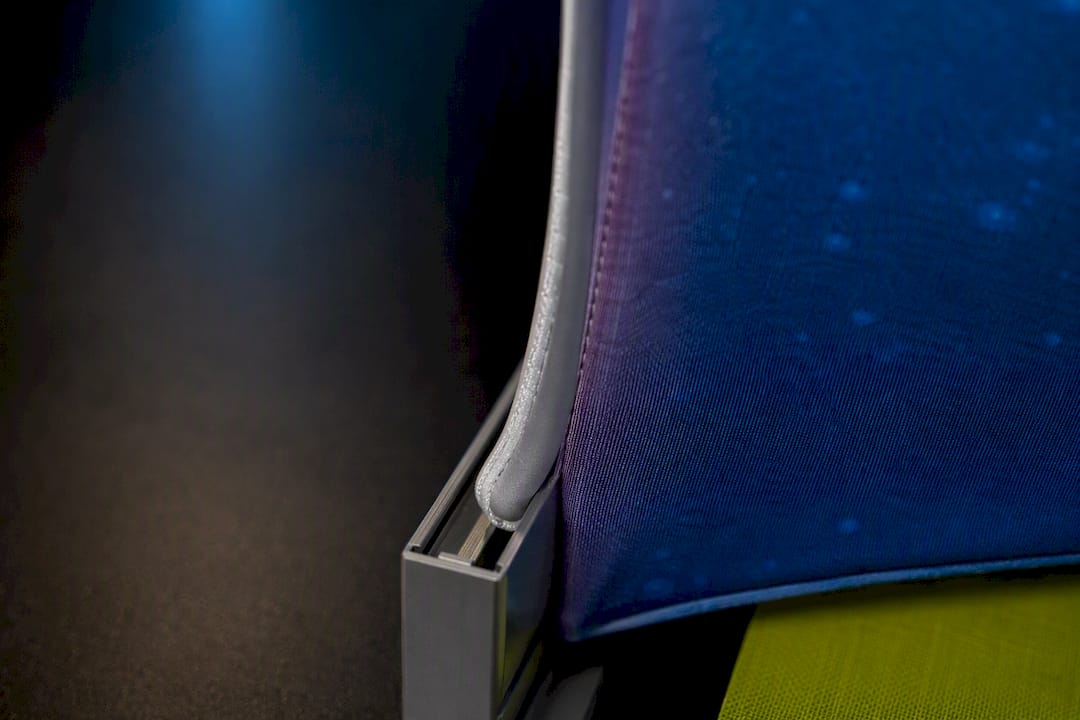
A fabric lightbox display relies on a construction method called silicone edge graphics, or SEG. A printed fabric panel has a silicone bead sewn directly into its edge, and that bead slips into a groove running along an aluminum extrusion frame. The result is a drum-tight, frameless graphic face with no visible border, sitting flush against the frame like a giant illuminated photograph. That mechanical detail is why SEG replaced clunky push-pin fabric panels in retail environments before it ever reached trade show floors, according to C17media’s breakdown of SEG systems.
Behind that fabric sits an array of LED strips that create the “backlit” part of the equation. The graphic itself is usually dye-sublimated polyester, a printing process that bonds ink into the fiber rather than sitting on top of it, which lets light pass through evenly rather than pooling in hot spots.
A few build details change how the finished display looks and performs:
- Frame depth: deeper frames (typically 3 to 6 inches) hold more LED strips and diffuse light more evenly across large panels.
- Single vs. double-sided: double-sided SEG frames let you print graphics on both faces, useful for hanging signs viewed from multiple aisles.
- Extrusion profile: curved vs. straight extrusions change the silhouette of the finished wall, from flat backwalls to rounded kiosks.
Why Event Marketers Choose Backlit Fabric Lightboxes
Even illumination changes how color reads from across a hall. Where a front-lit banner can look flat under fluorescent lighting, a backlit SEG panel pushes light outward through the fabric itself, keeping colors saturated and text legible from 30 feet away. That visual consistency matters more than most exhibitors assume: A majority of consumers say a business’s signage reflects the quality of its products or services, according to a FedEx Office survey. A booth that glows evenly reads as a company that invests in its brand, a quality key for premium products showcased through specialized DTC product photography for premium brands.
Backlit fabric performs particularly well in a handful of common show scenarios:
- Island booths and 10x20 backwalls where the display competes with dozens of neighboring exhibitors.
- Registration areas and lobby signage where ambient lighting is dim.
- Hanging signs viewed from multiple angles across a hall.
- Product launches where color accuracy on the graphic actually matters to the pitch.
The tradeoff is power. Every LED-backlit panel needs an outlet nearby, so confirm venue power access and drops before you commit to a layout.
How to Choose the Right Fabric Lightbox for Your Booth
Picking the right lightbox comes down to matching technical specs to your booth footprint and travel schedule. Work through these criteria in order:
- Match LED density to panel size. Larger backlit walls need higher SMD (surface-mounted diode) counts and proper diffusion sheeting to avoid visible hot spots, a detail worth confirming with LED spacing specs from your supplier.
- Size to your footprint. A single backlit panel works well for a 10x10 backwall; 10x20 spaces and islands usually call for modular combinations of multiple SEG frames plus a lightbox counter.
- Weigh portability against permanence. SEG frames pack into cases and ship in pieces, while replacement graphics roll or fold flat, keeping long-term shipping costs down.
- Ask for the safety paperwork. Any integrated LED lightbox should carry UL or ETL electrical certification to satisfy venue safety requirements at most convention centers.
- Request a mockup before committing. A proof under actual backlighting conditions catches color shifts a flat digital rendering won’t show.
Pro Tip: Ask your supplier for a burn-in test on large panels before your show date. A brief run confirms even light distribution and catches dead LED sections while there’s still time to swap the panel.
If you’re weighing SEG lightbox displays against simpler backdrop formats, start with your booth size and travel frequency, then let the budget follow.
Common Sizes and Configurations for Trade Show Booths
Most exhibitors size their fabric lightbox around one of a few standard booth footprints. A 10x10 backwall typically uses a single SEG frame roughly 9.5 feet wide by 7.5 feet tall, packed into one or two rolling cases depending on frame depth. A 10x20 or island configuration usually combines two or three modular SEG sections joined with concealed connector bars, sometimes paired with a backlit counter for literature and giveaways.
Hanging signs add a second layer of impact for larger footprints. Double-sided SEG frames suspended from the rafters give visibility from every aisle approach, which matters most in convention centers where ceiling height allows it.
Configuration notes worth flagging to your print vendor:
- Modular joints should sit flush with no visible seam once the graphic is tensioned.
- Counters with integrated lightboxes need their own power run, separate from the backwall.
- Dual-sided setups double your graphic cost but rarely double your frame cost, since the extrusion is shared.
Getting Your Artwork Print-Ready for Backlit Graphics
Dye-sublimation printing on backlit fabric behaves differently than a standard vinyl banner file, and the difference shows up the moment the LEDs turn on. Colors that look correct on a monitor can wash out or shift once light passes through the fabric from behind, so your printer needs a color profile built specifically for backlit output, not a generic CMYK setting.
A few file prep details matter more here than on non-illuminated graphics:
- Submit artwork at full resolution, generally 100 to 150 DPI at final print size, to avoid pixelation on large panels.
- Build in a bleed and safe zone that accounts for the silicone bead sewn into the fabric edge.
- Keep critical text and logos at least 2 to 3 inches from any seam line on multi-panel configurations.
Pro Tip: Always request a physical proof or a backlit mockup before your final print run. Colors that look bold on screen can go pale once light passes through the fabric, and catching that on a proof is far cheaper than reprinting a full booth wall.
For a deeper walk-through of file prep and color handling, see this planner’s guide to booth graphic printing.
What to Expect During Setup, Transport, and Install
Fabric lightbox panels ship folded, and that’s normal. Expect visible transit creases when you unpack the case, and don’t panic. Here’s how to handle it:
- Unfold the fabric graphic and let it rest near the frame for a few minutes before tensioning.
- Snap the silicone edge into the extrusion groove, working corner to corner rather than one side at a time.
- Budget 10 to 30 minutes of mild steaming or extra tensioning for large panels, since folded fabric commonly needs that final smoothing step once mounted.
- Route power cables along the back of the frame before the final panel section locks into place, keeping cords out of aisle sightlines.
A two-person crew can usually install a standard 10x10 SEG backwall in under an hour. Larger island configurations run longer depending on the number of modular sections.
Pro Tip: Pack your LED power supplies and cables in the same case as the frame extrusions, not with the graphics. It’s the single most common item exhibitors forget on-site.
Backlit SEG Lightboxes vs. Tension Fabric: Which Wins?
The two formats solve different problems, and the right pick depends on what your event calendar actually looks like.
- Visual impact: SEG lightboxes win decisively here, thanks to integrated LED backlighting and a frameless finish that tension fabric systems can’t replicate.
- Portability: tension fabric wins for solo travelers and air shipping, packing lighter with no LED components to transport.
- Setup time: tension fabric assembles faster, often in 15 to 20 minutes with one person; SEG lightboxes take longer due to LED wiring and tensioning.
- Cost: tension fabric costs less upfront; SEG carries higher initial investment but lower cost per show over time since frames are reusable and only the graphic gets replaced.
- Durability: SEG frames hold up better across heavy show schedules, while tension fabric frames see more wear from frequent folding and travel.
For a single annual trade show with a small crew, tension fabric usually makes more sense. For a recurring event program where visual dominance matters, SEG earns back its higher price over multiple shows. See how tension fabric compares against other backdrop types if you’re still weighing formats.
How Arrowhead Sign Company Supports Fast-Moving Event Teams
Dan, who covers trade show display strategy for a trade show display blog, built this guide around the questions event marketers actually ask before an RFQ: frame depth, LED spacing, shipping weight, turnaround. Many trade show product providers ship most trade show products within two business days, and some offer direct delivery to event venues rather than a shipping dock guessing game.
That fulfillment speed matters most when a show date lands closer than a standard production schedule allows. A quick-ship product line covers exactly that gap, giving teams a path to a finished display without sacrificing the SEG construction quality that makes backlighting worth choosing in the first place.
What Warranty and Service Support Should You Expect?
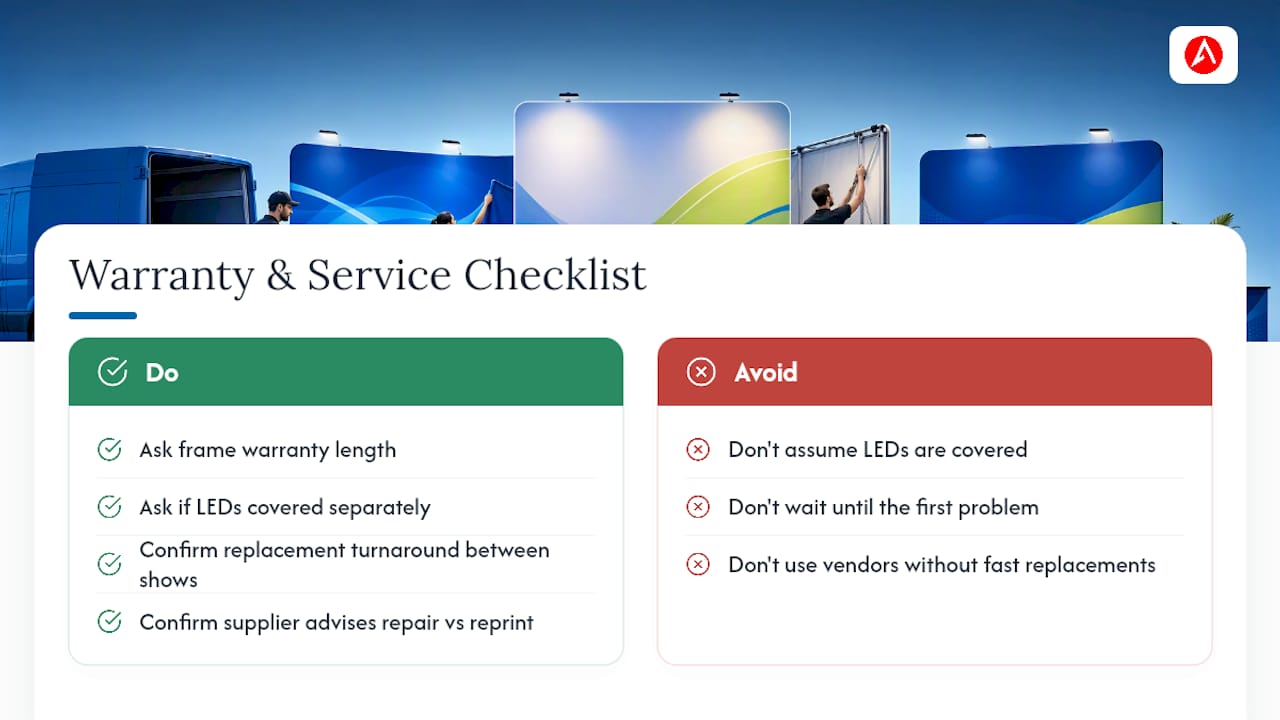
A fabric lightbox display is a long-term asset, not a one-show disposable, so warranty coverage on the frame and electrical components matters more here than on a basic vinyl banner. Reputable suppliers back their aluminum extrusion frames against manufacturing defects, and LED components carry their own coverage separate from the frame warranty since they’re the part most likely to fail first under repeated show use.
Ask specifically about three things before you buy: how long the frame warranty runs, whether LED strips are covered separately, and what the turnaround looks like if a component fails between shows. A supplier with fast fulfillment on the front end should offer equally fast replacement parts on the back end. A rapid shipping model, with most products out within two business days, applies to replacement components as much as new orders, which matters when a damaged panel threatens a show date you can’t move.
Service support also extends beyond warranty claims. A supplier who understands SEG construction can advise on whether a damaged graphic needs a full reprint or whether the frame itself needs attention, saving you from replacing an entire display when only the fabric panel failed. That kind of responsiveness separates a transactional print vendor from a genuine trade show partner, and it’s worth confirming before your first order, not after your first problem.
Are Fabric Lightbox Displays a Sustainable Choice?
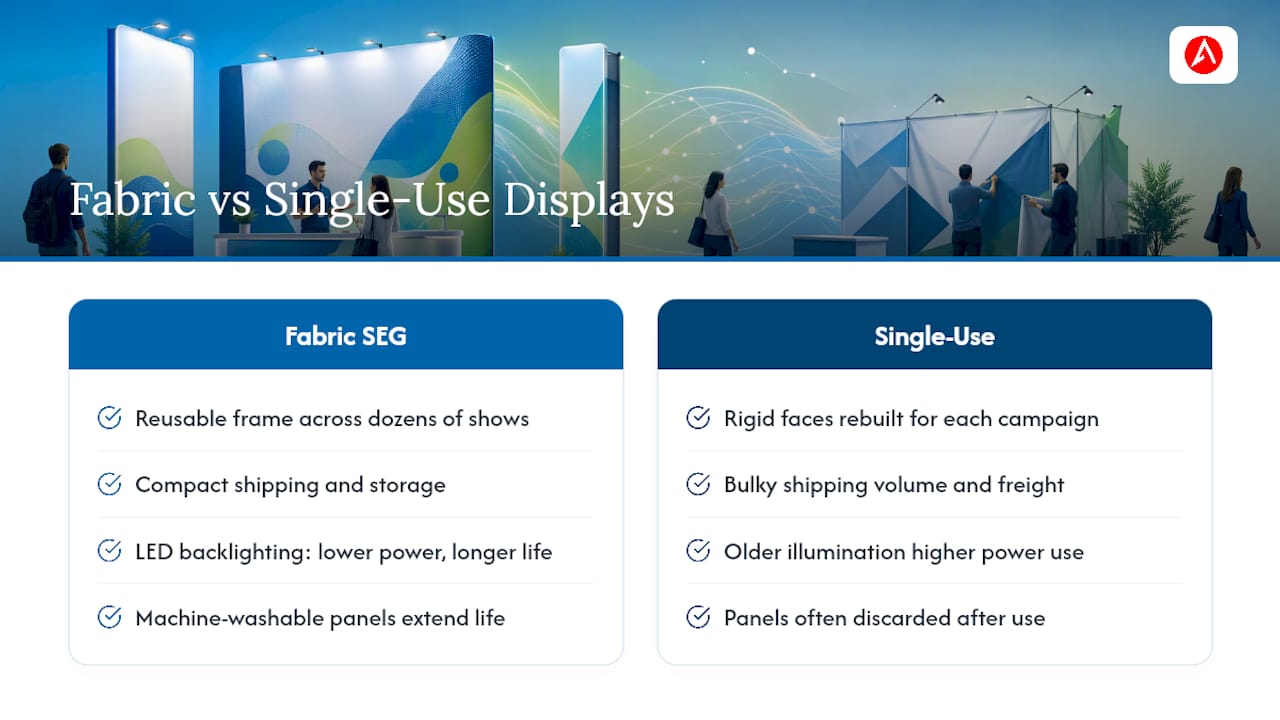
Fabric lightbox displays generally outperform rigid, single-use signage on environmental impact, largely because of how the SEG system is built. The frame is reusable across dozens of shows, while only the fabric graphic needs replacing when messaging changes, which cuts down on the material waste that comes from rebuilding an entire display every time a campaign updates.
Dye-sublimated polyester fabric also ships and stores more compactly than rigid acrylic or PVC display faces, reducing shipping volume and the freight footprint that comes with hauling bulkier materials between shows. Less volume per shipment means fewer trucks and lower fuel use across a busy event calendar.
LED backlighting adds another point in fabric’s favor. LED strips draw meaningfully less power than older fluorescent or halogen lightbox illumination, and they last far longer before needing replacement, which matters for any exhibitor running a display across a multi-year show schedule. Fabric panels themselves are also machine washable in many cases, extending usable life without the panel needing a full reprint.
None of this makes a fabric lightbox a zero-impact purchase. But compared with a printed banner destined for the trash after one activation, a reusable SEG frame with a replaceable graphic represents a genuinely lower-waste approach to trade show presence, especially for exhibitors who show up at the same events year after year.
The Real Question Isn’t SEG vs. Fabric. It’s How Often You Show Up.
Most buying guides frame this as a binary: SEG or tension fabric, backlit or not. That framing misses the variable that actually drives the right decision, which is show frequency. A company doing one trade show a year is solving a completely different problem than one running a dozen regional activations, and the conventional advice rarely separates the two.
Here’s where I’ll push back on the usual pitch: backlighting is not automatically worth the premium. If your brand story doesn’t depend on color accuracy or your booth sits in a well-lit hall with good foot traffic regardless of illumination, a well-printed tension fabric wall does the job at a fraction of the cost. The visual impact case for SEG is real, but it’s a case for specific conditions, not a universal upgrade every exhibitor needs.
What actually matters is matching frame investment to show cadence. If you’re rebuilding a display every year anyway, the reusable-frame model of SEG pays for itself. If you’re an occasional exhibitor, spend the savings on better graphics instead of a lightbox you’ll use twice.
— Dan
Ready to Spec Out Your Booth Display?
Some trade show display companies get you from decision to installed display faster than most exhibitors expect, with many products shipping within two business days and some offering direct venue delivery for local teams. If your show is farther out and you want the backlit look, our EZ Tube Tension Fabric Displays give you the modular SEG construction covered in this guide without the long production wait.
For a lighter, faster-to-pack option, the 10 ft stretch fabric display covers standard 10-foot backwalls without the LED components, ideal for teams that travel to multiple shows a year. Running an outdoor activation alongside your booth? The Outdoor Banner Frame handles signage outside the hall where a fabric lightbox isn’t practical. Request a mockup or a rapid quote through our trade show products page and get a real production timeline back before your show date gets any closer.
Sources
- FedEx Office survey: standout signs contribute to sales
- Tension Fabric vs SEG Lightbox Booths: 2026 Guide – Displayfactory
FAQ
What Is a Fabric Lightbox Display Exactly?
A fabric lightbox display is a printed fabric graphic stretched over an aluminum frame with LED backlighting built in, creating an evenly illuminated, frameless visual using SEG construction. It’s commonly used for trade show backwalls, hanging signs, and retail displays.
How Much Does a Backlit Fabric Lightbox Cost?
Pricing depends on panel size, LED density, and frame configuration, so current pricing is best confirmed directly through your supplier’s product pages. Arrowhead Sign Company - Signs, Banners and Trade Show Displays lists its EZ Tube Tension Fabric Displays and full trade show display line with details available on request.
Is SEG Better Than Tension Fabric for Trade Shows?
Neither format is universally better. SEG lightboxes deliver stronger visual impact through backlighting and hold up better across frequent shows, while tension fabric packs lighter and sets up faster for solo travelers or occasional exhibitors.
How Long Does It Take to Set Up a Fabric Lightbox Booth?
A standard 10x10 SEG backwall typically takes a two-person crew under an hour to install, including cable routing and final tensioning. Larger island configurations with multiple panels take longer depending on how many modular sections are involved.
Do Fabric Lightbox Displays Need Special Electrical Certification?
Yes, any integrated LED lightbox should carry UL or ETL electrical certification to meet standard venue safety requirements. Confirm this with your supplier before booking a show, since most convention centers require proof of certification during setup.