
Verify 6063, Dye Sublimation, UL/ETL: SEG Lightboxes for Exhibitors
Posted by Deeder Dandenhorf on Sep 13th 2026
Verify 6063, Dye Sublimation, UL/ETL: SEG Lightboxes for Exhibitors
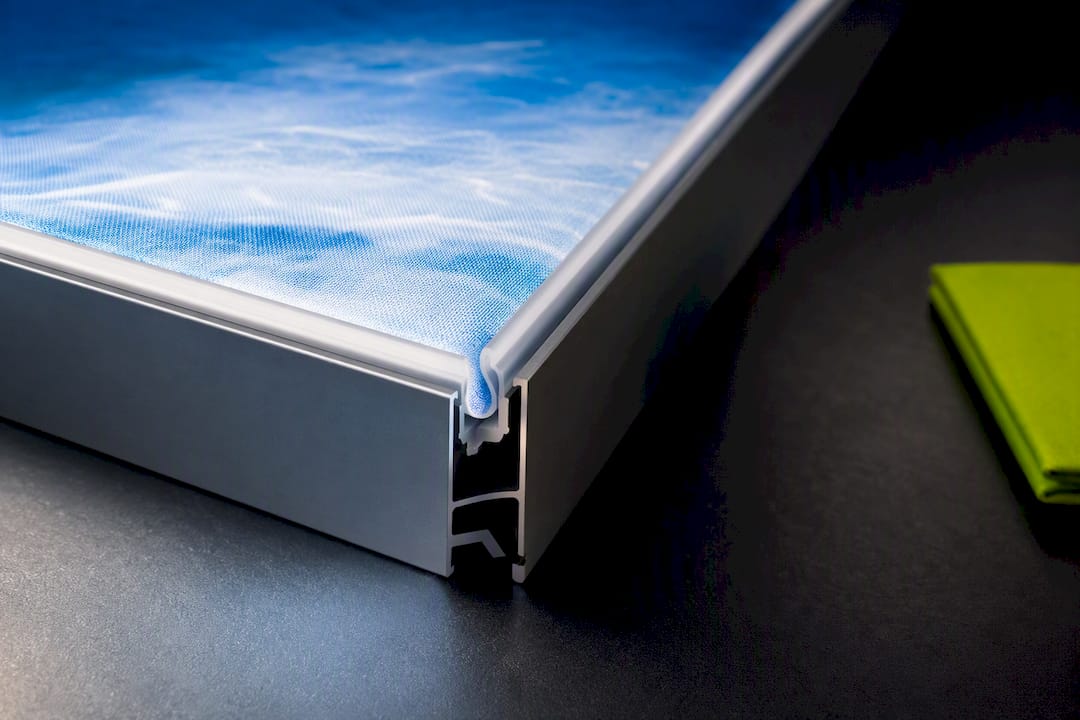
For most marketers and exhibitors, the best SEG lightbox displays are backlit systems built on 6063-grade aluminum extrusions, printed on dye-sublimation fabric, and lit with UL/ETL-certified LED modules. That combination delivers the crisp, glowing graphics buyers associate with premium booths without sacrificing durability. Fast-turn options built to those specs are available, and three products fit most common scenarios: a stretch fabric display for quick swaps, an outdoor banner frame for exterior events, and an A-frame sign for sidewalk promotions.
TL;DR:
- 6063-grade aluminum with a wall thickness specified in millimeters ensures better durability and stability for the frame, especially for frequent reassembly.
- Dye-sublimation printing provides deeper, more vibrant colors and longer-lasting graphics compared to direct-to-fabric methods, particularly when used with polyester fabrics designed for backlighting.
- Full LED-array backlighting offers more even illumination on larger displays, while UL or ETL certification is essential for safety and liability reasons, especially in venues with strict fire regulations.
- Heavier, deeper frames (100 to 120mm) offer increased stability and better backlight uniformity, but lighter frames (60 to 80mm) are more portable and suitable for frequent travel.
- Most Arrowhead Sign Company displays ship within two business days, and options like lightweight stretch fabric or outdoor banner frames provide quick solutions for varying event requirements.
Table of Contents
- What Makes a SEG Lightbox Display High Quality?
- How Does Dye-Sublimation Printing Affect Graphic Quality?
- Which LED Configuration Gives the Most Even Lighting?
- How Portable Are SEG Lightbox Displays Compared to Other Formats?
- How Do You Choose the Right SEG Lightbox for Your Program?
- When Should You Choose SEG Over Tension Fabric or Rigid Signage?
- Ready to Order Your SEG Lightbox Display?
- Sources
- FAQ
What Makes a SEG Lightbox Display High Quality?
A high-quality SEG lightbox display starts with the frame, not the graphic. Buyers who fixate on printed color and skip the extrusion spec often end up with a wobbly, scuffed booth by the third show.
6063-grade aluminum is the standard worth insisting on. It offers better structural rigidity and scratch resistance than softer alloys, which matters when a frame gets packed, shipped, unpacked, and reassembled dozens of times a year, according to a comparison of aluminum alloy properties. Wall thickness and the design of the extrusion channel also affect how much flex a frame tolerates before joints loosen.
Frame depth is the other variable that changes performance. Depths generally run from 60mm to 120mm:
- 60 to 80mm frames are lighter and easier to transport but can feel less stable freestanding in high-traffic aisles.
- 100 to 120mm frames add freestanding stability and often improve backlight uniformity because there’s more room for LED spacing.
- Deeper frames also tend to offer better accessory compatibility, including shelving, header extensions, and counter attachments.
Before ordering, ask any vendor three things: their exact alloy spec, whether spare parts are stocked and available on short notice, and whether the display ships in a reusable case. Suppliers who skip protective packaging are gambling with your investment, a point echoed in trade-show display buying advice.
Pro Tip: Ask for the extrusion’s wall thickness in millimeters, not just “aluminum” as a material description. Vague specs usually mean a thinner, cheaper stock.
How Does Dye-Sublimation Printing Affect Graphic Quality?
Dye-sublimation printing is what separates a photographic, color-saturated SEG graphic from a flat, printer-store banner. The process transfers dye onto fabric in two steps, using heat to fuse ink fibers into the material rather than sitting on top of it. That penetration gives colors more depth and holds up to repeated folding and rolling far better than basic direct-to-fabric printing.
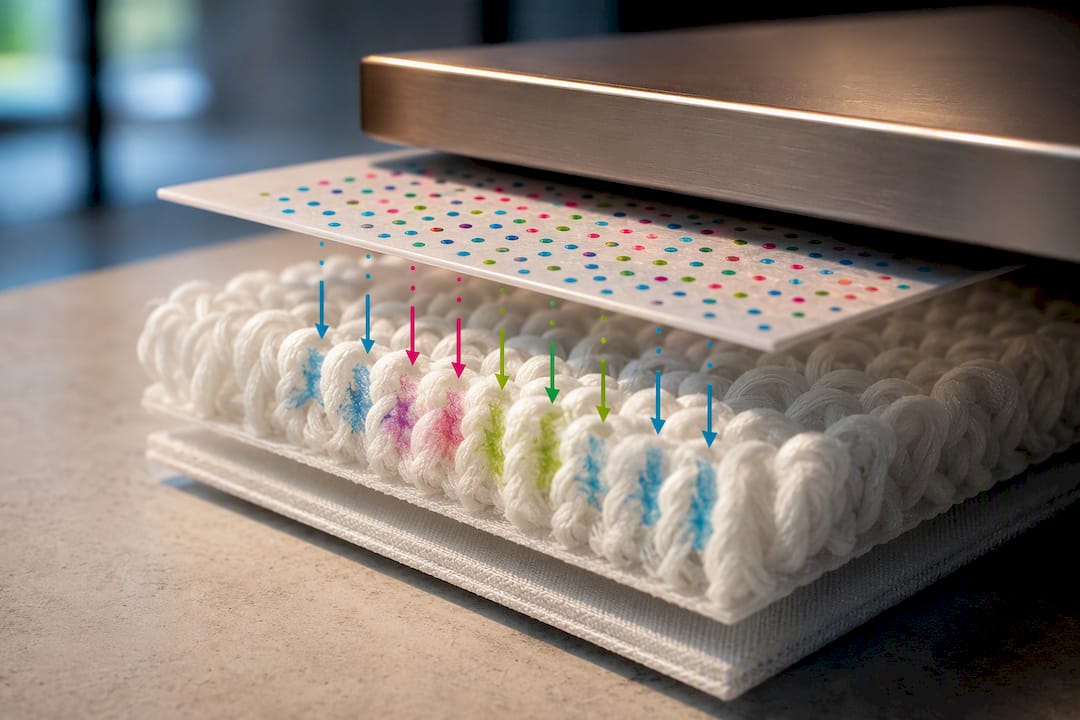
Fabric choice matters just as much as the print method. Most backlit SEG graphics use a polyester blend engineered for even light transmission, and the silicone edge bead sewn into the border is what creates the drum-tight tension that eliminates sagging, wrinkles, and visible frame lines. Suppliers consistently point to that combination, tension plus dye-sublimation, as the baseline for photographic backlit results, according to pro buying guidance on SEG lightboxes.
Before you commit to a vendor, verify quality with a few direct questions:
- Request a recent printed sample under actual backlighting, not a screen mockup.
- Ask how old the dye-sublimation printer is. Output quality degrades as printheads age, so a printer under two years old with a two-step transfer process is a reasonable benchmark.
- Get a replacement graphic cost estimate up front. Graphics wear out faster than frames, and budgeting for reprints keeps your cost-per-show honest.
Which LED Configuration Gives the Most Even Lighting?
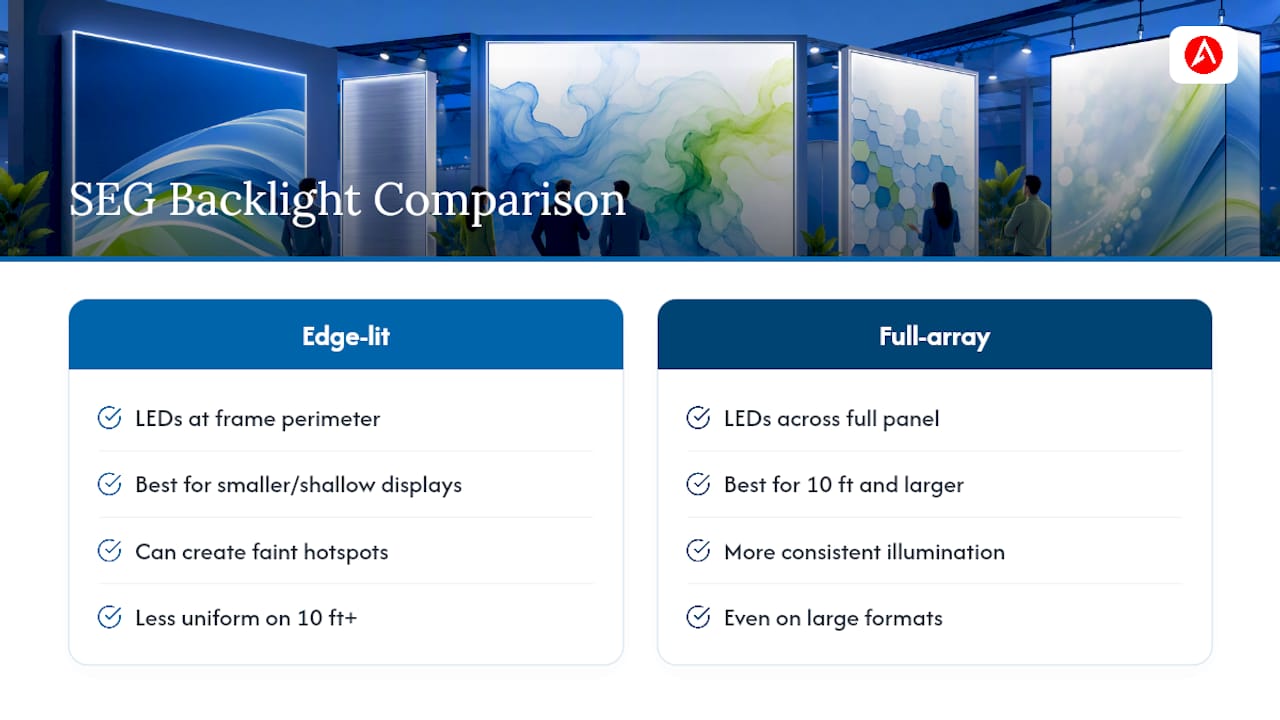
Backlit SEG frames use either LED-edge lighting or full LED-array panels, and the choice affects both brightness and uniformity. Edge-lit configurations place LEDs along the frame perimeter, which works well for smaller or shallower displays but can create faint hot spots on very large formats. Full LED-array backlighting spreads light sources evenly across the panel, which tends to produce more consistent illumination on 10ft and larger displays.
Either configuration draws substantially less power than older fluorescent or incandescent lighting, which keeps energy costs down during multi-day trade shows and reduces heat buildup inside the frame, per findings on backlit SEG lighting performance. That efficiency also extends bulb life, so you’re not troubleshooting dead modules between events.
UL/ETL certification is not optional. Ask vendors directly whether the LED modules carry UL or ETL listing, how the modules are constructed, and what warranty covers electrical failure. Uncertified components are a real liability risk in a venue, and reputable suppliers should answer this without hesitation.
Pro Tip: If you’re running displays in venues with strict fire marshal inspections, keep a copy of the LED certification paperwork in your show kit. Some venues ask for it on-site.
How Portable Are SEG Lightbox Displays Compared to Other Formats?
Portability is where SEG systems diverge most from tension fabric competitors, and the trade-offs are worth mapping out before you buy.
- Weight and shipping format: Soft-bag tension fabric displays pack lighter and ship in soft cases, while rigid-frame SEG lightboxes typically travel in hard cases that add both weight and shipping cost.
- Frame depth decision: Choose a 120mm modular system when freestanding stability and backlight uniformity matter more than shaving pounds off shipping. Choose 60 to 80mm frames when your team is flying to shows and checked-bag weight limits are a real constraint.
- Assembly time: SEG lightboxes generally take 15 to 20 minutes or longer to assemble and often benefit from a two-person crew, compared with tension fabric systems that can go up in 5 to 10 minutes solo, based on setup time comparisons across display types.
- Storage: Reusable, padded cases pay for themselves over a multi-show season by protecting graphics and frame joints between events.
For a deeper look at how these portability trade-offs play out across formats, our portable display options guide walks through several configurations side by side.
How Do You Choose the Right SEG Lightbox for Your Program?
Work through this checklist in order, and the right SEG configuration usually becomes obvious by the third or fourth item.
- Intended use: Trade show, retail window, or lobby signage each favor different frame depths and lighting intensity.
- Show frequency: A booth running 10+ shows a year justifies the higher upfront SEG cost; occasional use may not.
- Budget band: Market pricing shows 10ft SEG backlit systems commonly starting near $2,115, while tension fabric alternatives can run substantially lower, according to tension fabric versus SEG cost comparisons. Run the math as cost-per-show, not sticker price: a $2,115 SEG system used across 20 shows costs roughly $106 per event before graphics.
- Lighting needs: Dim convention halls call for brighter, more uniform LED-array backlighting.
- Portability: Solo travel favors lighter frames; established teams with drive-in access can handle heavier, more stable builds.
- Accessory requirements: Confirm shelving, header, and counter compatibility before ordering, not after.
Then ask any vendor six direct questions: their aluminum alloy spec, their print process, whether LEDs carry UL/ETL certification, replacement parts and lead times, how graphics ship, and what the warranty covers.
Pro Tip: If your show calendar exceeds four events a year, run the numbers against our break-even analysis for trade show displays before deciding between SEG and lighter alternatives. Budgeting advice from trade show cost planning resources can help you frame the full spend, not just the display line item.
When Should You Choose SEG Over Tension Fabric or Rigid Signage?
SEG earns its premium when a booth needs to read from across a hall, gets reused 10 or more times a year, or has to compete against bright ambient lighting. That combination of backlighting and drum-tight fabric tension delivers a visual pop that flat rigid signage or unlit tension fabric simply can’t match, and the longevity data on SEG versus tension fabric backs that reuse case. For occasional pop-ups or budget-limited activations, lighter formats covered in our promotional backdrop guide often make more sense. Most products ship within two business days, which matters when a show date is closing in fast.
— Dan
Ready to Order Your SEG Lightbox Display?
Once you know the spec you want, the next bottleneck is usually turnaround time, not design. Most products ship within two business days, and some vendors offer direct venue delivery for local clients, so a last-minute booth confirmation doesn’t turn into a shipping crisis.
If quick graphic changes matter most to your program, the 10 ft stretch fabric display gives you a lightweight, tool-free swap without the SEG lead time. For outdoor promotions and sidewalk visibility, the Outdoor Banner Frame handles wind and weather that indoor displays weren’t built for. And for walk-up foot traffic outside a storefront or venue entrance, the Signicade Deluxe A-Frame Sidewalk Sign gets your message in front of passersby without a full booth setup. Browse the full catalog of pop up signs and banner stands to match your next show date against a product that ships this week.
Sources
FAQ
What Alloy Should a SEG Lightbox Frame Be Made Of?
Look for 6063-grade aluminum, which offers better rigidity and scratch resistance than softer extrusions and holds up better to repeated setup cycles.
Is Dye-Sublimation Printing Necessary for SEG Graphics?
Yes, for photographic quality. The two-step transfer process fuses dye into the fabric fibers, producing deeper color and longer-lasting graphics than direct-to-fabric printing.
How Long Does It Take to Set Up a SEG Lightbox?
Plan for 15 to 20 minutes or more, often with a two-person crew, compared to 5 to 10 minutes for tension fabric systems that one person can assemble.
Are LED SEG Lightboxes Energy Efficient?
Yes. LED-edge and LED-array backlighting draw substantially less power than older fluorescent or incandescent lighting while delivering even, hotspot-free illumination.
How Fast Can I Get a SEG Lightbox Display From Arrowhead Sign Company?
Most products from Arrowhead Sign Company - Signs, Banners and Trade Show Displays ship within two business days, with direct venue delivery available for Arizona-based customers.