
2026 Trade Show Trend Display Ideas That Win Attention
Posted by Deeder Dandenhorf on Jul 23rd 2026
2026 Trade Show Trend Display Ideas That Win Attention
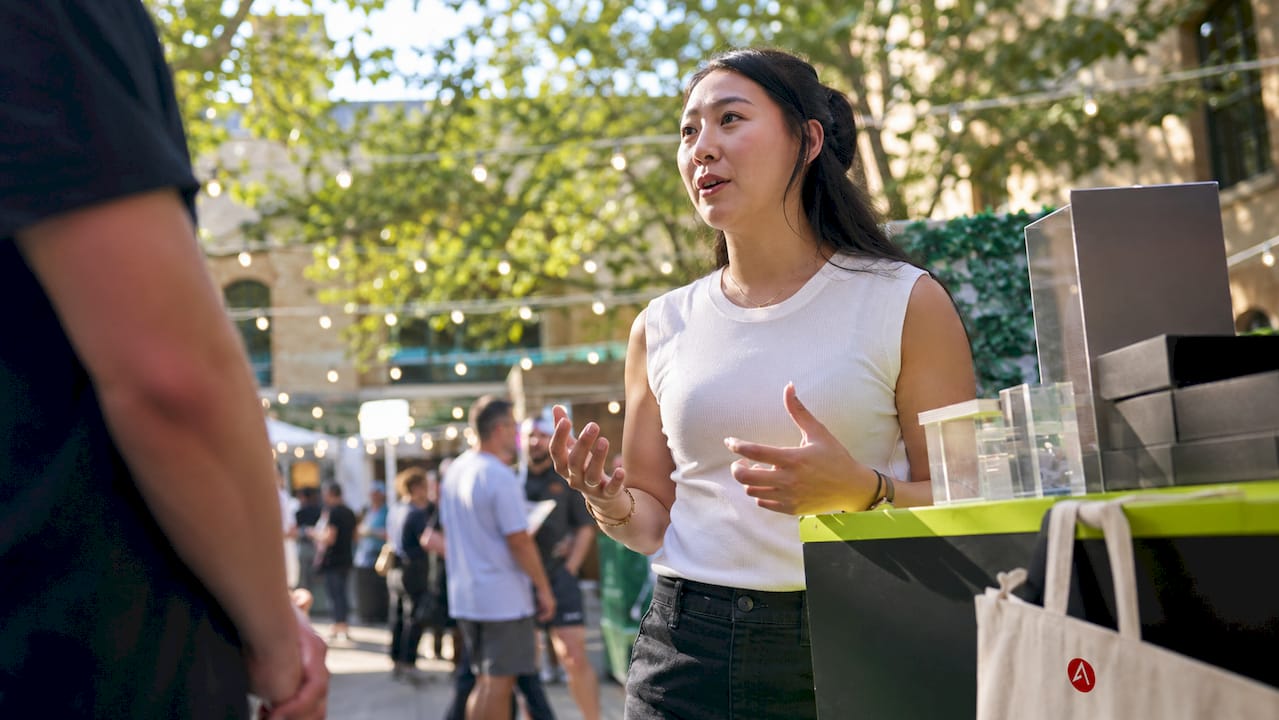
The most effective 2026 trade show booth display ideas share one quality: they replace passive viewing with active participation. Static walls and dense graphics no longer move the needle. According to the UFI Global Exhibition Barometer, 37% of exhibition professionals say all events need improved interactivity and engagement formats, and an additional 58% say it depends on the type of show. That indicates diminishing effectiveness for booths that rely on visual appeal alone.
Here is a quick-reference snapshot of the top trends shaping exhibit design this year:
- Hyper-experiential, multisensory environments that engage touch, sound, scent, and sight
- AI-powered engagement stations with personalized demos, configurators, and virtual try-ons
- Social amplification design built around shareable moments and coordinated team presence
- Modular, sustainable builds using recyclable materials and LED lighting
- Smart giveaways and micro-attractions that drive dwell time and lead capture
- Conversion-ready layouts with RFID, badge scanning, and post-show nurture integration
- Focused, localized messaging that prioritizes impact over sheer visual scale
- Personalization at the booth tailored to individual attendee profiles
- Lighting and color psychology used as navigational and emotional tools
- Pre-show marketing that generates qualified traffic before doors open
- Health and safety compliance built into booth planning from the start
1. How hyper-experiential booth designs pull attendees in
The static booth concept is obsolete in 2026. Booths that engage all five senses create the kind of dwell time that translates directly into conversations and qualified leads. Think kinetic sand installations, scented zones tied to product identity, and tactile product demos where attendees physically interact with what you sell.
Real-world examples from the 2026 show floor illustrate this well. At EMS 2026, a kinetic sand beach drew consistent crowds. At Licensing Expo 2026, LEGO’s flower cart with hands-on building instructions generated exceptional dwell time and tapped into genuine nostalgia. These are not gimmicks; they are deliberate sensory strategies.
- Tactile product demos that let attendees handle, build, or configure
- Scented zones aligned with brand identity or product category
- Live audio experiences, from ambient soundscapes to live demonstrations
- Kinetic or moving elements that attract attention from across the floor
- Analog play areas that offer a break from screen fatigue
Pro Tip: Balance digital and analog. Attendees who are overwhelmed by screens will gravitate toward a tactile station. A simple buttons-and-dials panel or a hands-on craft element can outperform a touchscreen kiosk for raw engagement.
2. What AI-powered engagement stations can do for your booth
AI has moved well past photo-to-sketch novelty. At Shoptalk 2026, Optimizely partnered with EveryHuman algorithmic perfumery to let attendees chat with an AI bot about scent preferences and then watch a personalized perfume mixed in real time. At NAB Show 2026, AWS analyzed attendees’ basketball shots, compared them to Toronto Raptors players, and produced a personal trading card, all powered by AWS Elemental Inference.
These activations do more than entertain. They collect rich first-party data, extend post-show engagement through shareable outputs, and demonstrate product capabilities in a way no brochure can.
Stat to know: The top two improvement priorities identified by exhibition professionals are enabling visitor participation through product demos and gamification, and offering more interactive learning formats, each selected by 22% of respondents in the UFI Global Exhibition Barometer.
Key AI and digital applications worth building into your 2026 booth plan:
- Personalized AI quizzes that match attendees to products or solutions
- Digital product configurators with real-time visual output
- Virtual try-ons for apparel, equipment, or physical products
- Dynamic content dashboards that update messaging by time of day or audience type
- QR-triggered AI experiences that extend engagement beyond the booth footprint
One planning note: embed technology into booth architecture from the start rather than adding it on-site. Installation windows at major venues are short, and last-minute AV add-ons are the fastest way to undermine an otherwise strong activation.
3. Designing your booth for social amplification
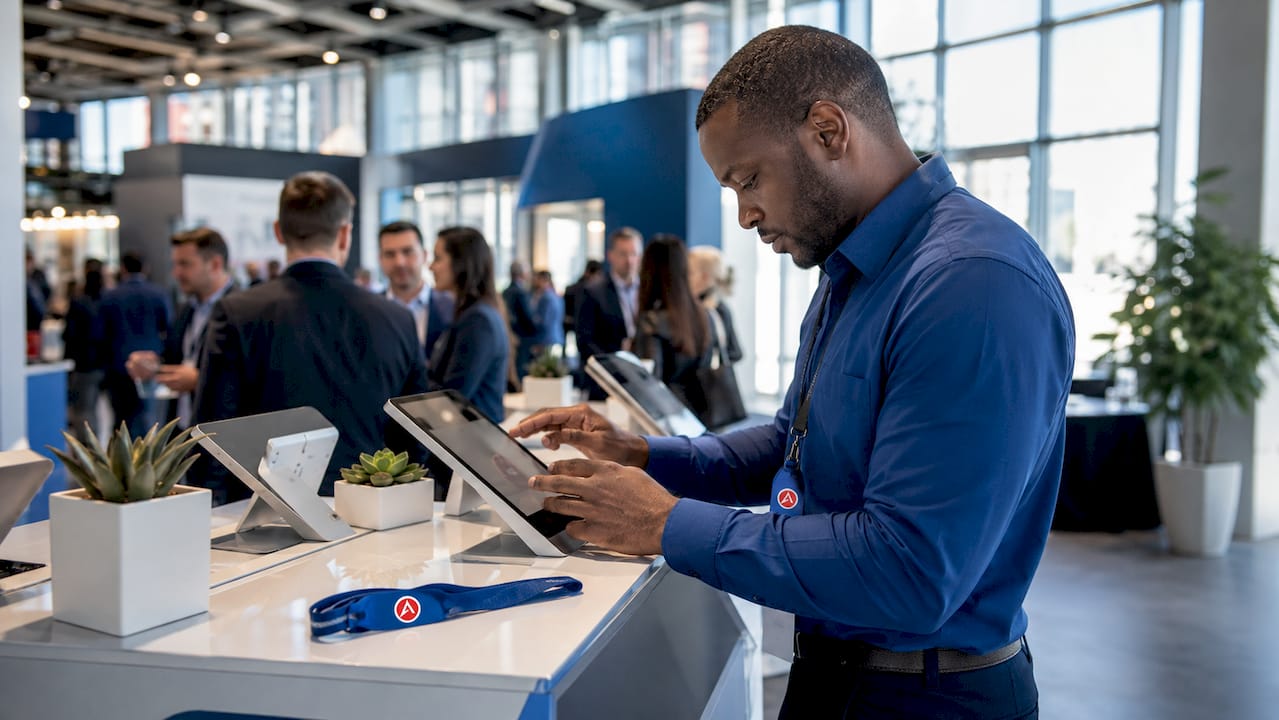
Every attendee with a smartphone is a potential content creator for your brand. Social amplification design treats this as a feature, not an afterthought. Branded photo walls, anamorphic 3D art installations, and oversized product props give attendees a reason to stop, photograph, and share, extending your booth’s reach far beyond the show floor.
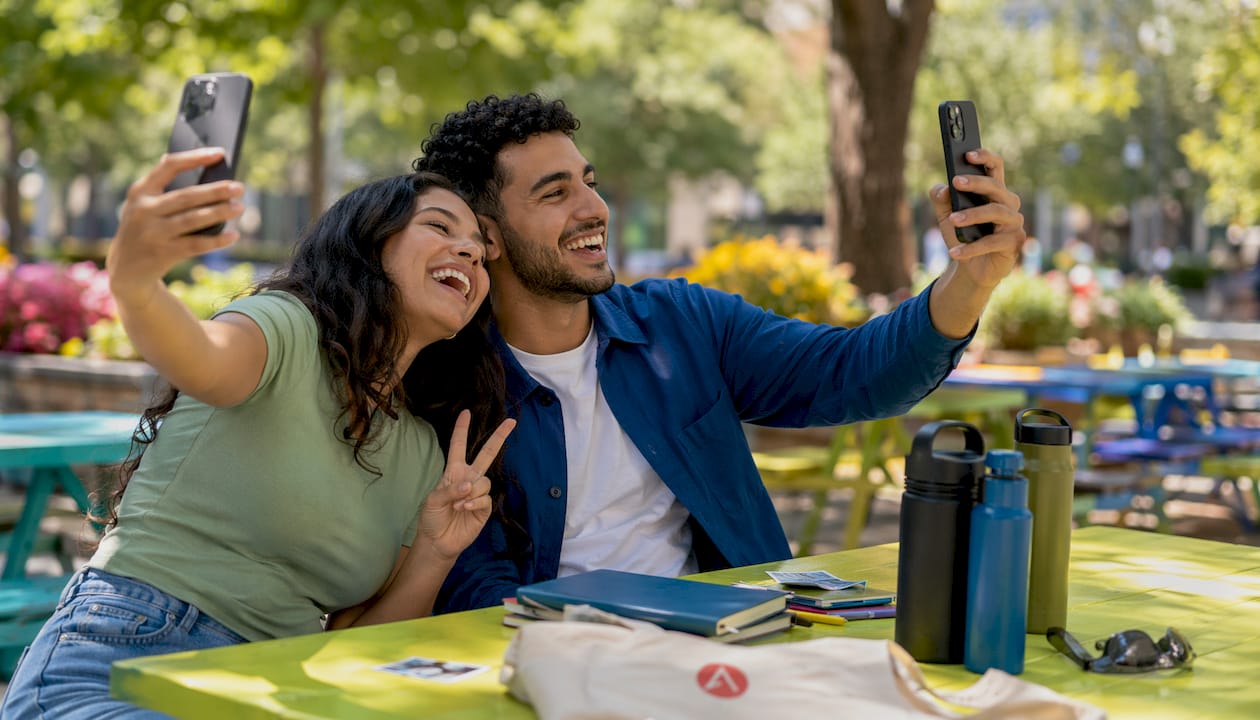
Coordinated team apparel plays a bigger role than most planners expect. When your staff wears consistent, on-brand clothing, they become walking signage. Attendees can spot your team from across a crowded hall, and every photo that includes a staff member reinforces your brand identity.
Practical steps to maximize organic social reach from your booth:
- Design one dedicated “selfie moment” with clear brand framing and good lighting
- Use your brand hashtag prominently at the photo moment, not buried in fine print
- Dress your team in apparel that photographs well and matches your booth palette
- Create a shareable output, a printed card, a digital video, or a personalized item, that attendees want to post
- Brief staff to encourage sharing in the moment, not after the fact
4. Why sustainable, modular builds are now the baseline
Sustainability is no longer a differentiator in 2026. Attendees and show organizers expect it. The shift toward modular booth systems built with recyclable materials, LED lighting, and reusable components reflects both environmental responsibility and financial discipline.
Modular architecture also solves a practical problem: no two venues are identical. A system that reconfigures for a 10x10 space at one show and a 20x20 island at the next protects your investment across an entire show season. Modular exhibition architecture allows teams to adapt layouts, integrate graphics and LED panels, and scale designs without starting from scratch.
- Use recyclable aluminum framing and fabric graphics instead of single-use foam or vinyl
- Specify LED lighting throughout to reduce power draw and heat output
- Choose a modular system that ships in fewer cases to cut freight costs
- Reuse structural components across multiple shows, updating only graphics as needed
- Verify that your display vendor can confirm material sourcing and recyclability
Pro Tip: Ask your display vendor for a material spec sheet before you order. Knowing the recyclability of each component helps you report sustainability metrics to show organizers and internal stakeholders alike.
5. Smart giveaways and micro-attractions that drive real ROI
The best giveaways in 2026 do two things: they create a moment worth sharing, and they capture a lead in the process. Spin-to-win wheels, personalized swag, and gamified contests measurably increase booth traffic and lead capture when tied to a data collection step.
Micro-attractions work on a simple principle: movement draws a crowd. Intuit Mailchimp’s conveyor belt at a 2026 show drew consistent traffic simply because something was always in motion. J.P. Morgan’s Payments Pressery at Money20/20 turned a pressed juice conveyor into a personalized brand moment, complete with hand-written name tags.
Effective micro-attraction formats to consider:
- Spin-to-win wheels tied to badge scan or email capture
- Personalized swag printed or engraved on-site while attendees watch
- Nostalgic analog games, from ring toss to pinball, with branded theming
- Skill challenges with a leaderboard and a social-shareable result
- Tasting or sampling stations with a product story built into the experience
6. How conversion-ready layouts turn foot traffic into leads
Square footage alone does not determine booth success. How attendees move through your space determines whether they leave as prospects or strangers. Booth layouts designed for conversion use clear entry points, defined demo zones, and semi-enclosed meeting areas to guide behavior intentionally.
Lead capture technology makes the difference between a great conversation and a lost contact. Badge scanning, RFID tracking, and mobile app integrations let your team capture qualified leads at the moment of peak interest, then feed those contacts directly into your post-show nurture sequence. For a deeper look at how display design connects to lead generation, the guide on trade show display leads covers the mechanics in detail.
Layout and lead capture best practices:
- Place your most compelling demo at the back of the booth to draw attendees deeper
- Create a semi-enclosed conversation zone away from high-traffic pathways
- Use badge scanning at every interactive station, not just at the entrance
- Connect lead data to your CRM in real time so follow-up begins the same day
- Design post-show email sequences that reference the specific booth experience
7. Impact over visibility: focused messaging and localized designs
Localized event strategies are increasingly important as global trade fragments and regional audiences diverge in expectations and cultural context. A booth that communicates one clear idea, expressed in the language and visual references of its audience, consistently outperforms a larger booth with generic messaging.
Modular environments make localization practical. You can swap graphic panels for language-specific versions, adjust color palettes for regional preferences, and update content between shows without rebuilding the entire structure. The IAEE notes that the old playbook of replicating successful events across markets no longer applies.
- Lead with one core message, not a list of features
- Use language-specific graphics for regional shows rather than English-only panels
- Adapt imagery to reflect the cultural context of each audience
- Keep body copy minimal; let visuals and demos carry the story
- Test your core message with a regional contact before the show
8. How Arrowhead Sign Company supports your 2026 exhibit strategy
For marketing professionals who need reliable, customizable displays without long production timelines, Arrowhead Sign Company - Signs, Banners and Trade Show Displays delivers. Their product range covers retractable banners, banner stands, custom printed tents, and modular display systems, all built for the flexibility that 2026 exhibit design demands.
What sets them apart for small business exhibitors:
- Two-business-day shipping on most products
- Direct delivery to Arizona venues for local clients
- Custom printed tents and retractable banners suited to modular layouts
- A product range that scales from tabletop displays to full booth builds
- Consistent quality backed by customer testimonials on service and turnaround
For planners comparing trade show display types before committing to a build, their blog resources cover the full spectrum of options.
9. Personalization techniques that make attendees feel seen
Personalization at the booth goes beyond printing a name on a badge. The most effective approaches in 2026 use pre-show data, on-site qualification conversations, and AI-driven tools to tailor the booth experience to each visitor’s role, industry, or stated challenge.
A booth staffer who opens with “What brings you to this show?” and then routes the attendee to the relevant demo zone delivers a fundamentally different experience than one who runs the same pitch for every visitor. When combined with digital tools like personalized product configurators or role-based content pathways on interactive kiosks, this approach shortens the sales conversation and increases lead quality.
10. How lighting and color psychology shape attendee behavior
Lighting is one of the most underused tools in booth design. Warm light draws people in and creates a welcoming atmosphere. Cool, bright light signals precision and technology. Colored accent lighting can reinforce brand identity or highlight specific product zones without adding signage.
Color psychology works at a distance. High-contrast color combinations, like deep navy with lime green or charcoal with warm amber, read clearly from across a crowded hall. Updating show look and feel through sounds, lights, and signage ranks among the top improvement priorities identified by exhibition professionals globally. Use lighting as a navigational tool, brighter at entry points, warmer in conversation zones, and focused on your hero product or display.
11. Pre-show marketing strategies that fill your booth
The most trafficked booths at any show are rarely surprises. They are the result of deliberate pre-show outreach that starts weeks before the event. Email campaigns to your registered attendee list, LinkedIn posts targeting show hashtags, and personalized meeting invitations sent to key prospects all drive qualified traffic before the doors open.
A trade show brand visibility checklist helps you confirm that your pre-show assets, from teaser graphics to appointment booking links, are consistent with your booth identity. Show organizers often provide exhibitor marketing toolkits with approved assets and attendee data; use them. Pre-scheduled meetings convert at a higher rate than cold floor traffic because the attendee has already committed time to your brand.
12. Health and safety compliance at trade shows
Compliance requirements at North American trade shows vary by venue, show organizer, and local jurisdiction, but several standards apply broadly. Booth structures above a certain height require engineering sign-off. Electrical connections must meet venue specifications, and open flames or certain chemical demonstrations require prior approval.
Plan for compliance early. Submit your booth drawings to the show’s exhibitor services team well before the deadline, and confirm power requirements with the venue directly. For booths with embedded technology, verify that your AV setup meets the venue’s noise and power limits. A booth that passes inspection on setup day is one less variable on an already demanding show schedule.
Your next exhibit starts with the right display
Getting the right physical foundation for your 2026 booth does not have to mean long lead times or complicated ordering processes. Arrowhead Sign Company - Signs, Banners and Trade Show Displays ships most products within two business days, so you can order closer to your show date and still arrive with professional, high-quality displays.
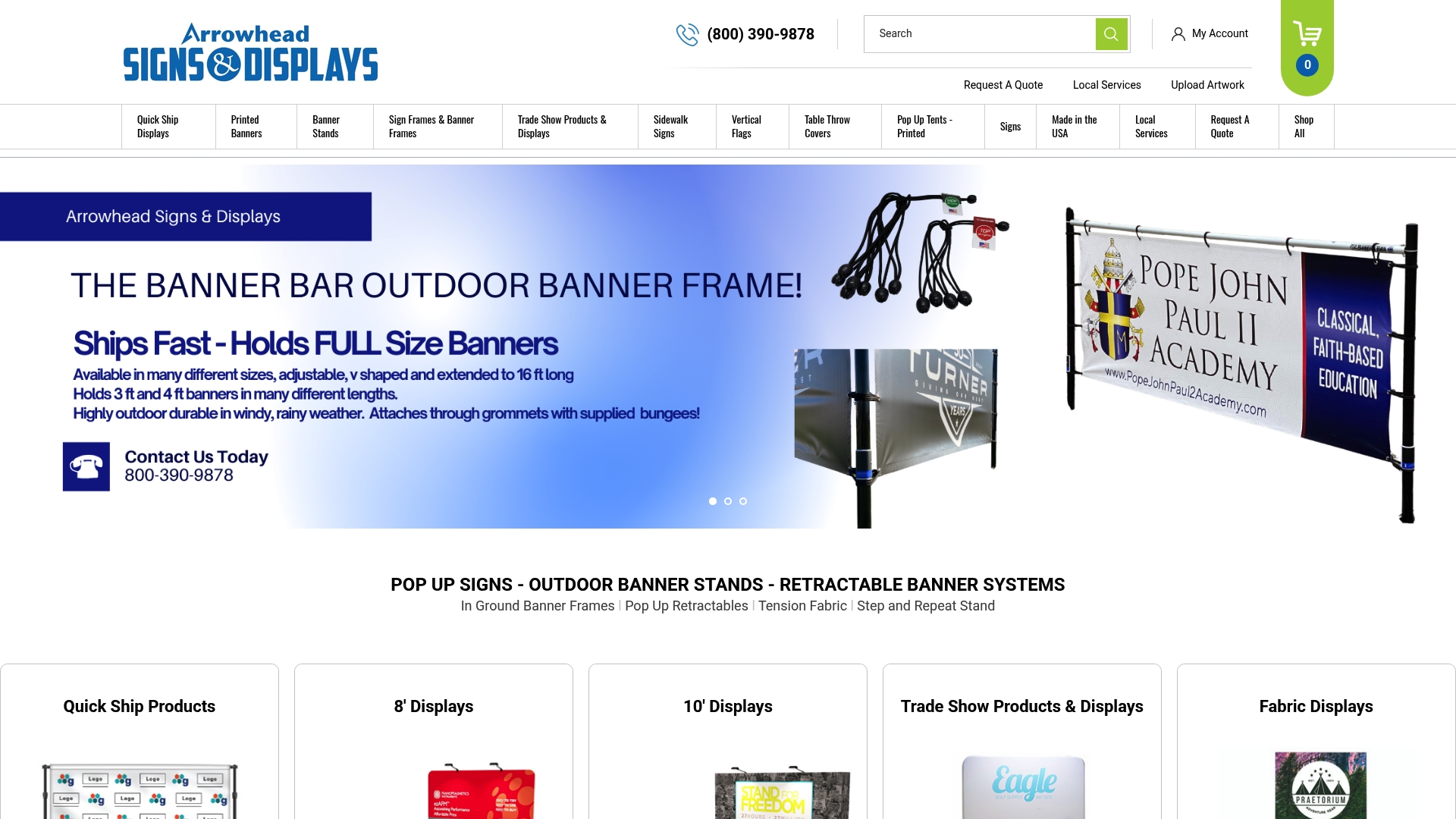
Their 10 ft stretch fabric display is a strong choice for exhibitors who want a clean, modular backdrop that photographs well, sets up fast, and works across multiple show formats. Whether you need retractable banners for a tabletop setup or a full custom printed tent for an outdoor event, Arrowhead Sign Company - Signs, Banners and Trade Show Displays has the product range to match your booth concept. Arizona-based teams also benefit from direct venue delivery, which removes freight complexity from the equation entirely. Get a quote today at arrowheadsigncompany.com and have your display ready before your next show.
Key Takeaways
The most successful 2026 exhibit strategies combine sensory engagement, embedded technology, and focused messaging to convert floor traffic into qualified leads.
| Point | Details |
|---|---|
| Interactivity drives format change | 37% of exhibition professionals say all events need improved engagement formats; 58% say it depends on the show type. |
| Modular builds protect ROI | Reusable, reconfigurable systems reduce per-show costs and support localized graphic swaps across venues. |
| AI personalization raises lead quality | On-site AI tools like configurators and personalized demos shorten sales conversations and improve post-show follow-up relevance. |
| Focused messaging outperforms scale | One clear, localized message consistently outperforms large booths with generic, feature-heavy content. |
| Arrowhead Sign Company | Offers two-business-day shipping on retractable banners, custom tents, and stretch fabric displays suited to modular 2026 booth builds. |
Recommended
- Trade Show Brand Visibility Checklist for Exhibitors - Arrowhead Sign Company
- Trade Show Display Types Explained for Marketers - Arrowhead Sign Company
- Trade Show Display Checklist for Small Business Success - Arrowhead Sign Company
- Signs Every Small Business Needs for Trade Shows - Arrowhead Sign Company