

Avoid Wind Damage: Choose Mesh or Vinyl Banners That Ship in Two Days
Posted by Deeder Dandenhorf on Sep 20th 2026
Avoid Wind Damage: Choose Mesh or Vinyl Banners That Ship in Two Days
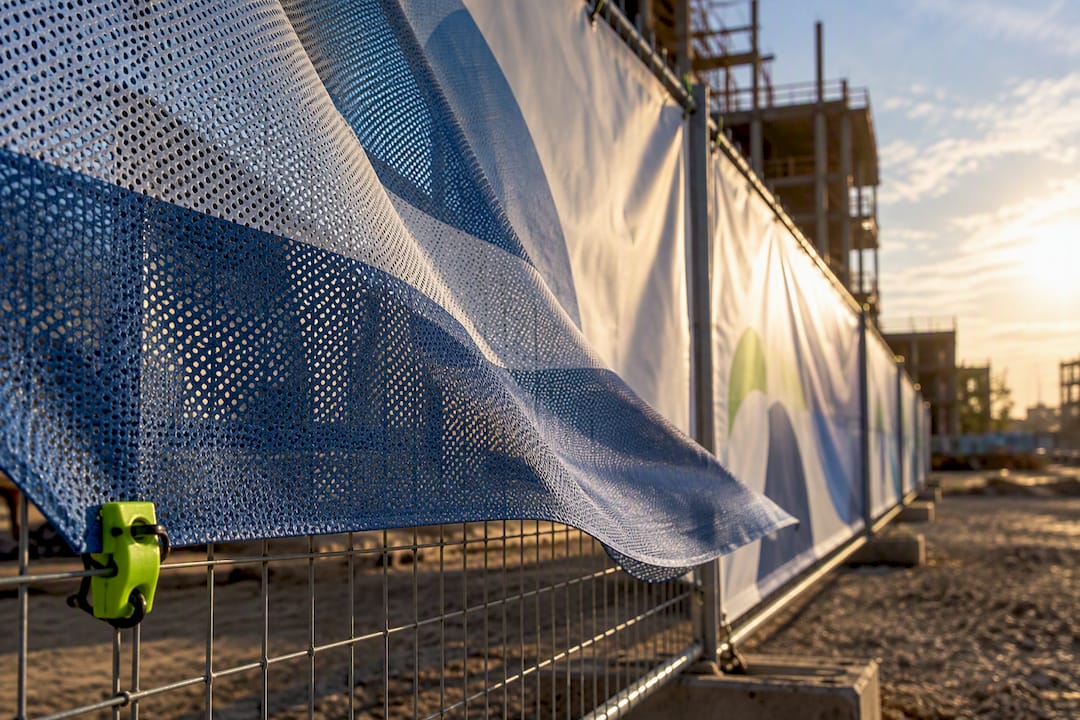
Choose mesh when your banner is large, outdoors, and exposed to wind. Choose solid vinyl when you need opaque, high-detail printing viewed up close, indoors, or somewhere sheltered. Size, mounting method, and how long the banner needs to survive outside can shift that recommendation, so read on before you order. Printed banner providers offer both materials, with most orders shipping within two business days.
TL;DR:
- Mesh banners are recommended for large, outdoor, and wind-exposed sites because their perforations allow wind to pass through, reducing risk of tearing.
- Vinyl banners provide superior print quality and detail, especially for close-up viewing or when graphics need to be seen from both sides, but are less wind-resistant.
- For lifespan, mesh generally lasts longer in exposed outdoor conditions, with 13 oz vinyl lasting 2 to 3 years and heavier variants extending that period with proper finishing.
- Installation and handling are easier with mesh due to its lighter weight, while vinyl’s rigidity favors smaller sizes and indoor or sheltered placements.
- Cost-wise, mesh may have a slightly higher initial price but tends to be more economical over time due to reduced damage from wind.
Table of Contents
- Mesh vs. Vinyl Banner: What Sets Mesh Apart?
- What Makes Solid Vinyl Banners the Print-Quality Standard?
- Mesh or Vinyl: Weighing Wind, Print Quality, and Cost
- How Do You Choose Between Mesh and Vinyl Banners?
- Installation and Maintenance Tips for Longer-Lasting Banners
- What Drives the Cost of a Custom Banner?
- Why Trust This Comparison?
- A Practitioner’s Take on Material Mistakes
- Get Your Mesh or Vinyl Banner Printed Fast
- Sources
- FAQ
Mesh vs. Vinyl Banner: What Sets Mesh Apart?
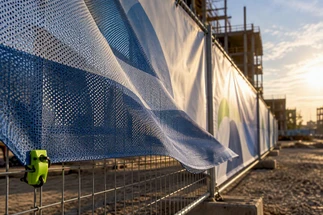
Mesh banners are made from perforated PVC, essentially solid vinyl with thousands of tiny holes punched through it. Those perforations let wind pass through the material instead of catching it like a sail, which is why mesh has become the standard for fences, scaffolding, and stadium perimeter signage. A solid sheet in the same spot would act like a parachute in a strong gust.
Standard mesh usually runs in a moderate weight range suited to general outdoor use. For sites with serious wind exposure, coastal properties, rooftops, or high-rise mounting, printers often step up to PVC Airmesh, a lighter and more open variant built for maximum airflow. The extra openness costs a little print density, but it buys real peace of mind on a site where a solid banner would tear loose in the first storm.
This is why you see mesh everywhere on construction fencing, building wraps, and fence-line advertising at outdoor events. Any spot where a banner faces open sky and unpredictable gusts is mesh territory. It is also noticeably lighter than solid vinyl at the same dimensions, which matters once you get into 10 or 20 foot runs that a crew has to lift and tension by hand.
What Makes Solid Vinyl Banners the Print-Quality Standard?
Solid vinyl is a continuous PVC sheet with no perforations, which gives it full opacity and noticeably richer color depth. Common weights run 13 oz for standard jobs and 18 oz for heavier-duty applications, and both can be finished with a matte or gloss laminate depending on the look you want.
That solid surface is what makes vinyl the material of choice whenever fine detail matters. Vinyl holds crisp small text, gradients, and photographic imagery that mesh simply can’t replicate at close range, and it’s the only option if you need graphics printed on both sides for a banner seen from two directions, like one hung across an aisle or over an entrance.
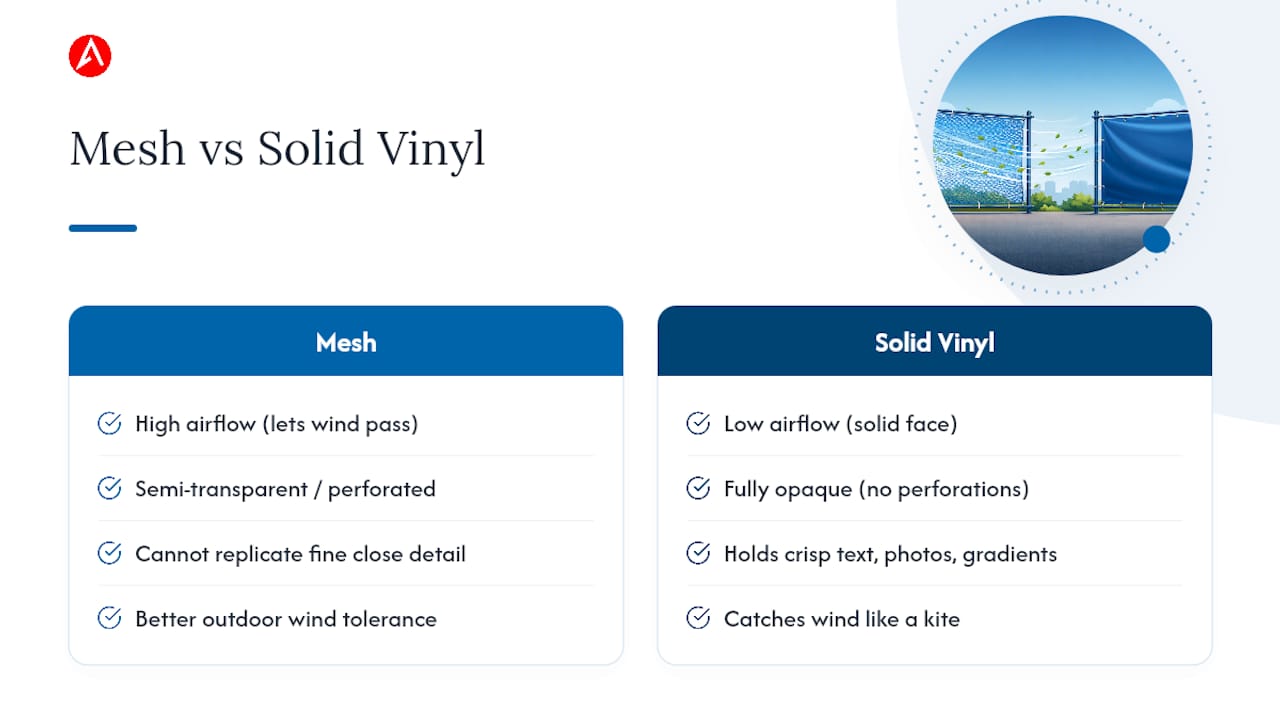
Think storefront signage, trade show booth graphics, lobby banners, and retail promotions. It also works fine outdoors for shorter runs in sheltered spots, an entrance overhang, a fenced booth space, a wall mount out of direct wind. The tradeoff is exposure tolerance: vinyl’s solid face that makes colors pop is the same face that catches wind like a kite.
Mesh or Vinyl: Weighing Wind, Print Quality, and Cost
Once you line the two materials up side by side, the decision usually comes down to which single factor matters most for your install.
- Wind resistance: Mesh wins decisively. The perforations cut wind load dramatically, which is why mesh becomes the safer default once a banner gets large and sits out in the open. Vinyl offers no relief here; a big solid sheet in an open lot is a wind hazard waiting to happen.
- Print quality: Vinyl wins for anything viewed within a few feet. Mesh still reads sharply from about 10 feet away or more, but up close its perforation pattern becomes visible, while vinyl stays clean at any distance.
- Handling and installation: Mesh is lighter per square foot, which makes it far easier to hang, tension, and take down solo at large sizes. Vinyl’s rigidity actually helps at smaller sizes but becomes a two-person job once you’re past roughly 8 by 10 feet outdoors.
- Cost: Mesh often costs slightly more per square foot upfront. Over a full season, though, mesh tends to be cheaper in lifecycle cost because it avoids the repeat replacements wind damage forces on vinyl.
Most material-selection mistakes come down to picking vinyl for a large, exposed run because it looked sharper on screen, then watching it shred in the first windstorm.
How Do You Choose Between Mesh and Vinyl Banners?
Before you order, answer four questions honestly:
- How exposed is the site? Open lot, rooftop, fence line, or anywhere wind has a clear path favors mesh. A covered entrance or indoor space favors vinyl.
- How big is the banner? Small format signage under roughly 4 by 8 feet handles fine in vinyl almost anywhere. Once you’re building anything larger outdoors, mesh generally becomes the safer default.
- How close will people stand? Sidewalk traffic and close-range viewing reward vinyl’s crisp detail. Highway frontage or stadium-perimeter viewing distances let mesh’s perforation pattern disappear into the design.
- How long does it need to survive outside? A weekend event tolerates either material. A multi-month or year-round installation pushes hard toward mesh, or Airmesh on genuinely brutal sites.
Pro Tip: If you’re on the fence between the two, ask which failure you’d rather risk: a banner that looks slightly softer up close, or one that tears loose in a gust and takes your signage down with it. That question usually answers itself.
Installation and Maintenance Tips for Longer-Lasting Banners
Good finishing prevents more failures than material choice alone. Reinforced hems, grommets every 18 to 24 inches, and welded seams on longer runs are standard practice for both materials, and skipping them is how a perfectly good banner tears at the corners after two weeks outside. Our guide to selecting the right finish for a printed banner breaks down which hardware fits which mounting setup.
Proper tensioning matters just as much as the hardware. A frame system like the Outdoor Banner Frame spreads stress evenly across the banner instead of concentrating it at a few grommets, which is exactly where most tears start.
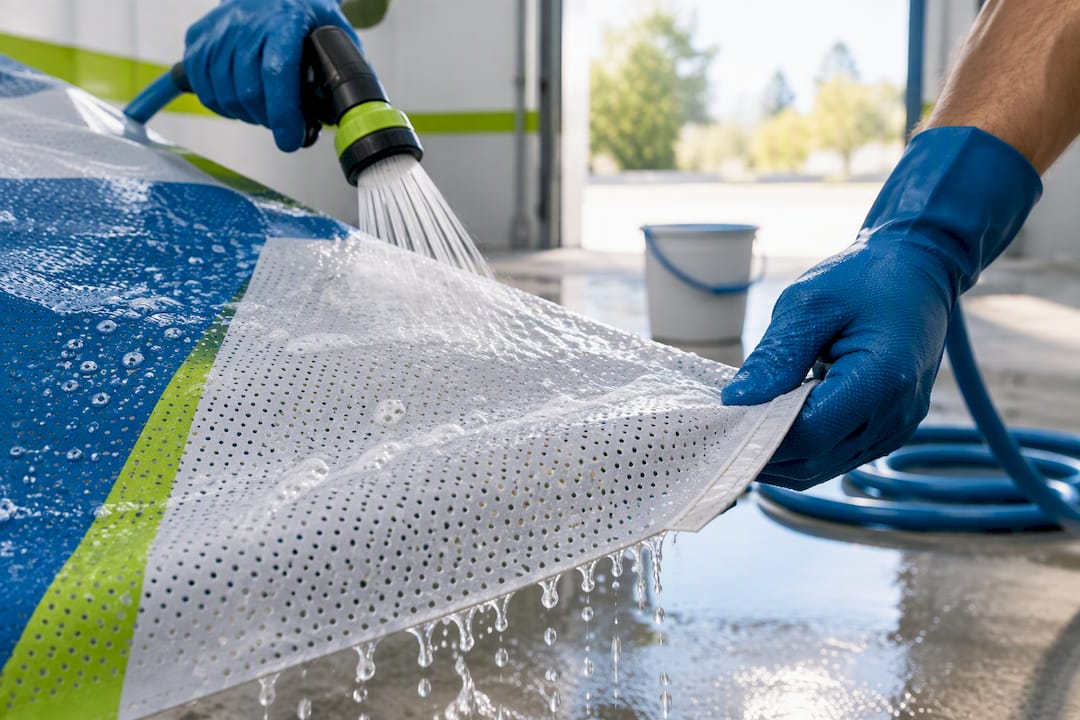
For upkeep: rinse both materials with mild soap and water, and let vinyl dry fully before rolling it for storage. Mesh sheds water and snow naturally through its perforations, while a poorly installed vinyl banner can pool water along a bottom hem and stress the seams over time.
What Drives the Cost of a Custom Banner?
Price comes down to material, size, finishing, quantity, and how much ink coverage your artwork needs. High-resolution photographic designs cost more to print well than a bold two-color layout, regardless of which material you choose.
Design accordingly: mesh performs best with bold, high-contrast graphics and larger type, since fine detail gets lost in the perforation pattern from a distance. Vinyl can handle photo-realistic imagery and small text without losing clarity. Our standard banner sizes guide covers how viewing distance should dictate your artwork’s DPI, and the difference between vector and raster file prep is worth understanding before you send anything to print.
Why Trust This Comparison?
This guide comes from Dan at Arrowhead Sign Company - Signs, Banners and Trade Show Displays, where most orders ship within two business days and Arizona clients get direct delivery to their venue. Our catalog matches every recommendation above: Printed Banners in mesh or vinyl; the Outdoor Banner Frame for tensioned outdoor mounting; the Signicade Deluxe A-Frame Sidewalk Sign for close-view sheltered placement; and a 10 ft stretch fabric display for indoor trade show graphics.
When you request a quote, include your exposure level, finished size, mounting method, viewing distance, and artwork file. That’s what lets production match the material to your actual site instead of guessing.
A Practitioner’s Take on Material Mistakes
The costliest mistake I see is picking vinyl for looks and ignoring the wind. Run the four-question checklist above before you order, not after the banner tears.
— Dan
Get Your Mesh or Vinyl Banner Printed Fast
Once you know whether your site calls for mesh or vinyl, ordering shouldn’t be the slow part. Arrowhead Sign Company - Signs, Banners and Trade Show Displays ships most Printed Banners within two business days, with standard layout service available for $35 and Next Day Air for $10 when you’re up against an event deadline.
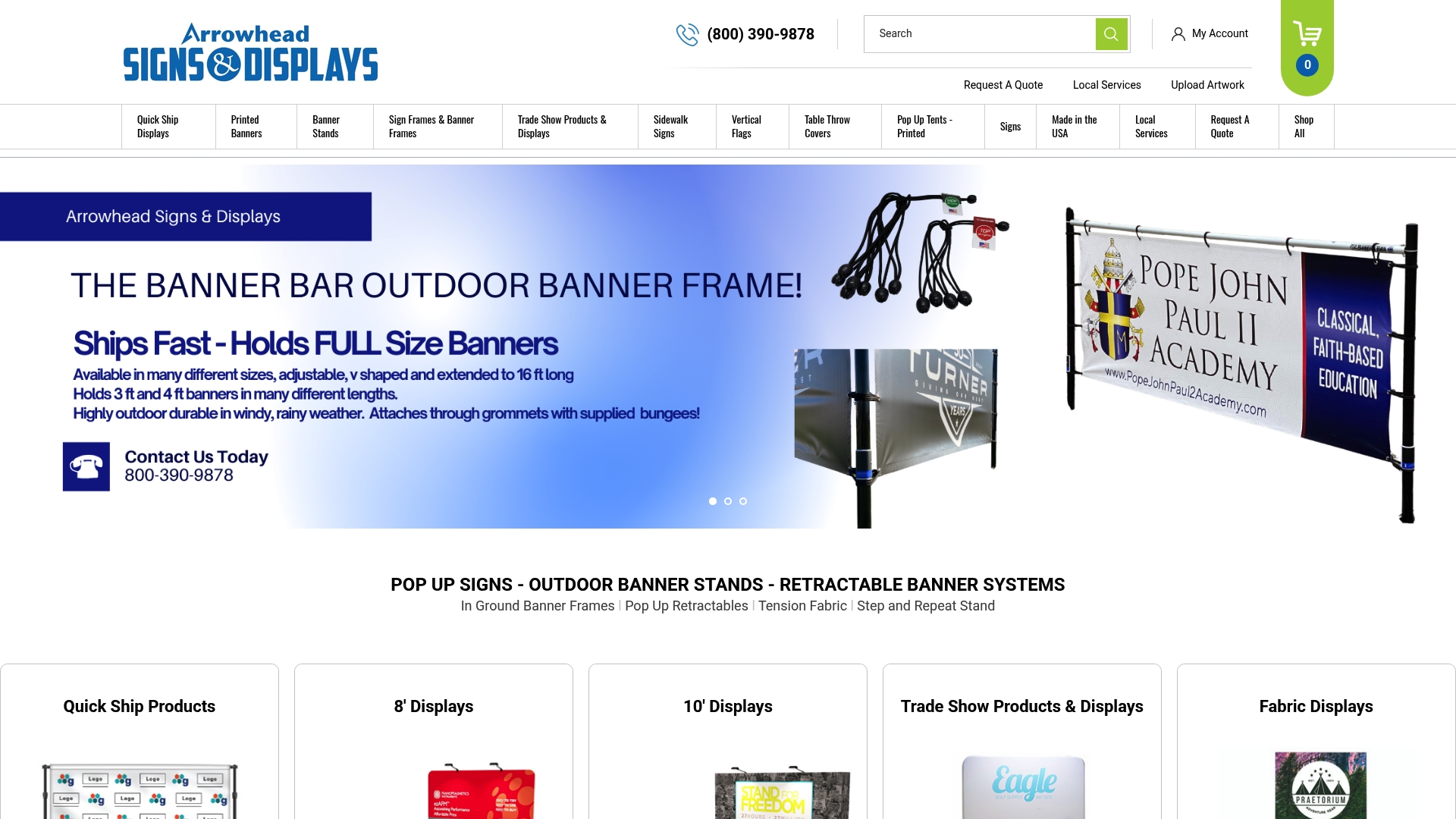
If your site is exposed and permanent, pair a mesh banner with the Outdoor Banner Frame to keep tension even and stress off the grommets. If you need close-range signage for a sidewalk or storefront, the Signicade Deluxe A-Frame Sidewalk Sign handles vinyl inserts beautifully in sheltered spots. When you request a quote, tell us your exposure level, finished size, mounting plan, and artwork format, and we’ll match production to your site instead of sending you a generic banner and hoping it holds up. Arizona clients get direct delivery to the venue; everyone else ships nationwide.
Sources
- PVC banner vs mesh banner - SKP Material
- Best banner material for outdoor use (PVC vs Mesh) - Banner World
- Mesh banner vs PVC banner: When to choose each - Mediapoint
FAQ
What Is the Best Material for Outdoor Banners?
It depends on exposure. Mesh is the standard choice for large, wind-exposed sites like fences and scaffolding, while solid vinyl suits sheltered outdoor spots and short-term placements where sharper detail matters more than airflow.
How Long Do Mesh Banners Last Outdoors?
Mesh is built for multi-month to multi-year exposed installations because it resists wind damage that shortens vinyl’s lifespan. Standard 13 oz vinyl, by comparison, typically lasts 2 to 3 years outdoors, with heavier 18 oz vinyl lasting longer when sheltered and properly finished.
What Is the Difference Between a Mesh and a Vinyl Banner?
Vinyl is a solid, continuous PVC sheet with full opacity and rich color depth. Mesh is the same material perforated with thousands of tiny holes, which lets wind pass through and dramatically reduces wind load at the cost of some close-up print clarity.
What Type of Fabric Is Best for High-Detail Trade Show Graphics?
For close-range, high-detail work indoors, solid vinyl or a stretch fabric display gives you the sharpest results, since opacity and color depth outperform mesh at short viewing distances. A 10 ft stretch fabric display is available that is built specifically for that kind of booth graphic.
How Much Does a Custom Banner Cost?
Cost depends on material, size, finishing, and quantity, so exact pricing is available when you request a quote through Printed Banners. Standard layout service runs $35, with Next Day Air available for $10 when you need it fast.