

Custom Banner Application Examples for Events in 2026
Posted by Deeder Dandenhorf on Jun 19th 2026
Custom Banner Application Examples for Events in 2026
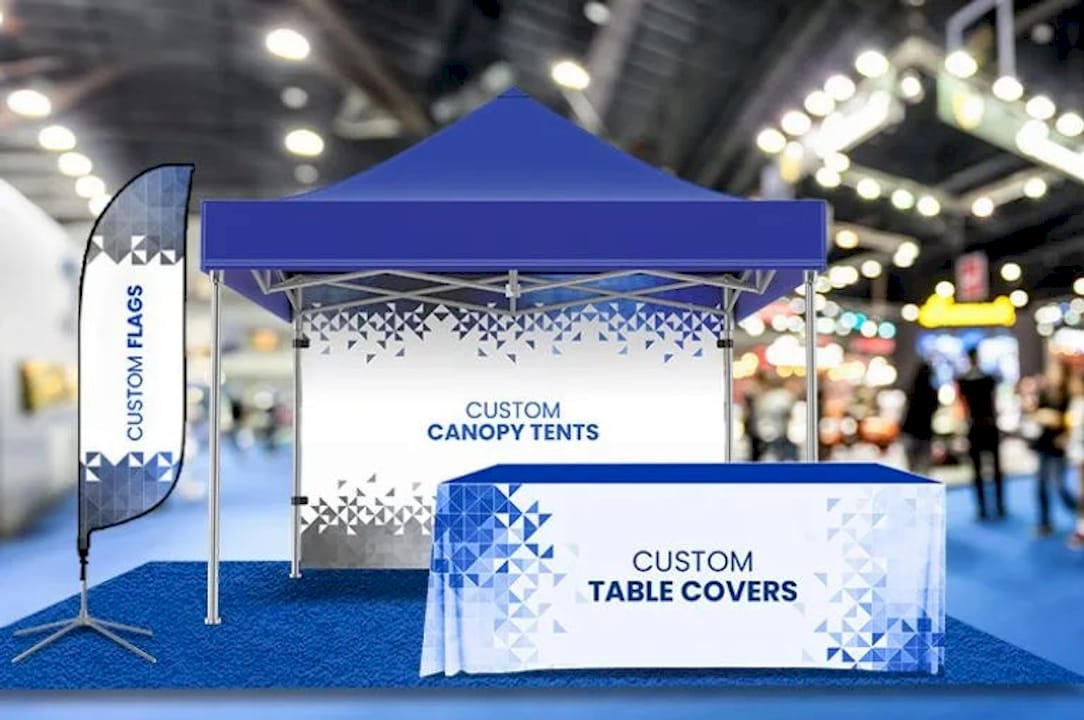
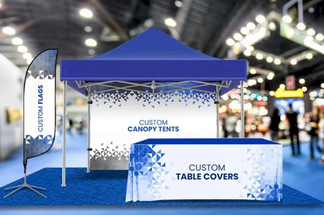
Custom banner applications are purpose-built signage solutions that use printed fabric, vinyl, or mesh to promote brands, direct foot traffic, and create visual impact at events. Event organizers, marketers, and small business representatives rely on these displays across trade shows, festivals, retail promotions, and community events. Design tools like Canva, Adobe Express, and CorelDRAW make it easier than ever to build print-ready artwork. The right banner type, whether a retractable roll-up, large-format vinyl, or lightweight fabric display, determines how well your message lands in a crowded venue.
1. What are the most effective types of custom banner applications for events?
Retractable roll-up banners are the most widely used format in trade show and event marketing. They set up in under 60 seconds and collapse into a compact carry case, making them ideal for exhibitors who move between multiple venues each season. That speed matters when you are setting up a 10x10 booth alone before doors open at 8 a.m.
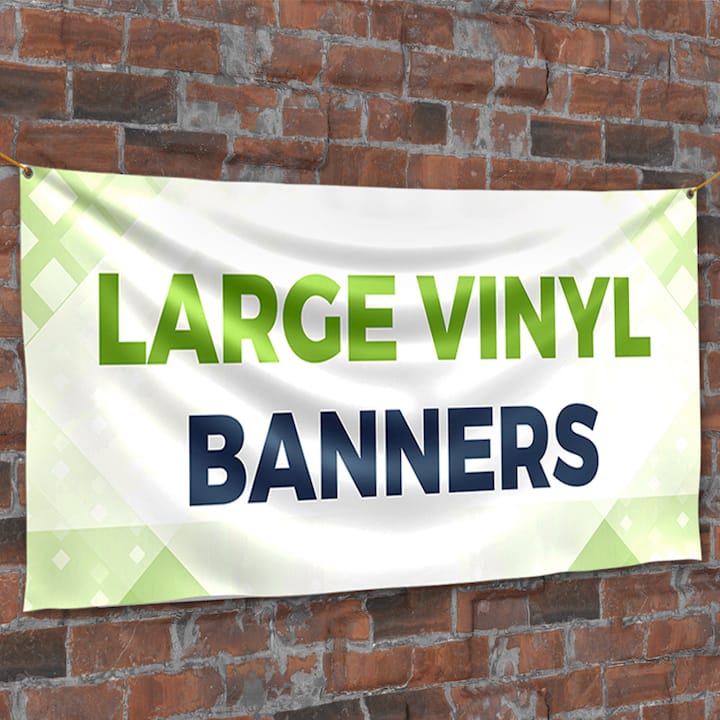
Large vinyl banners are the go-to choice for stationary outdoor applications. They are water and tear resistant, which means they hold up through wind, rain, and direct sun without fading or warping. A vinyl banner mounted on an adjustable outdoor frame delivers strong visual impact at a fraction of the cost of a printed tent or pop-up display.
Fabric banners serve a different purpose. They are lightweight, pack flat without permanent creasing, and reduce shipping costs compared to heavy vinyl alternatives. Exhibitors who fly to regional expos or ship displays ahead of time consistently prefer fabric for its portability and clean appearance on arrival.
Multi-banner configurations take any of these formats and combine them into a unified exhibit wall. Connected banner stands create an immersive display that signals professionalism and draws attention from across a convention floor. A single retractable banner is a presence. Three connected banners in a coordinated design are a statement.
Beyond these core types, banners also serve as:
-
Directional signage at large venues, guiding attendees to your booth or session room
-
Photo backdrops that frame branded content for social media posts
-
Sponsor recognition panels at community events and charity fundraisers
-
Promotional displays at retail storefronts announcing sales or new products
Pro Tip: Order one retractable banner with your evergreen brand message and a second with a swappable date or event panel. You get two deployments for roughly 60% of the cost of two fully custom banners.
2. How do design and materials affect custom banner applications?
Design quality is the single biggest variable in whether a banner performs or blends into the background. Digital designs often fail when resized for large-format printing without being rebuilt for scale, contrast, and legibility. A logo that looks sharp on a laptop screen can appear blurry and unprofessional at 6 feet tall.
Here are the core design principles that separate effective banners from wasted print budgets:
-
Design for distance. Attendees read your banner from 5–15 feet away. Use large type, high contrast color combinations, and no more than three lines of text. A message like “Free Samples Inside” communicates faster than a paragraph of brand history.
-
Use vector artwork. Large-format printing requires vector-based files to avoid pixelation. Adobe Illustrator and CorelDRAW both export print-ready vector formats. Raster images from Canva work only when exported at the correct DPI for the final print size.
-
Match material to environment. Heavy-duty vinyl handles outdoor conditions but adds weight and shipping cost. Lightweight fabric is better for indoor events and frequent travelers. Choosing the wrong material increases both cost and wrinkle damage over time.
-
Plan for reuse. Design your banner with a timeless layout. Avoid printing specific dates or prices directly into the main graphic. Use a separate date panel or A-frame insert for event-specific details so the main banner stays usable across multiple shows.
-
Apply visual hierarchy. Your brand name or headline should be the largest element. Supporting details like your website or tagline sit below it. Effective event banner design uses hierarchy, contrast, and minimal text to communicate benefits immediately.
Pro Tip: When submitting files to a print vendor, always request a digital proof at actual print dimensions before approving. Catching a resolution issue before printing saves you the cost of a reprint.
3. What innovative and unique banner application ideas stand out at events?
The most memorable booths at trade shows use banners in ways that go beyond standard signage. These creative banner application ideas generate engagement, extend your brand reach, and give attendees a reason to stop and interact.
-
QR code banners. Printing a QR code on your banner converts foot traffic into digital engagement by linking directly to a product page, discount offer, or email signup. Attendees who would not stop to talk will scan a code while walking past. Place the QR code in the lower third of the banner at a comfortable scanning height.
-
Photo backdrop banners. A clean, branded backdrop increases brand exposure through social media shares when attendees photograph themselves at your booth. Use a simple design with your logo, brand colors, and a short hashtag. Avoid cluttered graphics that compete with the subject in the photo.
-
Connected multi-panel displays. Linking three or more retractable banners side by side creates an exhibit wall that rivals much larger and more expensive booth setups. This approach works especially well for 10x20 booth spaces where a single banner would look undersized.
-
Sponsorship and community event banners. Local businesses use custom banners at charity runs, school fairs, and neighborhood festivals to build brand recognition outside of traditional retail settings. A well-placed banner at a community 5K reaches hundreds of local residents who may never attend a trade show.
-
Directional banners with high-contrast design. Simple arrows and short text on a tall retractable banner guide attendees through large venues. These banners serve a functional role and keep your brand visible throughout the event space, not just at your booth.
4. Comparison of banner types: Which one fits your event needs?
Choosing the right banner format comes down to four factors: portability, durability, visual impact, and cost. The table below compares the most common types across those criteria.
| Banner type | Portability | Durability | Best use case |
|---|---|---|---|
| Retractable roll-up | High | Moderate | Trade shows, indoor events, frequent travel |
| Large vinyl | Low | Very high | Outdoor events, storefronts, permanent signage |
| Fabric display | Very high | Moderate | Expos, air travel, wrinkle-sensitive venues |
| Multi-panel connected | Moderate | Moderate | Large exhibit spaces, brand walls, 10x20 booths |
| A-frame sidewalk sign | High | High | Retail foot traffic, outdoor promotions |
Retractable banners win on speed and mobility. Vinyl wins on weather resistance and cost per impression over time. Fabric wins when you are flying to events or shipping displays across the country. Multi-panel setups win when you need to fill a large space without renting a full custom exhibit.
Budget matters too. A single retractable banner typically costs less than a large-format vinyl banner with a frame, but the vinyl banner lasts longer in outdoor conditions and does not require a stand replacement if the mechanism wears out. For small businesses attending three to five shows per year, a retractable banner paired with one vinyl banner for outdoor use covers most scenarios at a manageable cost.
For guidance on outdoor signage best practices, including material specs and mounting options for 2026 events, Arrowhead Sign Company - Signs, Banners and Trade Show Displays publishes detailed resources based on real client projects.
Key takeaways
The most effective custom banner applications match the right format, material, and design to the specific event environment and audience distance.
| Point | Details |
|---|---|
| Retractable banners lead for mobility | They set up in under 60 seconds and travel easily between multiple venues. |
| Vinyl outperforms for outdoor use | Water and tear resistance make vinyl the most durable choice for outdoor events. |
| Design for distance, not screens | Rebuild digital artwork for large-format scale to avoid pixelation and poor legibility. |
| QR codes extend banner ROI | Adding a QR code turns passive signage into an active lead generation tool. |
| Multi-panel setups maximize booth impact | Connected banner stands create an immersive exhibit presence without a full custom build. |
What I have learned from watching banners succeed and fail at real events
After seeing hundreds of booths at trade shows across Arizona and beyond, the pattern is consistent. The businesses that get the most out of their banners planned the design before they booked the booth space. They knew their viewing distance, their booth dimensions, and their primary message before a single file went to print.
The most common mistake I see is treating a banner like a brochure. Exhibitors cram in product lists, phone numbers, social handles, and a tagline, then wonder why attendees walk past without stopping. A banner has about two seconds to communicate one idea. The businesses that accept that constraint and design around it consistently outperform those that do not.
The second mistake is buying cheap and reprinting often. A low-cost retractable banner with a flimsy mechanism fails at the worst possible time, usually at the first show of the season. Investing in a quality stand with a durable graphic pays off across multiple events. For retractable banner design specifically, the stand quality and the graphic quality are equally important.
My honest advice: coordinate your banner messaging with your overall event branding before you finalize any artwork. Your banner, your tablecloth, your handouts, and your staff shirts should tell the same story. When they do, your booth feels intentional. When they do not, even a well-printed banner looks like an afterthought.
— Dan
Ready to put these banner ideas to work at your next event?
Arrowhead Sign Company - Signs, Banners and Trade Show Displays offers a full range of retractable banners, fabric displays, vinyl banners, and outdoor frames built for event professionals who need quality on a deadline. Most products ship within two business days, and the team provides direct delivery to venues across Arizona.
Whether you need a single retractable banner for a local expo or a connected multi-panel display for a regional trade show, Arrowhead Sign Company - Signs, Banners and Trade Show Displays has the products and printing expertise to get you ready fast. Explore the 10 ft stretch fabric display for lightweight, wrinkle-resistant event presence, or browse the full banner stands and displays catalog to find the right fit for your next event.
FAQ
What are the most common examples of custom banner applications?
The most common applications include trade show retractable banners, outdoor vinyl event banners, fabric display walls, photo backdrop banners, and directional signage. Each serves a specific function based on venue type, audience distance, and portability needs.
How do I choose between vinyl and fabric banners for my event?
Choose vinyl for outdoor or permanent applications where weather resistance matters. Choose fabric when you are traveling by air, shipping displays, or need a lightweight option that arrives without heavy creasing.
Can I reuse a custom banner for multiple events?
Yes. Design your banner with a timeless layout and avoid printing event-specific dates or prices into the main graphic. A separate date panel or A-frame insert lets you update details without reprinting the full banner.
What file format should I use when submitting banner artwork for printing?
Submit vector-based files from Adobe Illustrator or CorelDRAW for the sharpest results. Raster files from tools like Canva work only when exported at the correct resolution for the final print dimensions to avoid pixelation.
How do QR codes improve banner performance at trade shows?
QR codes on banners convert foot traffic into digital leads by linking attendees directly to offers, signups, or product pages. Place the code in the lower third of the banner at a comfortable scanning height for maximum interaction.
Recommended
-
How Outdoor Event Banners Are Made: a 2026 Guide - Arrowhead Sign Company
-
Retractable Banner Design Best Practices for Events - Arrowhead Sign Company
-
What Is a Banner Stand? Types, Uses, and Benefits - Arrowhead Sign Company
-
Quick Turnaround Banner Printing Guide for Events - Arrowhead Sign Company