

Selecting the Right Banner Stand for Your Exhibit Space
Posted by Deeder Dandenhorf on Jul 7th 2026
Selecting the Right Banner Stand for Your Exhibit Space
Selecting the right banner stand type for your exhibit space is the single most important display decision you make before a trade show. The wrong choice costs you visibility, setup time, and credibility with attendees who judge your booth in the first three seconds. The right choice puts your brand front and center, regardless of booth size or venue conditions. This guide covers every major banner stand type, from retractable and tension fabric to backlit and outdoor frames, so you can walk into any exhibit space with confidence.
What are the main types of banner stands for exhibit spaces?
Banner stands are portable display structures that hold printed graphics upright in exhibit spaces, retail environments, and event venues. The industry recognizes five primary categories, each built for different operational and visual needs.
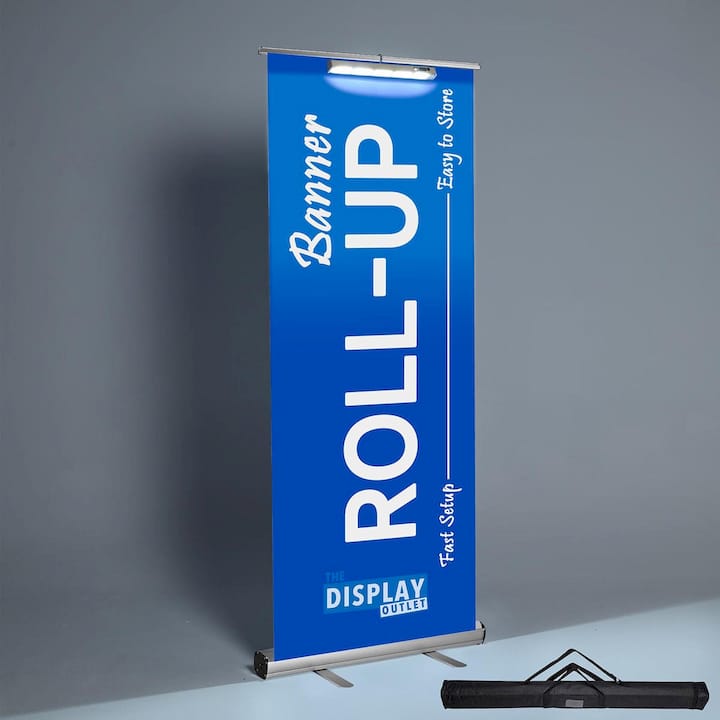
Retractable banner stands are the most widely used option for trade shows. The graphic rolls into a protected base unit, which means quick setup and transport without tools or extra staff. Common sizes run 33" x 80", with larger formats like 47" x 80" or 60" x 90" available for greater visibility. Even inexperienced staff can assemble a retractable stand without instructions, which matters when you are setting up at 7:00 AM before a show opens.
Tension fabric stands use a pillowcase-style graphic that stretches over an aluminum frame. Tension fabric displays weigh about 8 lbs and assemble in roughly 5 minutes. The wrinkle-free surface absorbs ambient lighting and prevents glare from fluorescent bulbs, making them the preferred choice in high-end corporate environments. The finished look is noticeably more polished than a standard vinyl banner.
X-frame and L-frame stands are the lightest and most affordable options. X-frames use a spring-tension cross brace that holds the graphic taut, while L-frames use a rigid upright with a foot base. Both are best suited for short-term promotions, retail environments, or situations where budget is the primary constraint.
Backlit stands integrate LED arrays behind a translucent fabric or acrylic panel. Backlit portable stands provide enhanced graphic visibility in dimly lit convention halls. Brands that need to stand out in crowded, low-light environments increasingly adopt this format for 2026 events.
-
Retractable: fastest setup, best for multi-show travel
-
Tension fabric: premium look, ideal for corporate or high-traffic booths
-
X-frame and L-frame: lightest weight, best for budget-conscious short-term use
-
Backlit: maximum visual impact in dim or competitive environments
Pro Tip: If you exhibit at more than four shows per year, invest in a tension fabric or retractable stand with a durable aluminum base. Cheap composite frames crack after repeated assembly and damage your brand reputation.
How do you determine the right banner stand size for your booth?
Banner stand sizing follows one clear rule: the banner should occupy roughly one-third of your available booth space. A 10x10 booth typically suits a 33" width banner for accessible, lightweight display. Going wider in a small booth crowds the space and blocks product or staff.
Viewing distance also drives size selection. Attendees walking a trade show floor typically read signage from 10–15 feet away. At that distance, a 33" wide banner with a headline in 3-inch type is readable. A 47" or 60" wide banner becomes necessary when your booth sits at the end of an aisle or in a large open hall where you need to capture attention from farther away.
-
Measure your booth footprint before ordering any display.
-
Apply the one-third rule: banner width should not exceed one-third of booth width.
-
Choose height based on ceiling clearance. Most convention centers allow up to 8 feet for inline booths.
-
Consider double-sided banner stands for island booths. They double impressions without using additional floor space.
-
Match stand quantity to booth size. A 10x10 booth works well with 1–3 stands. A 10x20 booth typically uses 2–4 stands, and a 20x20 or larger booth can accommodate 3–6 or more stands positioned strategically.
| Booth size | Recommended banner width | Recommended stand count |
|---|---|---|
| 10x10 ft | 33" | 1–3 |
| 10x20 ft | 33"–47" | 2–4 |
| 20x20 ft | 47"–60" | 3–6+ |
Pro Tip: Order one banner stand slightly wider than your standard size to anchor the back wall. The visual weight difference draws the eye and creates a natural focal point without adding a full backdrop display.
How do venue and environment affect your banner stand choice?
The event environment determines which stand materials and configurations actually perform. Indoor trade shows and outdoor festivals place completely different demands on your display hardware.
Indoor corporate events favor tension fabric and backlit stands. Fluorescent lighting in convention halls creates glare on glossy vinyl, while tension fabric absorbs ambient light and delivers consistent color across the graphic. Backlit stands go further by generating their own light source, which makes them visible from across a crowded hall. In a corporate lobby or retail setting, the clean lines of a tension fabric frame also signal professionalism.
Outdoor events require a completely different approach. Standard indoor stands tip or fade under outdoor conditions. Outdoor banner stands require weighted bases and airflow-permitting mesh graphics to withstand wind, along with UV-stable inks to maintain color vibrancy. A mesh graphic allows wind to pass through rather than act as a sail, which protects both the stand and the surrounding area.
Choosing a banner stand based on price alone ignores the most expensive variable: replacement cost. A $40 X-frame that fades after one outdoor event costs more over a season than a $200 aluminum stand with UV-stable graphics that lasts three years. Buy for the environment you exhibit in, not the budget you wish you had.
Frame material also carries brand implications. Aluminum and high-grade polymer frames offer better recyclability and brand quality than low-end composite materials. Exhibitors who prioritize sustainability increasingly specify aluminum frames as part of their event procurement standards.
What is the step-by-step process for selecting the ideal banner stand?
A clear selection process prevents the most common exhibitor mistake: ordering a display that looks great online but fails in the actual booth environment. Work through these steps before placing any order.
-
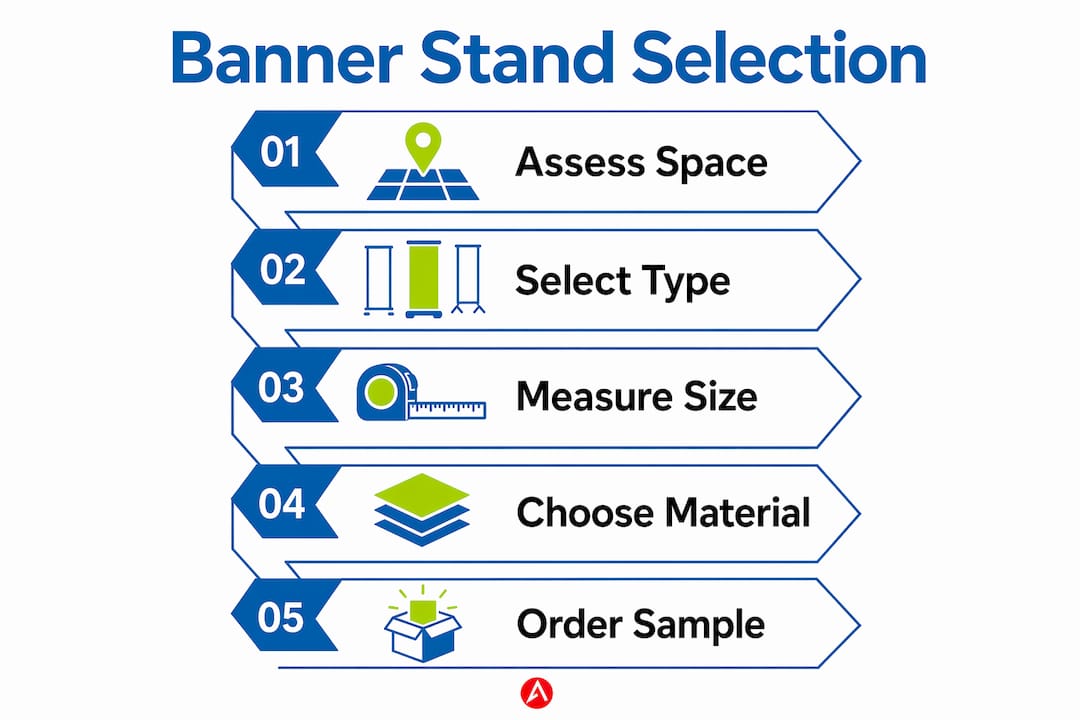
Define your booth size and layout. Confirm the exact dimensions with the show organizer. Note ceiling height, aisle placement, and whether you have a corner or inline booth.
-
Identify your primary environment. Indoor convention center, outdoor festival, corporate lobby, and retail floor each require different materials and hardware.
-
Set your setup time budget. If you travel alone or with one other person, prioritize stands that assemble in under 10 minutes. Retractable stands and tension fabric frames both meet this threshold.
-
Determine your graphic replacement frequency. If your messaging changes every show, choose a stand with an interchangeable graphic system. Retractable stands with replaceable cassettes and tension fabric frames with swappable pillowcase graphics both support this.
-
Match stand type to branding goals. High-end product launches call for tension fabric or backlit displays. Budget promotions or short-term retail signage suit X-frame or L-frame stands. Review your brand visibility checklist before finalizing.
-
Calculate total quantity needed. Use the booth-size-to-stand-count ratios above. Connecting multiple stands creates a cohesive wall of branding that single-stand setups cannot match.
| Selection factor | Retractable | Tension fabric | Backlit | Outdoor frame |
|---|---|---|---|---|
| Setup time | Under 5 min | 5–10 min | 10–20 min | 10–15 min |
| Best environment | Indoor, multi-show | Indoor corporate | Dim halls | Outdoor events |
| Graphic durability | Good | Excellent | Excellent | UV-rated required |
| Weight | Light | Light | Moderate | Heavy (with base) |
Pro Tip: Request a physical sample or proof of your graphic before the show. Color shifts between screen and print are common, and catching them before the event saves you from displaying an off-brand display in front of hundreds of potential customers.
Common pitfalls to avoid include ordering a stand without confirming ceiling height, choosing glossy vinyl for a fluorescent-lit hall, and buying the cheapest outdoor stand without checking for weighted base compatibility. Each of these errors is fixable before the show if you plan early.
Key Takeaways
The most effective banner stand selection process matches stand type, size, and material to the specific booth dimensions, environment, and branding goals of each event.
| Point | Details |
|---|---|
| Match type to environment | Use tension fabric or backlit indoors; use weighted, UV-stable frames outdoors. |
| Apply the one-third sizing rule | Banner width should not exceed one-third of your total booth width. |
| Prioritize setup speed | Retractable and tension fabric stands assemble in under 10 minutes for solo exhibitors. |
| Use double-sided stands wisely | Island booths benefit most from double-sided stands that capture traffic from both directions. |
| Buy for longevity | Aluminum frames with UV-stable graphics cost less per show than cheap stands replaced each season. |
What I’ve learned after watching exhibitors make the same mistakes
The most consistent error I see at trade shows is exhibitors choosing their banner stand based on the graphic design rather than the booth environment. A stunning backlit display looks flat and overpriced in a well-lit outdoor pavilion. A lightweight X-frame that photographs beautifully in a studio looks flimsy and unprofessional in a 20x20 island booth surrounded by competitors using full tension fabric walls.
The second mistake is underestimating logistics. I have watched exhibitors spend 45 minutes wrestling with a display that should take 5 minutes because they chose a stand type they had never assembled before. Retractable stands exist precisely because trade shows are chaotic. The graphic stores inside the base, you pull it up, you clip it to the top pole, and you are done. That simplicity has real value when you are also managing product samples, business cards, and a line of attendees.
The third issue is treating banner stands as a one-time purchase. The best exhibitors I know treat their display hardware as infrastructure. They buy quality aluminum frames once, then update graphics each season. That approach costs less over three years than buying a new cheap stand for every show. Reviewing banner finish options before printing also extends graphic life significantly, since the right laminate finish protects against scuffs and UV fade across multiple events.
— Dan
How Arrowhead Sign Company - Signs, Banners and Trade Show Displays can help you get it right
Choosing the right display hardware is easier when you have a supplier who ships fast and knows the exhibit space well.
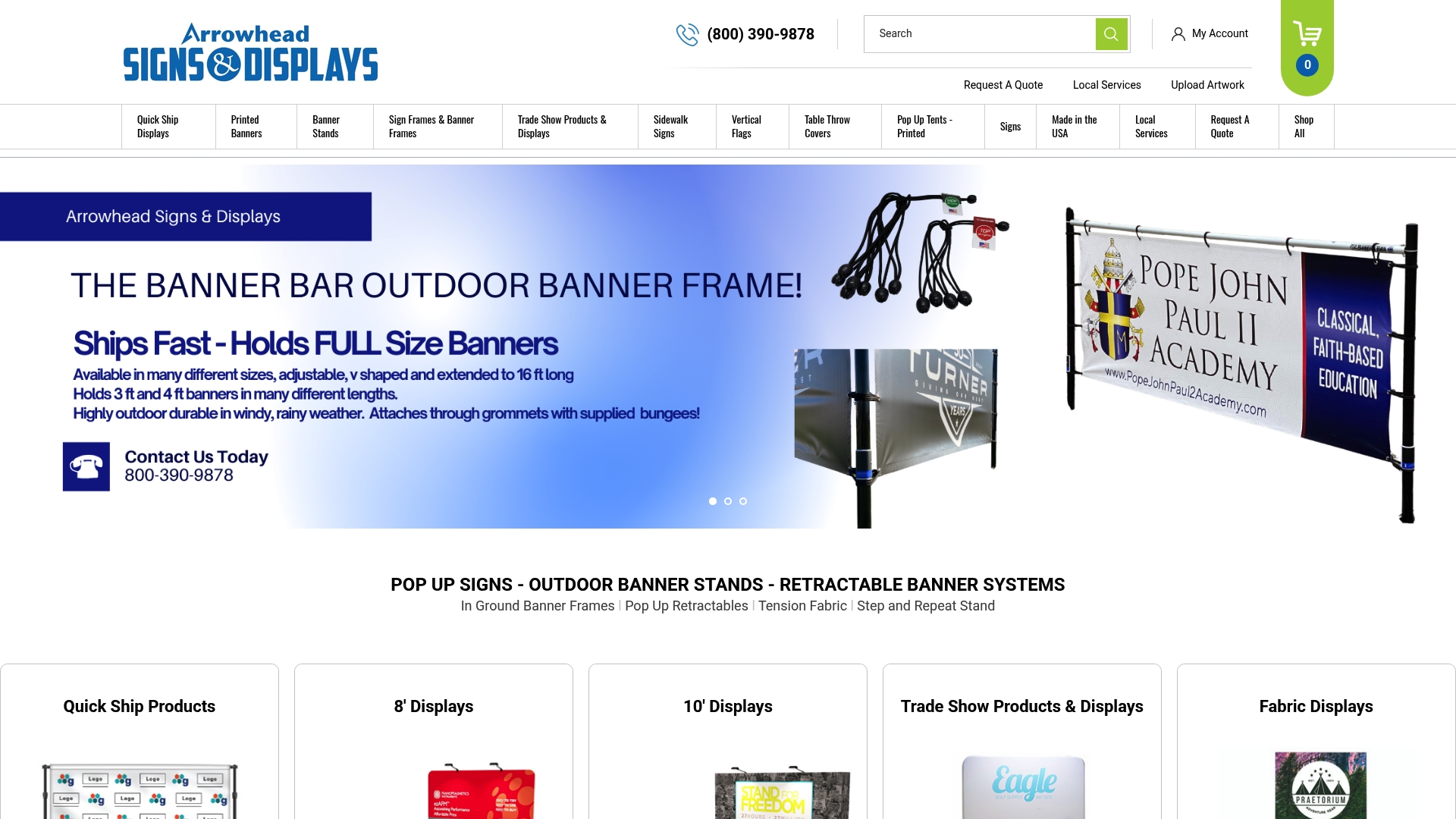
Arrowhead Sign Company - Signs, Banners and Trade Show Displays carries a full range of banner stands and trade show displays built for exhibitors who need quality without long lead times. The 10 ft stretch fabric display delivers a wrinkle-free, professional backdrop that works in corporate booths and high-traffic trade show floors. For outdoor events, the adjustable outdoor banner frame provides weather-resistant stability with a clean, polished look. Most products ship within two business days, and Arizona-based exhibitors can arrange direct venue delivery. Browse the full banner stand and display catalog to find the right fit for your next event.
FAQ
What is the most popular banner stand type for trade shows?
Retractable banner stands are the most widely used option at trade shows because they store graphics inside the base for easy transport and assemble without tools in under five minutes.
What size banner stand works best for a 10x10 booth?
A 33" wide banner stand is the standard recommendation for a 10x10 booth. The one-third rule applies: banner width should not exceed one-third of total booth width to avoid crowding the display area.
Can I use indoor banner stands outside?
Standard indoor stands are not built for outdoor conditions. Outdoor banner stands require weighted bases, mesh or UV-stable graphics, and wind-resistant hardware to perform reliably at outdoor events.
How many banner stands do I need for a 10x20 booth?
A 10x20 booth typically works well with 2–4 banner stands. Position them to define the back wall and anchor each end of the booth for consistent brand coverage across the full footprint.
What is a double-sided banner stand used for?
Double-sided banner stands display graphics on both faces of the stand. They are recommended for island booths where foot traffic approaches from multiple directions, effectively doubling impressions without using additional floor space.