

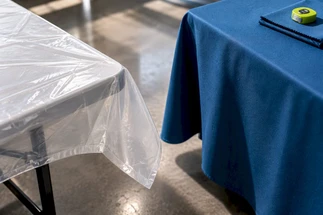
Table Cover Costs: $0.50–$5 Disposable, $145–$350 for Exhibitors
Posted by Deeder Dandenhorf on Oct 1st 2026
Table Cover Costs: $0.50–$5 Disposable, $145–$350 for Exhibitors

Expect to pay roughly $0.50 to $5 per disposable table cover and $145 to $350 or more for a custom printed 6-foot table throw, depending on quantity and print method. Disposable plastic covers make sense for single-use setups where budget rules the decision. Custom printed throws pay off when you exhibit repeatedly or need your booth to reflect your brand at every event.
TL;DR:
- Disposable table covers are the most economical choice for single events, costing around $0.50 to $4 per unit, but they tear easily and are mainly for short-term use.
- Custom printed 6-foot table throws start around $145 and can exceed $350, with prices decreasing as order quantities grow, making them ideal for multiple or recurring exhibitions.
- Printing method, material, and table size significantly impact costs, with dye-sublimation fabrics and larger or round tables costing more, especially for premium or specialty fabrics.
- Bulk purchases and using vendor templates for artwork can reduce per-unit prices and eliminate setup fees, especially when ordering large quantities or during off-peak seasons.
- Standard turnaround time is one to two weeks, though expedited shipping and rush production options are available for tight event schedules.
Table of Contents
- Disposable vs. Custom Table Covers: A Price Comparison
- What Drives Table Cover Pricing (and Where You Can Cut Costs)
- Real Price Examples for Common Table Cover Orders
- Smart Ways to Lower Your Table Cover Spend
- Ordering Timelines and What Fast Fulfillment Actually Means
- Where Buyers Lose Money on Table Covers
- How Arrowhead Helps You Get a Fast, Accurate Quote
- Sources
- FAQ
Disposable vs. Custom Table Covers: A Price Comparison
The gap between disposable and custom table covers comes down to how often you plan to use them and whether brand visibility matters to your event.
Disposable plastic covers are the cheapest option by a wide margin. Retail shelves price single covers under $3 in many cases, while wholesale cases bring the per-unit cost down further depending on size and pack count. These covers work for casual gatherings, back-of-house tables, or one-time setups where appearance is not the priority.
Custom printed table throws sit in a different category entirely. A 6-foot throw with full-color printing typically starts around $145 and can climb past $350 depending on fabric weight, print method, and finishing details. Per-unit cost drops noticeably as order quantity increases, which matters if you exhibit at multiple shows a year.
A few pricing patterns show up across vendors:
- Round tables often cost more to cover than rectangular tables of similar size because of the extra fabric needed for a clean drape.
- Stretch fabric covers, which pull tight over a table frame, tend to price higher than loose throws due to the specialized fabric and fitted construction.
- Vendors sometimes apply higher pricing when they learn an event is a wedding or similar premium occasion, a pattern documented in Consumer Reports’ wedding cost reporting.
- Case-pack disposable covers usually beat single-unit retail pricing once you need more than a handful.
If you exhibit once and never again, disposable wins on price. If your table cover doubles as a marketing asset, a custom throw earns its higher price through repeated use and brand consistency.
What Drives Table Cover Pricing (and Where You Can Cut Costs)
Table cover pricing depends on a handful of variables you can control more than you might expect.
- Material shapes both price and durability: plastic disposables cost the least but tear easily, polyester throws hold up to repeated folding and washing, and stretch fabric costs more upfront but resists wrinkling at every setup.
- Size and table style affect how much material a vendor uses; a 4-foot table needs less fabric than an 8-foot table, and round tables typically require more fabric than rectangular ones of similar footprint.
- Printing method matters more than most buyers realize: dye-sublimation produces vibrant, full-bleed graphics but costs more than screen printing, which in turn costs more than single-color options.
- Setup and art fees apply when your artwork needs adjustment before printing; vendor-supplied templates and print-ready files are one of the more reliable ways to skip these charges entirely.
- Quantity brings the per-unit price down steadily, while rush production and expedited shipping push it back up.
- Venue compliance can add cost too: some trade shows require flame-retardant fabric, so confirming venue rules before ordering avoids a late substitution fee.
Pro Tip: Ask your vendor for their print-ready template before you send artwork. It usually eliminates the setup fee and shortens turnaround.
Real Price Examples for Common Table Cover Orders
Numbers help more than percentages here, so consider a few worked examples.

A basic disposable plastic cover for a single table runs about $0.50 to $4 depending on size, while a case with multiple units brings the per-cover price down further. Medline’s bulk case of 100 nonsterile table covers offers a useful benchmark for this kind of volume pricing on utility-grade covers.
For custom printed 6-foot dye-sublimated throws, price scales with quantity:
- A single throw typically lands between $145 and $350, depending on fabric and print complexity.
- Ordering 10 throws usually drops the per-unit price meaningfully compared to a single order, since setup costs spread across more units.
- Ordering 50 or more often brings the steepest per-unit savings, making bulk orders the clear play for multi-booth companies or franchise networks.
A single custom 6-foot table throw commonly costs $145 to $350 or more before quantity discounts, according to Medline’s bulk pricing benchmark for comparable disposable volume math. That spread reflects fabric choice and print method more than anything else.
Smart Ways to Lower Your Table Cover Spend
A few practical habits keep table cover costs in check without sacrificing what you need.
- Buy instead of rent once you know you will use the cover more than two or three times; renting repeatedly usually costs more than owning outright.
- Calculate your break-even point by dividing the purchase price by the per-event rental fee to see how many uses it takes to justify buying.
- Use vendor templates and simpler artwork to sidestep setup fees, since complex custom layouts often trigger extra charges.
- Ask for an itemized quote so you can see exactly what you’re paying for, and ask directly whether wedding or event-type surcharges apply, a tactic supported by CBS News’ consumer reporting on vendor pricing.
- Order during off-peak seasons when possible, since production queues run lighter and rush fees are less likely to apply.
Ordering Timelines and What Fast Fulfillment Actually Means
Turnaround time affects price as much as fabric or print method does. Rush production almost always adds a fee, so understanding standard lead times helps you plan ahead and avoid paying for speed you don’t need.
- Most standard custom table cover orders take one to two weeks from art approval to shipment, though this varies by fabric and print method.
- Quick-ship programs, where available, can cut that window significantly, which matters if your event date moves up unexpectedly.
- Pricing commonly includes basic art file checks and access to layout templates, while add-ons like rush production, oversized fabric, or expedited shipping usually cost extra.
- For trade-show visibility, dye-sublimated polyester tends to outperform plastic or vinyl at a distance, which is worth factoring in even if it costs more upfront.
Where Buyers Lose Money on Table Covers
The costliest mistakes I see are avoidable: sending artwork that doesn’t match the vendor’s file specs, requesting rush production because measurements were taken too late, or ordering the wrong table size because nobody double-checked the venue’s setup.
Before you order, confirm five things with your vendor: table size, fabric type, required file format, standard lead time, and a full itemized quote. Getting these right the first time saves both money and a stressful week before your event.
— Dan
How Arrowhead Helps You Get a Fast, Accurate Quote
Once you know your table size, quantity, and event date, getting a real price takes minutes, not days. Table Throw Covers are built for exhibitors who need brand-consistent booths without a long wait, with many products shipping quickly.
To speed up your quote, have this ready:
- Table size and shape (4-foot, 6-foot, 8-foot, or round)
- Quantity needed and your event date
- Print-ready artwork or a request for a starter template
| Product | Best for |
|---|---|
| Table Throw Covers | Branded booth tables at repeat trade shows |
| 10 ft stretch fabric display | Large-format backdrop alongside your table setup |
| Outdoor Banner Frame, The Banner Bar | Durable outdoor signage paired with your booth |
| Signicade Deluxe A-Frame Sidewalk Sign | Sidewalk visibility for foot-traffic events |
Standard turnaround runs on the timelines described above, and expedited options are available when your event date is tight. Check Quick Ship Displays for availability on your event date.
Sources
A few outside sources back up the pricing behavior described here, and they’re worth a look if you want to verify a vendor’s quote yourself.
- Get More Wedding for Your Money - Consumer Reports
- Consumer Reports: cutting wedding costs without sacrificing celebration - CBS News
- Medline Nonsterile Table Cover with Fan-Fold, 50 x 90 Inch - Case of 100
FAQ
Is it cheaper to buy or rent tablecloths?
Buying is usually cheaper if you’ll use the cover more than two or three times, since rental fees add up fast across repeat events. Renting can make sense for a single occasion or an unusual table size you won’t need again.
How much do tablecloths cost at Dollar Tree?
Discount retailers commonly price basic disposable plastic table covers under a few dollars per unit, though exact pricing varies by store and season. For volume needs, a case-pack option like Medline’s bulk listing offers a clearer per-unit comparison.
How much does a table cloth cost?
A basic disposable cover typically runs $0.50 to $4 per unit, while a custom printed 6-foot table throw usually costs $145 to $350 or more depending on fabric and print method. Quantity, material, and turnaround time are the biggest factors in the final price.
How can I cover my table cheaply?
For a one-time event, a disposable plastic cover from a retail or wholesale supplier is the lowest-cost option. If you need a reusable, branded look, using a vendor’s print template instead of custom artwork helps you avoid setup fees on a printed throw.