

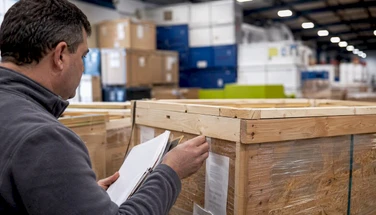
Track Your Display Order Delivery Status: Exhibitor Guide
Posted by Deeder Dandenhorf on Aug 12th 2026
Track Your Display Order Delivery Status: Exhibitor Guide
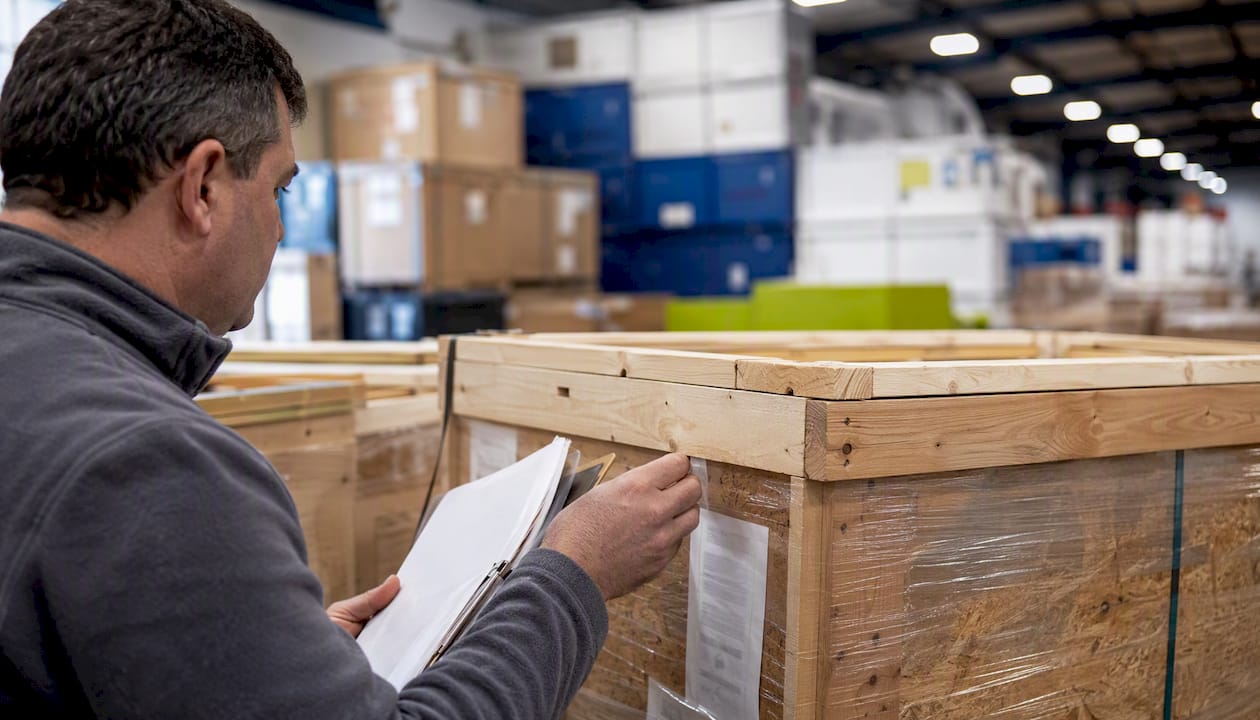
Your display order has reached the booth only when you have a signed drayage receipt or a timestamped photo showing your booth number, not when the carrier website says “Delivered.” To confirm right now, do three things: pull your tracking number and verify the carrier’s proof of delivery (POD), call the drayage company or floor manager and ask them to confirm delivery to your specific booth number, and request a photo of the crate or package at the booth. A carrier POD confirms the shipment reached the venue or marshaling yard. Booth-level sign-off confirms it reached you.
- Check your tracking number on the carrier portal for the latest scan event.
- Call the drayage company or floor manager and give them your booth number.
- Request a photo or signed receipt showing the crate at your booth.
MPI recommends tracking goods every day and following each delivery stage, from the advance warehouse to the venue to the stand, because gaps between stages are where shipments go missing.
Key Takeaways
Tracking display order delivery status for trade shows requires verifying booth-level sign-off, not just carrier POD, because the marshaling-to-booth handoff is where most shipments go missing.
| Point | Details |
|---|---|
| Carrier “Delivered” ≠ booth arrival | Always confirm with a signed drayage receipt or photo showing your booth number. |
| BOL piece count is your protection | Bring the bill of lading to the show; it resolves partial-delivery disputes at the warehouse. |
| Daily tracking reduces surprises | Check delivery status updates every day from ship date to setup day, per MPI best practices. |
| Contingency kit saves shows | Keep print-ready files and a fast-fulfillment contact ready before you leave for the event. |
| Arrowhead Sign Company ships fast | Two-business-day fulfillment and direct Arizona delivery make last-minute replacements possible. |
Table of Contents
- What are the 7 order-to-booth milestones you need to track?
- Why does “Delivered” on the carrier site sometimes mean your booth still has nothing?
- What should you request from your vendor before they ship?
- How do you confirm final booth arrival on event day?
- What should you do when a shipment is delayed, partial, or damaged?
- How do lead times and shipping options affect your risk?
- What experienced event planners actually do differently
- Fast, reliable fulfillment when your booth can’t wait
- Sources
What are the 7 order-to-booth milestones you need to track?
Every trade-show shipment moves through a predictable sequence. Knowing which stage your order is at tells you exactly who to call and what document to pull.
| Milestone | What to check | Expected documents | Typical event name |
|---|---|---|---|
| 1. Order confirmed | Vendor confirmation email | Order receipt, artwork approval | “Order processed” |
| 2. Fulfilled | Vendor ships notification | Packing list, tracking number | “Ready to ship” |
| 3. Shipped | Carrier pickup scan | Bill of lading (BOL), tracking number | “Picked up” / “In transit” |
| 4. In transit | Hub scans, estimated delivery | BOL, piece count | “Out for delivery” |
| 5. Advance warehouse / marshaling yard | Carrier POD + warehouse receipt | Signed warehouse receipt, BOL | “Delivered to warehouse” |
| 6. Delivered to booth | Drayage sign-off or photo | Signed drayage receipt, photo with booth number | “Delivered to booth” |
| 7. Post-show / return | Return carrier pickup confirmation | Return BOL, geofence timestamp | “Picked up for return” |
At milestones 5 and 6, the process shifts from carrier tracking to drayage tracking, and that handoff is where most surprises happen. Your BOL piece count is the document that resolves disputes at the warehouse; bring it to the show floor. Event logistics platforms coordinate receiving windows, event labeling with booth numbers and show names, and scheduled dispatch to make sure shipments hit the venue’s required date.
For the post-show return, asset-tracking solutions let you set a geofence around your warehouse and log return timestamps automatically, so you know exactly what made it home after teardown.
Pro Tip: Set a daily calendar reminder to check your shipment’s status at each stage. MPI’s event shipping best practices specifically recommend daily tracking to catch issues before they become show-day emergencies.
Why does “Delivered” on the carrier site sometimes mean your booth still has nothing?
A carrier marks a shipment “Delivered” the moment it reaches any accepted handoff point, which is often the venue’s loading dock or marshaling yard, not your booth. From there, the drayage company takes over, and that leg of the journey has its own timeline, paperwork, and potential delays.
Common scenarios where carrier “Delivered” does not equal booth arrival:
- Delivered to carrier warehouse: The shipment was held at a regional hub and never transferred to the venue.
- Dropped at the loading dock: The crate is at the venue but waiting in a queue for drayage to move it to the floor.
- Mis-scanned: A scan was triggered at the wrong location, creating a false “Delivered” event.
- Routed to the wrong event dock: Large convention centers handle multiple events simultaneously; mislabeled freight ends up in the wrong section.
- Marshaling yard delay: The advance warehouse accepted the shipment days before the show, but drayage to the booth floor doesn’t happen until setup day.
Experienced event planners treat the carrier’s “Delivered” status as confirmation of venue arrival, not booth arrival. Final confirmation always comes from on-site floor personnel or a signed drayage receipt.
Pro Tip: Always request booth-level proof of delivery. A photo showing the crate label next to your booth number sign is the fastest way to confirm arrival and the strongest evidence if you need to file a claim.
What should you request from your vendor before they ship?
Getting the right documents before your order leaves the vendor’s facility is the single most effective way to protect yourself against delays, partial deliveries, and disputes. Here is the complete pre-shipment checklist:
- Tracking number(s) and carrier name so you can monitor order shipment tracking from the moment the carrier picks up.
- Bill of lading (BOL) with piece count — this document is your legal record of what was shipped and how many pieces. A BOL piece count prevents partial-delivery disputes at the warehouse.
- Packing list detailing every item, quantity, and weight in each crate or box.
- Crate and box labels that include the show name, your booth number, and an onsite contact name and phone number, formatted per the venue’s labeling requirements.
- Estimated delivery windows for both the advance warehouse and the venue receiving dock.
- Drayage company contact or venue receiving contact for the specific event.
Why each item matters: the BOL is your proof of shipment count; the packing list is your verification tool on the booth floor; proper crate labels are what get your freight routed correctly by drayage handlers. Venue receiving windows and event-specific labeling are standard requirements at major convention centers, and shipments that arrive outside the window or with incomplete labels often face delays or additional fees.
Sample vendor email:
Subject: Pre-Shipment Documents Needed — [Show Name], Booth [Number]
Hi [Vendor Name], please send the following before shipping: tracking number(s), carrier name, BOL with piece count, packing list, and confirmation that crates are labeled with show name, booth number, and our onsite contact. Please also confirm the estimated delivery window for the advance warehouse and venue. Thank you.
Pro Tip: If you need to call the vendor for immediate clarification, lead with: “Can you confirm the tracking number, carrier name, and BOL piece count for our shipment to [Show Name], Booth [Number]? We need to verify delivery status updates before setup day.”
How do you confirm final booth arrival on event day?
Confirming booth arrival requires a specific sequence of checks, not just a glance at a carrier app.
- Check the carrier or drayage portal for the latest scan event and delivery status.
- Contact venue receiving and ask whether your shipment has been logged in under your company name and booth number.
- Reach the drayage handler on the floor and give them your booth number, show name, and BOL piece count.
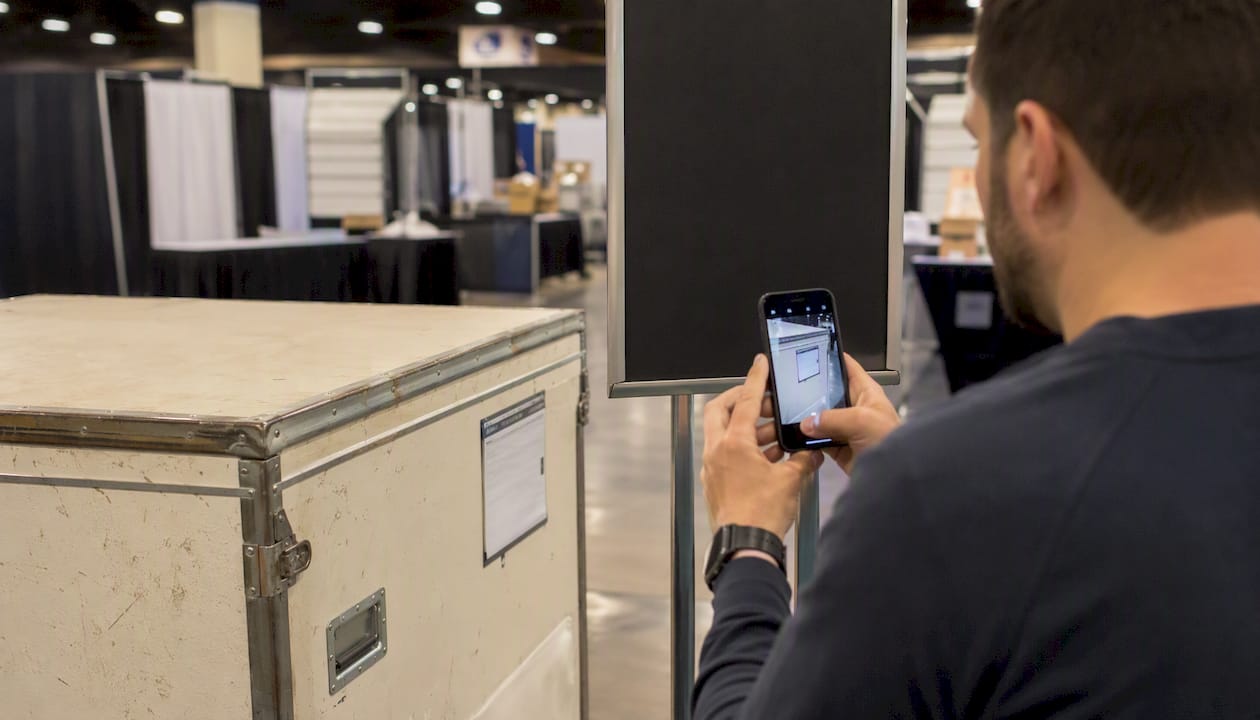
- Request a signed drayage receipt or ask them to send a photo of the crate at your booth with the booth number sign visible.
- Verify piece counts against your packing list as each crate is opened.
For on-site communication, keep three contacts ready: the drayage company’s floor supervisor, the venue’s receiving dock manager, and your own onsite staff member. If the drayage supervisor can’t locate your freight, escalate to the show services desk immediately with your BOL in hand.
Photo evidence guidelines: capture the crate label, the booth number sign, and the signed receipt in the same frame when possible. Note who signed, the time, and the location in your phone’s notes app right away. Real-time shipment visibility tools let logistics managers spot potential delays early and coordinate corrective action across carriers, drayage, and show services before the event opens.
What should you do when a shipment is delayed, partial, or damaged?
Speed matters here. The faster you escalate, the more options you have.
- Notify your vendor within hours of discovering the issue. Share your tracking number, BOL, and a description of what is missing or damaged.
- Contact the carrier to open a formal trace or damage claim. Most carriers require written notice within a specific window (often 9 months for loss, 9 months for damage, though terms vary by carrier and service level — confirm with your carrier directly).
- Notify the drayage company if the issue occurred after the marshaling yard handoff.
- Alert show services so they can flag your booth for priority handling if freight is still in the building.
Required documents for any claim: photos of damage, the BOL with piece count, the packing list, and the signed drayage receipt. Digitizing your freight visibility creates timestamped records that make claims faster and vendor accountability clearer.
Contingency options when freight doesn’t arrive in time:
- Emergency local rentals: Many convention cities have display rental companies that can deliver within 24 hours.
- Print-on-demand graphics: Local large-format print shops can reprint banners or fabric graphics overnight. See how booth graphics get printed for what to specify.
- Modular reconfiguration: If some pieces arrived, reconfigure what you have to cover the most visible booth positions.
- Fast-fulfillment replacement orders: Vendors with two-business-day fulfillment can sometimes ship a replacement that arrives before the show opens, depending on lead time.
How do lead times and shipping options affect your risk?
Choosing the right shipping method is a cost-versus-risk decision, and the stakes are higher for first-time venues or high-value exhibits.
- Standard freight: Lowest cost, longest lead time, highest exposure to delays. Best for non-critical items or shows with flexible setup windows.
- Expedited freight: Higher cost, tighter delivery window, better carrier priority. Worth it for high-value exhibits, perishable demo materials, or any show where setup time is compressed.
- Direct or local delivery: Eliminates drayage entirely for local events. The most reliable option for same-city shows and the fastest path to confirmed booth arrival.
Key cost drivers include shipment weight and cube, number of pieces, special handling requirements (crated vs. uncrated), and drayage fees at the venue. Drayage fees are charged per hundredweight (CWT) and can add up quickly for large booths.
Recommended lead times by scenario:
- Local delivery (same city): 3–5 business days before the show.
- National freight to advance warehouse: 10–14 business days before the show opens.
- International shipments: 4–6 weeks minimum, accounting for customs clearance.
Venue receiving windows and dock availability are common delay triggers; plan shipments to arrive within the venue’s specified window, not just before the show date. For portable display options that ship compactly and reduce freight risk, lighter formats often qualify for standard parcel carriers rather than freight, which simplifies tracking entirely.
What experienced event planners actually do differently
The planners who never panic on setup day share a few habits that most exhibitors skip.
Do:
- Track your shipment every day from the moment it ships, not just the day before the show.
- Get booth-level sign-off, not just a carrier POD.
- Keep digital copies of your BOL, packing list, and drayage receipt in a shared folder your whole team can access.
- Stage a contingency kit: a USB drive with print-ready files, a list of local print vendors, and the contact for a fast-fulfillment display supplier.
- For high-value exhibits, consider temporary asset-tracking tags that provide piece-level location history and geofencing, so you can spot a missing case before setup day.
Don’t:
- Assume “Delivered” on the carrier app means your booth has anything in it.
- Ignore piece counts when the drayage handler brings your freight to the floor.
- Wait until the show opens to escalate a missing or damaged shipment.
- Skip the post-show return tracking. Geofencing your warehouse and logging return timestamps prevents the common confusion about which items actually made it back.
The contingency kit idea sounds like overkill until the one show where your main banner is sitting in a marshaling yard two states away. A USB drive with your print files costs nothing. A last-minute reprint without them costs hours.
Fast, reliable fulfillment when your booth can’t wait
When your freight is delayed or you need a replacement fast, lead time is everything. Arrowhead Sign Company - Signs, Banners and Trade Show Displays ships most products within two business days and offers direct venue delivery for Arizona events, so you spend less time worrying about where your display is and more time preparing your pitch.
Three products worth keeping in mind for fast replacement or last-minute needs: the 10 ft stretch fabric display ships quickly and sets up without tools, making it a practical backup for a delayed booth backdrop. The Signicade Deluxe A-Frame Sidewalk Sign is a durable, portable option for immediate onsite signage. The Outdoor Banner Frame (The Banner Bar) handles outdoor placements with an adjustable frame that works with standard banner sizes. Browse the full range and place an order at Arrowhead Sign Company to get your replacement display moving today.
Sources
- Best Practices for Event Shipping & Logistics | MPI
- Event Logistics & Onsite Delivery | Stitchi
- Trade Show Equipment Tracking: Protect $50K+ Exhibits Across CES, MWC & Every Show | Asset Tracking Solution for Trade Show Equipment Tracking: Protect $50K+ Exhibits Across CES, MWC & Every Show | Airpinpoint
- Event logistics : how to ensure seamless coordination?
- How Freeman Upgraded Logistics Tracking to Eliminate Trade Show Chaos
Next steps: Copy the sample vendor email from Section 4, save the Key Takeaways table as your one-page checklist, and visit Arrowhead Sign Company if you need a fast-fulfillment replacement order before your next show.
Recommended
- How Exhibitors Prepare Display Materials: Small Team Guide - Arrowhead Sign Company
- Why Early Setup Benefits Exhibitors: A Practical Guide - Arrowhead Sign Company
- DisplayShopUSA.com Alternatives for Small Business Exhibitors - Arrowhead Sign Company
- Venue Signage Placement Checklist for Trade Shows - Arrowhead Sign Company