

Trade Show Display Checklist for Small Business Success
Posted by Deeder Dandenhorf on Jun 23rd 2026
Trade Show Display Checklist for Small Business Success
A trade show display checklist is defined as a structured preparation system covering booth design, staffing, logistics, and follow-up to protect your investment and generate measurable results. For small businesses, skipping any phase of this system costs real money. A 10x10 booth runs $15,000 to $25,000 all-in when you factor in rental, display production, travel, and logistics. That number makes thorough preparation non-negotiable. The checklist format used by professional exhibitors, sometimes called an exhibition planning framework, breaks preparation into four phases: pre-show, display setup, on-site operations, and post-show follow-up.
1. What should your pre-show preparation checklist include?
Goal setting is the first item on any trade show display checklist for small businesses. Write down specific, measurable targets before you book anything. Examples include collecting 50 qualified leads, scheduling 15 meetings, or closing two deals on the floor. Vague goals produce vague results.
Budget planning comes next. The standard rule is to multiply your booth fee by 3 to estimate total event expenditure. If your booth rental costs $3,000, plan to spend $9,000 overall. This covers display production, shipping, travel, hotel, and staff costs.

Reserve your booth location early. Corner spots and end-cap positions generate significantly more foot traffic than mid-row placements. Many shows open registration six to twelve months in advance, and the best spots go fast.
Map the attendee and exhibitor lists against your ideal customer profile. Filter by industry, company size, and job title to build a targeted outreach list. Pre-show outreach takes 4–6 weeks to generate 20–30 confirmed meetings, so start early. Use email and LinkedIn to schedule appointments before the show floor opens.
Pro Tip: Book your meetings before the show starts. Attendees who commit to a time slot are far more likely to show up than those who say “I’ll stop by.”
2. How to set your staffing levels correctly
Staffing is a logistics decision, not a last-minute call. The standard ratio is 1 staff member per 100 square feet of booth space. A 10x10 booth needs at least one person on the floor at all times, ideally two during peak hours.
Train every team member on three things before the show: your core product message, the lead capture process, and the qualifying questions they should ask every visitor. Inconsistent messaging across staff members confuses prospects and weakens your brand.
Schedule daily briefings at the start of each show day. Use them to share the previous day’s wins, flag any product demo issues, and reset team energy. Rotate staff every two hours to prevent fatigue and keep engagement quality high.
3. Which display types work best for small business booths?
Choosing the right display format is a core part of any trade show booth basics decision for small businesses. The most common options are retractable banner stands, pop-up displays, and stretch fabric displays. Each serves a different purpose.
| Display Type | Best For | Portability | Setup Time |
|---|---|---|---|
| Retractable banner stand | Brand reinforcement, tight spaces | High | Under 2 minutes |
| Pop-up display | Full backdrop, visual impact | Medium | 10–15 minutes |
| Stretch fabric display | Professional look, 10 ft booths | Medium | 15–20 minutes |
| Outdoor banner frame | Exterior visibility, flexible sizing | High | Under 5 minutes |
Review the full range of display types before committing to a format. Your choice should match your booth size, your travel situation, and the visual impression you want to make.
Pro Tip: Stretch fabric displays photograph exceptionally well for social media content. If you plan to post from the show floor, the clean printed surface beats a wrinkled vinyl backdrop every time.
4. What signage strategy drives the most booth traffic?
Signage is your first conversation with every attendee who walks past your booth. Hook-based signage readable from at least ten feet increases booth traffic more reliably than logo-heavy branding. The sign should name a specific problem your product solves, not just your company name.
Design your booth around one clear entry point. Visitors should know exactly where to walk in and what to do next. A single defined path through the booth keeps conversations focused and prevents the scattered, chaotic feel that drives people away.
Place your lead capture station near the exit point of the booth. Visitors who have already engaged with your product or team are far more likely to share their contact information on the way out than on the way in.
For a deeper look at how signage placement affects visitor behavior, the role of signage at expos guide covers layout principles that apply directly to small business booths.
5. How to handle interactive displays without losing visitors
Interactive displays work best when they require minimal user learning. If an attendee needs a staff explanation before they can use your demo, they will lose interest and move on. One-touch demos, short video loops, and physical product samples outperform complex digital experiences on the show floor.
Keep demos under 90 seconds. Attendees are moving through dozens of booths, and their attention is finite. A tight, focused demo that ends with a clear next step converts far better than a full product walkthrough.
Test every piece of AV and demo equipment the day before the show opens. Bring backup cables, a spare laptop, and printed materials as a fallback. Technology failures on day one are preventable with a 30-minute pre-show equipment check.
6. What goes in your trade show logistics checklist?
Logistics failures are the most common reason small businesses overspend at trade shows. Order booth services early, including carpet, electrical connections, and furniture rentals. Late orders cost significantly more and sometimes result in unavailable inventory.
Your logistics checklist should cover:
- Shipping deadlines for display materials to the venue or advance warehouse
- Drayage fees, which are the costs to move your freight from the loading dock to your booth
- Setup and teardown schedules, including any union labor requirements
- Hotel and travel bookings for all staff attending
- Insurance certificates required by the venue
Pack an emergency kit for the booth. Include tape, scissors, zip ties, a power strip, pain relievers, snacks, and a printed copy of your show schedule. These items cost almost nothing to bring and save significant stress on the show floor.
Pro Tip: Take photos of your packed display crates before shipping. If anything arrives damaged, you have documentation for an insurance or vendor claim.
7. What does a post-show follow-up checklist look like?
Post-show follow-up is where most small businesses lose the ROI they worked hard to build. Upload all leads to your CRM within 24 hours of the show closing. Assign a follow-up owner to each lead before anyone leaves the venue.
Contact every lead within 48 hours. Response speed is the single biggest factor in conversion rates after a trade show. A personalized email referencing the specific conversation you had at the booth outperforms any generic follow-up template.
Use lead scoring to prioritize your outreach. Leads who requested a demo, asked about pricing, or brought a colleague to the conversation rank higher than those who just dropped a business card in a bowl. Work the high-priority leads first.
Schedule a 30-day post-show review with your team. Measure results against the goals you set in step one. Document what worked, what failed, and what you would change. This review becomes the foundation of your next trade show preparation timeline checklist.
Key takeaways
A successful trade show display checklist for small businesses covers four phases: pre-show planning, display setup, on-site operations, and post-show follow-up, with budget and outreach driving the strongest ROI.
| Point | Details |
|---|---|
| Budget with the 3x rule | Multiply your booth rental fee by 3 to estimate total event costs accurately. |
| Start outreach 4–6 weeks early | Pre-show meetings booked in advance consistently outperform cold floor conversations. |
| Match display type to booth size | Stretch fabric and pop-up displays suit 10 ft booths; retractable banners work in tighter spaces. |
| Follow up within 48 hours | Contacting leads within two days of the show closing produces the highest conversion rates. |
| Review results at 30 days | A structured post-show review turns each event into a better plan for the next one. |
What I’ve learned about trade show checklists after years on the floor
Most small business owners I talk to spend the majority of their prep time on the display and almost none of it on outreach. That is the wrong order. Reversing that ratio and putting more effort into scheduling meetings than perfecting booth aesthetics produces better results almost every time.
The booths that generate the most leads are rarely the most elaborate. They are the ones with clear messaging, a focused demo, and a staff team that knows exactly what conversation they are trying to start. A well-trained team in a simple 10x10 booth will outperform a poorly briefed team in a 20x20 island display.
The checklist itself matters less than the habit of updating it. After every show, I add at least two or three new items based on what caught me off guard. The checklist you use for your fifth show should look nothing like the one you used for your first. That evolution is the real competitive advantage.
If you want to see how small business signage choices affect booth traffic before you commit to a display format, that resource is worth reading before you finalize your setup plan.
— Dan
Your next trade show display starts here
Arrowhead Sign Company - Signs, Banners and Trade Show Displays builds display products specifically for small businesses that need professional results without a large-event budget. Their 10 ft stretch fabric display ships within two business days and sets up in under 20 minutes, making it a practical choice for businesses exhibiting on a tight timeline.
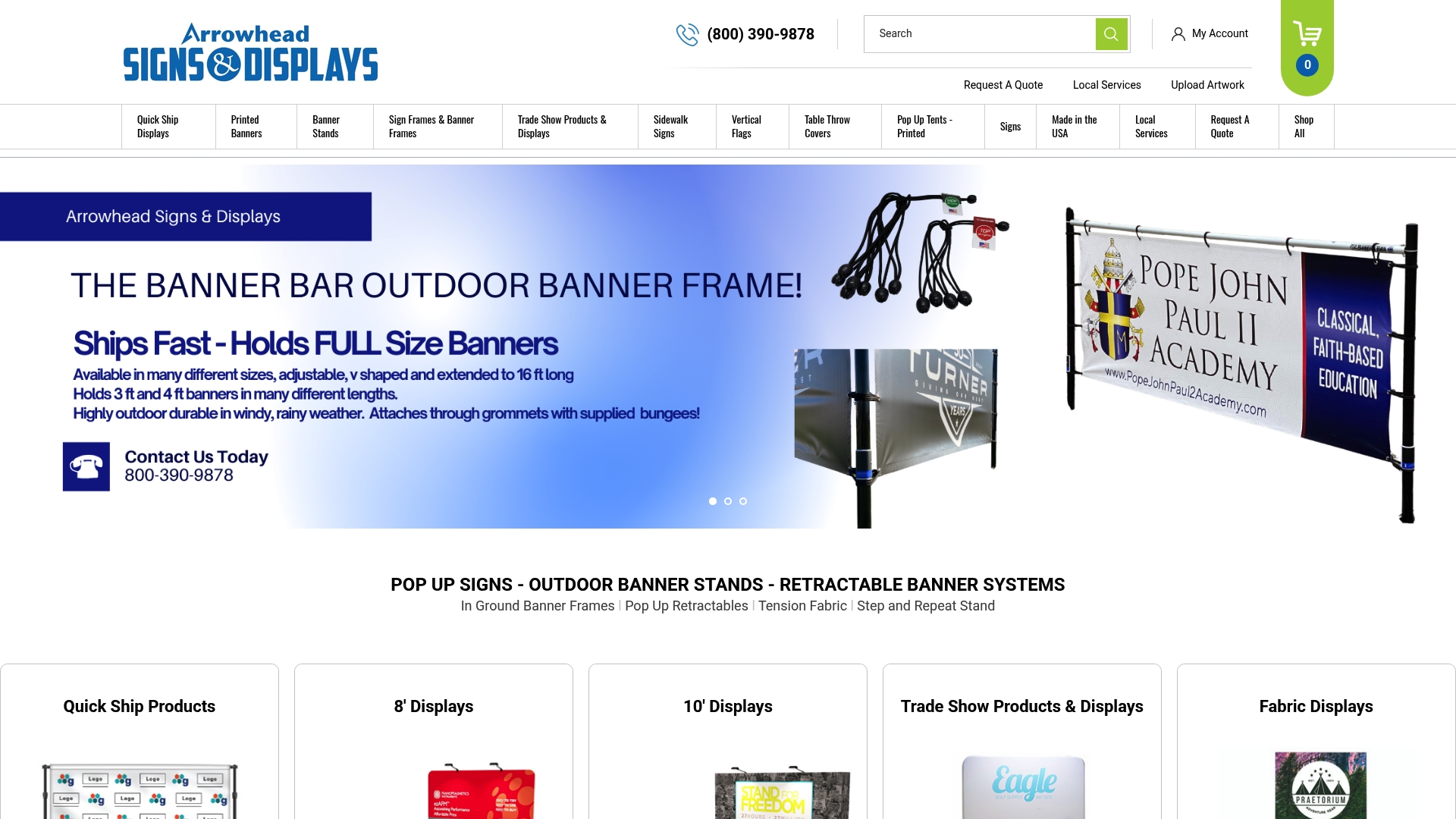
For booths that need flexible outdoor visibility, the adjustable outdoor banner frame works at 6 ft and 8 ft heights and pairs with any custom printed banner. Arrowhead Sign Company - Signs, Banners and Trade Show Displays also offers direct delivery to venues across Arizona, which removes one logistics variable from your checklist entirely. Their team supports custom design and printing, so you can bring your booth vision to life without sourcing multiple vendors.
FAQ
How much does a small business trade show booth cost?
A 10x10 booth typically costs $15,000 to $25,000 all-in, covering rental, display production, travel, and logistics. The standard budgeting rule is to multiply your base booth fee by 3 to estimate total expenditure.
How many staff members do I need for my trade show booth?
Plan for 1 staff member per 100 square feet of booth space. A 10x10 booth needs at least one person on the floor at all times, with two during peak traffic hours.
When should I start pre-show outreach?
Start outreach 4–6 weeks before the show to generate 20–30 confirmed meetings. Earlier outreach gives prospects enough time to add your meeting to their show schedule.
What is the most important post-show action?
Upload all leads to your CRM within 24 hours and contact every lead within 48 hours. Speed of follow-up is the strongest predictor of post-show conversion rates.
What display type works best for a 10x10 booth?
A stretch fabric display or a pop-up display suits a 10 ft booth well, offering strong visual impact with manageable setup times. Retractable banner stands work as supplemental signage alongside either format.