

What Is a Demo Counter for Trade Shows?
Posted by Deeder Dandenhorf on Jul 29th 2026
What Is a Demo Counter for Trade Shows?
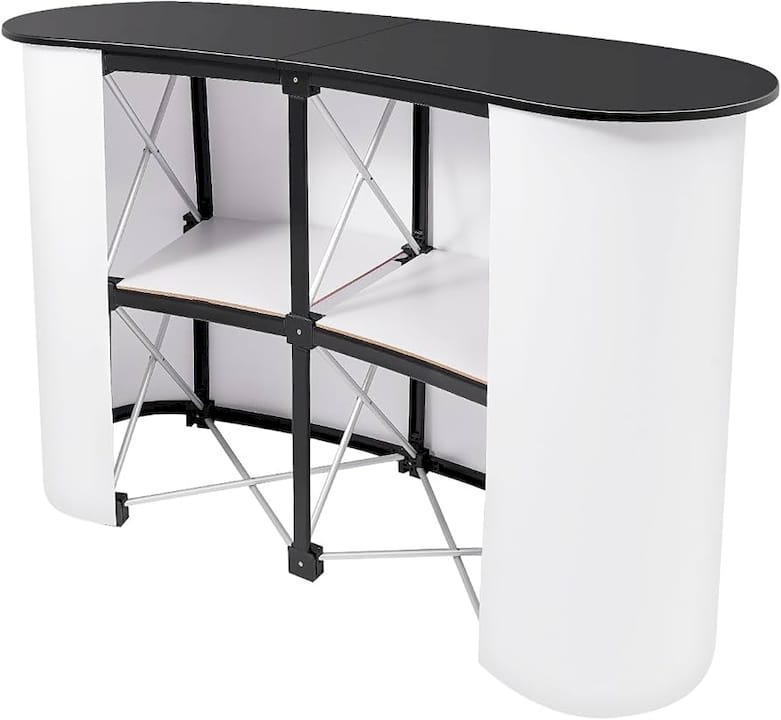
A demo counter is a compact, branded workstation placed on the trade-show floor to demonstrate products, register visitors, capture leads, or display literature. At its core, it gives your booth a defined focal point where conversations start and transactions happen. The worktop provides a functional surface for hands-on interaction, internal storage keeps supplies organized and out of sight, and a printed graphic wraps the exterior to reinforce your brand at every angle.
Three things a demo counter does for you at any event:
-
Demo station: Lets attendees touch, test, or watch a product in action at a comfortable, dedicated surface.
-
Info and lead capture: Serves as a registration desk, sample-distribution point, or literature display with a natural place to collect contact details.
-
Branded surface: Turns a functional piece of furniture into a 360-degree marketing asset that works even when no one is standing behind it.
Portable trade show counter market research confirms growing demand for lightweight, modular, quick-to-assemble solutions, particularly among smaller businesses looking to control logistics costs while maintaining a polished branded presence.
Table of Contents
What roles does a demo counter play at your event?
A demo counter is rarely just one thing. Depending on your booth plan, it can shift roles across the show day.
Common uses include:
-
Product demonstrations: A countertop at standing height lets reps walk attendees through a product without awkward hovering over a table.
-
Registration and check-in: For conferences or gated sessions, a counter with a tablet mount becomes an instant reception desk.
-
Sample distribution: A lockable lower cabinet keeps inventory secure while the worktop handles handoffs.
-
Point-of-sale: For consumer shows, a counter with a card reader and receipt printer handles on-site orders cleanly.
-
Meeting point: A branded counter anchors your booth so attendees can find you in a crowded hall.
-
Literature and media display: Brochure pockets, tablet stands, and monitor mounts turn the counter into a self-service information hub.
A typical booth flow centers on the counter naturally: an attendee stops at the graphic, a rep opens with a question at the worktop, a demo follows, and a lead form or business card closes the interaction. Trade-show ROI ties directly to how well that sequence is planned and executed, not just the quality of the display.
The counter is the booth’s handshake. It sets the tone for every conversation, signals professionalism before a word is spoken, and gives your team a physical anchor that keeps interactions focused and measurable.
Measure success by time-on-demo, leads captured per hour, or samples distributed. A counter that supports all three roles pays for itself quickly.

What types of demo counters should you consider?
Matching the counter style to your goals, travel schedule, and booth size is the most practical decision you will make. Portable display options have expanded considerably, so the choices are worth understanding before you buy.
-
Modular counters: Component-based systems that reconfigure for different booth sizes. Best for multi-event programs where you need one investment to serve a 10 ft inline one month and an island booth the next. Modular systems improve reuse and cost-efficiency across a full event calendar.
-
Folding/collapsible counters: Collapse into flat, airline-friendly packages. Top choice for roadshows and small regional events where you are checking luggage or shipping a single box. Folding designs retain stability and finish quality despite their compact pack size.
-
Pop-up/expanding counters: Lightweight frames with customizable graphic panels that assemble in minutes. Pop-up counters are widely used at high-traffic events where speed of setup and prominent branding matter most.
-
Backlit fabric/SEG counters: Fabric graphics stretched over an illuminated aluminum frame. Highest visual impact, but they add to lead time and cost. Best for flagship shows where brand impression is the priority.
-
Tabletop counters: Small risers or podiums that sit on an existing table. Low cost, easy to ship, and useful when booth space is tight.
-
Custom-built workstations: Permanent-looking counters with laminate or wood finishes, built-in shelving, and integrated AV. Best for large island booths with a dedicated setup crew.
Travel-friendly picks are folding and pop-up styles. If your show schedule is heavy and your team sets up without union labor, those two categories will save you the most time and money.
What features and specs matter most before you buy?
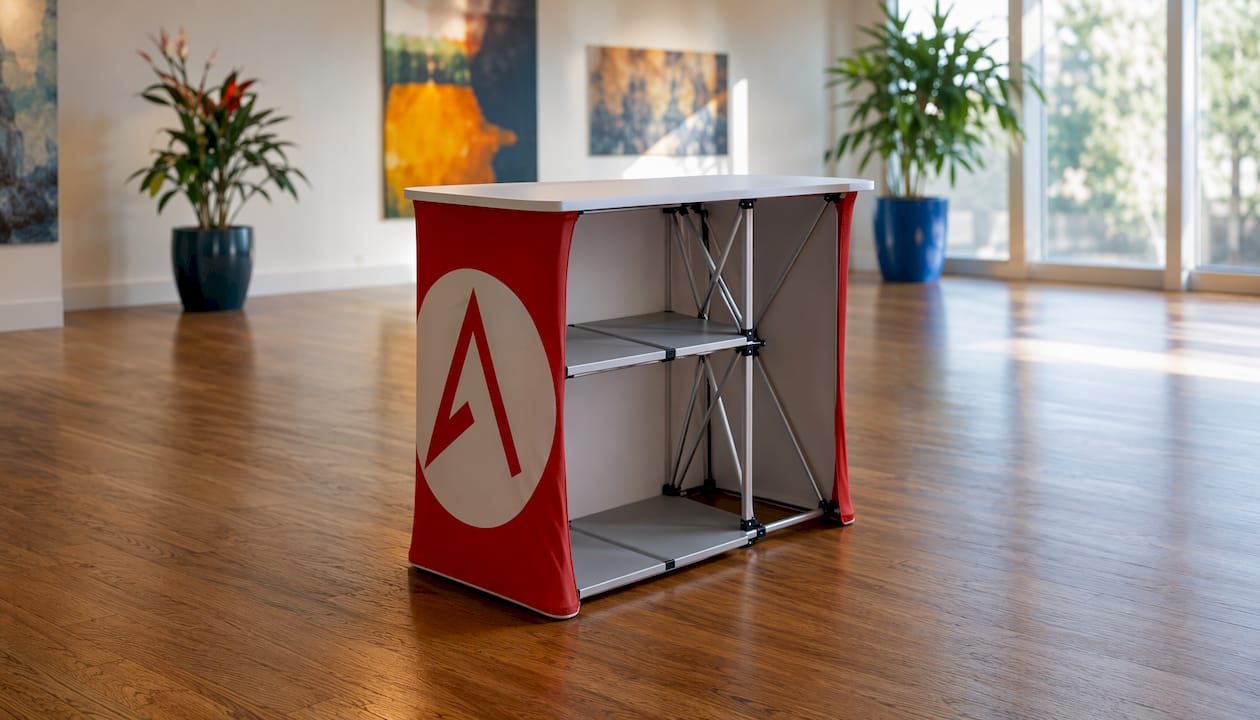
A practical checklist keeps you from discovering problems on the show floor.
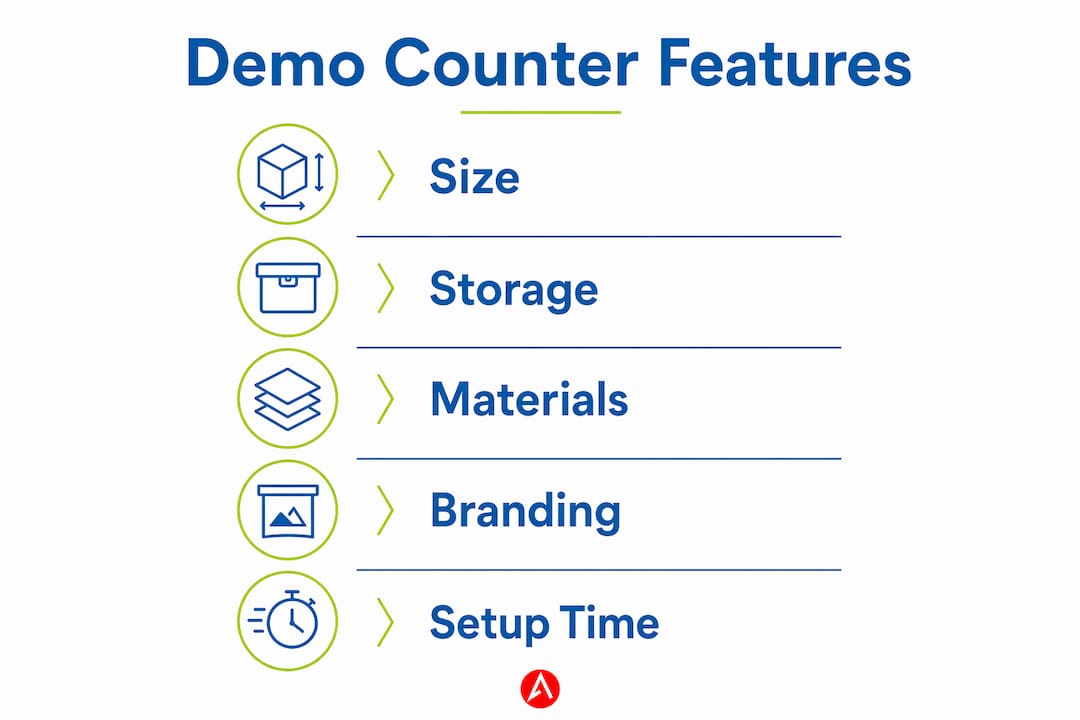
Size and height: Standard worktop height is designed to suit standing interaction and ADA-friendly side access. Footprint matters too. A small footprint counter leaves room to work in a booth, while a significantly larger one may reduce usable space.
Storage and access: Internal shelving, locking cabinets, and cable passthroughs are the features that separate a functional counter from a decorative one. If you are running a software demo with a laptop and a monitor, you need somewhere to route cables cleanly.
Materials and finish: Aluminum frames are light and durable. Laminate panels look polished but add weight. Fabric graphics are easy to replace when branding changes. Backlit SEG fabric offers the sharpest visual finish but requires an electrical connection.
Branding surface: Full-wrap printed graphics, backlit panels, and rigid printed inserts each serve different budgets and timelines. Custom backlit and SEG fabric options are higher-cost configurations that require longer production schedules, so plan accordingly.
| Feature | Portable/Folding | Modular | Custom Backlit |
|---|---|---|---|
| Setup time varies by counter type, ranging from quick assembly for portable styles to longer for custom backlit setups. | |||
| Travel weight depends on the counter type, with portable counters being light and custom ones heavier. | |||
| Branding surface | Printed wrap | Printed panels | Backlit SEG fabric |
| Storage | Basic | Configurable | Full cabinet |
| Best for | Roadshows, small events | Multi-event programs | Flagship shows |
How do you choose the right counter, and what will it cost?
Start with these questions before you request a quote:
-
What is your booth footprint, and how much floor space can the counter occupy?
-
How often do you travel, and does the counter need to check as luggage or ship freight?
-
How prominent does your branding need to be — printed wrap, backlit, or rigid panel?
-
Do you need locking storage for samples or high-value equipment?
-
Will you run a monitor, tablet, or lighting that requires power?
-
Are you buying for repeated use or renting for a single show?
Typical cost shapes:
-
Stock portable counters tend to have lower cost and are often available for fast shipping.
-
Modular and mid-range custom counters generally require moderate investment and longer print production times.
-
Backlit SEG and fully custom workstations require higher investment and longer production and shipping timelines.
Lead times matter. Stock items often ship within days. Custom prints and backlit systems need more runway. Smaller businesses increasingly favor lightweight, modular, and quick-to-assemble counters specifically to control event budgets and reduce setup crew requirements.
Questions to ask any supplier: What are the drayage weight and dimensions? What print resolution and file format do you require? What warranty covers the frame and graphics? Are accessories like monitor mounts and lighting available as add-ons or rentals?
How do you set up, transport, and store a demo counter?
Good logistics planning prevents the most common show-day problems.
Transport checklist:
-
Use a hard case for backlit and modular systems; a soft bag works for folding and pop-up counters.
-
Verify packed dimensions against airline carry-on or checked-bag limits before you book travel.
-
Label every case with your company name, show name, booth number, and a return address.
-
Keep a printed parts inventory inside each case so nothing gets left behind during teardown.
Assembly tips:
-
Do a full dry-run at your office before the show. Photograph each assembly step on your phone so any team member can replicate it on-site.
-
Pack a small tool kit: hex keys, zip ties, gaffer tape, and spare fasteners.
-
Plan cable management before you arrive. Know where the power outlet is relative to your booth and route cables before the counter is fully assembled.
Storage tips:
-
Store printed fabric panels flat or rolled per the manufacturer’s guidance to prevent creasing.
-
Keep frames in a climate-controlled space. Extreme heat or cold can warp aluminum and delaminate printed panels.
-
Use protective covers on graphic surfaces to prevent fading and scratching between shows.
Pro Tip: Pre-mount your monitor bracket and test the cable routing at the office. On a tight load-in day, that single step saves considerable setup time and eliminates common AV issues.
Check Arrowhead Sign Company’s trade show display checklist for a full pre-show logistics rundown.
Which accessories actually improve your demo counter?
Some add-ons are worth every dollar. Others are nice to have but rarely used.
-
LED accent lighting: Draws attention in a crowded hall and makes graphics pop. Worth it for any show with dim overhead lighting.
-
Adjustable shelving: Lets you reconfigure storage for different product sizes between shows.
-
Tablet and monitor mounts: Non-negotiable for software demos, video loops, or digital lead capture. Confirm the mount fits your device before the show.
-
Lockable cabinets: Protect high-value samples, cash, or equipment during breaks and teardown.
-
Cable passthroughs: Keep cords off the floor and out of sight. A small detail that looks professional.
-
Branded skirts and graphic panels: Replaceable panels let you update messaging without replacing the whole counter frame.
Heavy accessories like large monitors and full lighting rigs are often available as rental upgrades from show services, which keeps your shipping weight down. Accessory choices materially affect demo effectiveness and security, so prioritize the ones tied directly to your demo flow. For ideas on pairing your counter with broader booth visuals, the 2026 trade show trend display ideas guide covers current attention-grabbing treatments worth considering.
How do you keep a demo counter looking good long-term?
A well-maintained counter lasts through dozens of shows. Neglected, it looks worn by the third.
-
Clean fabric graphics with a damp cloth and mild detergent after each show. Never use bleach or abrasive cleaners.
-
Inspect frame fasteners and locking mechanisms before every event. Replace worn hardware immediately.
-
Check and replace batteries in LED lighting systems between shows so you are not troubleshooting on the show floor.
-
Store printed panels flat or upright per the manufacturer’s guidance. Never stack heavy items on top of graphic panels.
-
Protect aluminum frames with padded covers during transport and storage.
For graphics, the repair-versus-replace calculation is straightforward: if a fabric panel is creased, faded, or torn, reprinting is almost always cheaper than the brand damage from showing a worn graphic. Frames, by contrast, last years with basic care.
How Arrowhead Sign Company supports demo counter buyers
Arrowhead Sign Company - Signs, Banners and Trade Show Displays offers custom printing, fabric and backlit display options, and fast fulfillment that fits the timelines most exhibitors are working with. Most products ship quickly, and for Arizona-based exhibitors, direct venue delivery can simplify logistics.
Fast fulfillment is not just a convenience — it is a logistics safety net. When a graphic arrives damaged or a show date moves up, a two-business-day ship window means you can reorder and still make the show.
For a stock portable counter, you can typically order, receive, and prep within a standard work week. A custom backlit counter with SEG fabric graphics needs more lead time for print production, so plan three to four weeks minimum for those configurations. Arrowhead’s custom trade show counter guide walks through the full range of options and specifications in detail.
Key Takeaways
A demo counter is the single most functional piece of furniture in your booth, combining branded presence, product demonstration, and lead capture into one compact workstation.
| Point | Details |
|---|---|
| Core purpose | A demo counter combines demo station, lead capture, and branded surface in one workstation. |
| Style selection | Match counter type to travel frequency: folding/pop-up for roadshows, modular for multi-event programs, backlit for flagship shows. |
| Cost and lead time | Stock counters ship within days; custom backlit systems need three to four weeks of production lead time. |
| Logistics reminder | Do a full dry-run assembly at your office and pre-mount AV brackets before load-in day. |
| Arrowhead Sign Company | Arrowhead Sign Company - Signs, Banners and Trade Show Displays ships most products within two business days, with direct venue delivery available in Arizona. |
What the counter decision really comes down to
Most exhibitors overthink the visual and underthink the logistics. A backlit SEG counter looks stunning in a product photo, but if your team is setting up alone at 7 AM in a convention center with a 45-minute window, a folding counter that assembles in eight minutes is the smarter choice for that show. The best demo counter is the one your team can set up confidently, that fits your booth footprint without crowding the conversation space, and that carries your brand clearly from 20 feet away.
Small businesses, in particular, benefit from starting with a portable or modular counter and adding accessories as the show program grows. The portable marketing booth guide makes a strong case for building a modular system that scales with your event calendar rather than buying a custom fixture for a single show. The counter is not the whole booth. It is the anchor. Get that right, and the rest of the display falls into place around it.
Ready to order your demo counter?
Arrowhead Sign Company - Signs, Banners and Trade Show Displays gives you a direct path from decision to delivery, whether you need a stock portable counter on a tight timeline or a fully custom backlit workstation for your next flagship show. Most products ship within two business days, and Arizona exhibitors can request direct venue delivery so the counter arrives exactly where you need it.
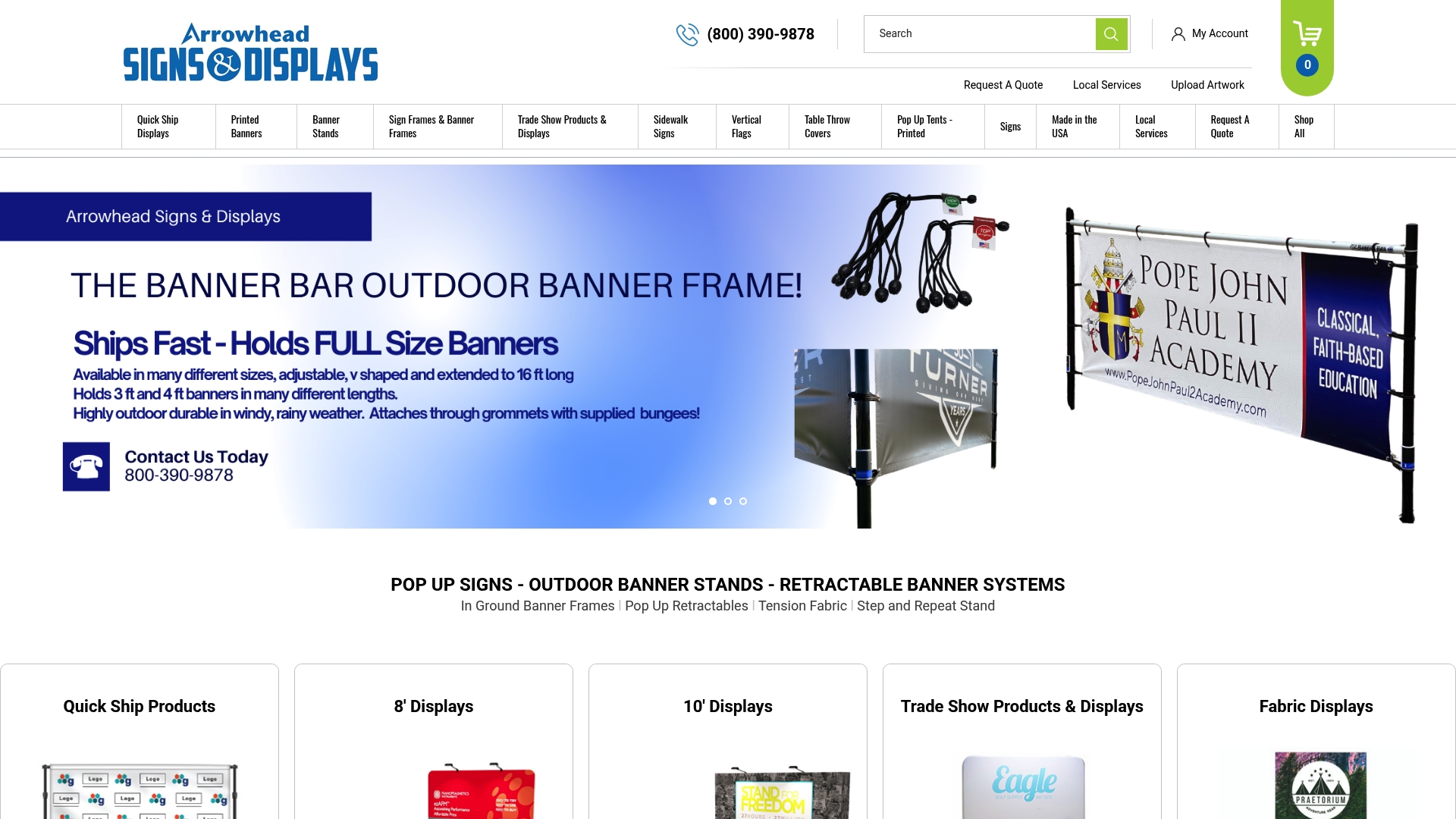
Start by measuring your booth footprint and deciding whether you need a portable, modular, or backlit configuration. Then browse the outdoor banner frame and 10 ft stretch fabric display options to pair your counter with the right surrounding display. For the full product range and custom order options, visit Arrowhead Sign Company and request a quote today.
Useful sources and next steps
-
Portable Trade Show Counter Market Research Report — DataIntelo: Market trends, adoption drivers, and configuration data for portable counters.
-
Do Trade Shows Pay Off? ROI Strategies — D4D Exhibits: Practical ROI guidance for exhibitors planning their show investment.
-
What Is a Custom Trade Show Counter for Exhibitors — Arrowhead Sign Company: Specifications and options for custom counter configurations.
-
Trade Show Display Checklist for Small Business Success — Arrowhead Sign Company: Pre-show logistics and setup checklist for small exhibitors.
-
Trade Show Display Types Explained for Marketers — Arrowhead Sign Company: Overview of display types and how counters fit into a full booth plan.
Recommended
-
What Is a Custom Trade Show Counter for Exhibitors - Arrowhead Sign Company
-
Trade Show Display Types Explained for Marketers - Arrowhead Sign Company
-
Trade Show Display Checklist for Small Business Success - Arrowhead Sign Company
-
How Trade Show Displays Generate Leads That Convert - Arrowhead Sign Company