

What Is a Window Cling Sign? Temporary Glass Graphics Explained
Posted by Deeder Dandenhorf on Aug 20th 2026
What Is a Window Cling Sign? Temporary Glass Graphics Explained
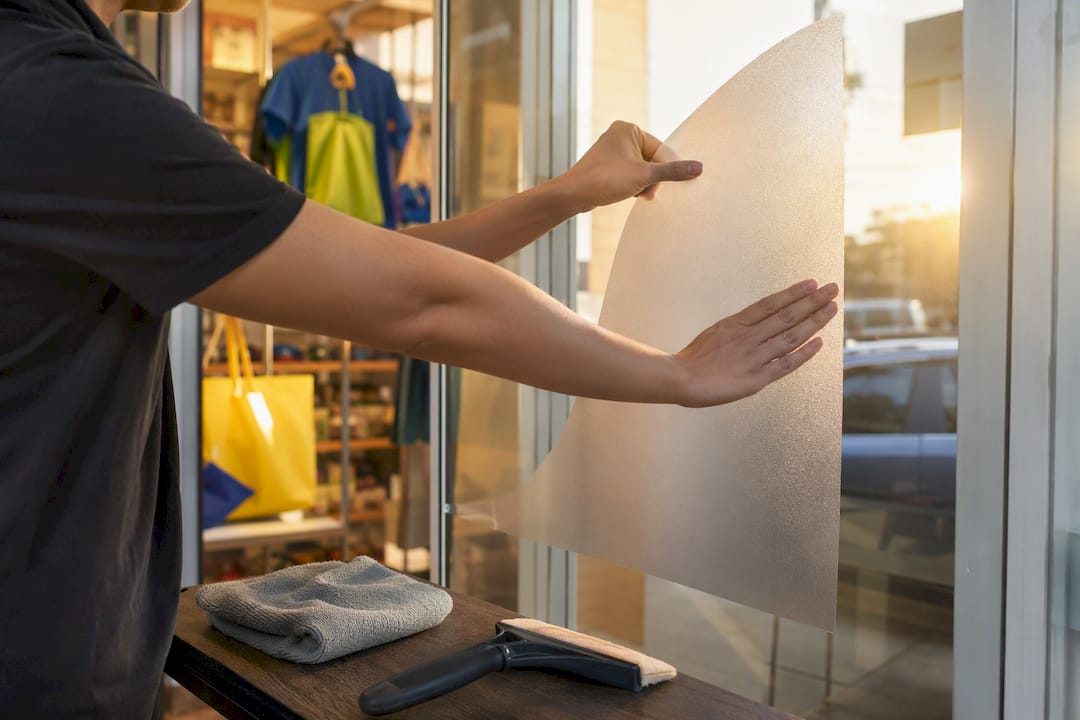
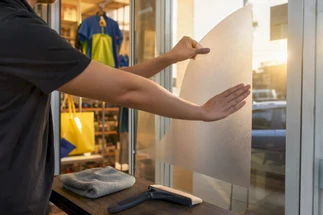
A window cling sign is a non-adhesive vinyl or PVC graphic that grips smooth glass without glue, then peels away clean when you’re done with it. Retailers use them for weekend sales, restaurants use them for hour-of-operation notices, and offices use frosted versions for instant meeting-room privacy. Most run around 7 mil (175 μ) thick, like ViziCling, and come in clear or white opaque finishes. At Arrowhead Sign Company - Signs, Banners and Trade Show Displays, we print these for small businesses who need sharp graphics today and a clean window again next season.
Key Takeaways
Window cling signs work because they use surface contact and conformable vinyl rather than adhesive, making them temporary, repositionable, and residue-free by design.
| Point | Details |
|---|---|
| No-glue adhesion | Clings grip glass through surface contact and film conformability, not true static electricity. |
| Interior use is more reliable | Heat, humidity, and UV exposure shorten a cling’s lifespan outdoors compared to indoor mounting. |
| Thickness affects handling | A 7 mil (175 μ) film balances durability with easy conformability for most jobs. |
| Clean surfaces extend reuse | Both the glass and the cling need regular cleaning to maintain tack across multiple applications. |
| Arrowhead handles the custom side | Arrowhead Sign Company - Signs, Banners and Trade Show Displays prints custom-sized clings with fast fulfillment and direct Arizona delivery. |
Table of Contents
- What Exactly Is a Window Cling? Terms and Lifespan
- How Do Window Clings Stick to Glass Without Glue?
- Materials, Thickness, and Finish Options Explained
- Where Should You Place a Window Cling?
- Window Clings vs. Decals vs. Stickers: Which Fits Your Project?
- How to Install a Window Cling Step by Step
- Cleaning, Storage, and Getting More Life From Your Cling
- Real-World Uses for Window Cling Signs
- What Drives the Price of Custom Window Clings?
- Why Order Custom Window Clings From a Signage Specialist
- What I’ve Learned Watching Businesses Order Clings
- Ready to Order Custom Window Clings?
- Sources
- FAQ
What Exactly Is a Window Cling? Terms and Lifespan
You’ll see this product called a few different names: window cling, static cling, or static decal. They all mean the same thing in the trade. The “static” label is really shorthand, and it sticks around because the marketing has used it for decades even though the actual mechanism is more nuanced than pure static electricity.
Clings are built for short-lived jobs. Think weeks or months, not years. A seasonal storefront promotion, a limited-time discount, a holiday design swap. That’s their sweet spot.
What makes them worth choosing over other window graphics:
- No adhesive means no sticky residue when you take them down.
- You can reposition a cling mid-application if you get the placement wrong.
- Removal takes seconds, not a scraper and a bottle of solvent.
- They’re reusable across multiple sessions if you store them properly.
How Do Window Clings Stick to Glass Without Glue?
Here’s the part most people get wrong: window clings don’t actually rely on static electricity the way the name implies. Physics discussions on the mechanism point to something closer to surface-to-surface forces, specifically van der Waals interactions combined with a light suction effect as the flexible vinyl conforms tightly to a smooth surface. Industry blogs still market it as “static charge” because that’s the term customers recognize, but practitioner explanations increasingly emphasize contact and conformability over electrostatic attraction.
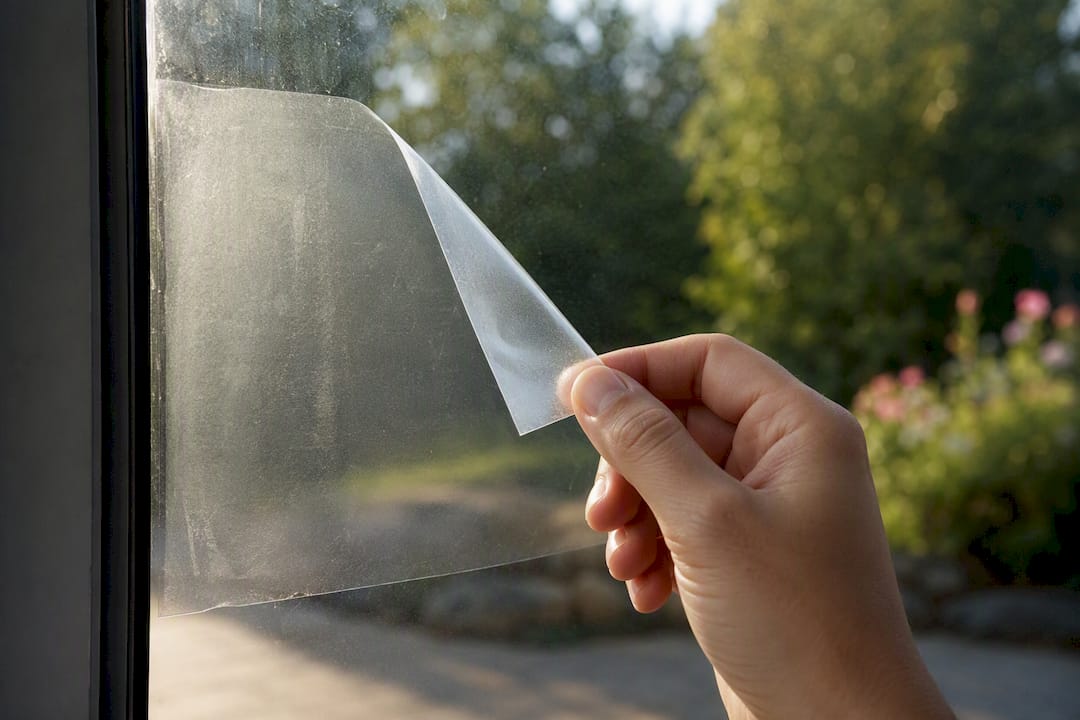
That distinction matters for how you troubleshoot a cling that won’t stay put. If the bond depended purely on static charge, humidity wouldn’t affect it much. But it does, because moisture and heat change how the vinyl conforms to the glass.
Environmental factors that weaken the bond:
- Heat above roughly 25°C (77°F) can cause plasticizer migration in clear films, leading to haze or curling edges.
- Humidity above about 50% has a similar effect on dimensional stability.
- Textured, etched, or dirty glass gives the vinyl far less surface contact to grip.
- Cold glass can make the film stiff and harder to smooth down evenly.
Pro Tip: Clean the glass with a lint-free cloth and a mild glass cleaner before applying anything. A film of dust or fingerprint oil is often the entire reason a cling won’t hold, and skipping this step is the number one cause of premature failure.
If your cling is losing its grip, run through this quick checklist:
- Bubbles under the surface: Lift the section and re-smooth from the center out.
- Edges lifting after a few days: Check for moisture or heat exposure near that spot, like a heating vent or direct afternoon sun.
- Won’t stick at all: Reclean both the glass and the back of the cling, since dust on either surface breaks contact.
Materials, Thickness, and Finish Options Explained
Most window clings are made from PVC or vinyl, though some premium applications use polyester for extra rigidity. PVC dominates the market because it’s flexible enough to conform to glass and stable enough to hold sharp, full-color printing.
Thickness is measured in mil or micron (μ), and it directly affects how a cling handles during installation. A common commercial spec, like the one used for ViziCling, runs 7 mil (175 μ). Thicker films resist tearing and hold their shape better on large-format jobs, but they’re also stiffer and harder to smooth around curves or tight corners. Thinner films conform more easily but tend to show wrinkles if you rush the application.
| Material Attribute | Clear Finish | White/Opaque Finish |
|---|---|---|
| Best for | Storefront graphics where you want the view through preserved | Privacy screens, one-way visual blocking, bold retail signage |
| Print visibility | Reads well from both sides depending on ink placement | Reads clearly from the printed side only |
| Common use case | Promotional graphics, hours-of-operation notices | Meeting room privacy, delivery vehicle branding, sun-facing displays |
| Typical thickness | 7 mil (175 μ) is a standard commercial spec | Similar range, sometimes slightly heavier for opacity |
Clear films let light and visibility pass through, which works well when you still want customers to see into the store. Opaque white films block the view entirely, which is exactly what you want for a conference room that needs privacy on demand or a delivery van where you don’t want cargo visible from outside.
Durability is where clings show their limits. Manufacturer guidance notes that clings are built for interior use and generally hold up for a shorter window outdoors, often cited around three months for some materials, before heat and UV exposure start affecting the bond and the print. If your project needs to survive rain and sun for a full season, a cling is the wrong tool. That’s a job for a printed banner or a rigid outdoor sign instead.
Where Should You Place a Window Cling?
Placement decides whether a cling performs the way you expect. Inside-glass mounting is the more reliable choice across the board, because the film is shielded from wind, rain, and direct UV that accelerate wear. Outside-glass application works for short campaigns, but you’re trading longevity for visibility from a slightly different angle.
Common cling formats you’ll run into:
- Full-window films that cover most or all of a storefront pane for maximum promotional impact.
- Die-cut shapes cut to a logo or icon outline instead of a rectangle, common for brand marks.
- Push/pull door signs that combine function (which way to open the door) with branding.
- Parking or permit clings sized for a car’s interior windshield or side window.
- Privacy overlays in frosted or opaque white for offices and healthcare settings.
For a storefront window, a size that covers much of the visible glass usually reads well from the sidewalk without feeling cluttered. Door clings tend to run smaller, sized to the push/pull hardware area so they don’t interfere with the door’s function. Vehicle interior clings, like rideshare permits or company car ID panels, are typically sized to fit within the lower corner of a windshield where they won’t obstruct the driver’s view.
Window Clings vs. Decals vs. Stickers: Which Fits Your Project?
The real difference comes down to adhesive. Decals and stickers use permanent or semi-permanent adhesive, which means strong hold but a real risk of residue or damage when you remove them. Window clings skip the adhesive entirely, trading some long-term durability for easy application, repositioning, and clean removal.
Industry comparisons generally agree on the decision logic: choose clings when you need something temporary or seasonal, choose decals when you need years of outdoor durability, and consider a low-tack adhesive vinyl as a middle ground if you want something semi-permanent that still removes without much drama.
Window clings:
- Pro: No residue, reusable, repositionable.
- Con: Shorter lifespan, weaker hold on textured or outdoor surfaces.
Adhesive decals:
- Pro: Long-term durability, strong hold in tough weather.
- Con: Permanent-feeling removal, can leave adhesive residue behind.
Low-tack adhesive vinyl:
- Pro: Easier removal than a full decal, more durable than a cling.
- Con: Not fully residue-free, still not ideal for frequent swaps.
| Product Type | Best For | Removal |
|---|---|---|
| Window cling | Temporary promotions, seasonal decor, privacy needs | Peels off clean, no residue |
| Adhesive decal | Permanent branding, long-term outdoor signage | Can leave residue, harder to remove |
| Low-tack vinyl | Semi-permanent projects, occasional updates | Easier than a decal, not fully residue-free |
How to Install a Window Cling Step by Step
Getting a smooth, bubble-free install comes down to prep and patience, not luck. Here’s the sequence that works for most jobs, from a small door sign to a full storefront panel.
- Clean the glass thoroughly. Use a standard glass cleaner and a lint-free cloth, and let it dry completely before touching the cling to the surface.
- Decide wet or dry application. Small clings under a foot or two usually go on fine dry. Larger or full-window pieces do better wet.
- For wet application, mix a light soap solution. A spray bottle with water and a single drop of dish soap gives the film enough slip to reposition without sticking prematurely.
- Position the cling against the glass. Line up your edges before you commit to smoothing.
- Squeegee from the center outward. Push trapped liquid and air toward the edges in overlapping strokes rather than working in one direction only.
- Trim excess material if needed, using a sharp blade along the window frame for a clean edge.
- Let it settle for a few minutes before wiping down any remaining moisture with a dry cloth.
This wet-application method is standard practice for larger jobs specifically because it reduces trapped air pockets, a technique manufacturers of clings recommend for anything beyond a small single sticker.
Pro Tip: Keep a squeegee wrapped in a soft cloth for smoothing. A bare plastic edge can scratch printed ink on cheaper films, so always use a felt-wrapped or microfiber-covered tool for the final pass.
If problems show up after installation: persistent bubbles usually mean you need to lift that section and re-squeegee with more water. Lifting edges point to a dirty surface underneath, so peel back, clean both sides, and reapply. A cling that won’t stick at all almost always traces back to dust, grease, or a surface that’s too cold to work with.
Cleaning, Storage, and Getting More Life From Your Cling
Keeping a cling in usable shape between uses is mostly about avoiding harsh chemicals and rough handling. Wipe printed surfaces with a soft, damp cloth rather than anything abrasive, and skip ammonia-based or solvent-heavy cleaners, which can dull the ink or degrade the vinyl over time.
Storage checklist:
- Store the cling flat on its original backing paper whenever possible.
- Keep it dust-free in a drawer or portfolio rather than rolled loosely in a bag.
- Avoid extreme heat or cold storage spaces, since temperature swings stress the material.
- Handle by the edges to keep fingerprints and oils off the printed face.
Reusability has real limits, but it’s better than most people expect. Guidance on reapplication confirms that clings can be removed and reapplied multiple times as long as both the glass and the cling itself stay clean. If a cling starts losing its grip after a few uses, the fix is usually simple: reclean both surfaces, dry them fully, and reapply. Dust buildup, not the film wearing out, causes most tack loss.
Real-World Uses for Window Cling Signs
Business owners reach for clings when the message has a shelf life. Here’s where they show up most:
- Retail promotions: A “40% Off This Weekend” cling on a storefront window, sized to cover most of the glass for visibility from the street.
- Seasonal window displays: Holiday scenes or snowflakes that come down the moment the season ends, no scraping required.
- Privacy film for meeting rooms: Frosted white clings on interior office glass, giving instant privacy without a permanent installation.
- Short-term event signage: Directional signs or sponsor logos on glass doors for a trade show or pop-up event.
- Vehicle interior clings: Rideshare permits or company branding on the inside of a windshield, sized small enough to avoid blocking the driver’s view.
For design, high-contrast artwork reads best from a distance, dark text on a light background or vice versa, and lettering should stay large enough to read from across a parking lot or sidewalk if that’s the viewing distance. Opaque finishes work better for privacy-focused designs, while clear finishes suit anything meant to keep the view through the glass intact.
What Drives the Price of Custom Window Clings?
A few variables move the price up or down on any custom cling order:
- Size: Larger clings use more material and take longer to print and cut.
- Quantity: Bulk runs bring the price-per-unit down noticeably compared to single pieces.
- Full-color printing: Complex, multi-color artwork costs more than a simple one or two-color design.
- Cut shape: A standard rectangle is cheaper than a die-cut custom outline.
- Lamination or overlaminate: Adding a protective layer increases durability and cost.
- Rush production: Faster turnaround almost always comes with a premium.
Ordering checklist before you submit artwork:
- Confirm file resolution is high enough for large-format printing (300 DPI is a safe standard).
- Include bleed if your design runs to the edge.
- Use CMYK color mode to match print output accurately.
- Approve a digital proof before production starts.
- Ask about lead times upfront, since small runs often ship faster than bulk orders.
A single custom cling for a storefront window might take a couple of days to produce, while a bulk order of fifty die-cut shapes for a franchise rollout takes longer simply due to cutting time. If your files aren’t print-ready, a good proofing process catches sizing or color issues before they become an expensive reprint.
Why Order Custom Window Clings From a Signage Specialist
Custom printing earns its cost when brand colors, exact sizing, and print quality actually matter to your business. A DIY sticker from a big-box store rarely matches your logo’s exact Pantone shade or fits your specific door frame dimensions. A signage provider solves both problems at once.
Arrowhead Sign Company - Signs, Banners and Trade Show Displays prints custom window clings alongside a broader lineup of signage, so you can outfit an entire storefront or trade show booth from one order. That includes the 10 ft stretch fabric display for backdrop graphics, the Signicade Deluxe A-Frame Sidewalk Sign for sidewalk visibility, and the Outdoor Banner Frame - The Banner Bar for weather-resistant outdoor promotion.
What you get with a specialist:
- Fast fulfillment, with most products shipping within two business days.
- Custom sizing instead of forcing your design into a stock template.
- Production guidance if your file needs adjustment before printing.
- Direct delivery for Arizona-based clients, plus nationwide shipping everywhere else.
What I’ve Learned Watching Businesses Order Clings
Working through enough of these orders, you start noticing the same two mistakes over and over. First, people underestimate how much interior mounting simplifies everything. They ask for exterior-rated clings for a job that never leaves the inside of a storefront window, adding cost and stiffness they don’t need.
Second, nobody wants to pay for a sample on a big job until they’ve already reprinted it twice. If you’re doing a full storefront window or a run of fifty pieces, testing one sample first catches color drift or sizing issues before they become expensive. It’s a small step that saves real money.
My honest recommendation: default to interior mounting unless you have a specific reason not to, and never skip the sample on a large-format order.
Ready to Order Custom Window Clings?
You’ve got the how-to. Here’s what ordering actually looks like: you submit your artwork or work with our team to build one from scratch, we send a digital proof for your approval, and production starts once you sign off. Most orders ship within two business days, whether you’re in Arizona and want direct delivery to your venue or anywhere else in the country waiting on standard shipping.
If your window cling is part of a bigger event push, browse our full range of trade show and storefront signage to see what pairs well with it, from A-frame sidewalk signs to full stretch fabric backdrops. Upload your artwork, request a proof, and let’s get your windows working for your brand.
Sources
For readers who want to dig into the technical side of window clings, these sources cover the material specs, the physics behind adhesion, and practical installation guidance referenced throughout this article:
- ViziCling (Drytac product literature)
- How do static charge window decals work without adhesive? (Stafix blog)
- How do window clings work? (Mosquera)
FAQ
What’s the difference between a window sticker and a window cling?
A window sticker uses adhesive and is meant to stay put long-term, often leaving residue when removed. A window cling has no adhesive at all, relying on surface contact to hold, which makes it removable and reusable.
How much do window clings typically cost?
Price depends on size, quantity, print complexity, and cut shape, with bulk orders lowering the cost per unit significantly compared to single custom pieces. Rush production and lamination add cost on top of the base price.
What does “window cling” actually mean?
It refers to a non-adhesive vinyl or PVC film that adheres to glass through surface contact rather than glue, commonly used for temporary signage, seasonal decor, and privacy screens.
How do I design a window cling for my business?
Use high-contrast artwork and legible type sized for your viewing distance, choose a clear finish if you want the view through preserved or an opaque finish for privacy, and submit print-ready files with correct bleed and resolution. Arrowhead Sign Company - Signs, Banners and Trade Show Displays can guide you through file specs and proofing before production starts.
Can window clings be reused after removal?
Yes, as long as both the glass and the cling stay clean and the cling is stored flat on its backing paper between uses. Reapplication works well multiple times, though tack can fade if either surface collects dust or grease.
Recommended
- Designing Eye-Catching Booth Signage That Wins Attention - Arrowhead Sign Company
- What Is a Hanging Fabric Display? A Trade Show Guide - Arrowhead Sign Company
- Indoor vs Outdoor Sign Options: A Practical Guide - Arrowhead Sign Company
- What Is a Vinyl Event Banner? Your 2026 Guide - Arrowhead Sign Company