


Why Custom Packaging Inserts Matter for Small Businesses
Posted by Deeder Dandenhorf on Aug 9th 2026
Why Custom Packaging Inserts Matter for Small Businesses
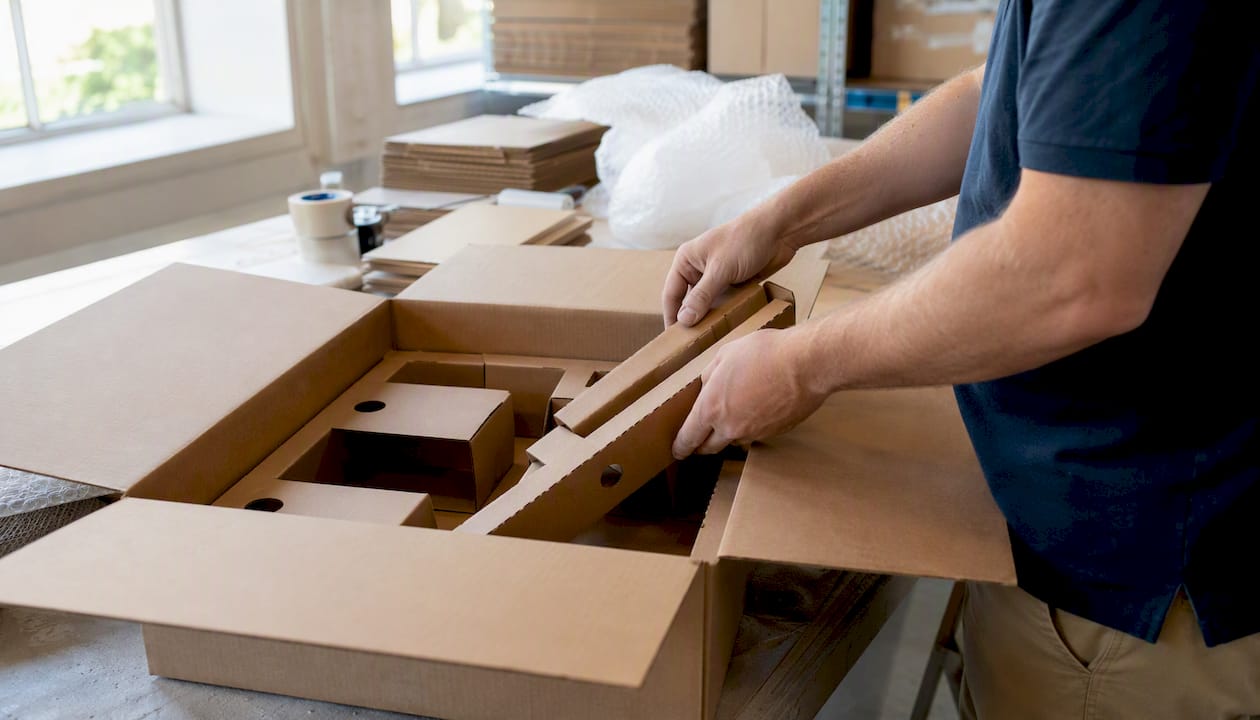
Yes, custom packaging inserts matter. A shipped order is your highest-attention marketing moment, and a well-placed insert converts that moment into a repeat purchase, a referral, or a resolved support question before it ever gets filed. As Modern Retail documents, brands are actively shifting budget toward inserts as digital ad costs climb, treating the parcel itself as an owned acquisition channel.
Two impacts you can expect immediately:
- Retention lift: PAKET PLUS measured 11–25% repeat purchase rates across insert program waves, with a 4% conversion rate in early test rounds.
- Support reduction: When inserts include quick-start guides or care instructions, G10 Fulfillment notes that return rates and inbound support tickets drop measurably when the insert program is integrated into the warehouse workflow.
Key Takeaways
Custom packaging inserts are a measurable, low-cost owned channel that can drive meaningful repeat purchase rates when integrated into your fulfillment workflow and tracked with unique codes or QR analytics.
| Point | Details |
|---|---|
| Inserts drive repeat purchases | Programs tracked by PAKET PLUS showed measurable repeat purchase rates across insert program waves. |
| One message per insert | A single, clear CTA outperforms multi-offer inserts and is easier to measure and iterate. |
| WMS integration is non-negotiable | Define SKU-based trigger rules and version control before the first insert ships to prevent packing errors. |
| ROI is trackable from day one | Use unique promo codes or UTM-tagged QR codes to attribute repeat orders and redemptions directly to your insert program. |
| Arrowhead Sign Company supports campaign continuity | Fast-fulfillment visual collateral from Arrowhead Sign Company - Signs, Banners and Trade Show Displays extends insert-driven campaigns into events and physical spaces. |
Table of Contents
- Why inserts matter: concrete business benefits for small brands
- What insert types work best, and when should you use each?
- How inserts affect your fulfillment operations
- Design and messaging rules that make inserts useful, not noise
- How to measure insert ROI and which KPIs to track
- Your compact pilot plan and rollout checklist
- Common insert mistakes and how to fix them fast
- A practitioner’s note on balancing creativity and systems
- Your visual marketing collateral, ready when you are
- Sources
Why inserts matter: concrete business benefits for small brands
The importance of packaging inserts goes beyond a printed card in a box. For small brands with tight acquisition budgets, inserts function as a low-cost, owned channel that reaches customers at peak engagement, the moment they open your product.
- Repeat purchase rate: A targeted discount or reorder reminder lands when the customer already likes what they received.
- Average order value (AOV) uplift: Cross-sell inserts introduce complementary products at zero incremental media cost.
- Return and support reduction: Care instructions and quick-start guides preempt the most common “how do I use this?” calls.
- Referral and social sharing: A shareable unboxing moment, prompted by a well-designed insert, drives organic reach that paid ads cannot replicate.
- Owned acquisition: Unlike Meta or Google ads, you control the message, the timing, and the audience. RapidShyp explains that inserts create emotional connection at unboxing, a psychological window no retargeting pixel can open.
Statistic callout: A multi-country insert program documented by PAKET PLUS reported a 4% conversion rate in test waves and repeat purchase rates of 11–25% over successive program waves, demonstrating that inserts can function as a measurable marketing channel, not just a courtesy gesture.
Pro Tip: Pick one measurable goal per insert, either repeat purchase rate or support ticket reduction, and track it for a full 60-day window before adding a second objective. Splitting focus too early makes attribution impossible.
What insert types work best, and when should you use each?
Shopify’s packaging insert guide identifies thank-you notes, coupons, product guides, and samples as the most effective formats. The key is matching the insert type to the customer’s lifecycle stage and your product category.
- Thank-you cards: Build emotional connection and encourage reviews. Best for first-time buyers and gift occasions.
- Quick-start guides: Reduce setup errors and returns. Best for electronics, tools, or any product with a learning curve.
- Care instructions: Extend product life and cut “it broke” returns. Best for apparel, ceramics, and fragile goods.
- Discount coupons: Drive reorders. Best for consumables, skincare, and subscription-adjacent products.
- Product samples: Introduce a complementary SKU. Best for beauty, food, and wellness brands with a catalog to cross-sell.
- Return labels: Remove friction from the return process and signal confidence. Best for apparel and footwear.
- QR-driven experiences: Link to video tutorials, loyalty programs, or referral pages. Measurable via UTM parameters and scan analytics.
HLunPACK’s practitioner perspective frames inserts as the quiet driver behind 5-star reviews and social unboxings when they are part of a deliberate packaging system rather than an afterthought.
| Insert Type | Best Use Case | Typical CTA or Measurement |
|---|---|---|
| Thank-you card | First purchase, gift orders | Review request, social tag |
| Quick-start guide | Complex or technical products | Support ticket rate before/after |
| Care instructions | Fragile, apparel, ceramics | Return rate delta |
| Discount coupon | Consumables, reorder-driven SKUs | Redemption rate, unique code |
| Product sample | Beauty, food, wellness cross-sell | Sample-to-purchase conversion |
| Return label | Apparel, footwear | Return friction score, NPS |
| QR experience | Any category with digital extension | QR scan rate, UTM sessions |
How inserts affect your fulfillment operations
Inserts add a step to every pack. Without a system, that step creates wrong-card errors, missing inserts, and outdated promotions reaching customers weeks after an offer expires. G10 Fulfillment’s operational guidance is clear: inserts integrated into WMS and 3PL workflows reduce confusion and improve perceived shipment value; ad-hoc inserts create packing errors and extra cost.
Integration checklist:
- Define insert rules in your WMS by SKU, order value, channel, or customer segment.
- Automate triggers so the correct insert is pulled without manual decision-making at the pack station.
- Apply version control: every insert has a version number and an expiration date in the system.
- Write a 3PL runbook that covers insert placement, orientation, and what to do when stock runs out.
- Run QA spot checks weekly, sampling at least 5% of outbound orders to catch mismatches early.
Common failure modes to watch:
- Wrong insert in the box (no WMS rule defined)
- No insert at all (stock-out not flagged)
- Outdated promo circulating after campaign end
- Insert rattling inside packaging, which G10 Fulfillment flags as a damage and return risk
Pro Tip: Keep insert logic to one rule per clear trigger. “All orders over $75 get the loyalty card” is repeatable. “Depends on the week” is a packing error waiting to happen.
Design and messaging rules that make inserts useful, not noise
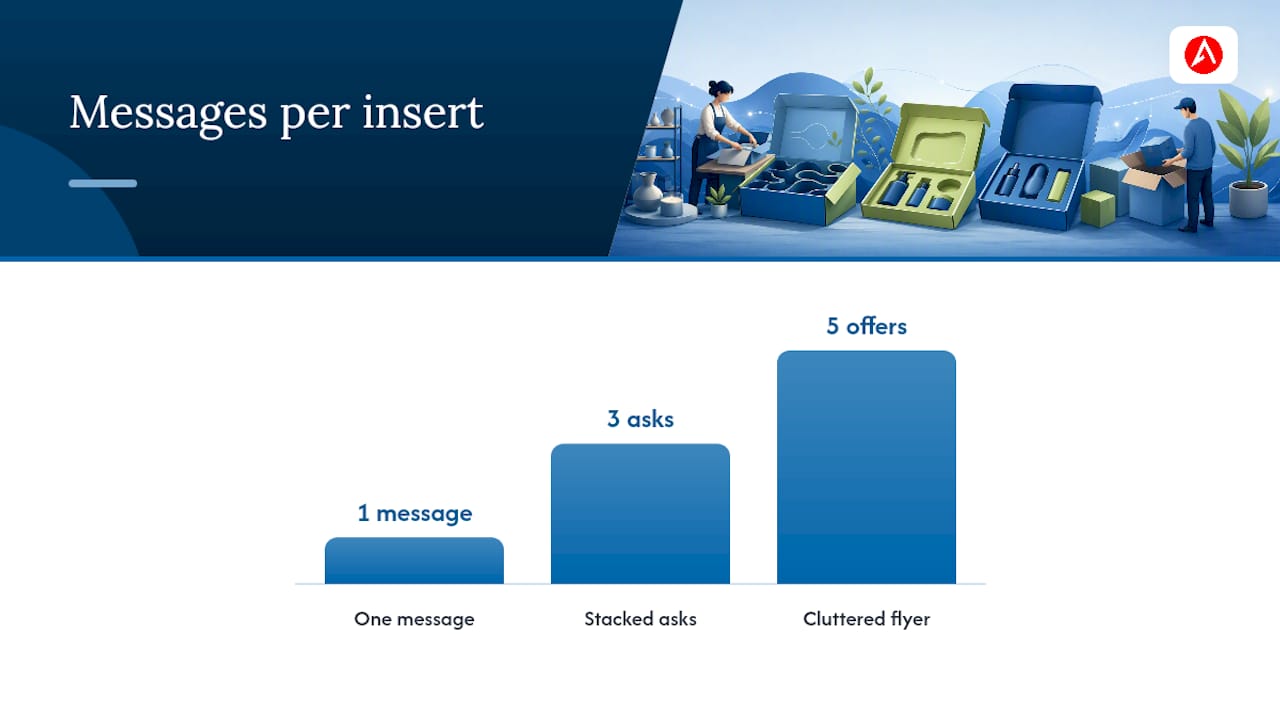
Merchant Boxes’ brand loyalty research confirms that simple, authentic inserts outperform complex advertising inserts. A thank-you note with a personal tone and a single next step beats a cluttered flyer with five offers.
- One message per insert. A coupon insert does one thing: drives a reorder. Don’t stack a review request, a referral code, and a social follow on the same card.
- Legibility first. Minimum 10pt font, high contrast, and a clear headline the customer reads in three seconds.
- Personalize by segment, not by individual. SKU-based targeting (all buyers of Product A get Insert B) is repeatable and scalable. Hyper-personalized inserts require data infrastructure most small teams don’t have.
- Match materials to your brand tier. A matte card stock with spot UV signals premium. A flimsy flyer undermines a $90 product.
- Size inserts to fit snugly. Loose inserts rattle, which customers associate with damage. Size to the box interior or use a designated pocket.
- Consider sustainability. Recycled stock and soy-based inks are low-cost upgrades that resonate with environmentally aware buyers.
For visual marketing display best practices that align your insert design with your broader brand standards, consistent typography and color usage across all collateral reinforces recognition at every touchpoint.
Pro Tip: Write the insert copy before you design it. If the message doesn’t fit in two sentences, it’s too complex for an insert.
How to measure insert ROI and which KPIs to track
Core KPIs:
- Repeat purchase rate (30-day and 60-day windows)
- Coupon or code redemption rate
- AOV uplift in the 60 days post-insert introduction
- Support ticket volume before and after care-instruction inserts
- QR scan rate and UTM-attributed sessions
Sample ROI calculation:
Attribution is the main limitation. Customers who redeem a code are easy to track. Customers influenced by a thank-you card but who reorder without using a code require matchback analysis or a simple survey at checkout. Use unique promo codes or UTM-tagged QR codes on every insert to maximize trackable attribution from day one.
Your compact pilot plan and rollout checklist
Step-by-step pilot:
- Define one objective (repeat purchase rate or support ticket reduction).
- Pick a test segment: one SKU, one order-value band, or one channel.
- Design one or two inserts with unique tracking codes.
- Implement the WMS or 3PL trigger rule before the first shipment goes out.
- Run the pilot for 4–8 weeks and collect data before making changes.
- Compare test segment KPIs against a control group that received no insert.
Cost estimate buckets:
- Design: $150–$400 for a freelancer or in-house designer
- Print (1,000 units): $80–$220 depending on stock and finish
- Fulfillment handling: $0.03–$0.10 per order (confirm with your 3PL)
- Tracking setup: $0 if using UTM parameters and a free analytics account
Go/no-go criteria before full rollout:
- Redemption or repeat purchase rate meets or exceeds your baseline by a measurable margin
- No increase in packing errors during the pilot window
- Insert stock-out rate is zero (supply chain is reliable)
- 3PL team confirms the runbook is clear and executable
Common insert mistakes and how to fix them fast
- Too many inserts in one box. Customers ignore stacks. Pick the one insert that fits the order’s lifecycle stage and remove the rest.
- Outdated promotions. An expired 20%-off code that still ships is a customer service problem. Set hard expiration dates in your WMS and pull stock the day the offer ends.
- Channel mismatch. A wholesale buyer receiving a DTC loyalty card is confused, not delighted. Segment insert rules by sales channel.
- No version control. Old print runs circulate for months when no one tracks which version is in the warehouse. Number every version and log it.
- Generic messaging. “Thanks for your order!” with no next step wastes the insert’s only job. Every insert needs one CTA.
Pro Tip: When retiring an offer, don’t just stop printing. Pull remaining stock from the warehouse immediately and update the WMS rule the same day. One week of overlap creates weeks of customer confusion.
A practitioner’s note on balancing creativity and systems
The tension between marketing campaigns and fulfillment operations is real. Marketing wants a new insert for every promotion. Operations wants one insert, forever, that never changes. The answer is neither extreme.
Embed insert logic in your WMS or 3PL runbook as a standing rule with a defined review cycle, quarterly works for most small brands. Time-box every test to 4–8 weeks so you’re not running open-ended experiments that never get evaluated. When a campaign ends, the insert retires with it, automatically, because the system says so, not because someone remembered to send an email.
The brands that get the most from insert programs treat them the way they treat email flows: designed once, triggered by behavior, measured on a schedule, and iterated based on data. That mindset is what separates a program that compounds over time from a box of cards that sits in a corner of the warehouse.
Your visual marketing collateral, ready when you are
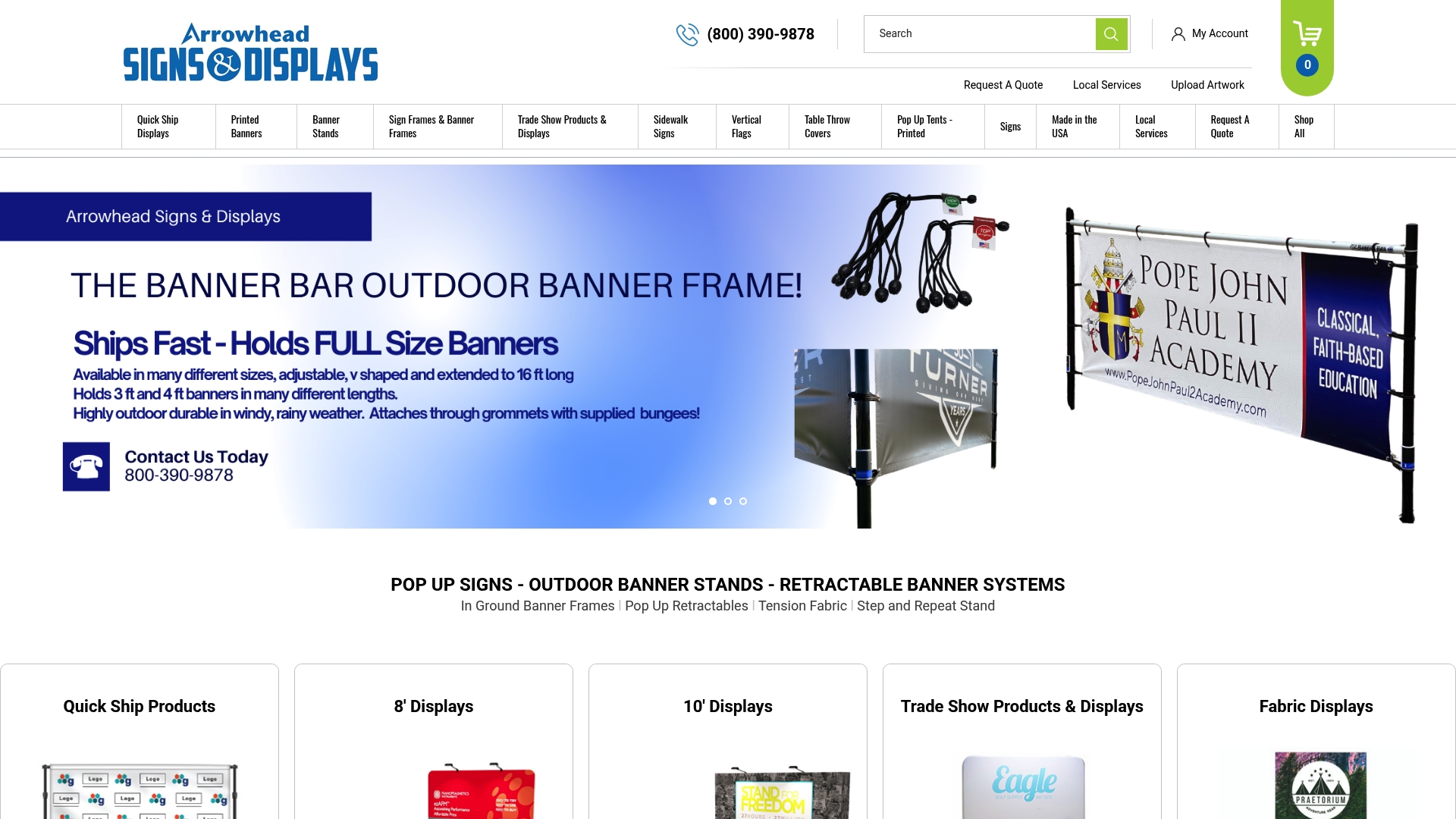
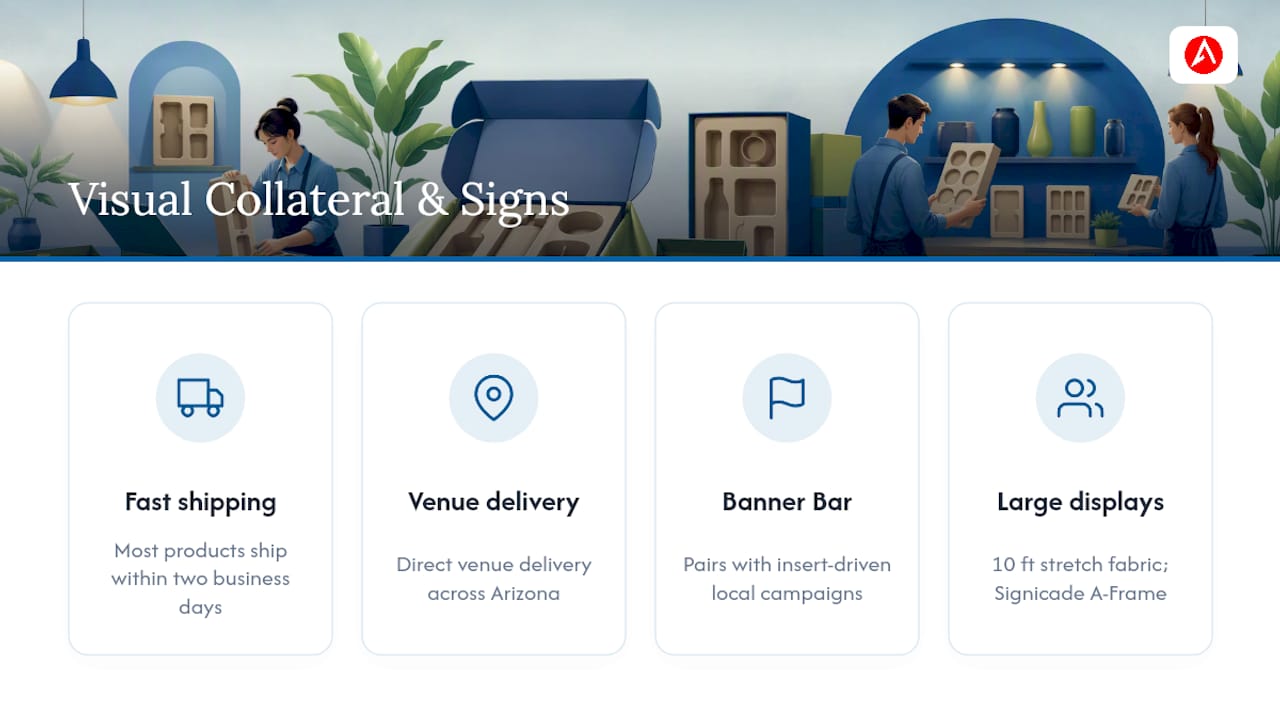
Custom packaging inserts work hardest when your broader brand presence is just as sharp. Arrowhead Sign Company - Signs, Banners and Trade Show Displays gives small businesses and D2C brands fast access to high-quality visual marketing collateral, with most products shipping within two business days and direct venue delivery available across Arizona.
When your insert drives a customer to an event, a pop-up, or a local promotion. Your physical presence needs to match the promise. The Outdoor Banner Frame - The Banner Bar pairs with insert-driven local campaigns, giving you a professional outdoor presence that reinforces the same message your customer just unboxed. For larger event footprints, the 10 ft stretch fabric display and the Signicade Deluxe A-Frame Sidewalk Sign extend your insert campaign into physical spaces without a long lead time.
Browse the full range at Arrowhead Sign Company - Signs, Banners and Trade Show Displays and get your next campaign collateral ordered today.
Sources
- More brands are testing package inserts as a cheaper customer acquisition tactic - Modern Retail
- Custom inserts for ecommerce - G10 Fulfillment
- Packaging inserts - Shopify
- THE PARCEL AS A MARKETING CHANNEL: our perspective, submitted to the Marketing Diamond Awards | PAKET PLUS
- Best Packaging Insert Ideas to Boost Customer Retention – RapidShyp
- How Packaging Inserts Build Brand Loyalty — Merchant Boxes
- Packaging Inserts: The Small Detail That Transforms Your Unboxing Experience - HLunPACK
Recommended
- What Is a Custom Shaped Sign? A Business Guide - Arrowhead Sign Company
- Proofing Custom Promotional Signage: A Small Business Guide - Arrowhead Sign Company
- What Is a Custom Trade Show Counter for Exhibitors - Arrowhead Sign Company
- Trade Show Display Checklist for Small Business Success - Arrowhead Sign Company