

What Is a Custom Shaped Sign? A Business Guide
Posted by Deeder Dandenhorf on Jun 26th 2026
What Is a Custom Shaped Sign? A Business Guide

A custom shaped sign is any graphic element fabricated to precise specifications beyond standard rectangular or square formats, often using CNC milling or laser cutting to match logo outlines, object silhouettes, or unique brand imagery. These signs go far beyond the typical rectangle you see stapled to a telephone pole. They are purpose-built tools for marketing, branding, events, and compliance. Whether you run a small business, manage a trade show booth, or coordinate events in Arizona, understanding custom shaped signs helps you make smarter decisions about your visual communication.
What is a custom shaped sign and how is it made?
A custom shaped sign is defined as any sign fabricated beyond standard formats, cut or milled to match a specific logo, silhouette, or geometric form. The industry term for this category is “die cut” or “contour cut” signage, and you will hear both terms used interchangeably by fabricators. What sets these signs apart is that their physical outline matches the design itself, not a generic frame around it.
The fabrication process relies on two primary technologies. CNC milling and laser cutting both allow fabricators to follow a digital vector file with extreme accuracy, reproducing even intricate curves and tight angles. This means your brand’s exact logo shape can become a physical sign without compromise. The result is a sign that communicates your brand before anyone reads a single word on it.
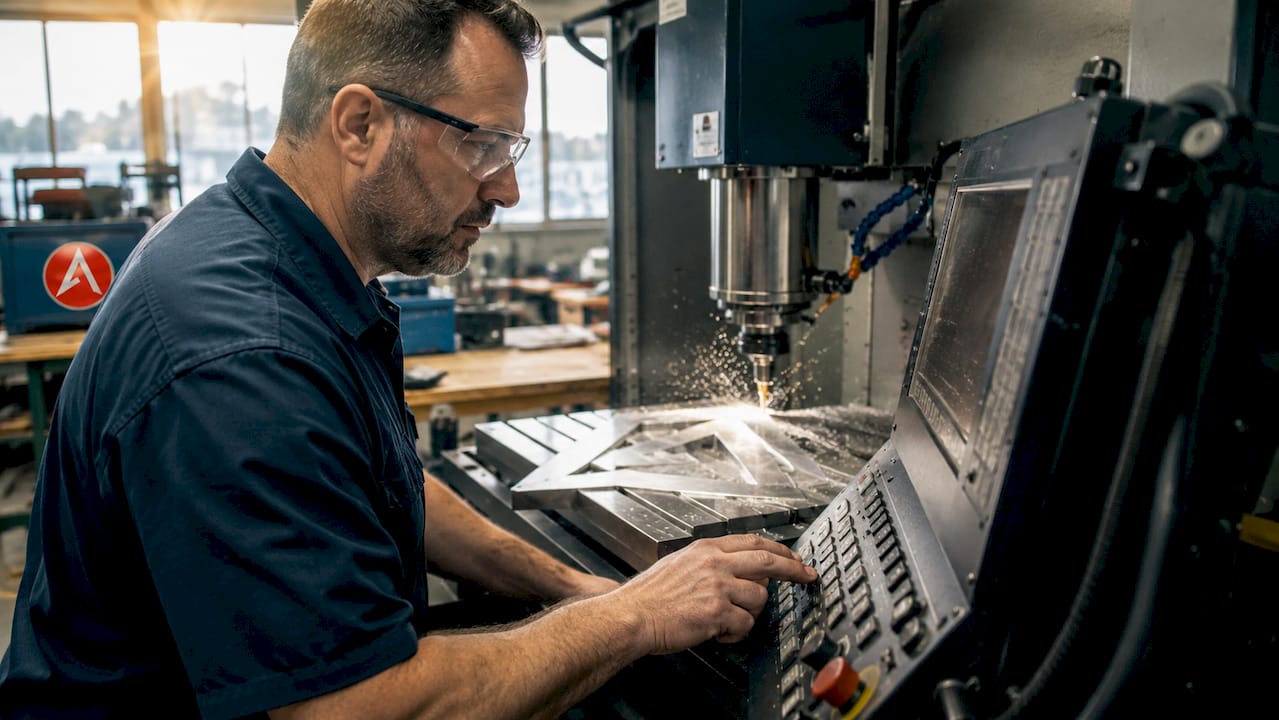
Custom shaped signs appear in retail storefronts, trade show floors, outdoor events, real estate yards, and safety compliance applications. Each environment calls for a different material and fabrication approach. The shape is only the starting point.
What materials work best for custom shaped signs?
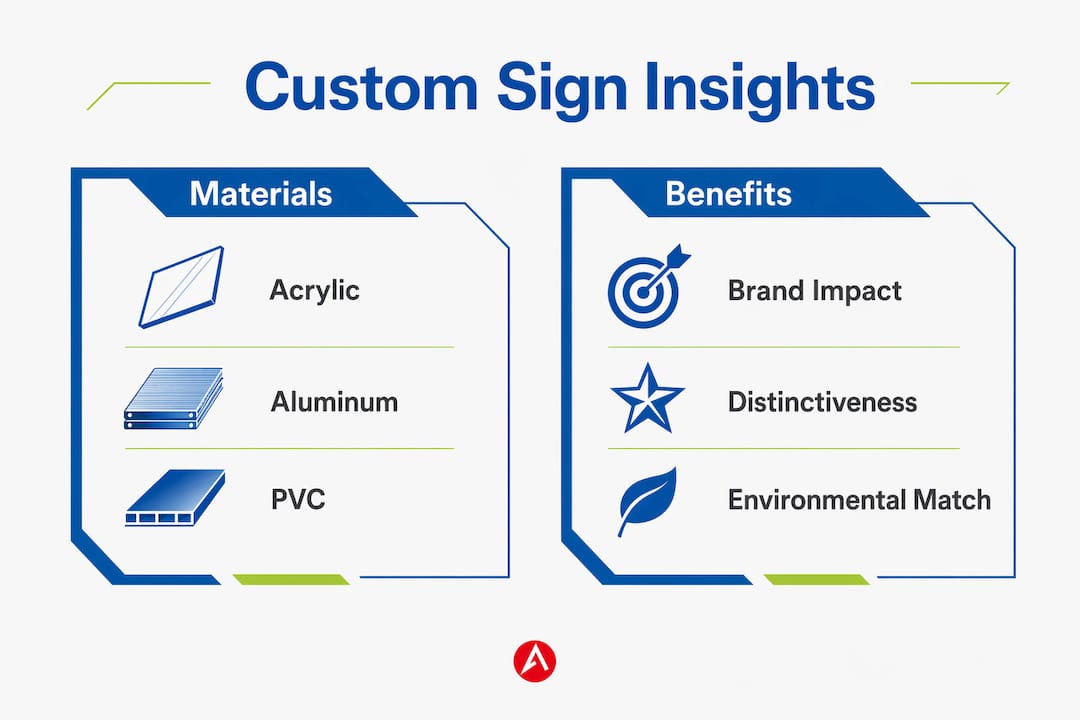
Material selection determines how long your sign lasts, where you can use it, and how well it holds color. Custom shaped signs use materials including corrugated plastic (commonly sold as Coroplast), PVC, aluminum, stainless steel, and acrylic. Each material suits a different application.
Here is how the most common materials compare:
- Corrugated plastic (Coroplast): Lightweight, affordable, and ideal for temporary outdoor use. Common for yard signs, event directionals, and political signage. Typically available in 4mm thickness.
- PVC: Printed PVC signs are weather-resistant and accept UV printing cleanly. Best for semi-permanent indoor or sheltered outdoor use.
- Aluminum: Fade-resistant outdoors due to specialized inks and films. The right choice for long-term exterior branding where durability matters most.
- Stainless steel: Premium option for architectural or prestige applications. Heavy and expensive, but nearly permanent.
- Acrylic: Excellent for indoor retail, lobby signage, and dimensional letters. Laser cutting produces clean, polished edges on acrylic.
Fabrication methods include CNC milling, laser cutting, and contour cutting. Laser cutting and CNC milling enable highly detailed and intricate shapes that would be impossible to achieve with manual cutting. Contour cutting follows a printed graphic’s outline precisely, making it the standard method for yard signs and banner-based shapes.
Pro Tip: Match your material to the environment first, then choose your shape. An acrylic sign with a beautiful laser-cut edge will warp and yellow outdoors within a season. Aluminum or Coroplast handles outdoor conditions far better.
Check out the indoor vs outdoor sign guide from Arrowhead Sign Company - Signs, Banners and Trade Show Displays for a deeper breakdown of environment-specific material choices.
What types of custom shaped signs are used in business and events?
Custom shaped signs include yard signs, metal signs, acrylic signs, dimensional letters, arrows, and unique logo shapes, each suited to different marketing or directional needs. Sizes can range up to 5 feet by 10 feet and up to 4 inches thick, giving businesses significant flexibility in scale and presence.
| Sign type | Common material | Best use case |
|---|---|---|
| Contour cut yard sign | Corrugated plastic | Real estate, events, political campaigns |
| Logo-shaped metal sign | Aluminum | Exterior storefronts, long-term branding |
| Dimensional letters | Acrylic or PVC | Lobbies, retail interiors, trade show booths |
| Directional arrow sign | PVC or aluminum | Event wayfinding, parking, campus navigation |
| Geometric safety sign | Aluminum | Compliance, warnings, regulatory messaging |
| Multi-layer decorative sign | PVC | Retail displays, pop-up events, promotions |
Shape choice carries real marketing weight. A sign shaped like your product or logo creates instant brand association that a rectangle simply cannot. At trade shows and expos, where dozens of booths compete for attention, a custom shaped sign at your booth can be the single detail that draws foot traffic your direction.
Pro Tip: Choose a shape that reinforces your message, not just your aesthetic. A coffee shop using a coffee cup silhouette communicates its product before a customer reads the name. That kind of instant clarity is the real goal.
What benefits do custom shaped signs offer over standard rectangular signs?
Custom shaped signs deliver measurably stronger visual impact in cluttered environments. The move toward custom shaped signage is driven by businesses needing to make a strong first impression where competition for attention is intense. A rectangle blends in. A shape that mirrors your brand stands out.
The core benefits include:
- Brand recognition: A sign contoured to your logo reinforces brand identity at a glance, even from a distance.
- Memorability: Unusual shapes register differently in memory than standard formats. Customers recall a distinctive shape faster than they recall text.
- Functional clarity: Specific geometric shapes act as visual language the public responds to intuitively. Octagons mean stop. Triangles signal warnings. Shape selection is a functional decision, not just an aesthetic one.
- Event visibility: At outdoor events and trade shows, custom shapes help your signage compete with surrounding visual noise.
- Brand alignment: Custom shapes let you match signage to your exact brand standards, including logo proportions and color fields.
“Custom signage improves compliance and safety by using universally recognizable shapes like octagons or triangles for warnings and stop signs, enhancing communication effectiveness.” — Safety Decals
For small businesses, the strategic value of sign shapes goes beyond aesthetics. A well-chosen shape communicates professionalism and intentionality, two qualities that build customer trust before a single conversation happens.
How do you design and create a custom shaped sign?
Designing a custom shaped sign requires more planning than a standard rectangular sign. The shape affects every downstream decision, from file preparation to mounting hardware. Follow these steps to get it right.
-
Prepare your vector file. Custom shaped signs require a vector-based design file, typically an AI, EPS, or PDF format. The cut path must be a separate layer from the printed artwork. Raster files like JPEGs cannot define a precise cut line.
-
Add a bleed area. Designing a custom shaped sign involves creating bleed areas so that color extends slightly beyond the cut line. This prevents white edges from appearing if the cut shifts even slightly during production.
-
Plan your mounting points early. Mounting method considerations early in design prevent costly redesigns later. Decide whether your sign will hang, stake, mount to a wall, or attach to a frame before finalizing the shape. Each method requires specific hardware placement.
-
Choose colors and fonts that work with the shape. Complex shapes with thin extensions need simple, bold graphics. Intricate typography gets lost when the sign outline itself is already detailed. Keep the visual hierarchy clear.
-
Consult your fabricator before finalizing. Collaboration with fabricators is essential to maintain design integrity and durability. Fabricators can flag structural weaknesses in thin protrusions or sharp angles before production begins.
-
Proof the sign digitally and physically. Request a digital proof showing the cut line overlaid on the artwork. For large or complex signs, a physical prototype reveals issues that a screen cannot.
-
Account for the production timeline. Custom shapes take longer to produce than standard rectangles. Build in extra lead time, especially for events with fixed dates.
Pro Tip: If your sign has complex protrusions, like antlers on a deer silhouette or thin letter extensions, ask your fabricator to add reinforced mounting points or internal supports. Thin extensions are the first place a sign fails in wind or during transport.
For outdoor events specifically, reviewing outdoor signage best practices helps you anticipate environmental challenges before they become problems on-site.
Key Takeaways
Custom shaped signs deliver the strongest return when material, shape, and mounting are planned together from the start, not treated as separate decisions.
| Point | Details |
|---|---|
| Definition matters | A custom shaped sign is any sign fabricated beyond standard rectangular formats using CNC or laser cutting. |
| Material drives durability | Match material to environment: Coroplast for temporary outdoor use, aluminum for long-term exterior branding. |
| Shape is a communication tool | Geometric shapes like octagons and triangles carry universal meaning that reinforces your message instantly. |
| Design prep is critical | Vector files, bleed areas, and mounting point planning must happen before production begins. |
| Fabricator collaboration saves money | Consulting your fabricator early prevents structural failures and costly redesigns. |
Why shape is the most underrated decision in sign design
Most businesses spend the bulk of their sign budget on color, font, and logo quality. Shape gets treated as an afterthought, something chosen from a dropdown menu on an order form. That is a mistake I have seen repeated across retail, events, and trade show environments.
Shape is the first thing the human eye processes at a distance. Before your brand name registers, before your tagline lands, the outline of your sign has already sent a signal. A circle feels approachable. A sharp geometric form feels precise and technical. A silhouette of your product tells the whole story in a fraction of a second.
The most common mistake I see from first-time custom sign buyers is choosing a shape that looks interesting in isolation but fights with the message on the sign. A highly detailed, irregular shape competes with the graphics inside it. The shape and the content need to work together, not against each other.
My honest advice for anyone ordering their first custom shaped sign: start with function, then add personality. Decide what the sign needs to do, where it will live, and how it will be mounted. Then choose a shape that amplifies that function. The aesthetic will follow naturally.
— Dan
Custom sign solutions from Arrowhead Sign Company
Arrowhead Sign Company - Signs, Banners and Trade Show Displays offers a full range of display and signage products built for businesses that need to show up strong at events, expos, and retail locations.
Whether you need a freestanding display or a sidewalk sign that stops foot traffic, Arrowhead Sign Company - Signs, Banners and Trade Show Displays has options that ship fast, often within two business days. The Signicade Deluxe A-Frame sign is a durable, customizable sidewalk sign ideal for outdoor marketing. For larger displays, the 10 ft stretch fabric display delivers a bold visual presence at trade shows and events. Contact the team directly for personalized advice on which sign format fits your brand and venue.
FAQ
What is a custom shaped sign?
A custom shaped sign is any sign fabricated beyond standard rectangular or square formats, using CNC milling or laser cutting to match a specific logo, silhouette, or geometric form.
What materials are used for custom shaped signs?
Common materials include corrugated plastic, PVC, aluminum, stainless steel, and acrylic. Material choice depends on whether the sign is used indoors or outdoors and how long it needs to last.
How do I create a custom shaped sign?
Start with a vector design file, add a bleed area, plan your mounting points, and consult your fabricator before production. Proofing the design digitally before printing prevents costly errors.
What are the benefits of custom shaped signs over rectangular signs?
Custom shapes increase visual impact, improve brand recognition, and communicate meaning faster than standard formats. Geometric shapes like octagons and triangles also serve functional compliance and safety roles.
What shaped sign types work best for trade shows and events?
Contour cut yard signs, dimensional letter signs, and logo-shaped acrylic or PVC signs perform well at events. They draw attention quickly and reinforce brand identity in visually competitive environments.
Recommended
- What Is a Promotional Flag Banner? A Business Guide - Arrowhead Sign Company
- What Is a Promotional Standing Sign for Marketing - Arrowhead Sign Company
- Signs Every Small Business Needs for Trade Shows - Arrowhead Sign Company
- Indoor vs Outdoor Sign Options: A Practical Guide - Arrowhead Sign Company