

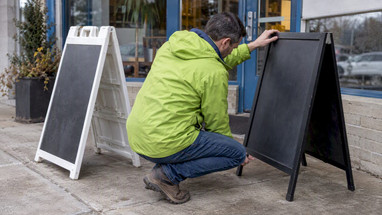
Buy & Inspect Checklist: A-Frame vs Sandwich Board for U.S. Small Businesses
Posted by Deeder Dandenhorf on Oct 4th 2026
Buy & Inspect Checklist: A-Frame vs Sandwich Board for U.S. Small Businesses

For most small businesses, a rigid A-frame sidewalk sign like our Signicade Deluxe A-Frame Sidewalk Sign is the practical default when you need durability and wind resistance on a busy sidewalk. A lightweight sandwich-board-style plastic frame or chalk A-board works better when portability and low cost matter more than long-term toughness. The rest of this guide walks through materials, sizing, local rules, and upkeep so you can match the sign to your storefront.
TL;DR:
- Aluminum or steel A-frames offer greater wind resistance and durability for outdoor use, but are more expensive than plastic sandwich boards.
- 4mm corrugated plastic panels provide better resistance to heat and sun damage compared to 3mm options, making them suitable for outdoor signage.
- Most municipalities require permits and strict adherence to sidewalk clearance, with typical limits of 6 square feet and placement outside the corner sight zones.
- For high-traffic storefronts, printed inserts in rigid A-frames create a more professional appearance that lasts for years, while chalkboards suit frequent daily updates.
- Regular inspection, cleaning, and seasonal replacement of graphic inserts extend the lifespan of sidewalk signs and optimize their outdoor performance.
Table of Contents
- Comparing A-frame and sandwich board signs side by side
- Which frame and insert materials actually matter
- What municipal codes typically require for sidewalk signs
- Matching the sign type to your use case
- Buying and maintaining your sidewalk sign
- What years of sign orders have taught us about sidewalk signage
- Where to buy A-frame and sandwich board signs built to last
- FAQ
- Sources
Comparing A-frame and sandwich board signs side by side
Both sign types fold flat and stand on their own, but they solve different problems. An A-frame built from aluminum or powder-coated steel holds up through wind, rain, and daily moves in and out of your shop. A sandwich-board-style plastic frame costs less and weighs less, but it flexes more in gusty conditions and shows wear faster.
- Best for: rigid A-frames suit retailers and storefronts with heavy foot traffic; lightweight sandwich boards suit cafés and pop-up vendors that reposition signs daily.
- Materials: aluminum or steel frames resist bending; plastic frames are easier to carry but less sturdy.
- Portability and setup: plastic sandwich boards set up in seconds and tuck under one arm; aluminum A-frames take a bit more effort but stay put once placed.
- Visibility and branding: printed inserts on an A-frame project a more polished brand image than handwritten chalk panels.
- Price range: sandwich-style plastic frames typically run cheaper upfront; rigid A-frames cost more but last through more seasons.
A coffee shop writing daily specials in chalk gets more value from a lightweight board it can swap out each morning. A boutique retailer wants the sturdier build and printed graphics of an A-frame like the Signicade Deluxe, since that sign stays outside for years, not weeks. Event organizers often need something in between, a frame light enough to transport but rigid enough to survive an afternoon outdoors. Our custom A-frame sign guide covers more on matching frame style to storefront type.
Which frame and insert materials actually matter
Frame material determines how your sign handles wind, repeated folding, and years of outdoor exposure. Aluminum and powder-coated steel frames hold up best in high-traffic locations, while molded plastic frames trade some durability for lighter weight and easier daily handling.
Insert panels matter just as much as the frame. Industry guidance points to 4mm corrugated plastic as the sweet spot for sidewalk sign inserts: rigid enough to resist bowing in heat, light enough to swap out seasonally. Thinner 3mm panels often warp when left in direct sun for long stretches, so they’re a poor fit for anything staying outside all day.
- Choose aluminum or steel frames for storefronts that leave signs out daily.
- Choose plastic frames when you need to move the sign indoors and outdoors often.
- Order 4mm Coroplast inserts over 3mm for anything facing direct sunlight.
- Add a water- or sand-fillable base if your sidewalk sees regular wind gusts.
Pro Tip: Check hinge quality before you buy; a loose or flimsy hinge is usually the first part to fail on a sign used daily. Our weather-resistant signage guide goes deeper on material choices for outdoor durability.
What municipal codes typically require for sidewalk signs
Before you set a sign outside your door, check your city’s sign permit page. Requirements vary by municipality, but a few patterns show up consistently across the country.
Many cities require a minimum 48-inch clear pedestrian path, and San Francisco Public Works sets that minimum at 6 feet in many commercial districts while also barring A-frames within five feet of intersections. Corner clear zones commonly run 5 to 10 feet, a buffer meant to keep sightlines open for drivers and pedestrians alike. Raleigh’s permit guidance also caps panel size in some zones, with example limits around 6 square feet of area, 3 feet of height, and 2 feet of width.
- Confirm your city’s minimum clear sidewalk width before placing a sign.
- Keep signs out of corner clear zones near intersections.
- Limit placement to one sign per storefront frontage.
- Remove signs after business hours unless your permit says otherwise.
Most cities enforce these rules through public works or planning departments, and an encroachment or sidewalk permit is often required before you place anything on public sidewalk space. Skipping that step can mean a confiscated sign or a fine, so a quick call to your local permit office saves a headache later.
Matching the sign type to your use case
The right sign depends less on budget and more on how you use it day to day; understanding which format fits your goal is key for effective outdoor advertising Sign Trailer Advertising: Which Format Fits Your Goal.
- Retail storefronts benefit from a sturdier A-frame with printed inserts, since visibility and a polished look matter more than daily repositioning.
- Cafés and restaurants often do better with a chalkboard-friendly sandwich board that gets rewritten for daily specials without needing new printed panels.
- Trade shows and events call for a lightweight frame with quick-swap graphic inserts, since setup speed and easy transport outweigh long-term weatherproofing. Our event signage guide covers setup tips for booth and sidewalk signage at shows.
- Short-term promotions fit a cheaper plastic frame you won’t mind retiring after a season, while year-round branding justifies the upfront cost of an aluminum or steel A-frame built to last.
Buying and maintaining your sidewalk sign
A little inspection at delivery and a short maintenance routine afterward will stretch the life of any sidewalk sign well beyond its first season.
- At arrival: check hinge action, test the ballast port for leaks, inspect print finish for scratches, and confirm inserts slide in and out cleanly.
- Ongoing care: wipe down frames monthly, swap inserts seasonally if graphics fade, and store signs indoors overnight when possible.
- Replacement timeline: inserts typically wear out faster than frames, so budget for new graphic panels well before the frame itself needs replacing.
Pro Tip: Keep a spare insert on hand for seasonal promotions; swapping a panel takes minutes and saves you from reordering an entire sign when a sale ends.
What years of sign orders have taught us about sidewalk signage

Small businesses rarely ask for the cheapest sign. They ask for the one that survives their sidewalk, their weather, and their daily routine without turning into a monthly headache. That’s the real test, not the spec sheet.
Our experience filling orders for storefronts and event exhibitors shows the same pattern over and over: businesses that choose a sturdier frame up front spend far less time and money on replacements later. The temptation to grab the cheapest plastic frame is understandable, but it often costs more in the long run once wind damage or UV fading sets in after one season. A sign is marketing equipment, not an afterthought, and it deserves the same scrutiny you’d give a storefront banner or a trade show display.
— Dan
Where to buy A-frame and sandwich board signs built to last
We carry both the sturdier and the lightweight options discussed above, with direct delivery available for clients in Arizona and nationwide shipping. The Signicade Deluxe A-Frame Sidewalk Sign gives storefronts a durable, printed option built for daily outdoor use, while the Outdoor Banner Frame, The Banner Bar suits businesses that want a lightweight, adjustable frame for banners at events or temporary promotions.
| Product | Best for | Setup |
|---|---|---|
| Signicade Deluxe A-Frame Sidewalk Sign | Storefronts needing durability | Fold-out frame, printed inserts included |
| Outdoor Banner Frame, The Banner Bar | Events and temporary promotions | Adjustable 6 ft or 8 ft, quick assembly |
Need a custom size or a rush order before an event? Reach out and we’ll help you with your sidewalk sign or custom sign. Current prices and shipping options are listed on our website.
FAQ
What is the standard size of an A board?
Standard A-frame panels sizes vary, though some municipal codes set their own caps. Raleigh’s sign permit guidance, for example, limits panel area to around 6 square feet in some zones, so check local rules before ordering a larger size.
Why is it called a sandwich board?
The name comes from the shape: two flat panels connected at the top, with the wearer or stand sandwiched between them, much like a sandwich holds filling between two slices of bread. The term now covers both wearable boards and the folding A-frame signs seen outside shops.
What are the different types of sign boards?
Common types include rigid A-frame sidewalk signs, lightweight plastic sandwich boards, chalkboard-style A-boards, and banner frames like our adjustable outdoor banner frame. Each type trades off durability, portability, and cost differently depending on frame and insert material.
What kind of frame sign is best for advertising?
A rigid A-frame with printed inserts, such as the Signicade Deluxe, generally performs best for storefront advertising because it holds up outdoors and projects a more polished look than a chalk board. Events and short promotions often do better with a lighter frame that’s easier to transport and swap between locations.
Do I need a permit to place a sidewalk sign?
Many cities require an encroachment or sidewalk permit before you place any sign on public sidewalk space, and rules on clearance, placement, and hours vary by municipality. Check your city’s sign permit page before setting a sign outside your business.
Sources
- Choosing the right sign material — Vanderbilt printing services
- A-frame guidelines — San Francisco Public Works
- Sandwich Board Application — Astoria community development
- A-frame signs — Raleigh NC permits