

What Is a Custom A-Frame Sign for Small Businesses
Posted by Deeder Dandenhorf on Jul 6th 2026
What Is a Custom A-Frame Sign for Small Businesses
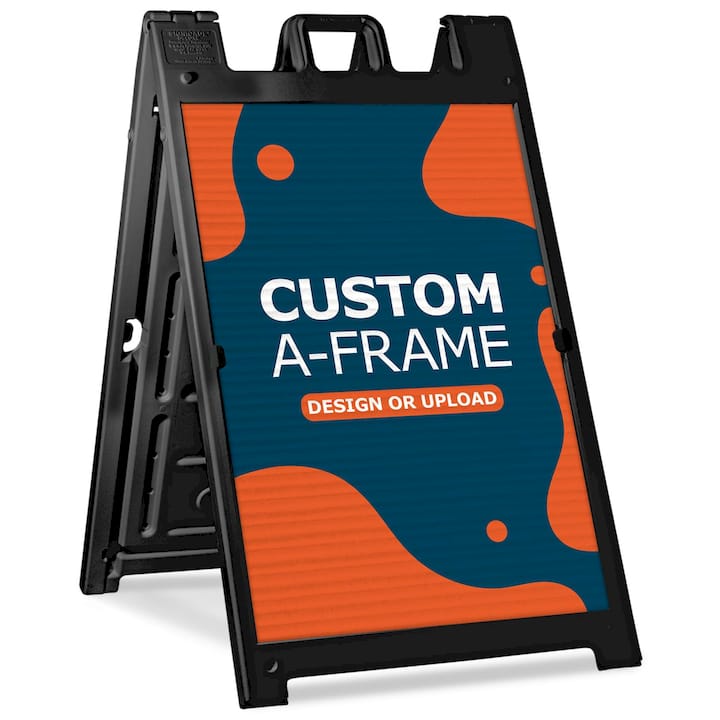
A custom A-frame sign is defined as a portable, foldable, double-sided display with two hinged panels that form a stable triangle shape, typically sized at 24x36 inches for maximum readability. You may also hear it called a sandwich board, which is the older industry term for the same format. Small business owners use these signs to capture foot traffic, announce daily specials, and promote events without committing to permanent signage. This guide covers the key features, benefits, customization options, and practical uses that make A-frame signs one of the most cost-effective marketing tools available in 2026.
What is a custom A-frame sign made of?
A-frame signs are built from a hinged frame and a graphic surface, and the materials you choose determine how long the sign lasts and how often you can update it.
Common frame materials include:
-
Metal (steel or aluminum): The most durable option for outdoor use. Metal frames resist wind, rain, and daily wear without warping.
-
Plastic (polypropylene or ABS): Lighter and more affordable than metal. Good for indoor use or sheltered outdoor spots.
-
Wood: Offers a handcrafted, boutique look. Popular with cafes, boutiques, and farmers market vendors, though wood requires more maintenance in wet climates.
The graphic surface is where the real decision happens. Fixed panels use printed vinyl or direct-print graphics permanently attached to the frame. Interchangeable insert panels accept swappable corflute or foam board prints, letting you change your message without buying a new frame. Chalkboard surfaces give you the most flexibility for daily updates with zero printing costs.
Weather resistance is a key practical benefit for outdoor use. Look for UV-resistant coatings on printed panels and powder-coated finishes on metal frames to prevent fading and rust.
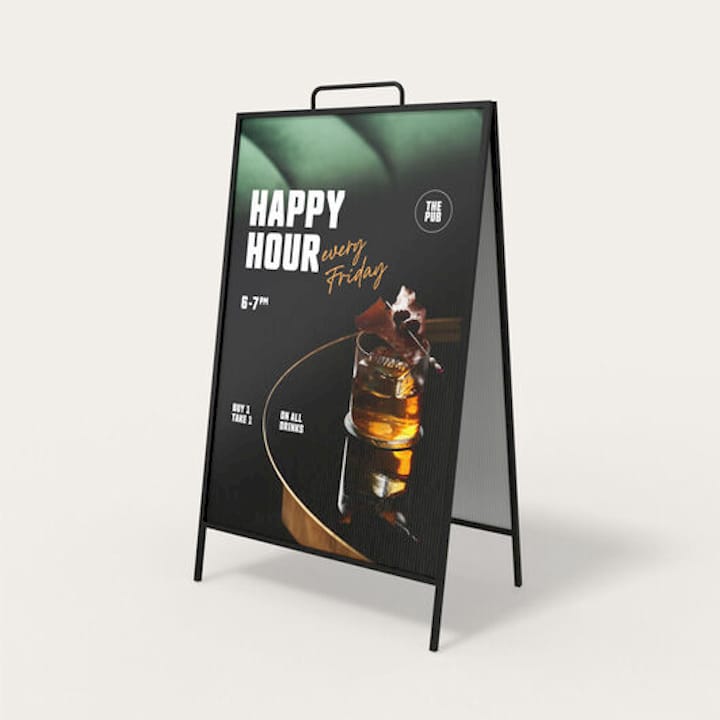
Most sidewalk ordinances in major cities specify 24x36 inches as the ideal size for sidewalk signage. That standard exists because 24x36 inches balances legibility from a distance with a footprint small enough to keep walkways clear.
Pro Tip: Always check your local sidewalk signage ordinance before purchasing a frame. Some cities restrict sign height, width, or placement distance from the curb, and a non-compliant sign can result in fines or forced removal.
What are the benefits of A-frame signs for small businesses?
A-frame signs deliver marketing value that is hard to match at their price point. The double-sided format means your message reaches pedestrians coming from both directions, effectively doubling your exposure with a single sign.
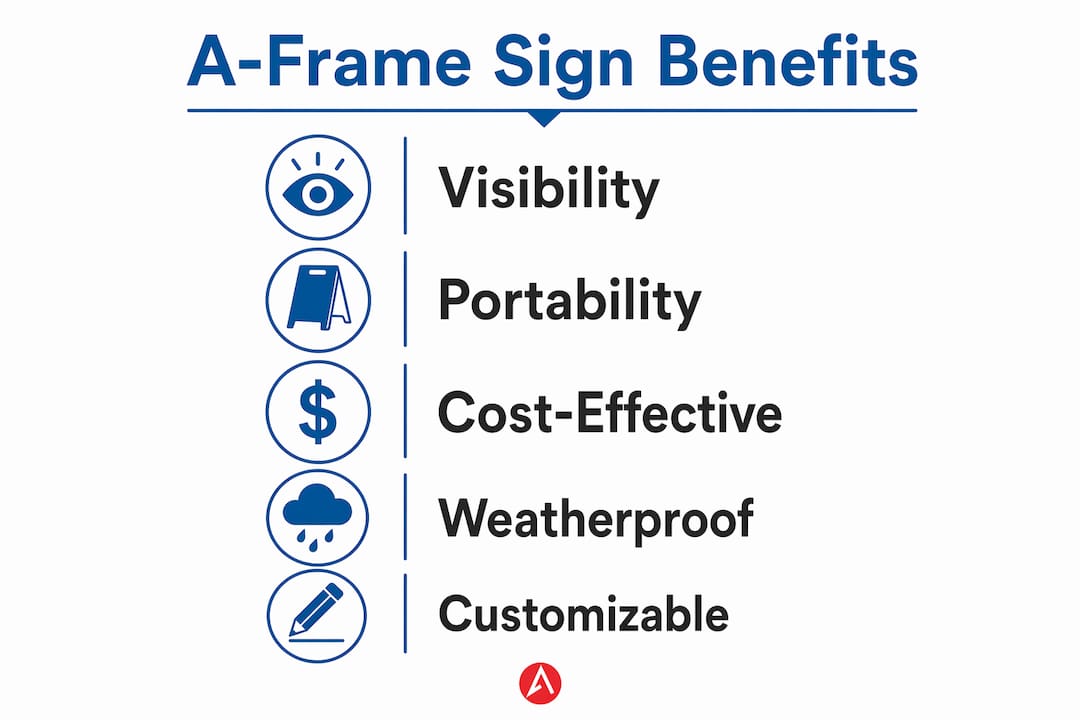
Here are the core benefits that make A-frame signs worth the investment:
-
High visibility from two directions. Both panels display your message simultaneously, so you capture foot traffic on either side of a walkway or entrance.
-
Portability and flexible placement. A-frame signs fold flat for easy transport and storage. You can move them from your storefront to a trade show booth to an event entrance without any tools.
-
Quick message updates. Chalkboard and insert-style frames let you change your message daily or even hourly. A restaurant can promote the lunch special at noon and switch to happy hour pricing by 3:00 PM.
-
Cost-effective compared to other signage. A quality A-frame sign costs a fraction of a printed banner stand or digital display, yet delivers comparable visibility in pedestrian environments.
-
Suitable for indoor and outdoor use. Weatherproof frames and UV-resistant prints handle outdoor conditions, while lighter plastic frames work well inside trade show halls and retail spaces.
A-frame signs act as physical interruptions at eye level in busy pedestrian environments. That positioning is what separates them from wall-mounted or window signage, which pedestrians often ignore because it sits outside their natural line of sight. A well-placed A-frame stops people mid-stride and delivers your message before they consciously decide to look away.
How can you customize A-frame signs to enhance brand impact?
Customization is where a generic sandwich board becomes a true marketing asset. The goal is to make your sign immediately recognizable as part of your brand while keeping the message simple enough to read in seconds.
Applying vinyl decals for crisp branding
Vinyl decals are the most professional finish for a fixed-panel A-frame. For the sharpest results, your logo files must be in vector formats such as .AI, .EPS, or .SVG. Vector files scale to any size without pixelation, which matters when a sign is viewed from 10 to 15 feet away. Raster files like .JPG or .PNG often look blurry when printed at sign size.
Using interchangeable panels for frequent updates
Insert-style A-frames let you swap promotional panels without replacing the entire frame. This approach works well for retailers running weekly promotions or event organizers who reuse the same frame across multiple shows. Print a set of panels for different occasions and store them flat between uses.
Choosing colors, fonts, and graphics
High-contrast color combinations, such as black text on a white or yellow background, read fastest at a distance. Limit your sign to one or two fonts. Scripts and decorative typefaces look attractive up close but lose legibility from 10 feet away. Use your brand’s primary color as the background or border to reinforce recognition.
The 3-second rule is the most important design constraint for A-frame signs. Pedestrians walking at a typical pace have roughly three seconds to read and process your message. That means your sign needs one clear headline, one supporting detail, and a call to action. Nothing more.
| Message element | Best practice |
|---|---|
| Headline | 3–6 words, large font, high contrast |
| Supporting detail | One line: price, date, or offer |
| Call to action | “Come in,” “Ask us,” or an arrow |
| Graphics | One image or logo, not a collage |
Pro Tip: Test your sign design by standing 10 feet away and reading it aloud. If you stumble or need more than three seconds, simplify the layout before printing.
For more ideas on creating visually engaging signage, the guide on custom shaped signs from Arrowhead Sign Company - Signs, Banners and Trade Show Displays covers design principles that apply directly to A-frame formats.
Where are custom A-frame signs most effectively used?
Placement determines whether your sign works or sits ignored. The best location puts your sign in the path of your target customer at the moment they are most likely to act.
High-impact placement locations include:
-
Sidewalks in front of storefronts: The classic use case. Position the sign perpendicular to foot traffic so both panels face the flow of pedestrians.
-
Event and trade show entrances: An A-frame at the entry point of a booth or venue directs visitors and sets expectations before they walk in. Arrowhead Sign Company - Signs, Banners and Trade Show Displays offers trade show sign guidance that covers how A-frames fit within a full booth setup.
-
Restaurant and cafe exteriors: Daily specials, brunch hours, and seasonal menus are natural fits for a chalkboard or insert-style A-frame placed near the entrance.
-
Retail store interiors: Use A-frames inside your store to highlight sale sections, new arrivals, or loyalty program sign-ups without permanent fixtures.
-
Real estate open houses: A-frames placed at street corners and driveway entrances guide buyers from the main road to the property.
-
Farmers markets and pop-up events: Portable frames fold flat for transport and set up in seconds, making them ideal for vendors who move locations weekly.
Portability is the feature that makes A-frame signs uniquely flexible. You can shift a sign from the morning breakfast rush position to the afternoon lunch spot without any tools or extra staff. That kind of real-time repositioning is not possible with wall-mounted or window signage.
For event-specific placement strategies, the outdoor event signage guide from Arrowhead Sign Company - Signs, Banners and Trade Show Displays covers best practices that apply directly to A-frame deployment.
How do you maintain and update A-frame signs for long-term use?
A well-maintained A-frame sign can last for years. The key is treating the frame and the graphic surface as two separate maintenance tasks.
Frame care:
-
Wipe metal frames with a damp cloth after rain or dusty conditions. Dry immediately to prevent rust on non-powder-coated surfaces.
-
Inspect hinges monthly. Tighten loose screws and apply a small amount of lubricant if the hinge stiffens in cold weather.
-
Store frames flat or folded in a dry location when not in use. Leaning them against a wall at an angle can warp plastic frames over time.
Graphic surface care:
-
Clean printed vinyl panels with a mild soap solution and a soft cloth. Avoid abrasive cleaners, which scratch the surface and dull colors.
-
Replace vinyl panels when colors fade noticeably or edges begin to peel. Faded graphics undermine your brand’s credibility faster than no sign at all.
-
For interchangeable corflute inserts, store unused panels flat and away from direct sunlight to prevent warping and color shift.
Pro Tip: Keep a set of backup printed panels on hand for your most-used messages. If a panel gets damaged during an event, you can swap it out immediately rather than running without signage.
Knowing when to replace the entire frame is straightforward. If the hinge no longer holds the panels at a stable angle, or if the frame rocks in light wind, it is time for a new unit. A wobbly sign is a safety hazard and a poor brand impression.
Key Takeaways
A custom A-frame sign is the most portable, cost-effective double-sided display a small business can use to capture pedestrian attention and communicate a clear message in three seconds or less.
| Point | Details |
|---|---|
| Standard size matters | The 24x36-inch format meets most sidewalk ordinances and ensures readability from a distance. |
| Material choice drives flexibility | Fixed vinyl panels suit static branding; interchangeable inserts suit daily or weekly message updates. |
| The 3-second rule governs design | Limit signs to one headline, one detail, and one call to action for maximum pedestrian impact. |
| Placement is as important as design | Position signs perpendicular to foot traffic so both panels face the flow of pedestrians. |
| Maintenance extends sign life | Clean frames and panels regularly, and replace faded graphics before they damage your brand image. |
What I’ve learned from watching A-frame signs work in the real world
Small business owners consistently underestimate how much a single well-placed A-frame sign can move foot traffic. I have seen restaurants fill slow Tuesday lunches simply by placing a chalkboard sign at the corner rather than directly in front of the door, because the corner catches people before they commit to walking past.
The most common mistake I observe is overcrowding the panel. Business owners want to communicate everything: the name, the hours, the menu, the social media handle, and the promotion. The result is a sign that communicates nothing because pedestrians cannot process it in three seconds. One clear message beats five competing ones every time.
The second mistake is treating the sign as a one-time purchase and never updating it. A sign that reads “Grand Opening” six months after opening tells customers you are not paying attention. Fresh messaging signals an active, engaged business. Even a simple seasonal update, like swapping a summer special for a fall menu, keeps the sign relevant and worth reading.
My honest recommendation is to think of your A-frame sign as a daily communication channel, not a set-it-and-forget-it fixture. The businesses that get the most value from their signs are the ones that update messaging weekly and reposition the sign based on where foot traffic is heaviest at different times of day. That level of attention costs nothing extra and compounds over time into real customer growth.
— Dan
Custom A-frame signs from Arrowhead Sign Company - Signs, Banners and Trade Show Displays
Arrowhead Sign Company - Signs, Banners and Trade Show Displays carries the Signicade Deluxe A-Frame, a professional-grade sidewalk sign that includes two full-color prints ready to display from day one. The frame is built for outdoor durability, and the included prints mean you can set up and start marketing the same day your order arrives.
Most orders ship within two business days, and the team at Arrowhead Sign Company - Signs, Banners and Trade Show Displays provides direct delivery to venues across Arizona. Whether you need a single sign for a storefront or a set of frames for a trade show, the product range covers both entry-level and high-traffic applications. Visit Arrowhead Sign Company to browse the full catalog and get expert guidance on the right signage solution for your next event or promotion.
FAQ
What is a custom A-frame sign?
A custom A-frame sign is a portable, double-sided display with two hinged panels forming a stable triangle shape, typically sized at 24x36 inches. Businesses use them to advertise promotions, direct foot traffic, and display menus both indoors and outdoors.
What are A-frame signs used for?
A-frame signs are used for sidewalk advertising, trade show booth displays, event entrances, restaurant specials, retail promotions, and real estate open houses. Their portability makes them effective across nearly any setting where pedestrian traffic is present.
How do I create an A-frame sign with effective messaging?
Follow the 3-second rule: use one headline of 3–6 words, one supporting detail, and one call to action. High-contrast colors and a single large font make the message readable from 10 or more feet away.
What file format do I need for custom vinyl A-frame signs?
Professional vinyl printing requires vector logo files in .AI, .EPS, or .SVG format. These formats scale to any size without losing sharpness, which is critical for signage viewed from a distance.
How often should I update my A-frame sign message?
Update your message as often as your promotions or offerings change. Insert-style and chalkboard A-frames support daily updates, while fixed vinyl panels are best for messages that stay consistent for weeks or months at a time.