

15 oz Wins: Best Vinyl Banner Printing for Small Businesses
Posted by Deeder Dandenhorf on Sep 12th 2026
15 oz Wins: Best Vinyl Banner Printing for Small Businesses
For most outdoor and general-purpose event banners, 15 oz scrim-reinforced vinyl is the material to order, printed with eco-solvent or latex ink and finished with stitched hems. Choose 13 oz for short-term indoor use or travel, mesh for large windy outdoor sites, and 18 oz blockout for double-sided or permanent signage. Skip the guesswork and order from a specialist supplier with fast fulfillment, like Arrowhead Sign Company, so your banner arrives finished correctly and on time.
TL;DR:
- Most outdoor banners use 15 oz vinyl, which balances durability and cost for two to three years of outdoor exposure.
- Grommet spacing and reinforced corners are critical for wind resistance and preventing tearing, especially in windy outdoor settings.
- Stitching hems significantly improves the banner’s lifespan compared to adhesive hem tape, especially under sun and temperature fluctuations.
- Rush orders are typically delivered within one to two days and may require additional fees, but standard production usually takes several business days.
- In indoor or trade show use, fabric banners often outperform vinyl by reducing glare and allowing compact travel, but vinyl is preferred for outdoor durability.
Table of Contents
- What Should You Look for When Comparing Vinyl Banner Printing Companies?
- Which Vinyl Weight, Ink, and Finish Actually Determine Durability?
- How Fast Can You Get a Banner Printed, and What Drives the Price?
- How Arrowhead Sign Company Covers Your Event Banner Needs
- What Actually Goes Wrong at Events, and How to Catch It
- Get a Fast Quote on Your Event Banner
- Sources
- FAQ
What Should You Look for When Comparing Vinyl Banner Printing Companies?
Before you request a single quote, decide what job the banner needs to do. A banner bolted to a fence for three months of Arizona sun has completely different requirements than a retractable backdrop that travels to a trade show every other weekend. Matching the format to the use case, fixed outdoor, traveling retractable, or indoor backdrop, determines almost everything else on your quote.
Once you know the use case, the real evaluation happens in the details most shoppers skip past. Use this checklist when you’re comparing custom vinyl banner services:
- Material weight and whether the vendor defaults to 13 oz, 15 oz, or 18 oz for your application
- Hem construction: stitched hems versus adhesive hem tape, since stitched hems resist delamination better outdoors
- Grommet spacing and whether corners get reinforced patches
- Ink technology (eco-solvent, latex, or UV) and the vendor’s stated outdoor fade expectations
- Proofing standards, including whether you get a color-accurate PDF proof and how many revisions are included
- Written lead times for standard and rush orders, plus the shop’s reprint policy if a banner arrives damaged or misprinted
A vendor who hesitates on any of these, especially hem construction or written turnaround times, is telling you something about how the rest of your order will go.
Pro Tip: Ask every quote for grommet spacing in inches, not just “reinforced grommets.” A shop that says “every 24 inches, tighter on windy installs” understands wind load. A shop that just says “grommets included” probably hasn’t thought about it.
Which Vinyl Weight, Ink, and Finish Actually Determine Durability?
Vinyl banners come in a handful of standard weights, and the difference between them is not marketing fluff. It’s the difference between a banner that survives a three-day festival and one that survives three Arizona summers.
13 oz is the lightest common option, suited to short campaigns, single weekend events, or banners that get shipped and hung indoors. 15 oz is the industry’s workhorse weight, the choice that balances cost against two to three years of outdoor life, and it’s the default recommendation for most storefront and event signage. 18 oz blockout vinyl blocks light from passing through the material entirely, which makes it the right call for double-sided banners or anything meant to stay installed long term.
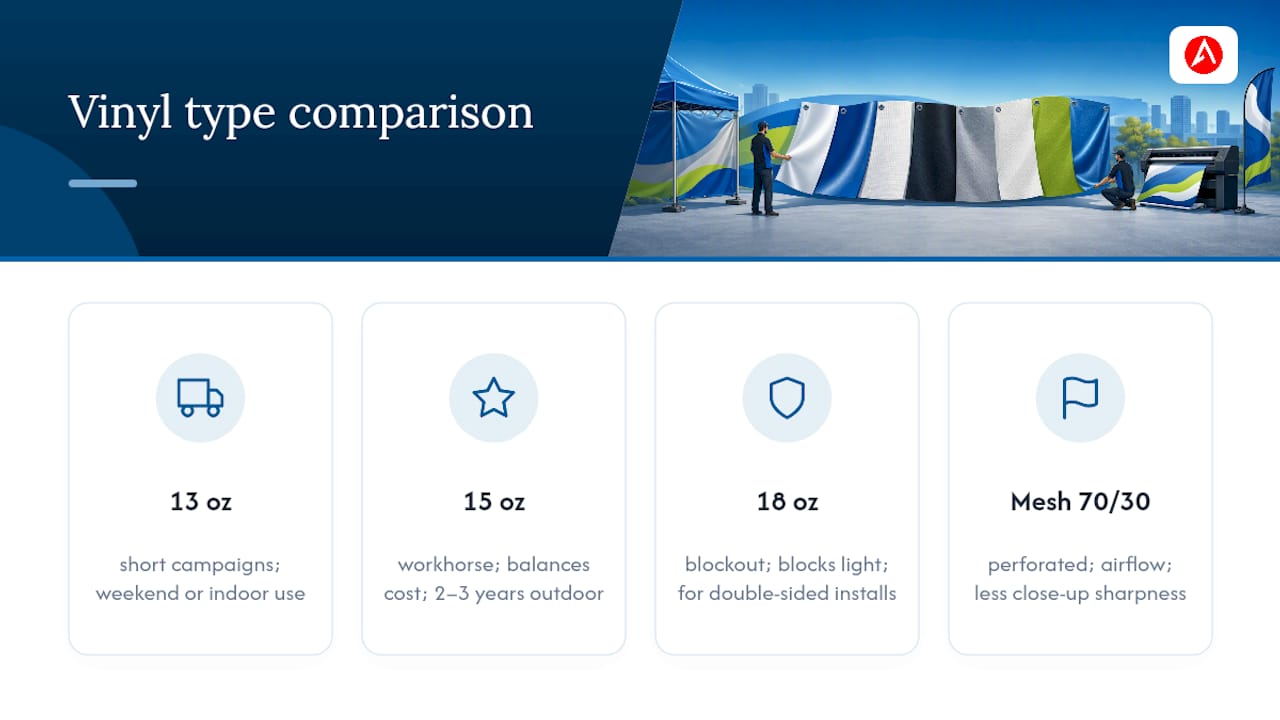
For large outdoor installations exposed to wind, mesh vinyl deserves a look before you jump to a heavier weight. Mesh uses a perforated weave, typically a 70/30 split, that lets air pass through instead of catching it like a sail. You trade some close-up image sharpness for a banner that won’t tear its grommets out in a gust, which matters if you’re covering a chain-link fence at an outdoor expo.
Ink choice matters less than most buyers assume. Eco-solvent and latex inks both deliver strong multi-year outdoor durability when applied and cured correctly, so the choice between them usually comes down to a shop’s equipment and scheduling rather than any real gap in performance. UV-cured ink shows up more often on rigid substrates than on flexible vinyl banners.
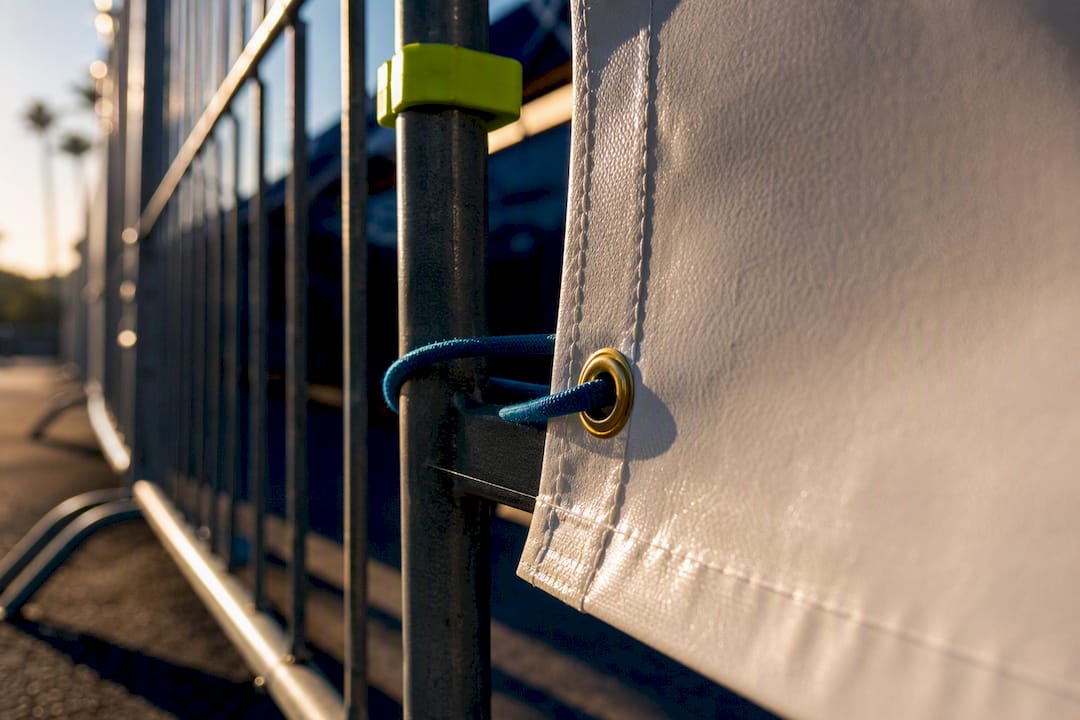
Finishing is where cheap orders quietly fail. Stitched hems mechanically lock the vinyl edge and hold up far better than heat-applied hem tape, which can peel after repeated sun exposure and temperature swings. Grommet spacing of 12 to 24 inches, tighter in windy conditions, along with reinforced corners, keeps a banner from tearing loose at its weakest points.
A banner’s real-world lifespan is a system, not a single spec. Material weight, ink chemistry, hem construction, grommet spacing, and installation tension all work together to determine how long a banner actually lasts, which is why two “15 oz banners” from different shops can perform very differently outdoors.
If your event is entirely indoors, particularly a trade show under bright exhibition lighting, fabric often outperforms vinyl for retractable stands and backdrops. Fabric doesn’t glare under overhead lights the way vinyl can, and it folds down small for travel between shows.
How Fast Can You Get a Banner Printed, and What Drives the Price?
Standard production on a straightforward vinyl banner typically runs several business days, depending on size and finishing complexity. Rush service compresses that to about one to two days, sometimes same-day, though most shops charge a premium for it and reserve it for simpler jobs without heavy finishing.
Your final price gets built from several stacking factors:
- Material weight, since 18 oz blockout costs more per square foot than 13 oz
- Total size, quoted per square foot on most standard orders
- Single-sided versus double-sided printing
- Finishing choice, with stitched hems typically priced higher than hem tape
- Ink type and quantity, since larger print runs often bring the per-unit cost down
- Rush fees and shipping, which can add more to the total than the banner itself on tight timelines
When you’re comparing quotes, look past the bottom-line number and check whether finishing is itemized separately or bundled into a flat per-square-foot rate. A quote that buries hem and grommet work inside “setup fees” makes it hard to tell what you’re actually paying for.
A few practical moves keep costs down without sacrificing durability. Choose 15 oz instead of 18 oz whenever the banner won’t be double-sided or permanent. Batch multiple banners into a single order to spread fixed setup costs. And stick to standard sizes and finishes unless your installation genuinely requires a custom cut, since custom dimensions often trigger both material waste charges and longer production windows.
How Arrowhead Sign Company Covers Your Event Banner Needs
Arrowhead Sign Company builds its process around the reality that event marketers usually don’t have weeks to wait. Most products ship within two business days, and customers in Arizona can arrange direct delivery to their venue instead of hoping a shipment clears customs or a warehouse in time.
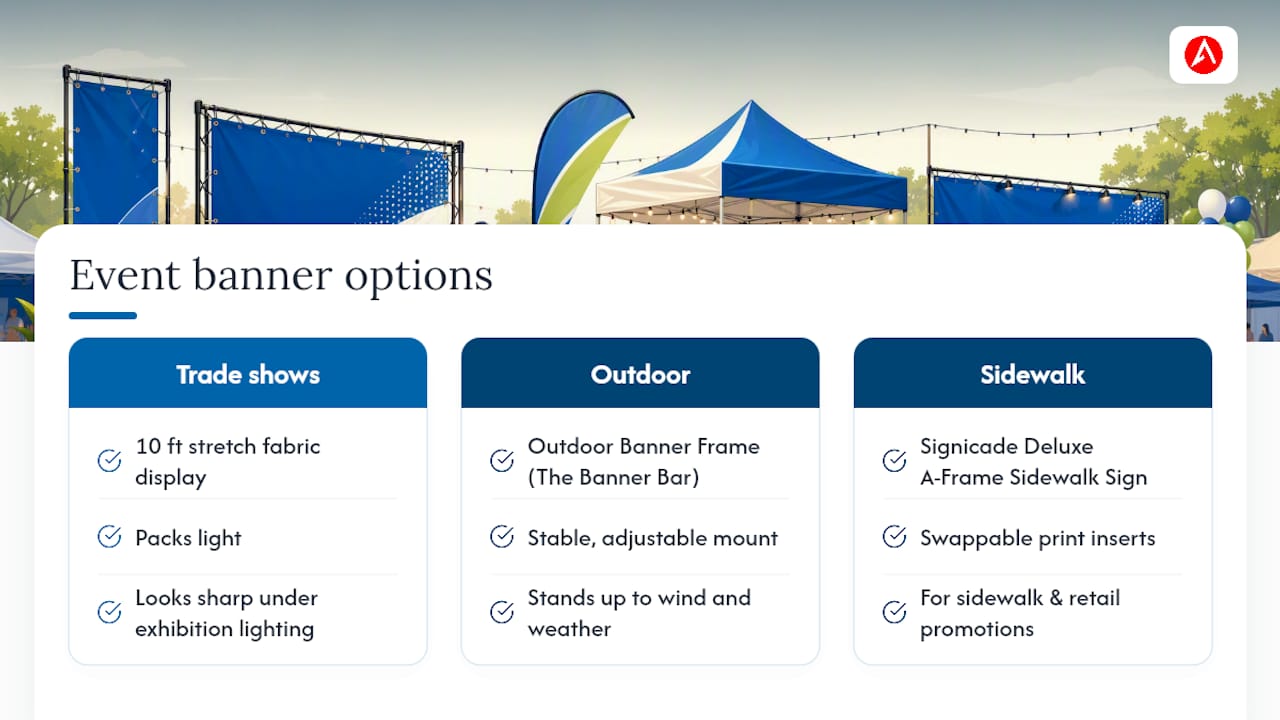
The product range maps directly onto the use cases above. Traveling to trade shows means you want something that packs light and looks sharp under exhibition lighting: the 10 ft stretch fabric display fits that job well. For outdoor promotions that need to stand up to wind and weather, the Outdoor Banner Frame, known as The Banner Bar, gives your vinyl banner a stable, adjustable mount. Sidewalk and retail promotions call for something different again, and the Signicade Deluxe A-Frame Sidewalk Sign handles that role with swappable print inserts.
Before you place an order, gather your file specs, preferred material weight, and finishing notes (stitched hems, grommet placement) so proofing goes quickly.
Pro Tip: Send your logo files as vector art (AI, EPS, or high-resolution PDF) instead of a screenshot pulled from your website. It’s the single fastest way to avoid a proof revision cycle that eats into your rush timeline.
What Actually Goes Wrong at Events, and How to Catch It
The failures I see repeated most often aren’t exotic. Someone orders 13 oz vinyl for a banner that needs to survive a windy parking lot install for a season, skips the proof to save two days, or picks hem tape because it’s cheaper without realizing it’s the first thing to fail. Shipping delays compound all of it when there’s no buffer before the event date.
Run a quick check the day before setup: pull the banner taut and look for slack, inspect every grommet for tearing, confirm corner reinforcement is intact, and view the printed color under the actual venue lighting, not just daylight. Colors read differently under fluorescent or LED rigs than they do on a laptop screen.
— Dan
Get a Fast Quote on Your Event Banner
There’s no reason to wait a week and a half for a banner that needs to be on-site Friday. Some sign companies build their process around fast fulfillment, with most products shipping within two business days and direct venue delivery available for local customers who need a banner installed rather than just shipped.
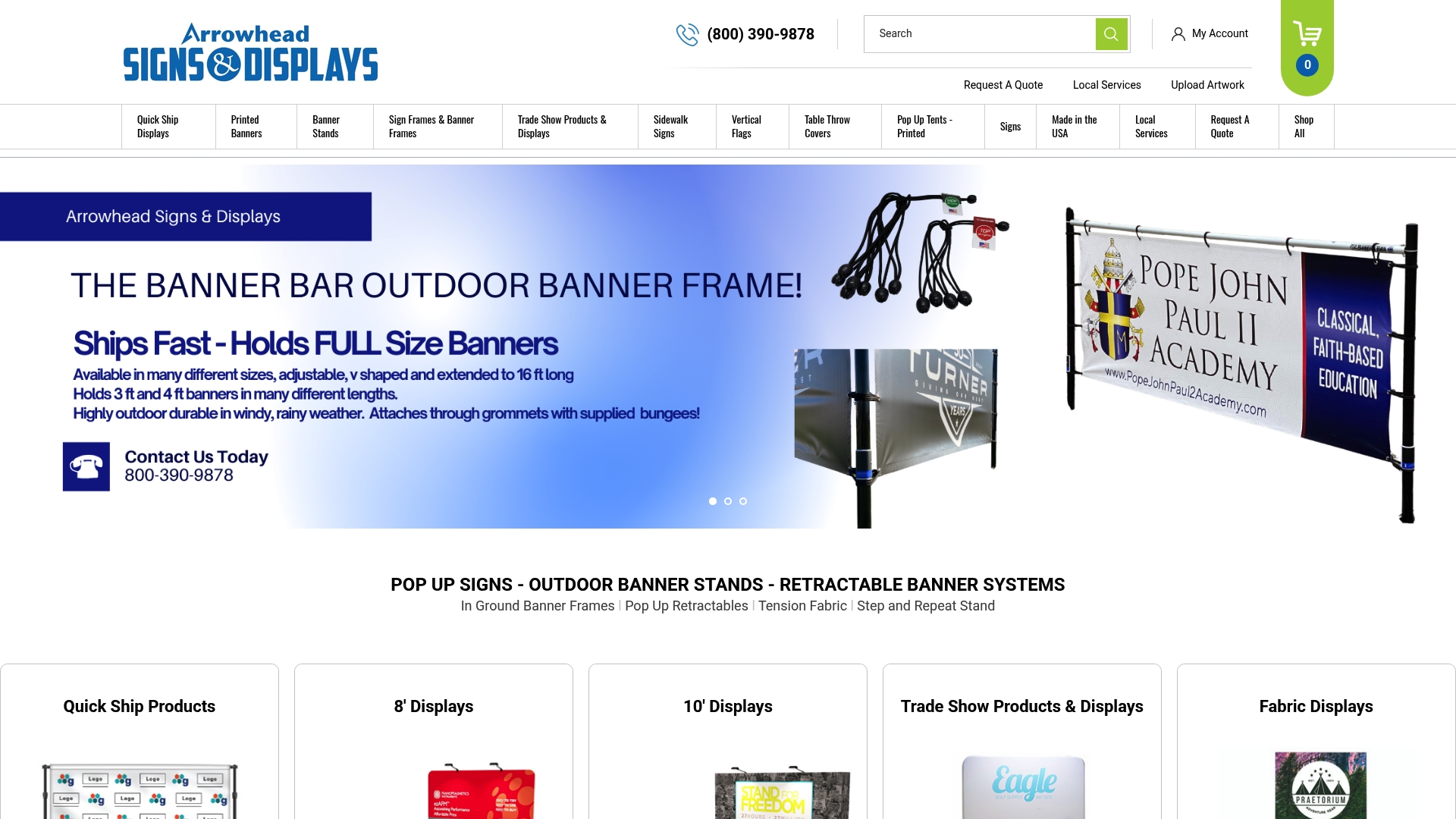
Start by pulling together your file specs, preferred material weight (15 oz for most outdoor jobs, 13 oz for short indoor runs), and quantity, then request a quote through the Arrowhead Sign Company product catalog. If your event calls for a mounted outdoor banner, check out the Outdoor Banner Frame alongside your vinyl order, or browse the 10 ft stretch fabric display if your next stop is a trade show floor rather than a sidewalk. Get your specs in today and you can have a finished banner in hand well before your deadline.
Sources
The material and finishing recommendations here draw on vendor guidance from Custom Ink’s banner guide, CenTex Printing’s vinyl banner guide, and BY Banner’s material comparison, along with Canvas Etc.'s notes on fabric versus vinyl for trade-show stands. For a deeper look at file prep, see this guide to proofing custom promotional signage.
- Banner stand materials | Canvas Etc.
- Custom banners guide for events, business, and every display in between | Custom Ink
- 13oz vs 15oz vs 18oz vinyl banners: complete material comparison guide | BY Banner
FAQ
What Is the Best Type of Vinyl for Banners?
For most event and outdoor use, 15 oz scrim-reinforced vinyl is the best all-around choice, balancing cost with two to three years of outdoor durability. Use 13 oz for short-term or indoor needs and 18 oz blockout for double-sided or permanent installations.
Where Can You Get a Vinyl Banner Printed?
Specialty sign and display companies print vinyl banners with fast fulfillment and finishing options like stitched hems and reinforced grommets, which general print shops often don’t offer. Look for a vendor that lets you confirm material weight, ink type, and turnaround in writing before you order.
Is Vinyl or Paper Better for a One-Time-Use Banner?
Vinyl outperforms paper even for single-use events because it resists tearing, moisture, and handling damage during setup and transport. Paper banners from general retailers are cheaper upfront but rarely survive an outdoor install or a second use, making vinyl the more reliable pick even for a one-day event.
What Makes a Banner Printing Company One of the Best?
The best vinyl banner printing companies are transparent about material weight, use stitched hems and proper grommet spacing, offer a real color proof before production, and commit to written turnaround times. Fast fulfillment and clear finishing standards separate reliable vendors from ones that cut corners on construction.
How Long Does a Vinyl Banner Last Outdoors?
Outdoor lifespan depends on weight and finishing, but 13 oz banners typically last one season while 15 oz banners hold up for two to three years, with 18 oz blockout suited to permanent installations. Stitched hems and correct grommet spacing extend that lifespan regardless of weight.