

Pop Up Display Sizes: 8 ft or 10 ft? Check Trade Show Rules
Posted by Deeder Dandenhorf on Oct 12th 2026
Pop Up Display Sizes: 8 ft or 10 ft? Check Trade Show Rules

The most common pop-up back-wall sizes are 8 ft and 10 ft, and for most exhibitors working a standard 10x10 in-line booth, 10 ft is the right call unless your exhibitor manual or pipe-and-drape installation trims your usable width. Retractable banners typically run 33 to 36 inches wide and 78 to 84 inches tall, making them a flexible add-on to any back wall. Confirm your show’s floor plan rules before you order, since booth type changes what fits.
TL;DR:
- Confirm booth type and exhibitor rules first: standard inline spaces usually allow an 8 foot rear wall, with a 4 foot limit near the front.
- Measure floor level clearance after setup, since pipe and drape or corner posts can reduce nominal booth width by 2–3 inches.
- Prepare artwork in CMYK at roughly 150 DPI, with at least a quarter inch of bleed; confirm panel seams before placing text or logos.
- Portable displays typically weigh under 100 pounds and take about 30 minutes to assemble without tools; modular builds can require crews and several hours.
Table of Contents
- Common pop-up and banner sizes you’ll run into
- How booth footprints and show rules limit your display size
- Frame types and materials that change your visual footprint
- Artwork specs that determine your final printed size
- Weight, transport, and setup time by display size
- How to choose the right pop-up size: 5 practical steps
- Arrowhead’s quick-ship fit for common sizing scenarios
- What exhibitors get wrong about pop-up sizing
- Ready to order: quick links and next steps
- FAQ
- Sources
Common pop-up and banner sizes you’ll run into
Once you start comparing displays, the size options narrow into a handful of predictable categories. Most suppliers build around 10-ft increments because that matches how convention floors are plotted, so an 8-ft or 10-ft pop-up wall covers the vast majority of in-line booths. Curved pop-up walls in both widths add visual depth without changing your footprint, while straight walls give you a flatter surface for photography backdrops or step-and-repeat branding.
Larger footprints call for combined or modular setups. A 20-ft wall is usually two 10-ft units joined with a center connector, which works for larger in-line runs or back-to-back booth configurations. Suppliers often reference panel widths like 36 inches or 48 inches, or grid shorthand such as 3x1, 3x2, or 3x5, when describing tension fabric frame builds. These numbers describe the frame’s internal grid, not the finished graphic size, so always confirm the printed dimension separately.
- Pop-up back walls: 8 ft and 10 ft are standard, with 20 ft available as a combined or modular unit.
- Retractable banners: typically 33 to 36 inches wide and 78 to 84 inches tall, with tabletop retractable options around 24 inches wide for counter displays.
- Backlit or SEG fabric displays: common in 6-ft, 10-ft, and 20-ft widths, often sized 10 ft wide by 8 ft tall for a standard back wall.
- Panel references: 36-inch and 48-inch panel widths, or grid shorthand like 3x1 and 3x2, describe frame construction rather than final graphic size.
Backlit SEG displays in the 10-ft by 8-ft range have become a popular choice because they assemble quickly and present an edgeless, illuminated graphic, and many models now offer double-sided printing when a booth needs visibility from two aisles.
How booth footprints and show rules limit your display size
Your booth type sets the ceiling on what you can bring, literally. Convention floor plans in North America are built around 10-ft increments, which is why 10x10 has become the default booth size for small and mid-size exhibitors, according to IAEE display guidelines. That same guidance caps back-wall height at 8 ft for most in-line exhibits, which is exactly why the 8-ft and 10-ft pop-up sizes dominate the market.
Sight-line rules add another layer. Display guidelines for technical trade shows note that the back half of an in-line booth may use the full 8-ft height, but a 4-ft height restriction typically applies to the front half so neighboring exhibitors keep visibility down the aisle, according to exhibit display guidelines. Perimeter and island booths usually get more latitude since they don’t share a back wall with another exhibitor, and most show organizers allow a written request for a height variance when your display calls for it.
- Confirm your booth type (in-line, corner, perimeter, or island) before ordering, since each carries different height allowances.
- Plan for an 8-ft maximum rear-wall height on standard in-line booths and a 4-ft restriction near the front edge.
- Measure usable width at floor level, not the nominal booth size. Pipe-and-drape and corner posts can reduce that width by 2 to 3 inches, according to this portable exhibits overview.
If you’re working a classic 10x10 footprint, our 10x10 booth layout guide walks through arrangement priorities alongside quick-ship backwall options sized for that exact space.
Frame types and materials that change your visual footprint
Size on a spec sheet doesn’t always match what a visitor sees walking the aisle, so it helps to understand how frame construction affects the finished look.
- Tension-fabric pop-ups stretch a single printed panel over a lightweight aluminum frame, typically in 8-ft or 10-ft widths with a shallow depth that keeps the unit easy to carry and assemble.
- SEG and backlit fabric displays use the same stretch-fabric principle but add an internal light source, usually in 6-ft or 10-ft panels, which adds some weight and a deeper frame to house the lighting.
- Tubular and kit-style pop-ups rely on a collapsible frame with separate graphic panels; the nominal width often runs slightly larger than the visible graphic area because of overlap at the seams.
- X-frame and banner stands are the smallest category, usually matching retractable banner widths, and work best as accent pieces rather than a primary back wall.
A deeper frame, generally 12 to 16 inches, can make a small booth feel more substantial because it reads as a built structure rather than a flat panel leaning against the pipe-and-drape. Modular displays that add that extra depth can create a more cohesive look for a 10x10 space without the cost of a full custom build, based on how modular fabric displays are typically designed for small-booth use. For a side-by-side look at how these categories compare visually, our breakdown of trade show display types covers tension fabric, SEG, and retractable formats in more depth.
Artwork specs that determine your final printed size
Getting the size right on paper means nothing if your graphics don’t print cleanly, so a few measurement checks belong on every order.
Bleed and trim matter most on multi-panel frames, where panels overlap slightly at the seams; supply at least a quarter-inch of bleed on each edge so nothing gets cut off during trimming or assembly. Resolution should sit around 150 DPI at full output size for most large-format prints, since viewing distance on a trade show floor is far enough that higher resolution rarely adds value. Always build files in CMYK rather than RGB, because RGB files can shift color noticeably once they hit a large-format printer.
Single-piece stretch fabric displays show no seams at all, which is one reason they photograph better for backdrop and step-and-repeat use. Multi-panel tubular displays will show a visible seam line between panels, which is worth knowing if your layout includes text or logos that cross a panel boundary.
- Supply at least a quarter-inch of bleed on every edge, more on multi-panel frames where overlap occurs.
- Build artwork at roughly 150 DPI and in CMYK color mode.
- Expect visible seams on multi-panel tubular displays; stretch fabric prints as one continuous piece.
- Double-check that logos and text don’t straddle a panel seam before sending files to print.
Pro Tip: Send your layout as a flat PDF with crop marks visible, then confirm panel seam placement with your printer before approving final art.
Weight, transport, and setup time by display size
Size drives almost every logistics decision you’ll make, from how you ship a display to how many people you need on-site to build it. Portable pop-up exhibits typically weigh under 100 pounds and set up tool-free in about 30 minutes, which keeps a single staff member capable of handling the entire install, according to this portable exhibits overview. Modular systems, by contrast, often need a small crew and several hours, since they involve more hardware and sometimes custom lighting or counters.
Weight and case size also affect your shipping class and your exposure to material-handling fees at the venue. Many convention centers charge for material handling by the hundredweight, and some union venues require paid labor for anything beyond a one-person, tool-free setup. Staying under that 100-pound threshold and choosing a tool-free frame can help you sidestep those costs entirely when venue rules permit self-installation.
- Portable pop-ups: typically under 100 lb, tool-free setup in about 30 minutes, ideal for one-person installs.
- Modular or custom builds: heavier cases, longer setup windows, and often a required crew.
- Material-handling fees and union labor rules vary by venue, so confirm them before you ship.
- Larger or heavier cases can push your shipment into a different freight class, adding cost beyond the display price itself.
Our portable display options guide breaks down which formats travel easiest for teams managing their own setup.
How to choose the right pop-up size: 5 practical steps
Turning all this sizing information into an actual order comes down to five checks.
- Confirm your booth footprint and orientation. Pull your exhibitor manual and verify whether you have an in-line, corner, perimeter, or island space, since that determines your maximum height.
- Match the format to your marketing goal. A flat tension-fabric wall suits a photo backdrop or step-and-repeat, while a deeper modular build suits a demo station or product display.
- Check your transport and staffing reality. If you’re traveling without a crew, prioritize a tool-free frame that one person can set up in around 30 minutes.
- Verify printable area and bleed before ordering. Confirm panel dimensions, seam placement, and bleed requirements with your printer so the final graphic matches your frame exactly.
- Leave room for accessories and foot traffic. Counters, literature stands, and lighting all take up floor space, so plan clearance in front of your display rather than crowding the aisle.
Pro Tip: Measure your actual usable floor space with pipe-and-drape installed before finalizing your order. Nominal booth size and real usable width are rarely identical.
Arrowhead’s quick-ship fit for common sizing scenarios
We build and ship pop-up displays and signage for small businesses heading to events, with most products shipping within two business days. That speed matters most when a show date lands sooner than expected and a standard sizing decision needs to turn into an order the same week.
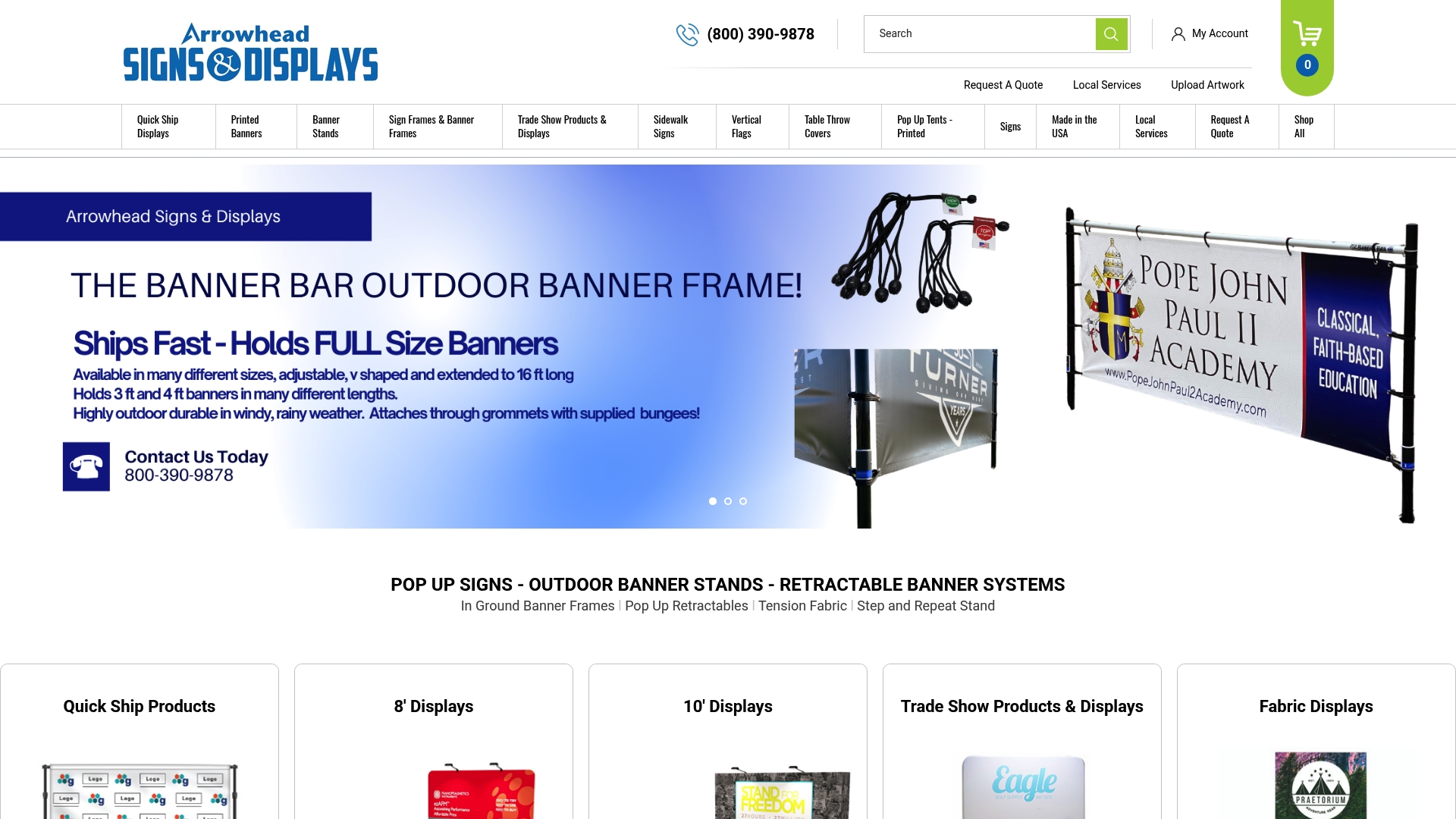
For a 10x10 in-line booth needing a clean, seamless back wall, our 10 ft stretch fabric display covers the full 10-ft width with a single printed panel and no visible seams. For outdoor events, farmers markets, or sidewalk promotions where wind and weather are a factor, our Outdoor Banner Frame, The Banner Bar adjusts between 6 ft and 8 ft to match the space you’re working with. Customers consistently point to fast turnaround and dependable service as the reason they return for their next event.
What exhibitors get wrong about pop-up sizing
Most sizing advice treats the back wall as the whole decision, and that’s where it falls short. The frame width matters less than whether your graphic, your booth rules, and your transport plan all line up before you place an order. An 8-ft wall that fits your exhibitor manual and travels in a case you can carry alone beats a 10-ft wall that triggers a height variance request or needs two people to lift.

The other overlooked detail is usable width versus nominal width. Pipe-and-drape, corner posts, and show-provided signage all eat into your floor space, so a “10-ft booth” rarely gives you a true 10 feet of clearance. Measure before you design artwork, not after.
If you prioritize one thing, make it this: confirm your booth type and height allowance first, then choose frame style, and only then finalize artwork specs. Working in that order prevents the two most common remakes we see, which are oversized frames that won’t clear an inline height limit and graphics printed before a panel seam placement was confirmed.
— Dan
Ready to order: quick links and next steps
Once you know your size, ordering shouldn’t be the hard part. We ship most products within two business days, and a Next Day Air option is available for a flat fee when your event date is closer than you’d like.
- 10 ft stretch fabric display: a seamless, full-width back wall for standard 10x10 in-line booths.
- Outdoor Banner Frame, The Banner Bar: adjustable between 6 ft and 8 ft for outdoor events and sidewalk promotions.
- Quick Ship Displays: built for exhibitors working against a tight event date.
- Printed Banners: a standard banner layout service is available, with Next Day Air available for an additional fee.
If you’re building artwork yourself and want a starting template, CrispSign’s pop-up shop signage templates offer a useful reference point before you send files our way. Browse our trade show displays collection to compare specifications, or reach out for a quote tailored to your booth size.
FAQ
What are the available sizes for stand-up banners?
Stand-up or retractable banners typically measure 33 to 36 inches wide and 78 to 84 inches tall, with smaller tabletop versions around 24 inches wide for counters and registration desks. These sizes work as a standalone display or as a complement to a larger pop-up back wall.
What is the size of a pop-up box?
“Pop-up box” usually refers to a tubular or kit-style pop-up frame case, and dimensions vary by manufacturer and panel count rather than following one fixed standard. Check your specific frame’s packed case dimensions and weight before booking shipping, since case size affects both freight cost and whether you’ll need help lifting it on-site.
What is the standard size of an exhibition stand?
The most common exhibition booth footprint in North America is 10x10 feet, built around the 10-ft increments used in most convention floor plans, according to IAEE display guidelines. Back-wall height for standard in-line booths is typically capped at 8 feet, with a 4-foot restriction near the front to preserve sight lines.
How can I create a pop-up banner?
Start by confirming your booth type and the height or width limits in your exhibitor manual, then choose a frame style that matches your transport and setup needs. Build your artwork in CMYK at around 150 DPI with a quarter-inch of bleed on every edge, then send it to a printer that can confirm panel seam placement before production.
Sources
- Guidelines for Display Rules and Regulations (IAEE)
- Small Packages / Portable exhibits overview (Exhibitor Online)
- Exhibit display guidelines (Messe Frankfurt / Texprocess Americas)