

How a 10 ft Fabric Display Cuts U.S. 2026 Trade Show Display Costs
Posted by Deeder Dandenhorf on Sep 2nd 2026
How a 10 ft Fabric Display Cuts U.S. 2026 Trade Show Display Costs
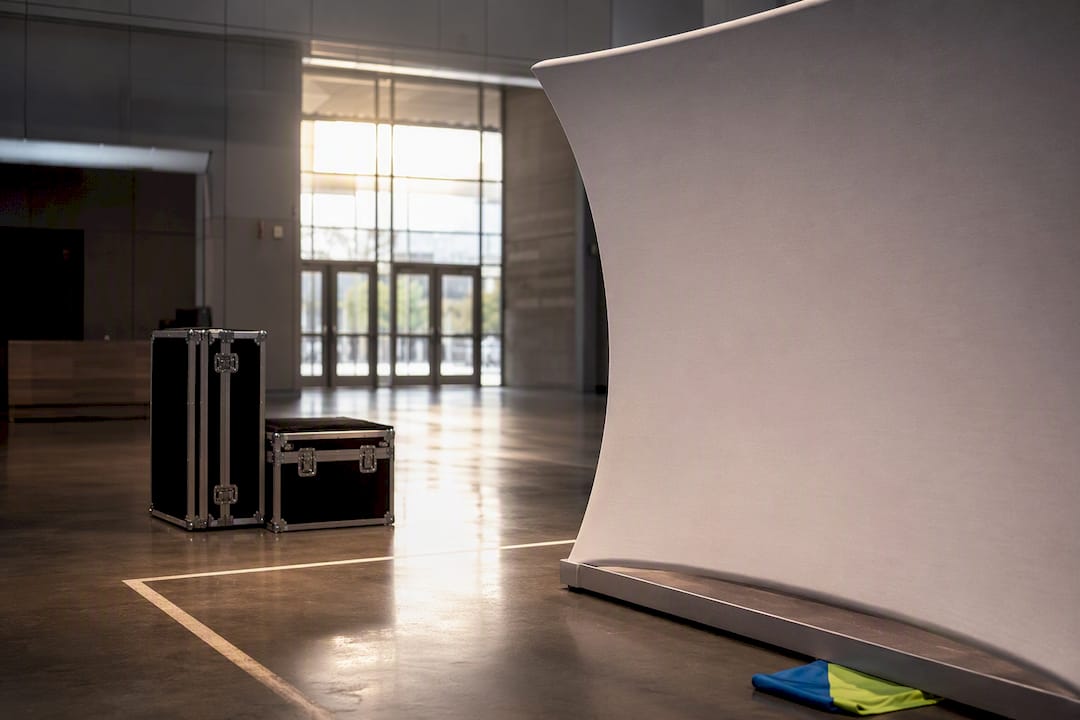
A 10x10 booth typically runs between several thousand to tens of thousands of dollars all-in, a 10x20 can cost from tens of thousands to over a hundred thousand, and a 20x20 range broadly increasing with show tier. “All-in” means space rental, exhibit build or rental, graphics, freight and drayage, installation labor, show services, travel, and a contingency buffer, not just the booth itself. Space rental usually drives 25–35% of that total, with drayage and labor close behind.
TL;DR:
- The actual total cost of a trade show exhibit can be multiple times higher than space rental alone, with freight, labor, and build type heavily influencing the final budget.
- Drayage costs, driven by freight weight and union policies, are often the largest unexpected expense, especially for heavier, custom-built displays.
- Lightweight fabric displays reduce drayage and labor costs significantly, making them a smart choice for exhibitors with tight budgets or quick timelines.
- Planning a detailed budget that includes space, build, freight, labor, and contingency, and early booking of show services, prevents costly surprises.
- Show location and city impact costs due to local service fees, union rules, and venue policies, often making major cities considerably more expensive than others.
Table of Contents
- What Does a Trade Show Display Cost by Footprint and Show Tier?
- What Are the Major Cost Categories in a Trade Show Budget?
- Why Do Trade Show Invoices Come in Higher Than Expected?
- Should You Rent, Buy Modular, or Go Custom?
- How Do You Build an Accurate Trade Show Exhibit Budget?
- Do Venue and City Choice Really Change Your Budget?
- How Arrowhead Sign Company’s 10 Ft Stretch Fabric Display Fits Real Budgets
- What Seasoned Exhibitors Do Differently
- When a Lightweight Fabric Display Makes the Most Financial Sense
- Sources
- FAQ
What Does a Trade Show Display Cost by Footprint and Show Tier?
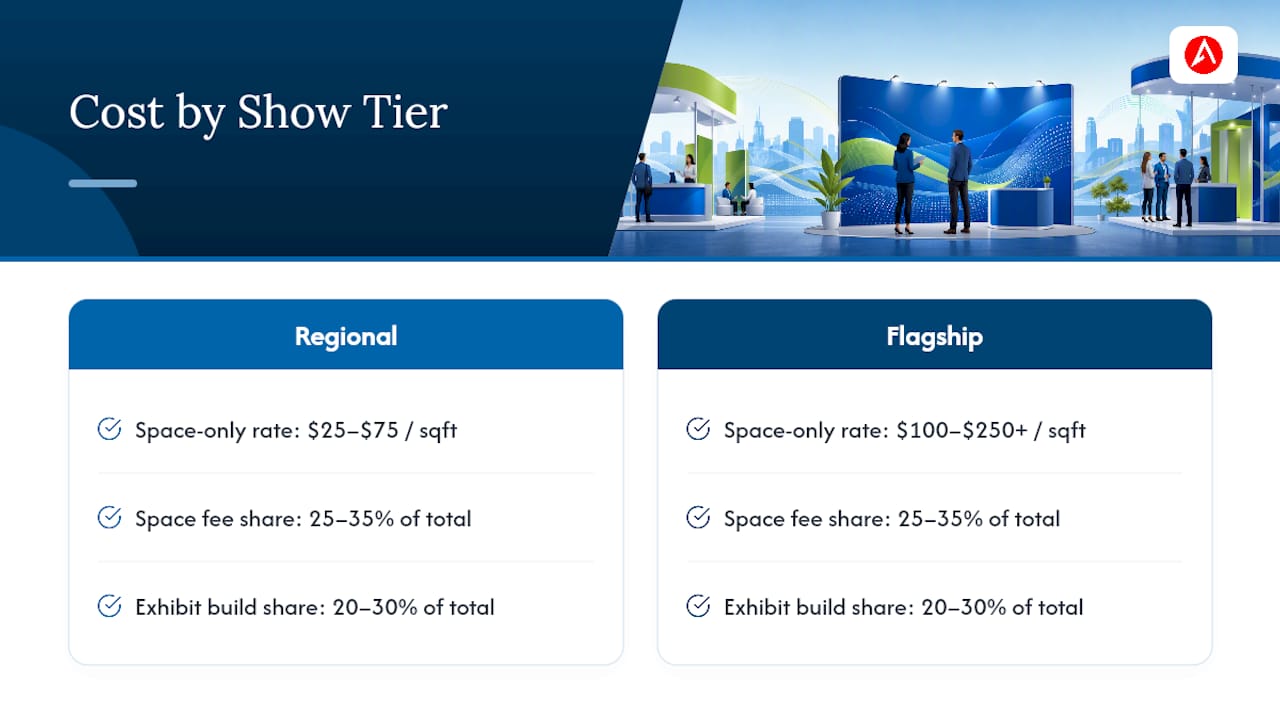
The number that scares most first-time exhibitors is the space invoice, and it’s the wrong number to anchor on. Space-only rates run $25 to $75 per square foot for regional shows and $100 to $250 or more per square foot for flagship events held in major convention centers. That space fee typically represents just 25–35% of what you’ll actually spend once the invoice includes everything else.
Here’s the part that catches people off guard: your all-in budget generally runs multiple times the space-only figure, depending on your build type and how much freight you’re hauling in. A rented pop-up exhibit at a regional trade show multiplies the space cost less dramatically than a custom island build at a national conference, where rigging, extra electrical, and specialty labor stack up fast.
These figures assume a modest staffing count (two to four booth staff), standard ground or common-carrier freight rather than expedited shipping, and basic AV like a monitor and sound bar rather than a full stage build. Sample budget breakdowns from exhibit-industry guides confirm the exhibit build and rental usually account for 20–30% of the total, with the rest split across services, freight, and people. Push any of those assumptions higher, say four booth staff flying in from out of state, or a full custom island with a suspended sign, and you’ll land at the top or above these ranges quickly.
What Are the Major Cost Categories in a Trade Show Budget?
Breaking your total into line items makes it possible to actually request quotes instead of guessing at a lump sum. Every exhibit budget worth trusting includes these categories:
- Space rental: the fee paid to show management for your floor footprint, typically 25–35% of the total per CEIR benchmarking data.
- Exhibit build or rental: your booth structure, whether that’s a rented pop-up, a modular system, or a fully custom island.
- Graphics: printed backwalls, banner stands, and signage that carry your branding.
- Freight and drayage: shipping your exhibit to the show and having the show’s contracted labor move it from the dock to your booth.
- I&D labor: installation and dismantle crews, often union-contracted at convention centers.
- Show services: electrical, internet, cleaning, and rigging ordered through the venue’s exclusive vendors.
- Furniture and storage: tables, chairs, carpet, and empty-case storage during the show.
- Lead retrieval: scanner rentals or app licenses for capturing visitor contact information.
- Travel and lodging: flights, hotel rooms, and per diem for your booth staff.
- Marketing materials: brochures, giveaways, and pre-show promotion.
- Contingency: your buffer for the surcharges nobody quotes you in advance.
Graphics costs vary widely based on print size and material, and it pays to understand production timelines before you’re facing a rush fee. Arrowhead Sign Company’s guide on signs every small business needs for trade shows walks through what to order and roughly what it costs. For a deeper look at print production schedules, how booth graphics get printed explains why ordering early avoids expedite premiums.
Why Do Trade Show Invoices Come in Higher Than Expected?
Drayage is the line item that blindsides more exhibitors than any other. Drayage gets charged by hundredweight, abbreviated CWT, meaning you pay per 100 pounds of freight moved from the dock to your booth and back. If your crated exhibit weighs 800 pounds and the show’s drayage rate is $120 per CWT, that’s eight units times $120, or $960, just to get your booth to the floor. Add return shipping and empty-case storage fees, and drayage alone can rival your space rental.
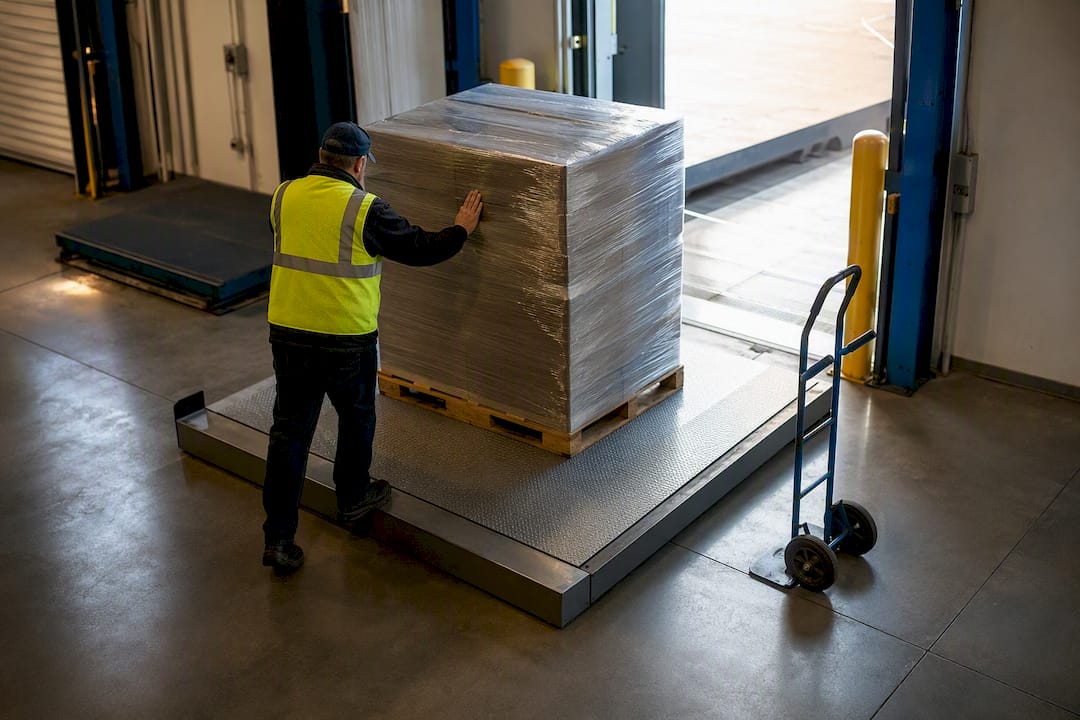
Move-in schedules create a second hazard. If your I&D crew works past the scheduled window, you’re often paying 1.5 times the standard rate, and past a certain hour, double time. A booth that should take four hours to build can balloon in cost if the crew hits overtime because the freight arrived late or the union hall was short-staffed that morning.
Common invoice surprises also include:
- Floor-order surcharges for electrical, internet, or rigging ordered after the advance deadline, often 30–50% higher than pre-show pricing.
- Mandatory carpet or flooring fees at venues that don’t allow bare concrete.
- Empty-case storage charges billed per crate for the show’s duration.
Pro Tip: Ship to the advance warehouse instead of direct to show site. It costs a bit more upfront but locks in lower drayage rates and gives your crew a buffer if freight runs late.
Lighter booth structures reduce drayage exposure directly, since you’re paying by weight. Overtime labor and drayage together cause more budget blowouts than any other category, which is worth remembering before you commit to a heavy custom build for a show you’re only doing once.
Should You Rent, Buy Modular, or Go Custom?
The right build approach comes down to how often you exhibit and how long you plan to keep showing up at the same events. Three paths dominate the industry:
- Rental/turnkey: no upfront ownership cost, typically $3,000–$15,000 per show for a 10x10 to 10x20, ideal for one-off events or testing a new market.
- Modular/hybrid: a $10,000–$40,000 upfront investment in a reconfigurable system you own and reuse, with lower per-show costs after the first outing.
- Custom: $25,000–$150,000+ upfront for a fully branded island build, justified mainly for flagship shows you’ll attend repeatedly for three or more years.
Run a simple break-even check before committing to custom. If a custom build costs $60,000 upfront versus $12,000 per show for a comparable rental, you need roughly five shows before ownership pencils out, and that’s before accounting for storage and refurbishment between events. Arrowhead Sign Company’s overview of display types breaks down the practical differences among portable, modular, rental, and custom systems.
Weight matters here too. A heavier custom island costs more in drayage every single show, which erodes the long-term savings that ownership is supposed to deliver. Storage fees between shows, refurbishment costs after wear, and the flexibility to update branding all factor into which path actually saves money over a three-year horizon.
How Do You Build an Accurate Trade Show Exhibit Budget?
A reliable budget follows the same sequence every time, regardless of show size:
- Pull the space invoice first. This confirms your actual square footage cost and show dates.
- Get an exhibit quote for rental or build, based on your chosen footprint and design.
- Estimate freight weight and request a drayage quote using the show’s published CWT rate.
- Add I&D labor based on estimated setup hours plus a buffer for potential overtime.
- Order show services early (electrical, internet, cleaning) to lock in advance-rate pricing.
- Budget travel and lodging for your confirmed staff count.
- Set marketing collateral costs, including printed materials and giveaways.
- Add contingency of 15–30% on top of the subtotal, with first-timers leaning toward 30–40%.
Total: around $17,640.
Divide your total budget by expected qualified leads to get cost per lead, a figure sales teams can compare against your average close rate to sanity-check whether the show is worth repeating.
Do Venue and City Choice Really Change Your Budget?
Yes, and often more than exhibitors expect. Cities like New York, San Francisco, and Philadelphia carry a noticeably higher “basket” of service costs than Las Vegas, Houston, or Nashville, largely because of local union labor agreements and venue exclusivity contracts. Recent industry surveys show electrical service costs alone rising 18.4% year over year in some markets, and drayage base rates climbing alongside them.
Watch for union-mandated labor at convention centers, rigging fees for anything hung from the ceiling, mandatory carpet requirements, and venues where a single internet provider sets the price with no competition. Before ordering anything, pull the exhibitor manual and confirm: drayage rates per CWT, electrical and internet pricing tiers, advance-order deadlines, and union labor jurisdiction rules.
How Arrowhead Sign Company’s 10 Ft Stretch Fabric Display Fits Real Budgets
A lightweight fabric display changes the math on two of the most volatile line items in your budget: drayage and labor. Because fabric structures weigh a fraction of hard-sided or custom crated builds, they cost less to ship and less to move across the dock, which lowers your CWT exposure directly. Arrowhead Sign Company’s 10 ft stretch fabric display ships within two business days for most orders, and clients based in Arizona get direct delivery to their venue, cutting out a freight handoff that often introduces delay and overtime risk. For exhibitors juggling tight show timelines, that faster fulfillment window means less exposure to the late-order surcharges and rush-shipping premiums that inflate so many first-time budgets.
What Seasoned Exhibitors Do Differently
Most exhibitors overspend on the booth and underspend on trade show staffing and follow-up, and it shows in their cost-per-lead numbers. That single decision avoids far more overtime exposure than any amount of booth negotiation. Before locking in booth space, build the full budget first. The space invoice is the smallest decision you’ll make; the labor, freight, and staffing plan around it decide whether the show actually pays for itself.
— Dan
When a Lightweight Fabric Display Makes the Most Financial Sense
If freight weight, setup speed, and predictable labor costs matter more to your budget than a fully custom island build, a stretch fabric display solves for exactly that. Arrowhead Sign Company’s 10 ft stretch fabric display gives cost-conscious exhibitors a way to show up polished without absorbing the drayage and overtime risk that heavier builds carry.
The benefits stack up in your favor on the line items that actually blow budgets: lower freight weight means a smaller drayage bill, a two-business-day production window means less exposure to rush fees, and direct venue delivery for Arizona clients removes a freight handoff that often triggers delays. If you’re planning a 2026 show calendar and want a display that keeps your budget predictable, view the 10 ft stretch fabric display and request a quote to see how it fits your specific footprint and timeline.
Sources
- Average trade show booth cost breakdown (2026) — ExhibitionsVoice
- Trade show budget: a complete guide to exhibit costs — Pure Exhibits
- Tradeshows still work — exhibiting costs rising — ExhibitCityNews (2026)
- The hidden costs of trade show exhibiting most budgets miss — ShowHero
FAQ
How Much Does It Cost to Exhibit at a Trade Show?
Total exhibiting costs typically range from $12,000 for a small 10x10 booth at a regional show to over $250,000 for a large custom 20x20 island at a flagship national event, covering space, build, freight, labor, and services.
How Much Does a 20x20 Trade Show Booth Cost?
A 20x20 booth generally ranges from tens of thousands to over a hundred thousand dollars all-in depending on show scale, with space rental comprising a significant but partial fraction of that.
Who Makes Trade Show Displays?
Trade show displays are produced by signage and exhibit companies that handle printing, fabrication, and fulfillment; Arrowhead Sign Company builds custom displays including retractable banners, pop-up displays, and fabric structures with fast U.S. fulfillment.
What Are the Best Trade Show Displays for Tight Budgets?
Lightweight fabric displays and modular pop-up systems offer the best balance of visual impact and cost control, since they reduce freight weight and drayage charges compared to heavier custom builds.