


The Role of Signage in Event Flow: A Planner's Guide
Posted by Deeder Dandenhorf on Jun 24th 2026
The Role of Signage in Event Flow: A Planner’s Guide

Signage is defined as the primary system that guides attendee movement, reduces confusion, and reinforces brand identity throughout an event. The role of signage in event flow goes far beyond pointing people to restrooms. Well-placed signs prevent bottlenecks, reduce staff interruptions, and create an experience that feels organized from the moment attendees walk in. Poor signage, by contrast, erodes brand reputation by causing frustration before a single session begins. Event planners and small business owners who treat signage as a core planning tool, not an afterthought, consistently produce better attendee experiences.
How does signage facilitate seamless navigation and wayfinding at events?
Wayfinding signage is the industry term for any sign system designed to help people orient themselves and move through a space. The informal phrase “event navigation signage” describes the same concept. Both terms apply here, and understanding the difference matters because wayfinding is a discipline with its own best practices, not just a collection of arrows on foam board.
The most important principle in wayfinding is decision point placement. A decision point is any location where an attendee must choose a direction: a hallway intersection, the top of an escalator, the entrance to a registration area, or a fork between two exhibit halls. Signs placed at these exact spots prevent hesitation. Signs placed anywhere else, such as midway down a corridor where no choice exists, waste space and add visual noise.
Effective signage often becomes invisible to attendees because they follow cues instinctively without stopping to search. This happens when signs are eye level, high contrast, and placed before the decision point rather than after it. A sign that appears after an attendee has already passed the turn creates backtracking and frustration. Ceiling-hung signs frequently fail this test because they compete with lighting fixtures, banners, and architectural details that pull the eye away.
Common wayfinding mistakes at events include:
- Placing signs too high or too low for the average adult’s sightline
- Using small fonts that require attendees to stop and squint
- Skipping signs at secondary decision points like stairwells and side entrances
- Using inconsistent colors or icons across different sign types
- Relying on a single large map at the entrance instead of distributed directional cues
Pro Tip: Place a test sign at every planned decision point during venue walkthrough, then walk the route as a first-time attendee. If you hesitate even once, add a sign.
What role does branding and messaging on signage play in enhancing event flow and experience?
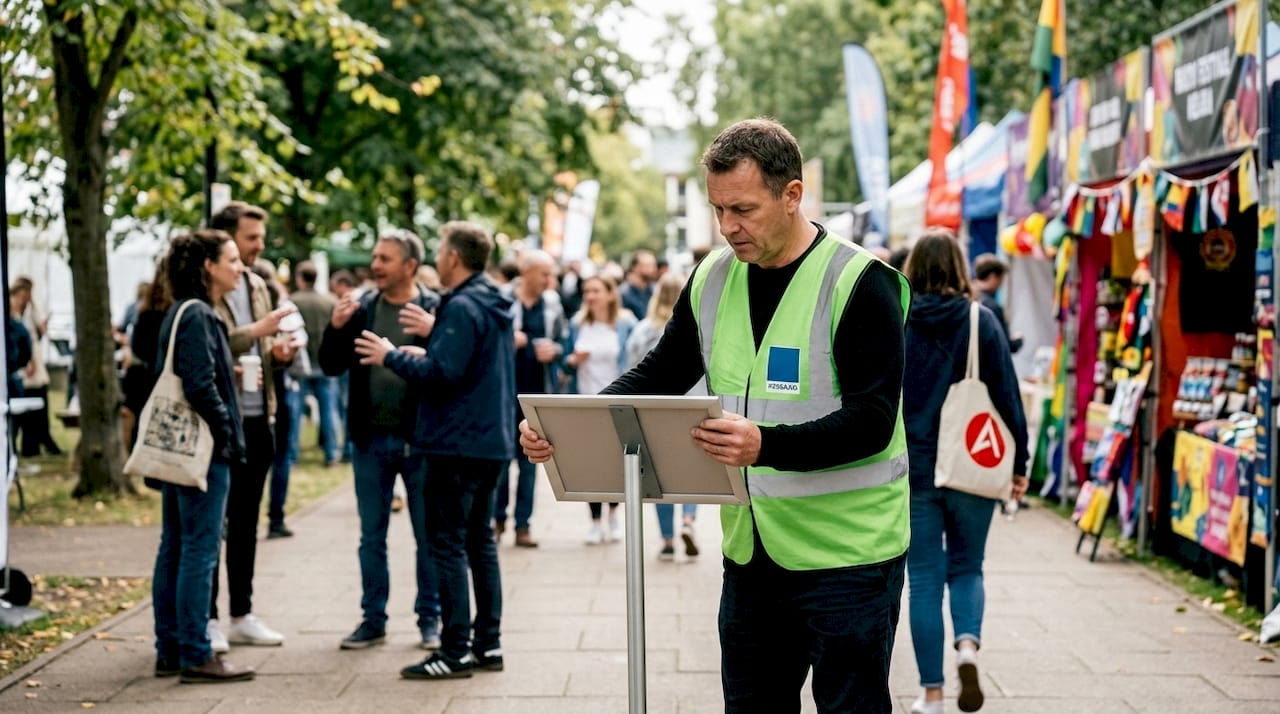
Signage that goes beyond navigation creates memorable brand impressions that attendees associate with the event long after it ends. A directional arrow printed in your brand’s colors on a retractable banner does two jobs at once: it moves people and it reinforces your visual identity. That dual function is what separates a well-designed signage system from a collection of generic arrows.
Digital signage takes this further by turning static displays into programmable platforms. Networked digital signage allows organizers to update schedules, swap sponsor messages, and redirect attendees in real time without reprinting a single sheet. A session that moves rooms at the last minute becomes a minor adjustment rather than a logistical crisis. That flexibility is a direct improvement to event flow.
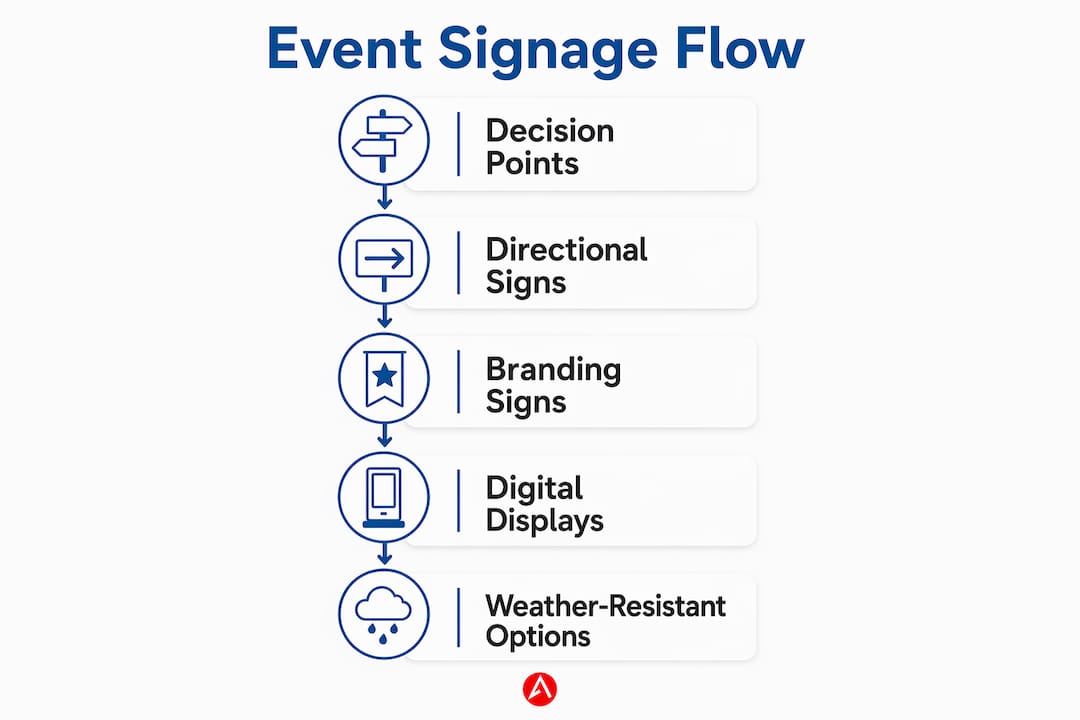
Sponsors notice this capability quickly. Treating screen time as inventory creates a revenue stream that offsets signage costs while giving sponsors premium, high-traffic visibility. An organizer running a trade show with 20 digital displays can rotate sponsor content between wayfinding messages, turning every hallway screen into a media placement.
Consistent visual identity across all sign types ties the experience together. When your registration desk banner, session room signs, and outdoor frames all share the same color palette and logo treatment, attendees perceive the event as polished and professional. That perception directly affects how they rate the experience afterward.
Key branding benefits of a unified signage system:
- Reinforces sponsor visibility without interrupting attendee flow
- Creates photo-worthy moments that attendees share on social media
- Builds trust through visual consistency across every touchpoint
- Supports thematic zones that make large venues feel organized and intentional
What are the different types of event signage and their specific impact on event flow?
A comprehensive signage system uses a hierarchy of sign types, each matched to a specific location and purpose. Mixing types without a plan creates visual clutter. Matching each type to its function creates clarity.
| Sign type | Primary function | Best placement |
|---|---|---|
| Directional signage | Guides movement between areas | Intersections, entrances, escalators |
| Informational signage | Communicates schedules and rules | Registration desks, session rooms |
| Identification signage | Labels spaces and booths | Exhibit hall entries, stage fronts |
| Promotional signage | Builds brand and sponsor awareness | High-traffic corridors, near exits |
Print signage remains the workhorse of most events. Retractable banners set up in under two minutes, hold their shape throughout a multi-day show, and pack down to a carry bag. A-frame sidewalk signs work at outdoor entrances where foot traffic needs a clear first cue. Pop-up displays create branded backdrops at registration areas and photo stations. Outdoor banner frames handle wind and weather at festivals and expos where fabric banners would otherwise collapse.
Digital signage adds real-time flexibility that print cannot match. The tradeoff is cost and setup time. For a single-day local event, a set of well-designed retractable banners often delivers better value than renting digital screens. For a multi-day conference with shifting schedules and multiple sponsors, digital displays pay for themselves through operational savings alone.
Pro Tip: For outdoor events, choose weather-resistant banner frames over standard stands. Wind and rain will test your signage before your attendees do.
Indoor versus outdoor placement changes material requirements significantly. Indoor signs can use lighter materials and matte finishes that reduce glare under fluorescent lighting. Outdoor signs need UV-resistant inks, weighted bases, and frames rated for wind load. Mixing indoor materials outdoors is one of the most common and costly mistakes event planners make. A practical indoor vs. outdoor comparison helps planners choose the right format before ordering.
How can effective signage design and placement reduce congestion and improve event flow efficiency?
Poor signage creates congestion at predictable locations: registration desks, session room entrances, food and beverage areas, and exhibit hall exits. Attendees who hesitate at these points create a ripple effect that backs up traffic behind them. A single well-placed directional sign eliminates that hesitation before it starts.
The most effective congestion reduction strategy follows these steps:
- Map every decision point on the venue floor plan before finalizing your signage order.
- Assign a sign type and message to each decision point based on what attendees need to know at that exact location.
- Use color-coding to separate zones. Assign one color to each hall, stage, or program track so attendees can follow a color rather than read full text while walking.
- Place signs at eye level, 10–15 feet before each decision point, so attendees can read and react without stopping.
- Add redundant signs at high-traffic decision points. One sign can be blocked by a crowd. Two signs at different heights guarantee visibility.
- Test the route on-site before the event opens. Walk every path an attendee might take and note any gap where you had to guess a direction.
Color-coded zone systems reduce attendee search time and make large venues feel manageable. A three-hall convention center with color-coded signage feels navigable within minutes. The same venue with generic black-and-white signs forces attendees to stop, consult maps, and ask staff for help repeatedly.
The impact on exhibitor performance is direct. Poor signage reduces visitor engagement and wastes the limited time attendees spend on the floor. When attendees spend less time lost, they spend more time at booths. That shift in time allocation increases lead generation and improves exhibitor ROI without changing anything else about the event.
Integrating signage into your initial floor plan from the start, rather than adding it after the layout is finalized, is the single most effective planning decision you can make. Signage added as an afterthought fills gaps. Signage planned from the beginning shapes the flow.
Key Takeaways
Effective signage placed at decision points is the single most reliable tool for managing attendee flow, reducing congestion, and protecting your event’s brand reputation.
| Point | Details |
|---|---|
| Decision point placement | Place signs at every location where attendees must choose a direction, not randomly throughout the venue. |
| Wayfinding starts at the floor plan | Map signage locations during initial venue planning, before finalizing booth and session layouts. |
| Sign type hierarchy matters | Match directional, informational, identification, and promotional signs to their specific locations and purposes. |
| Color-coding reduces search time | Assign one color per zone or track so attendees follow visual cues without reading full text while walking. |
| Digital signage adds operational flexibility | Networked displays allow real-time schedule updates and sponsor messaging changes that print cannot match. |
Why I think most planners underestimate signage until it’s too late
Most event planners I talk with treat signage as a line item they finalize in the last two weeks before an event. That timing almost always creates problems. By the time the floor plan is locked, the booth assignments are confirmed, and the session schedule is set, the natural decision points in the venue are already determined. Adding signage at that stage means fitting signs into a layout rather than designing a layout that works with signs.
The planners who get this right start their signage map on the same day they receive the venue floor plan. They walk the space, mark every intersection, escalator, and entrance, and assign a sign function to each one before a single booth is sold. That process takes a few hours and saves a full day of on-site scrambling.
The other mistake I see consistently is treating digital and print as competing options rather than complementary ones. Print signage handles the permanent wayfinding that never changes. Digital handles everything that might. Running both in the same event gives you the reliability of print and the flexibility of digital without paying for screens where you don’t need them.
Signage is also one of the few event elements that works for you before attendees arrive, during the event, and in photos afterward. A well-branded retractable banner at your registration desk appears in every check-in photo posted to social media. That is free brand exposure that costs nothing beyond the original print run. Planners who recognize that value stop treating signage as overhead and start treating it as media.
— Dan
Arrowhead Sign Company has the signage your next event needs
Your event’s flow depends on having the right signs in the right places before doors open. Arrowhead Sign Company - Signs, Banners and Trade Show Displays carries the full range of print signage that event planners and small business owners rely on, from retractable banner stands to pop-up displays, A-frames, and outdoor banner frames.
Most products ship within two business days, and Arrowhead Sign Company - Signs, Banners and Trade Show Displays offers direct delivery to venues across Arizona. Whether you need a 10 ft stretch fabric display for your main booth or a portable A-frame for outdoor directional use, the product range covers every signage need from a single source. Visit Arrowhead Sign Company to see the full catalog and get your order moving before your next event date.
FAQ
What is the role of signage in event flow?
Signage guides attendee movement through a venue by providing directional cues at decision points, reducing hesitation and congestion. Effective signage also reinforces brand identity and communicates schedules, making the overall event experience feel organized and professional.
Where should event signs be placed for best results?
Signs should be placed at every decision point where attendees must choose a direction, such as hallway intersections, escalator landings, and room entrances. Eye-level placement 10–15 feet before each decision point gives attendees time to read and react without stopping.
What types of signage work best at trade shows?
Retractable banners, pop-up displays, A-frame sidewalk signs, and outdoor banner frames are the most practical options for trade shows. Each type serves a specific function, from booth identification to directional wayfinding and sponsor promotion.
How does digital signage improve event management?
Digital signage allows organizers to update schedules, redirect attendees, and swap sponsor messages in real time without reprinting materials. That flexibility is especially valuable at multi-day events where session times or room assignments change after print deadlines.
Can poor signage hurt exhibitor performance?
Poor signage reduces the time attendees spend at booths by forcing them to search for locations rather than engage with exhibitors. More time lost to navigation means less time for lead generation, which directly lowers exhibitor ROI.