

What Is a Custom Event Program Sign for Organizers
Posted by Deeder Dandenhorf on Jul 17th 2026
What Is a Custom Event Program Sign for Organizers

A custom event program sign is a branded, purpose-built display that combines your event’s schedule, navigation, and identity into a single visual communication tool. Unlike generic printed boards or off-the-shelf templates, these signs are tailored to your specific event format, audience, and brand standards. The industry term for the broader category is “event wayfinding signage,” and custom program signs represent the most information-rich format within that system. Event organizers who treat custom event signage as a core operational asset, rather than a decorative afterthought, consistently report better attendee flow and stronger brand recall.
What is a custom event program sign and what does it include?
A custom event program sign is defined as a printed or digital display that presents event-specific content, including schedules, speaker information, venue maps, and sponsor acknowledgments, formatted to match the event’s visual brand. The sign serves two functions simultaneously: it informs attendees and it reinforces the event’s professional identity. Custom signage plans act as a strategic roadmap that minimizes confusion and reinforces brand identity. That dual role is what separates a custom program sign from a simple directional arrow or a generic printed agenda.
Core content elements
Every effective event program sign should include the following:
-
Event schedule: Session times, room assignments, and break periods presented in a clear, scannable format
-
Speaker or performer bios: Brief credentials that help attendees decide which sessions to prioritize
-
Venue map: A floor plan or campus diagram with color-coded zones and labeled exits
-
Sponsor acknowledgments: Logos and tier designations placed in a visually consistent section
-
QR codes: Links to real-time updated digital schedules, reducing the need for reprints when sessions change
Design principles that make signs work
Readability is the first design priority. Use high-contrast color combinations, a minimum 24-point font for body text, and no more than three typefaces across the entire sign system. Branding consistency matters just as much: your sign’s color palette, logo placement, and typography should match your event website, email communications, and stage graphics. Place signs at eye level, roughly 5 to 6 feet from the floor, and position them where attendees naturally pause to orient themselves.
Accessibility is non-negotiable. Signs should meet ADA-compliant contrast ratios and include tactile or audio-assisted alternatives where required. Modern digital programs use QR codes linking to real-time updated schedules, which also benefits attendees who need screen-reader-compatible content.
Pro Tip: Design your sign layout at actual print size before finalizing. A font that looks sharp at 12 inches on a monitor can become unreadable at 6 feet in a convention hall.
How do custom event program signs improve attendee navigation?
Custom event program signs directly reduce the time attendees spend searching for sessions, restrooms, registration desks, and exits. Digital wayfinding reduces navigation time by 42%, and effective directional signage improves crowd movement efficiency by up to 55%. Those numbers translate to fewer bottlenecks at registration, shorter lines at breakout rooms, and a calmer overall event atmosphere.

Placement strategy: decision junctures and sightlines
The most effective placement follows a simple rule: put signs where people stop to think. Signage placed at decision junctures and natural eye-level sightlines improves navigational clarity far more than signs placed at regular intervals along a wall. A decision juncture is any point where an attendee must choose a direction: building entrances, elevator banks, hallway intersections, and the perimeter of large open-floor areas. Ignoring environmental factors like light reflections can make graphics illegible, so always test placement with the venue’s actual lighting before the event opens.
The table below shows how sign type and placement interact with attendee behavior:
| Sign type | Best placement | Primary function |
|---|---|---|
| Static floor plan | Entrance and registration | Orientation on arrival |
| Directional arrow signs | Hallway intersections | Route confirmation |
| Schedule board | Session room entrances | Session-level decision support |
| Digital display | High-traffic lobby areas | Real-time updates and announcements |
| QR code panel | Near seating and lounge areas | On-demand schedule access |
Multi-channel signage systems
A multi-channel signage strategy uses static permanent signs for landmarks and digital signage for real-time updates. Static signs handle the predictable navigation load: room names, exit routes, and sponsor areas. Digital displays handle the dynamic load: session changes, speaker delays, and emergency announcements. Events using clear digital navigation tools report a 37% increase in total attendee satisfaction. That figure reflects the compounding effect of reduced frustration, faster orientation, and greater confidence in the event experience.
Pro Tip: Always maintain printed backups of your digital schedule boards. Power failures and Wi-Fi outages happen at the worst possible moments, and a laminated backup sign costs almost nothing compared to the confusion it prevents.
What are the benefits of custom event signs versus generic options?
Custom event program signs produce measurably better outcomes than generic templates or off-the-shelf solutions. Well-designed programs and signage reflect event professionalism and shape attendee perceptions of quality from the moment they arrive. Generic templates, by contrast, signal that the event was assembled quickly rather than planned carefully.
The specific advantages of custom event signage include:
-
Brand consistency: Every sign reinforces your color palette, logo, and typography, creating a unified visual environment that attendees associate with quality
-
Credibility signals: Sponsors and partners judge event professionalism partly by the quality of printed and digital materials; custom signs communicate that their investment is in good hands
-
Attendee confidence: 77% of event visitors rely on digital wayfinding tools, and over 1 in 3 report that clear signage boosts their sense of safety and confidence
-
Long-term brand touchpoints: High-quality printed program signs are often kept by attendees, extending brand exposure well beyond the event itself
-
Reduced staff burden: Clear signage answers the questions that would otherwise require staff intervention, freeing your team for higher-value tasks
“Generic templates can undermine event credibility by appearing less intentional. Branded signage and event programs serve as key brand touchpoints, shaping professional impressions and reinforcing event identity.” The difference between a custom sign and a generic one is visible to every attendee within the first 30 seconds of arrival.
The role of signage in event branding extends beyond the event itself. Attendees who photograph signs for social media, or take printed programs home, carry your brand into new contexts. Generic signs produce generic impressions. Custom signs produce memorable ones.
How to create and implement effective custom event program signs
Creating effective event program signage follows a clear sequence. Skipping steps, especially early planning, is the most common reason signs fail on the day of the event.
-
Start with a signage brief. Define every sign type you need, its dimensions, its location, and its primary message. A conference with five breakout rooms needs a different sign system than a single-stage outdoor festival.
-
Integrate signage into your event operations plan early. Treating signage as a core component rather than a last-minute print order prevents avoidable costs and onsite confusion. Plan signage alongside security, lighting, and AV.
-
Choose materials based on environment. Indoor events can use fabric displays, foam board, and retractable banner stands. Outdoor events require weather-resistant materials; outdoor event signage best practices recommend UV-resistant inks and weighted bases for wind stability.
-
Build your design files with production specs in mind. Use 300 DPI resolution for print files. Confirm bleed margins and color profiles with your sign vendor before finalizing artwork.
-
Set up a digital signage management system for multi-day events. Event signage systems managed with cloud software adapt instantly during multi-day programs, reducing the need for reprints when schedules shift.
-
Conduct a pre-event walkthrough. Walk the venue as an attendee would. Check every sign for legibility, correct placement, and lighting interference before doors open.
-
Prepare contingency materials. Print backup schedules, have extra mounting hardware on site, and assign one team member to monitor digital displays throughout the event.
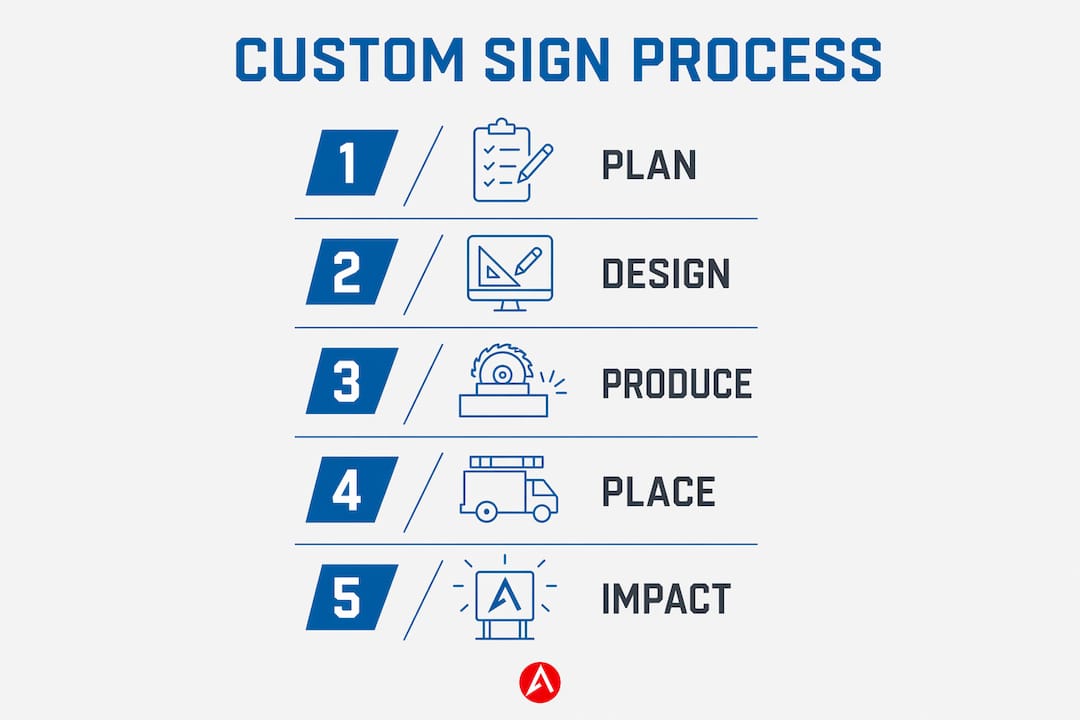
The custom sign ordering process typically requires a minimum of five business days for production and shipping. Build that lead time into your event timeline, and add a buffer for revision rounds.
Key Takeaways
Custom event program signs are the most effective tool for combining attendee navigation, schedule communication, and brand reinforcement into a single, professionally managed system.
| Point | Details |
|---|---|
| Definition and dual role | Custom program signs inform attendees and reinforce brand identity simultaneously. |
| Placement drives results | Signs placed at decision junctures improve navigational clarity more than evenly spaced signs. |
| Digital plus static wins | Combining real-time digital displays with static printed signs produces the highest attendee satisfaction. |
| Custom beats generic | Branded signage signals professionalism to attendees and sponsors from the moment they arrive. |
| Plan early, not last | Integrating signage into event operations planning prevents costly reprints and onsite confusion. |
Why I think most event organizers underestimate their signs
Most event organizers I have worked with treat signage as the last item on the production checklist. They finalize the speaker lineup, the catering, and the AV setup, and then order signs with whatever budget and time remain. That sequence is backwards, and it shows on event day.
The signs are the first thing attendees interact with. Before they hear a speaker or taste the food, they are reading your registration sign and looking for the restroom. That first impression sets the tone for everything that follows. A sign with a blurry logo, the wrong font, or a schedule that does not match the printed agenda tells attendees that the event was not fully thought through.
The other mistake I see consistently is treating digital signage as a luxury add-on rather than an operational tool. A cloud-managed display system that lets you push a schedule change to every screen in the venue in under two minutes is not a nice-to-have. At a multi-day conference with 500 attendees, it is the difference between a smooth session transition and a crowd of confused people blocking the hallway.
My advice: allocate your signage budget and timeline at the same time you allocate your AV budget. Treat your sign vendor the way you treat your lighting crew. Brief them early, give them complete information, and build revision time into the schedule. The return on that investment shows up in attendee satisfaction scores, sponsor feedback, and the social media photos your attendees take without being asked.
— Dan
Custom event signage from Arrowhead Sign Company - Signs, Banners and Trade Show Displays
Your event program signage deserves the same attention as every other production element. Arrowhead Sign Company - Signs, Banners and Trade Show Displays offers a full range of custom event signs built for professional results, including retractable banner stands, pop-up displays, and fabric frames that work equally well for indoor conferences and outdoor expos.
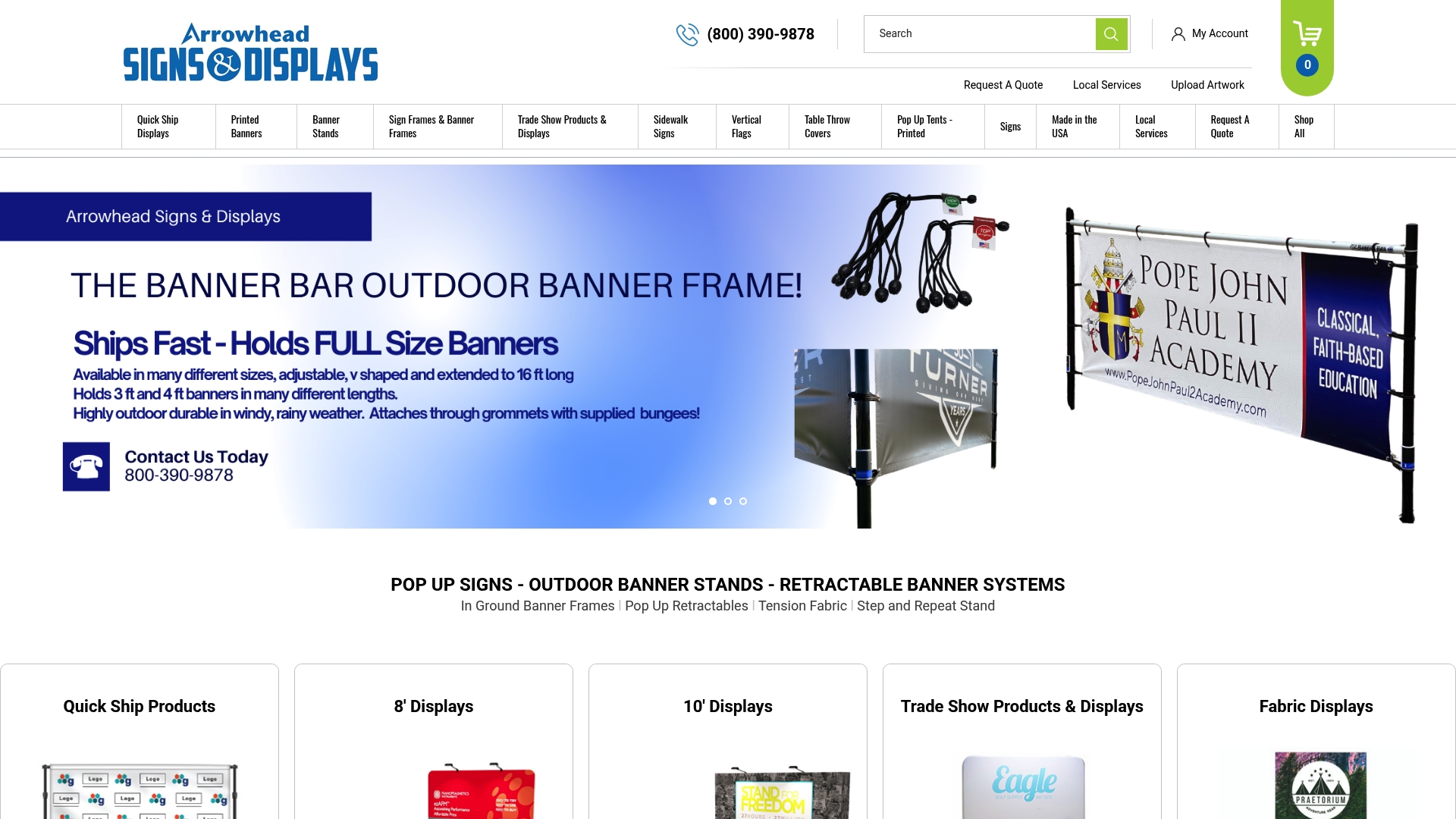
Most products ship within two business days, and the Arizona team offers direct venue delivery for local events. Whether you need a 10-foot fabric display for your main stage or an adjustable outdoor banner frame for an entrance sign, Arrowhead Sign Company - Signs, Banners and Trade Show Displays has the format and the turnaround to meet your event timeline. Browse the full custom sign product range or contact the team directly for design assistance.
FAQ
What is a custom event program sign?
A custom event program sign is a branded display that presents your event’s schedule, navigation, and sponsor information in a format tailored to your specific event and visual identity. It serves as both a wayfinding tool and a brand touchpoint for attendees.
How early should I order custom event signs?
Order custom event signs at least two weeks before your event to allow time for design revisions, production, and shipping. Vendors with rapid fulfillment can ship within two business days, but building in extra time prevents last-minute problems.
What information should an event program sign include?
An event program sign should include the session schedule, speaker names and room assignments, a venue map, sponsor logos, and a QR code linking to a real-time digital schedule. These elements give attendees everything they need to navigate and plan their time.
Do custom signs really improve attendee experience?
Yes. Digital wayfinding reduces navigation time by 42%, and events with clear directional signage report a 37% increase in attendee satisfaction. Clear signs reduce confusion, lower staff workload, and create a more confident attendee experience.
What materials work best for outdoor event signs?
Outdoor event signs require UV-resistant inks, weather-resistant substrates, and weighted or staked bases for wind stability. Adjustable banner frames with reinforced grommets perform well across a range of outdoor conditions and are easy to reposition during setup.
Recommended
-
How the Custom Sign Ordering Process Works for Events - Arrowhead Sign Company
-
Custom Banner Application Examples for Events in 2026 - Arrowhead Sign Company
-
Branded Signage for Sponsored Events: 2026 Guide - Arrowhead Sign Company
-
The Role of Signage in Event Flow: A Planner’s Guide - Arrowhead Sign Company