

How Local Delivery Saves Time for Busy Businesses
Posted by Deeder Dandenhorf on Aug 10th 2026
How Local Delivery Saves Time for Busy Businesses
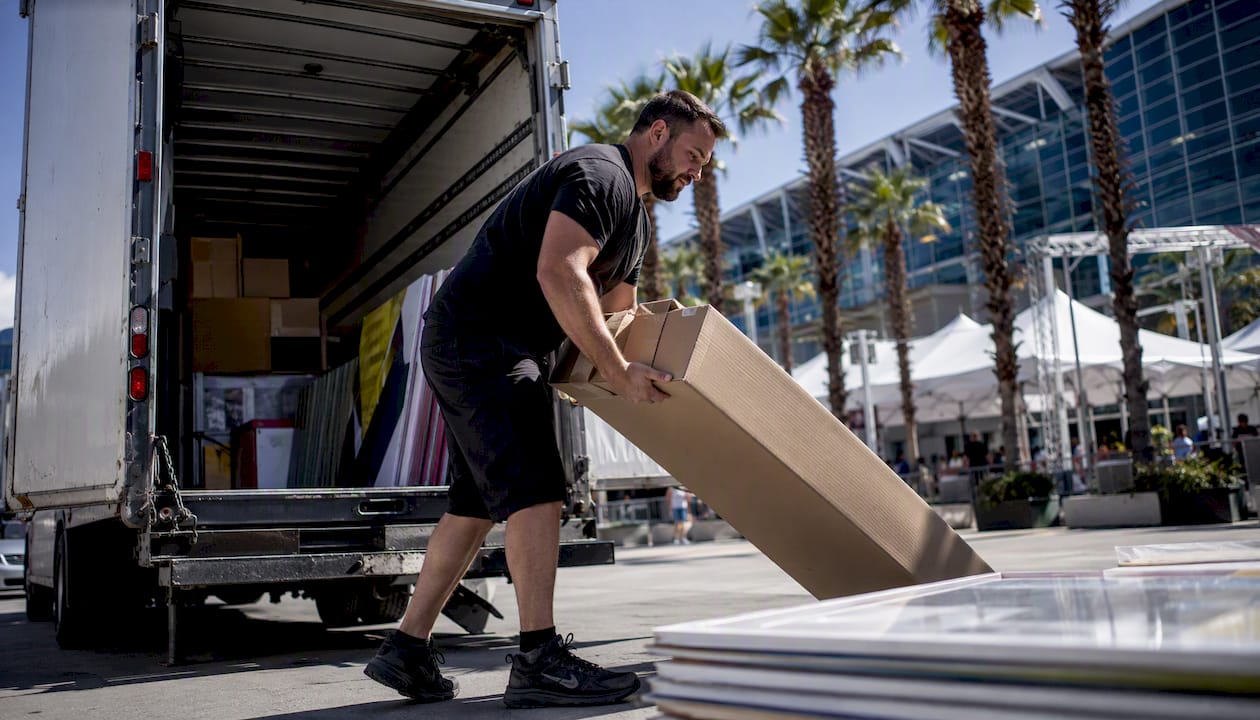
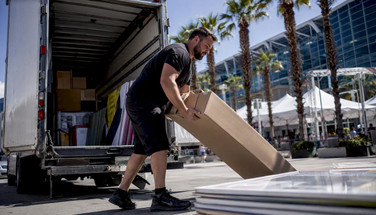
Local delivery cuts door-to-door wait time by keeping inventory close, reducing handling steps, and routing drivers through familiar neighborhoods. Where standard national shipping takes several business days, a local courier can often deliver the same item within hours. Last-mile delivery accounts for a large share of total logistics costs, which means shortening that final leg saves both time and money in a single move.
The three mechanisms that drive those savings are straightforward:
- Proximity: Local stock or micro-fulfillment centers sit minutes from the customer, not days away.
- Fewer handoffs: No cross-docking through regional hubs means fewer chances for delays or misroutes.
- Optimized local routing: Drivers who know neighborhood shortcuts and congestion patterns consistently beat estimated arrival windows.
Pro Tip: If you’re evaluating a local delivery option, ask the provider whether they use dynamic routing software. A provider that recalculates routes in real time based on live traffic will outperform one running static daily routes, especially during event days or peak hours.
Key Takeaways
Local delivery saves time by combining proximity, fewer handling steps, and optimized routing to compress door-to-door transit from days to hours, making it the right choice whenever a deadline is firm and the address is within a provider’s service zone.
| Point | Details |
|---|---|
| Core time-saving mechanisms | Proximity, fewer handoffs, and dynamic routing cut transit from days to hours. |
| Realistic delivery windows | Instant: 30 minutes; same-day: within business hours; local standard: 24–48 hours. |
| Cost trade-off | Local delivery costs more upfront, but the time value often justifies the premium for urgent orders. |
| Best use cases | Event signage, hot meals, grocery top-ups, and urgent B2B restocks gain the most from local delivery. |
| Arrowhead Sign Company | Ships most products within two business days and delivers directly to Arizona venues for event exhibitors. |
Table of Contents
- How local delivery saves time: the core mechanisms
- What delivery types actually look like in practice
- Where local delivery saves the most time
- How faster local delivery affects your business operations
- Costs, tipping, and trade-offs: what you pay to save time
- When should you choose local delivery vs. standard shipping?
- Arrowhead Sign Company’s fulfillment speed in practice
- Why local delivery is worth the premium for the right buyer
- Arrowhead Sign Company - Signs, Banners and Trade Show Displays for fast event signage delivery
- Sources
How local delivery saves time: the core mechanisms
The speed advantage of local delivery isn’t accidental. It comes from a set of structural differences that compress every stage of the fulfillment chain.
Proximity and hyperlocal inventory are the biggest levers. When a warehouse or fulfillment point sits within a few miles of the delivery address, travel time drops from days to hours. Some retailers use micro-fulfillment centers inside or near dense urban areas specifically to serve same-day demand.
Fewer handling steps matter more than most people realize. A standard national shipment passes through a regional sort facility, a destination hub, and a local post office before it reaches a front door. Each transfer adds time and a new opportunity for a scan error or a missed connection. Local delivery often goes directly from origin to recipient, sometimes with a single driver handling the full route.
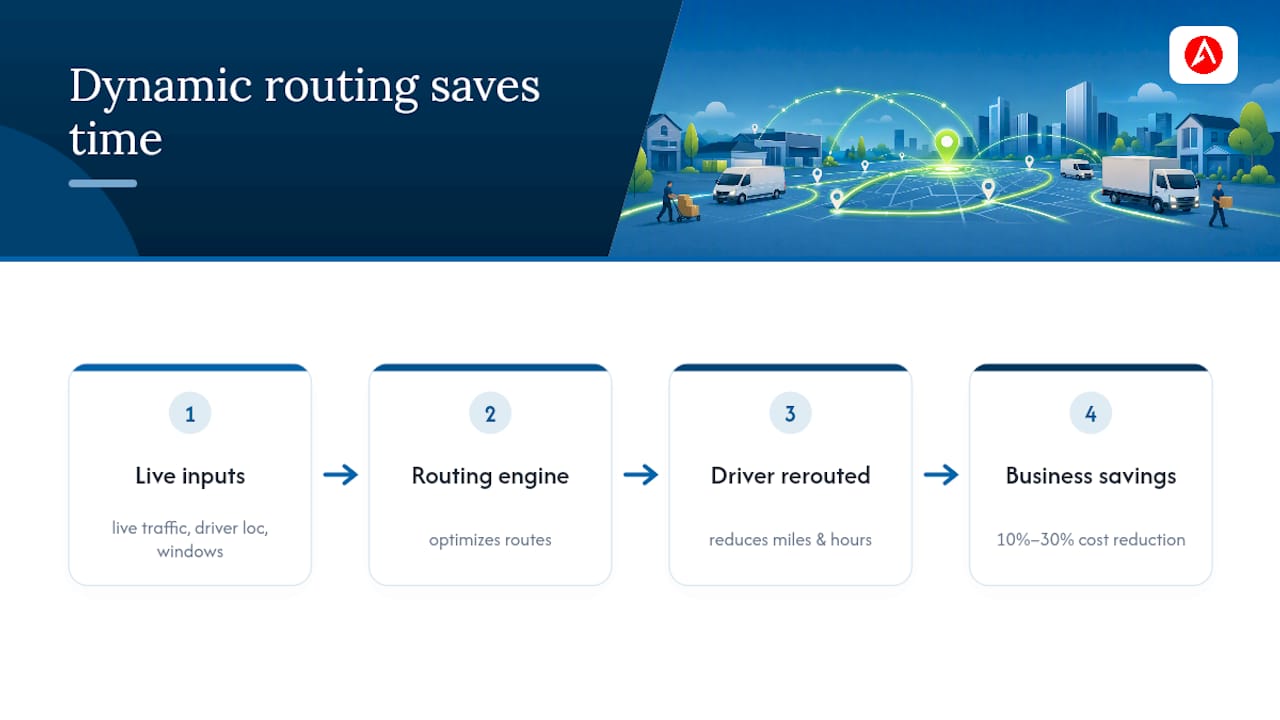
Dynamic routing compounds those gains. Route optimization can reduce mileage and driver hours, with businesses commonly reporting delivery cost reductions of 10%–30% from optimized routing. Modern routing engines recalculate continuously based on live traffic, driver location, and delivery windows, so a driver who hits unexpected congestion on one street gets rerouted before the delay compounds.
Local couriers also carry place-based knowledge that no national algorithm fully replicates: gated community codes, which loading docks accept deliveries before 8 AM, and which intersections back up on game days. That knowledge translates directly into higher first-attempt delivery success and shorter door-to-door times.
Scheduled cutoff times add another layer of speed. A local provider with a noon cutoff for same-day delivery compresses the customer’s wait to a predictable afternoon window rather than an open-ended “2–5 business days.” Delivery planning tools that batch orders by zone and enforce cutoff times help local shops reduce coordination time and lower failed-delivery rates.
Pro Tip: Zone-based batching multiplies time savings for businesses dispatching multiple orders. Group deliveries by neighborhood rather than by order time, and you’ll cut total drive time per stop significantly.
What delivery types actually look like in practice
Understanding the difference between delivery tiers helps you set realistic expectations before you commit to a service level.
| Delivery Type | Typical Time Range | When It’s Available |
|---|---|---|
| Instant / on-demand | 30 minutes | Dense urban areas; app-based platforms |
| Express | 2–8 hours | Metro areas with cutoff times |
| Same-day | Within business hours | Most mid-to-large cities; order by noon |
| Scheduled local | 24–48 hours | Suburban and semi-rural areas |
| Last-mile local handoff | Same-day or next-day | Once at local courier facility |
Once a package reaches a local courier facility, same-day or next-day delivery is often achievable depending on the service area. That’s a meaningful contrast to a national carrier, where “local facility” can still mean a 48-hour processing queue.
Several factors push delivery times toward the slower end of each range:
- Heavy traffic or road closures during peak commute hours
- Capacity constraints when a provider has more orders than drivers
- Weather events that slow road access
- Event-day congestion near convention centers or stadiums
- Incomplete address information that requires driver confirmation
Local delivery is most consistently available for restaurants, grocery retailers, and event signage suppliers in metro areas. Rural addresses may fall outside a provider’s service zone entirely, which is worth confirming before you build a schedule around it.
Where local delivery saves the most time
The time savings from local delivery aren’t evenly distributed across every use case. Some scenarios produce dramatic gains; others produce modest ones.
Consumer use cases tend to center on urgency and perishability. Hot meals lose quality within 20–30 minutes of preparation, so a 45-minute local delivery window preserves something a 3-day shipment cannot. Grocery top-ups for a single forgotten ingredient follow the same logic: the time cost of driving to the store, parking, and returning often exceeds the delivery fee. Urgent household items, from a replacement phone charger to a last-minute gift, follow a similar pattern.
Business use cases are where the stakes get higher. Event exhibitors face hard install windows. If your booth signage doesn’t arrive before setup closes, you’re presenting without materials. That’s a scenario where local delivery isn’t a convenience; it’s a business necessity.
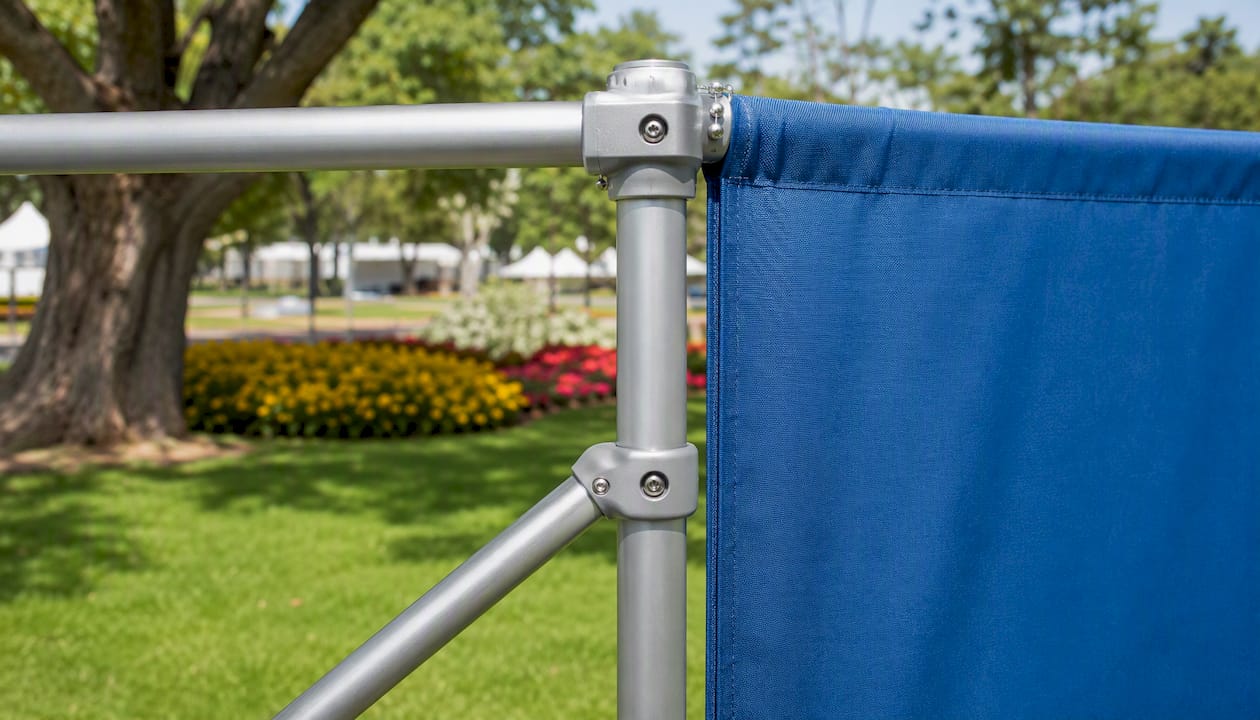
Items like the Outdoor Banner Frame - The Banner Bar, the Signicade Deluxe A-Frame Sidewalk Sign, and a 10 ft stretch fabric display are exactly the kind of products where local delivery to a venue changes the outcome of an event. These aren’t items you can improvise on-site. They need to be there, assembled, and ready before the doors open.
Retail restocks benefit from local delivery when a fast-moving SKU sells out mid-week. Waiting for a standard replenishment cycle means lost sales. A local supplier who can deliver the next morning keeps the shelf full and the revenue flowing.
Pro Tip: For event signage, confirm the venue’s receiving hours and the name of the on-site contact before placing your local delivery order. A driver who arrives at a locked loading dock with no contact name loses the time advantage entirely. Check how event signage installation works before your next show.
How faster local delivery affects your business operations
Speed in fulfillment isn’t just about customer satisfaction. It reshapes how a business manages inventory and working capital.
B2B platforms compressing delivery timelines from 96 hours to next-day have reported improvements in cash cycles and customer loyalty. When stock moves faster, it ties up less capital in transit. Businesses that previously held large safety stocks to buffer against slow replenishment can reduce those buffers when they trust a next-day local supplier.
The operational benefits stack up quickly:
- Fewer missed events or stockouts due to late deliveries
- Lower emergency shipping spend (overnight national freight is expensive)
- Better customer retention when orders arrive on time, consistently
- Reduced staff time spent tracking delayed shipments and managing exceptions
A small business switching even a handful of high-priority SKUs from 3-day national shipping to next-day local delivery can see a meaningful reduction in the inventory it needs to hold. That freed capital can go toward marketing, new product lines, or simply a healthier cash position.
Delivery software that centralizes order visibility and automates dispatch amplifies these gains by cutting the manual coordination time that otherwise eats into staff hours. Fewer phone calls to track a package means more time on the work that actually moves the business forward.
Costs, tipping, and trade-offs: what you pay to save time
Local delivery’s time savings come with a real cost premium. Understanding the components helps you decide when the trade-off is worth it.
Typical cost components include:
- Delivery fee: Usually $3–$10 for restaurant and grocery delivery; higher for bulky or business items
- Distance surcharge: Some providers add a per-mile fee beyond a base radius
- Item markup: Grocery and retail apps often charge 10%–15% above in-store prices
- Tip: Customary for consumer deliveries; less standard for B2B
- Failed-delivery fee: Some providers charge if no one is available to receive the order
Consumer Reports has documented that grocery delivery typically costs more than in-store shopping on average, though that comparison usually excludes the monetary value of the time saved. If a grocery run takes 45 minutes and your time is worth $30 per hour, a $5 delivery fee is a rational trade even before you factor in gas.
Tipping norms vary by context. For meal delivery, $3–$5 is a common baseline, with more for large orders or difficult access. Grocery delivery drivers typically receive $5–$10. For B2B or business deliveries, tipping is less expected but appreciated for complex drops like multi-item venue deliveries.
Local delivery is less likely to be worth the premium when:
- The item value is low and the delivery fee represents a large percentage of the total
- The address is at the edge of or outside the service zone, which often triggers surcharges
- The order is not time-sensitive and standard shipping would arrive within an acceptable window
- Event-day congestion makes on-time delivery uncertain
Pro Tip: Batch multiple orders into a single delivery window rather than placing several small orders throughout the day. Most local providers charge per delivery, not per item, so consolidating saves both money and coordination time.
When should you choose local delivery vs. standard shipping?
Use this checklist to make the call quickly.
- Is the item needed within 24 hours? If yes, local delivery is almost always the right choice.
- Is the delivery address in a metro or suburban area? Rural addresses may fall outside service zones.
- Does the item value justify the delivery fee? A $6 fee on a $10 item is a harder case than a $6 fee on a $200 order.
- Is there a hard deadline (event setup, business opening, perishable window)? Hard deadlines make local delivery a necessity, not a preference.
- Is the provider’s service area confirmed? Verify before ordering, not after.
- Can you consolidate multiple items into one delivery? Batching improves the cost-per-item math.
Red flags that suggest local delivery may not be the right call:
- The item requires special packaging or temperature control the provider doesn’t offer
- The delivery address is more than 20–25 miles from the nearest fulfillment point
- The provider has no tracking or confirmation system, making on-time delivery uncertain
- You need the item in more than 48 hours and standard shipping is cheaper
A practical way to test a new local delivery provider: place a single small order, measure the actual door-to-door time, and compare it to the quoted window. Track cost per delivery and on-time rate across 3–5 orders before committing to it for time-sensitive business needs.
Arrowhead Sign Company’s fulfillment speed in practice
For event exhibitors and small businesses in Arizona, local delivery for trade-show signage is one of the clearest examples of the time-saving advantages described throughout this guide.
Arrowhead Sign Company - Signs, Banners and Trade Show Displays ships most products within two business days, and for Arizona-based clients, offers direct delivery to event venues. That combination compresses the fulfillment timeline significantly compared to ordering from a national supplier and waiting for standard freight.
A typical scenario: an exhibitor places an order for a retractable banner stand and a sidewalk sign on Monday. Production completes Tuesday. The order ships or is delivered locally Wednesday, arriving at the venue before Thursday setup begins. That’s a 2-to-3-day door-to-venue window that a national 5–7 day shipping estimate simply can’t match when the event is Friday.
Arrowhead Sign Company - Signs, Banners and Trade Show Displays ships most products within two business days and delivers directly to Arizona venues, giving event exhibitors a reliable, fast path from order to setup without the uncertainty of national freight timelines.
For a smooth local delivery experience, confirm these details when you place your order:
- The venue’s receiving hours and any dock access restrictions
- The name and phone number of the on-site setup contact
- Whether the venue requires advance notice for large or multi-piece deliveries
The custom sign ordering process at Arrowhead Sign Company - Signs, Banners and Trade Show Displays is built around these timing realities, with production and delivery windows designed to fit event schedules rather than standard retail fulfillment cycles.
Why local delivery is worth the premium for the right buyer
Local delivery earns its cost premium when the alternative is a missed deadline, a lost sale, or a booth that goes up without signage. For event exhibitors, restaurant operators, and retailers managing fast-moving inventory, the time savings are concrete and measurable. For someone ordering a low-value item with a flexible timeline, the math often doesn’t work.
The practical test for businesses considering local delivery: start with a single ZIP-code pilot. Pick your highest-urgency product category, run 5–10 local deliveries, and measure on-time rate and cost per delivery against your current method. That data will tell you more than any general estimate.
Arrowhead Sign Company - Signs, Banners and Trade Show Displays for fast event signage delivery
When your event timeline is tight, the last thing you need is signage stuck in a national freight queue. Arrowhead Sign Company - Signs, Banners and Trade Show Displays ships most products within two business days and delivers directly to Arizona venues, giving you a faster, more reliable path from order to setup than standard shipping allows.
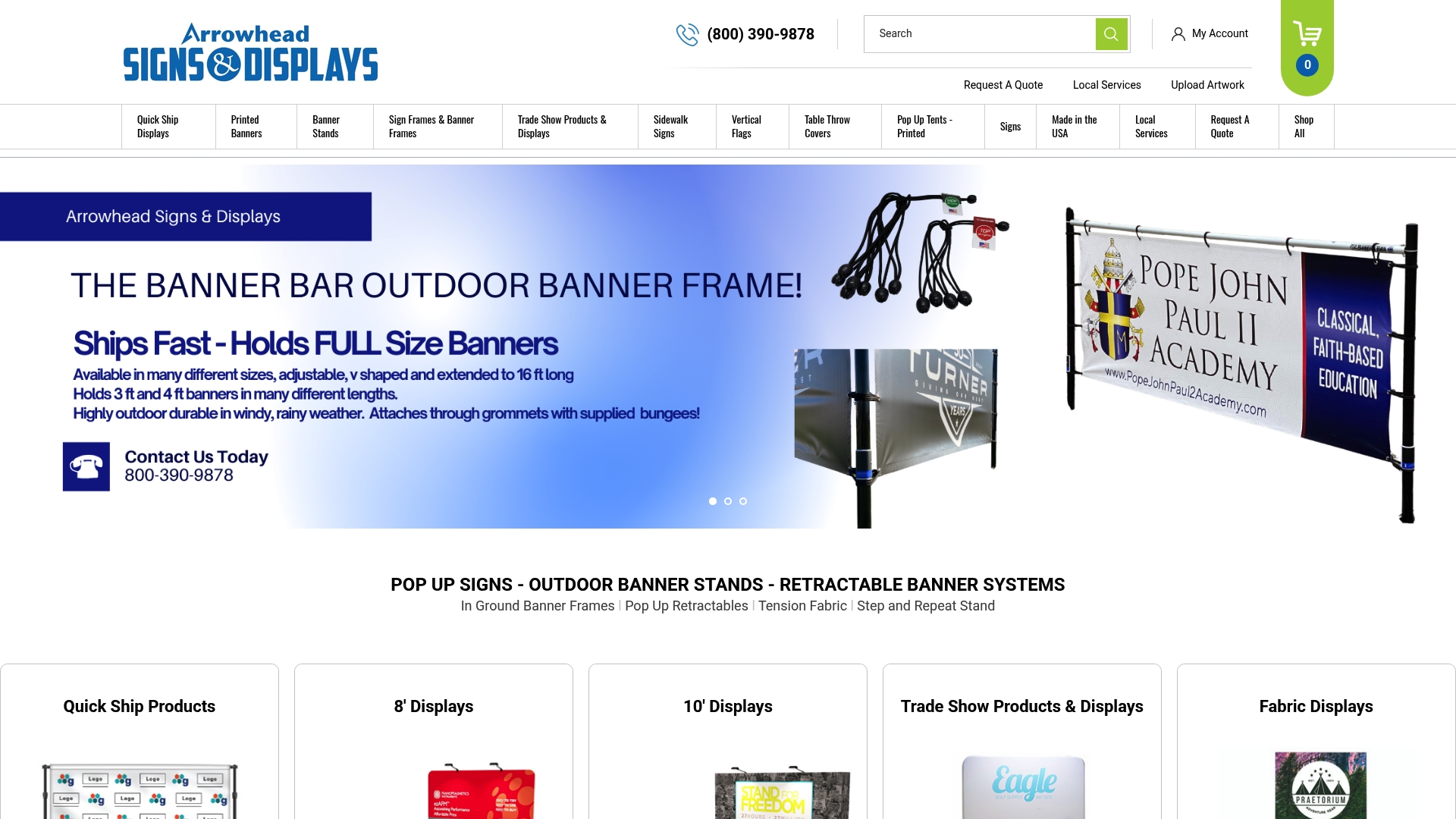
Whether you need an Outdoor Banner Frame - The Banner Bar for an outdoor activation, a Signicade Deluxe A-Frame Sidewalk Sign for a storefront promotion, or a full 10 ft stretch fabric display for your trade-show booth, the fulfillment process is built around event deadlines. Arizona clients get direct venue delivery; everyone else gets fast nationwide shipping with production that starts the moment your proof is approved. Visit Arrowhead Sign Company - Signs, Banners and Trade Show Displays to get a quote and confirm your delivery window before your next event.
Sources
- B2B platforms race to deliver faster, not just cheaper - The HinduBusinessLine
- B2B Last-Mile Delivery: Strategy, Challenges & Optimization
- Local Courier Deliveries Explained - Detrack
- Why Small Local Delivery Companies Outperform the Giants
- How Delivery Planning Helps Local Shops Compete - Big Easy
- Consumerreports
Recommended
- Why Lightweight Displays Reduce Shipping Costs - Arrowhead Sign Company
- How Rush Print Orders Work: A Complete Guide - Arrowhead Sign Company
- Versioning Promotional Materials Across Regional Markets - Arrowhead Sign Company
- Why Early Setup Benefits Exhibitors: A Practical Guide - Arrowhead Sign Company