
Product Signage Examples That Drive Real Engagement
Posted by Deeder Dandenhorf on Jul 8th 2026
Product Signage Examples That Drive Real Engagement
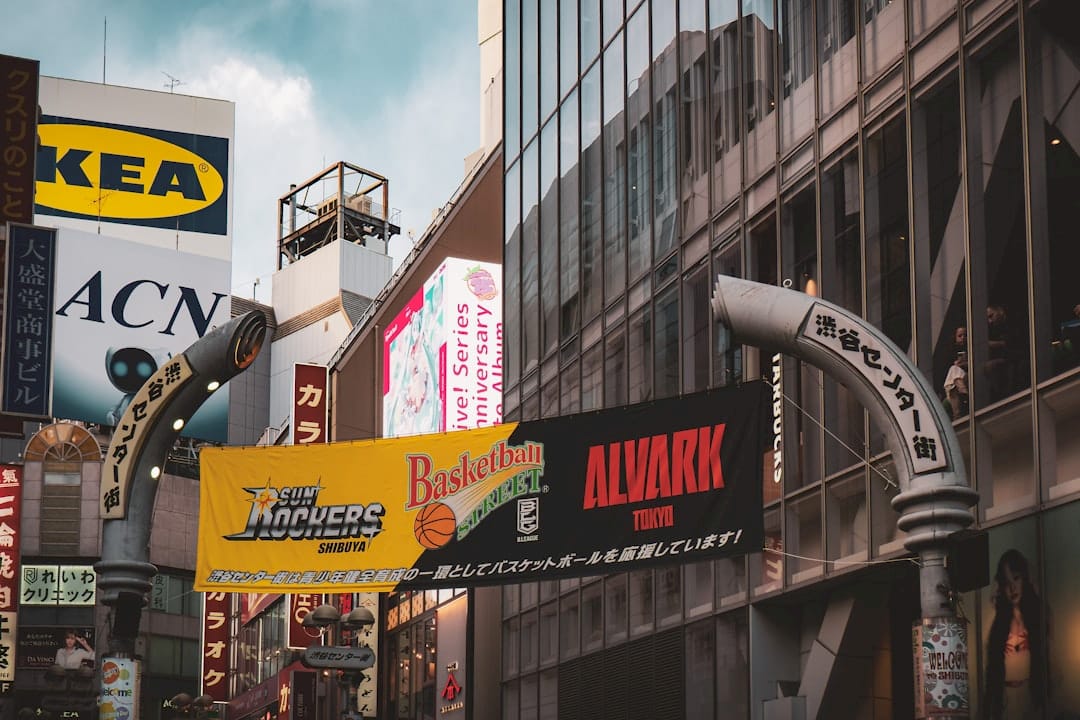
Compelling product signage is defined as visual communication that captures customer attention, communicates a clear message within 1.5 seconds, and drives a specific action. The industry standard for legibility follows the Rule of 10: one inch of letter height for every ten feet of viewing distance. A 70% Luminance Contrast Ratio between text and background is the accessibility benchmark that also maximizes biological attention response. For marketing professionals and small business owners, understanding examples of compelling product signage is the difference between a display that converts and one that gets ignored. Arrowhead Sign Company - Signs, Banners and Trade Show Displays works with businesses every day to close that gap.
1. What makes product signage compelling?
The core elements of effective product signage are clarity, contrast, legibility, placement, and color psychology. Each element works on a different part of the shopper’s attention system, and missing one weakens the whole display.
Clarity and message hierarchy are non-negotiable. Your sign must communicate one primary idea. Secondary details belong in smaller text below, not competing for the same visual weight.

Contrast and color psychology directly shape how shoppers feel. Red invokes urgency while blue evokes trust and professionalism. Choosing the wrong color for your goal sends a mixed message before the customer reads a single word.
Negative space is as important as the content itself. Excessive signage overwhelms shoppers, causing them to mentally disengage and move faster without converting. Less content, more breathing room, higher engagement.
Key elements to apply to every sign:
-
One primary message per sign
-
High contrast between text and background (70% LRV minimum)
-
Letter size scaled to viewing distance using the Rule of 10
-
Placement at eye level or natural sightlines
-
Brand colors used consistently across all display materials
Pro Tip: Place small accents of your primary brand color on the outer edges of your sign. These “brand anchors” trigger peripheral recognition before the shopper consciously looks at your display, building brand awareness passively.
2. Retail signage examples that convert shoppers
Retail visual merchandising relies on layered signage working together. No single sign type does everything. The most effective product displays combine storefront, aisle, and point-of-purchase signage into a system.
Illuminated and backlit storefront signs
Illuminated channel letters and backlit acrylic signs are the strongest storefront options for brand authority. They remain visible in low light, communicate permanence, and signal quality to first-time visitors. Halo-lit letters, where light glows behind the letters rather than through them, create a premium look at a moderate cost increase over standard illuminated signs.
Point-of-purchase signage
Point-of-purchase (POP) signage sits at the moment of decision. Shelf talkers, edge strips, and product feature boards all fall into this category. Well-designed store signage increases customer dwell time by up to 20%, which directly increases impulse purchases. A shelf talker that highlights one specific benefit, not five, outperforms a cluttered feature board every time.
Temporary promotional signage
Discount banners, limited-time offer signs, and seasonal window graphics create urgency without requiring permanent installation. Adhesive-free signage solutions make these easy to swap out without damaging surfaces. This flexibility supports frequent campaign updates while keeping your space looking professional.
| Signage type | Visual impact | Cost level | Flexibility |
|---|---|---|---|
| Illuminated channel letters | Very high | High | Low |
| Backlit acrylic signs | High | Medium | Low |
| POP shelf talkers | Medium | Low | High |
| Temporary discount banners | Medium | Low | Very high |
| Window graphics | High | Medium | Medium |
Pro Tip: Rotate your promotional signage every 3–4 weeks. Shoppers who visit regularly stop registering signs that never change. Fresh creative keeps your impactful retail signage working harder.
3. Trade show and event signage examples that stand out
Trade show environments are visually noisy. Your signage must work harder than it does in a controlled retail setting. The most effective event displays use height, fabric, and structure to claim visual territory before attendees get close.
Pop-up fabric displays
Tension fabric displays stretched over lightweight frames are the current standard for professional trade show backdrops. They pack flat, set up without tools, and print with sharp, vibrant color across large surfaces. A 10 ft stretch fabric display gives your booth a full branded wall that reads clearly from across a convention floor.
Retractable banner stands
Retractable banner stands are the most portable high-impact option for events. They set up in under a minute, protect the graphic during transport, and work equally well as booth dividers, product feature displays, or directional signs. For small businesses attending multiple events, they offer the best cost-per-use ratio of any display format. Check the signs every small business needs for a practical starting list.
Branded counters and custom canopies
Branded counters serve double duty: they define your space and give staff a professional surface for product demos or lead collection. Custom printed canopies and gazebos extend your brand overhead, making your booth visible from a distance in outdoor event settings.
Emerging formats: AR and ghost signage
Augmented reality ghost signage is an emerging technique where digital visual layers are visible only through a smartphone camera or AR viewer. AR ghost signage can boost window-shopping conversion by 40%, as demonstrated by H&M’s use of the format to bypass planning restrictions while maintaining a high-impact storefront presence. This format is still early-stage for most small businesses but worth tracking.
Pro Tip: Track your trade show signage performance using the formula ROI = (Net Gains - Total Costs) / Total Costs. Measure booth entry rate, average dwell time, and lead quality up to 90 days after the event to get a complete picture of what your display investment actually produced.
4. How to choose the right signage for your goals
Effective product signage balances visual impact with brand consistency and operational needs. The right choice depends on your environment, your budget, and how often your message changes.
Permanent signage builds brand authority over time. It signals stability and professionalism to repeat visitors. Temporary signage drives excitement around specific offers, new products, or seasonal campaigns. The strongest retail and event strategies use both in defined roles.
For high foot traffic environments, prioritize legibility at distance and fast message processing. For intimate settings like boutique retail or small expo booths, you can use more detail because visitors spend more time in your space.
| Signage category | Durability | Cost | Engagement | Update frequency |
|---|---|---|---|---|
| Permanent exterior signs | Very high | High | High | Rarely |
| Fabric event displays | High | Medium | Very high | Per event |
| Retractable banners | Medium | Low | High | Frequently |
| POP and shelf signage | Low | Very low | Medium | Weekly |
| Temporary window graphics | Low | Low | High | Monthly |
Reusable, easy-install materials reduce labor costs and support sustainable practices. For businesses attending multiple events per year, investing in quality fabric displays and banner frames pays off faster than buying disposable alternatives. Review outdoor event signage best practices to match your format to your venue type before ordering.
Key takeaways
Compelling product signage works because it combines visual contrast, clear hierarchy, and strategic placement to guide customer attention and drive purchasing decisions.
| Point | Details |
|---|---|
| Apply the Rule of 10 | Scale letter height to viewing distance: one inch per ten feet for legible signs. |
| Use color with purpose | Red drives urgency; blue builds trust. Match your color choice to your marketing goal. |
| Avoid visual clutter | Negative space increases engagement. One message per sign outperforms five competing ideas. |
| Match format to environment | Fabric displays suit trade shows; POP signage suits retail; temporary banners suit promotions. |
| Measure ROI after events | Track booth entry rate, dwell time, and lead quality up to 90 days post-event. |
What I’ve learned about signage that most articles won’t tell you
After working with hundreds of businesses on their event and retail displays, the pattern I see most often is not poor design. It’s poor prioritization. Business owners spend their budget on the largest sign possible and then fill every inch of it with information. The result is a sign that technically exists but functionally disappears.
The silent salesperson principle is real. Signage influences purchasing decisions without a single conversation. But it only works when the sign respects the shopper’s attention. A retractable banner with one bold claim and a strong visual will outperform a fabric display covered in bullet points every single time.
The other mistake I see constantly is treating signage as a one-time purchase. Your message should evolve with your campaigns. Businesses that build a modular display system, a quality frame with interchangeable graphics, get far more value than those who buy a single fixed display and use it unchanged for three years.
Measuring what your signage actually does is still underused. Most businesses know their total event cost but have no idea what their booth entry rate was or how many leads converted within 90 days. Without that data, you cannot improve. Start tracking, even informally, and your next display decision will be significantly better.
— Dan
Signage solutions from Arrowhead Sign Company - Signs, Banners and Trade Show Displays
Your signage strategy is only as strong as the products behind it. Arrowhead Sign Company - Signs, Banners and Trade Show Displays offers a full range of customizable displays built for marketing professionals and small businesses who need quality results fast.
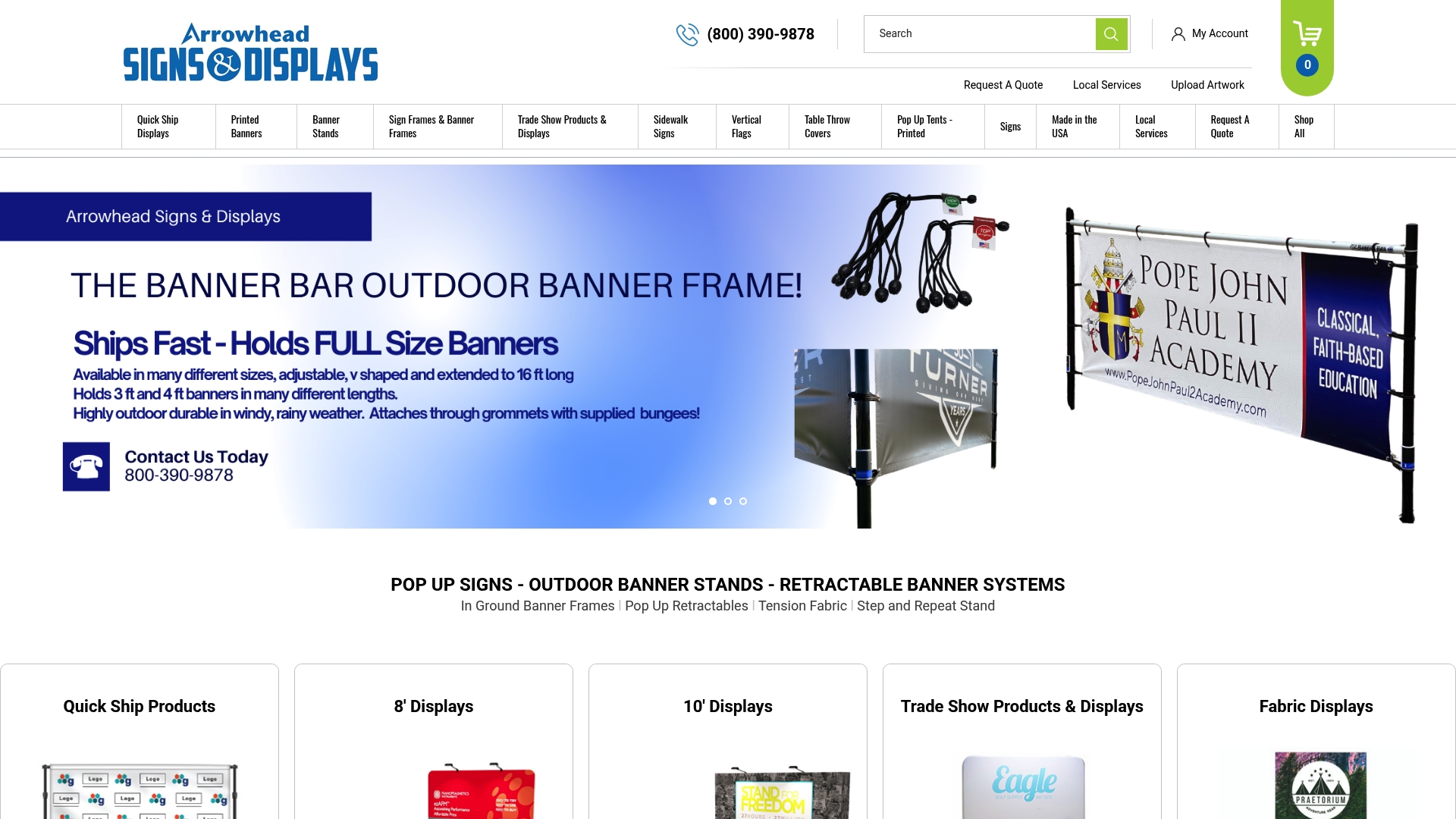
The 10 ft stretch fabric display delivers a bold, professional backdrop for any trade show or event booth. For retail and outdoor promotions, the adjustable outdoor banner frame gives you a durable, weather-ready display that sets up in minutes. Most products ship within two business days, and Arizona-based clients receive direct venue delivery. Arrowhead Sign Company - Signs, Banners and Trade Show Displays also offers expert guidance on material selection and customization so your display fits your brand from day one.
FAQ
What are the most effective types of product signage for retail?
Point-of-purchase signs, backlit displays, and temporary promotional banners are the most effective retail options. Each serves a different stage of the customer decision process, from awareness to impulse purchase.
How do I calculate ROI on trade show signage?
Use the formula ROI = (Net Gains - Total Costs) / Total Costs and track booth entry rate, dwell time, and lead quality for up to 90 days after the event.
What is the Rule of 10 in signage design?
The Rule of 10 states that letter height should be one inch for every ten feet of viewing distance. This standard ensures your sign is legible from the distance at which most shoppers first see it.
How much contrast does product signage need?
A 70% Luminance Contrast Ratio between text and background is the accessibility and visibility standard for retail signage. This level of contrast drives attention and improves readability across different lighting conditions.
When should I use temporary signage instead of permanent signage?
Temporary signage works best for promotions, seasonal campaigns, and events where your message changes frequently. Permanent signage builds long-term brand authority and suits storefronts and fixed retail locations.