

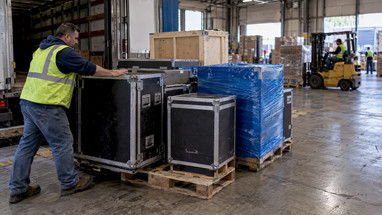
Trade Show Shipping for Exhibitors: Combine Loads, Cut Drayage Fees
Posted by Deeder Dandenhorf on Oct 17th 2026
Trade Show Shipping for Exhibitors: Combine Loads, Cut Drayage Fees

Book your carrier and finalize packaging well before move-in. Consolidate everything into as few shipments as possible, because that is the single biggest lever on material handling charges. Then carry a bill of lading and certified weight tickets for every load, and name one person to own the logistics from pickup to teardown.
TL;DR:
- Check receiving windows in the Exhibitor Services Manual; advance warehouses may accept freight 30 days early, but local storage can make direct delivery cheaper.
- Drayage rounds each shipment up to the next 100 pounds and applies per shipment minimums, so palletizing cartons can lower billed weight and charges.
- Pack fragile displays in fitted crates or padded containers, number each piece against a packing list, and keep high value contents off outside labels.
- Audit invoices against certified weights for duplicate charges and double rounding, and file a Material Handling Agreement for each destination before the show closes.
Table of Contents
- Should you ship to the advance warehouse or straight to the show site?
- What does material handling cover, and what drives the bill?
- How should you pack, crate, and label freight?
- Which documents do you need, and how do you track the shipment?
- How does consolidation lower your drayage bill?
- Who should run inbound, on-site, and outbound logistics?
- How do you protect your shipment and booth assets?
- Which carriers and service levels work for trade show shipping?
- What should you budget for trade show shipping?
- What is the timeline from packing to venue arrival?
- What mistakes do vendors see most often? Dan’s view
- How can we help with last-minute shipping and display needs?
- FAQ
- Sources
Should you ship to the advance warehouse or straight to the show site?
Advance warehouse means your freight goes to a warehouse run by the show’s general service contractor ahead of time. Direct-to-site means it arrives at the venue during the move-in window. According to AFP’s guidance, advance warehouse shipping can happen up to 30 days before move-in, and the contractor then stores your freight so it is waiting at your booth when setup begins.
Advance warehouse is not automatically the cheaper path. In smaller or remote show markets, direct-to-site shipping can cost less because contractors may pass along high local storage rents. Start with your Exhibitor Services Manual (ESM), check the receiving windows, and let your production schedule decide.
Use this timing checklist when you plan:
- Read the ESM first and note advance warehouse dates, direct delivery windows, and late-arrival policies.
- Confirm production lead times for anything being printed or built for the show.
- Book your carrier well before move-in. Our own pack and ship schedule for small exhibitors walks through that window step by step.
- Work backward from the earliest accepted arrival date, not the show opening date.
- Pick advance warehouse when it fits your schedule, and direct delivery when it does not.
What does material handling cover, and what drives the bill?
Material handling, often called drayage, is the service of moving your freight from the dock to your booth and back again. Freeman’s exhibitor guide describes it as covering unloading, booth delivery, storage of empty containers, and return to the dock at the end of the show. It is billed by hundredweight (CWT, or 100 pounds), and Freeman’s international exhibitor guide notes it is typically a one-way inbound charge.
Material handling is billed by CWT and rounded up to the nearest hundred pounds, so combining shipments often reduces the billed weight.
Drayage often surprises first-time exhibitors because the labor, storage, and handling sit on top of the freight bill itself. These factors move the total most:
- Minimum charges per shipment, so several small deliveries cost more than one larger one.
- Special handling premiums for items that are crated oddly, uncrated, or hard to move.
- Overtime surcharges when freight arrives outside the scheduled window.
- Weight rounding, since every shipment is rounded up to the next CWT increment.
Choose common-carrier or floor-loaded freight when possible, avoid packaging that triggers special handling, and schedule arrivals inside the standard hours.
How should you pack, crate, and label freight?
Good packing protects the display, speeds up dock processing, and keeps your handling classification low. Blanket-wrapped items work for sturdy goods, while TVs and fragile pieces belong in crates or on pallets. Exhibitor Online’s security guide also recommends cases that hide what is inside, since an unmarked crate attracts less attention than a box shouting “plasma TV.”
Our article on shipping cases and how they cut drayage premiums covers the case side in more detail. Run through this checklist before anything leaves your dock:
- Pack fragile displays and monitors in crates or padded containers sized to the item.
- Palletize small boxes into one unit instead of sending loose cartons.
- Label every piece with the show name, booth number, and “1 of X” numbering.
- Keep outer labels free of high-value contents descriptions.
- Photograph each crate packed and sealed, and list serial numbers on a manifest.
- Pack fabric graphics flat or rolled per the guidance in our graphics storage article, so they arrive wrinkle-free.
Pro Tip: Number your pieces “1 of 6,” “2 of 6,” and so on, and tape a copy of the packing list inside lid number one. A missing piece is obvious on the dock instead of at your booth.
Which documents do you need, and how do you track the shipment?
Paper trouble causes more dock delays than damaged freight does. Your bill of lading should list the shipper and consignee, itemized weights, package counts, and any special handling instructions. A certified weight ticket from the carrier confirms the actual weight, which protects you in a billing dispute.
For outbound freight, you will complete a Material Handling Agreement (MHA). Complete one for each destination. Freeman’s transportation page also advises designating someone to make sure the MHAs are filed.
Keep your paperwork tight with these steps:
- Keep order confirmations and carrier receipts in one folder, digital and printed.
- Collect certified weight tickets from the carrier at pickup, not afterward.
- Confirm labels and paperwork are attached before the truck leaves.
- Check delivery status on a schedule; our tracking guide shows how to follow a display order and what to ask the shipper.
- Photograph the signed delivery receipt.
How does consolidation lower your drayage bill?
Because CWT is rounded up and minimums apply per shipment, several small deliveries can cost far more than one combined pallet. Freeman’s freight guide recommends consolidating shipments, getting certified weights, and choosing carriers that do not split loads.
Here are the tactics that tend to pay off the most:
- Palletize small packages so they travel as one unit.
- Ship combined crates rather than separate cartons from different departments.
- Ask your carrier whether they offer consolidation services.
- Bundle inbound and outbound with the official show carrier. Freeman reports that round-trip bundling can save up to 10 percent on freight costs.
- When comparing a nonofficial vendor against the official carrier, add the show’s drayage to the vendor’s quote so the numbers match.
- Audit your invoice on site. Compare billed weight to your certified weight tickets, check for duplicate charges, and confirm that rounding was applied once.
Pro Tip: Ask show management whether the general service contractor offers package pricing before you request outside quotes. It gives you a baseline to beat.
Who should run inbound, on-site, and outbound logistics?
Pick one person, or one trusted vendor, to own the whole chain. That person books the carrier, confirms receipt, signs for deliveries, and completes the outbound paperwork. When three people each assume someone else is handling the MHA, the freight stays on the dock.
Walk through this order of operations:
- Review the ESM and write down every deadline, including marshaling yard check-in times.
- Confirm inbound delivery and receipt, then match pieces to your manifest.
- Verify empty-case storage and any accessible storage arrangements before the show opens.
- Choose an outbound carrier that knows show procedures. Freeman’s first-time exhibitor checklist says to confirm inbound and outbound shipping and certified weight tickets early.
- Submit your MHA before the show closes so pickup is not delayed.
- Use our booth teardown guide to pack out in a sensible order.
Booking round trip with an experienced carrier also keeps one party accountable from start to finish.
How do you protect your shipment and booth assets?
Security starts before the truck arrives. Build a manifest with serial numbers and photos so you can document claims, and buy door-to-door insurance that covers freight from pickup through return. Check policy limits and deductibles before you rely on them.
Exhibitor Online also points out that exhibitors can effectively pay twice for storage when they use accessible on-site storage on top of inbound drayage charges, so decide ahead of time what really needs to stay within reach.
Follow these practices on site:
- Keep valuables concealed during setup and out of sight when the booth is empty.
- Use locked storage for small, high-value items such as tablets and demo units.
- Remember that venue perimeter security is not booth-level security.
- If something goes missing or arrives damaged, photograph it immediately, note it on the delivery receipt, and report it to show management and your insurer the same day.
- Keep the manifest and photos somewhere other than the shipping crate.
Which carriers and service levels work for trade show shipping?
You have three realistic choices. The official show carrier handles freight to the advance warehouse or the show site and often bundles outbound service. IAEE reported that organizers sometimes name an official carrier offering pre-printed labels, round-trip discounts, and an on-site service desk, which simplifies life for first-time exhibitors.
The second option is a specialty trade show freight carrier. Several publish their own guides, including GES, Unishippers, and XPO. The third option is a standard parcel or LTL carrier, which works for small, light loads that you can send direct to the venue or warehouse.
Match service level to your risk. Standard ground works when you have weeks to spare. Time-definite or expedited service suits freight with a firm delivery window, and air belongs only to emergencies, because rush costs stack up quickly. Whichever you choose, favor a carrier that does not split shipments and one that understands show check-in rules. Corrigan Logistics emphasizes how complicated final-mile delivery can be, so ask each carrier who handles the last leg and what happens if the dock is busy.

What should you budget for trade show shipping?
We do not have a reliable published dollar figure for shipping a typical exhibit, because the total depends on distance, weight, and show location. A useful budget instead breaks the cost into line items you can price from real quotes.
Build your estimate from these pieces:
- Freight from your location to the warehouse or show site.
- Material handling, billed by CWT with minimums and rounding.
- Special handling and overtime surcharges you want to avoid.
- Empty-case storage and any on-site accessible storage.
- Outbound freight and the MHA.
- Insurance for transit and show-floor exposure.
- A contingency line for rush charges or replacement items.
Get at least two quotes, and add drayage to any nonofficial vendor quote so the comparison is fair. Ask each carrier for certified weights before you commit. Order early where you can: IAEE’s supplier guidance notes that early ordering broadens transportation choices and helps avoid rushed production. If you are weighing a display purchase against shipping weight, remember that lighter, reusable setups reduce drayage every time you travel.
What is the timeline from packing to venue arrival?
Count backward from your move-in date, and treat the ESM as the final authority on show-specific deadlines. Freeman’s exhibitor guidance says to review the manual months ahead, since it contains move-in schedules, late-arrival policies, and deadlines that trigger surcharges when missed.
A workable schedule looks like this:
- Well ahead of the show: read the ESM, set your budget, and place display orders.
- Before the show: book your carrier, finalize packaging, and confirm production dates.
- Before shipping: build the manifest, photograph crates, and prepare labels and the bill of lading.
- Before shipping: confirm advance warehouse or direct delivery windows, and insurance.
- Ship date: collect certified weight tickets and confirm the pickup.
- Delivery: receive the freight, match it against your manifest, and note any damage on the receipt.
- Show close: submit your MHA, repack, and release freight to the outbound carrier.
Build a buffer into each step. A weather delay on one leg should not push the whole chain past a deadline.
What mistakes do vendors see most often? Dan’s view
I work with exhibitors who wait until close to the show to decide on graphics, then pay for air freight to fix it. In our experience the cheapest freight is the freight you never have to rush. We state that our products ship quickly, which is a claim about our own fulfillment, and it gives you room to order a replacement banner instead of hauling a spare.
— Dan
How can we help with last-minute shipping and display needs?
When time is short, we help you skip the rush freight. Most of our products ship within two business days, and we offer direct delivery to venues in Arizona, plus nationwide shipping.
Explore what we offer:
- 10 ft stretch fabric display for a full backdrop that packs down small
- Quick Ship Displays when your show date is close
- Printed Banners, with a standard banner layout at $35 and Next Day Air at $10
- Banner Stands and EZ Tube Tension Fabric Displays
Order quick-ship items for short lead times or replacement signage, and arrange venue delivery when you want to skip a freight leg. Browse our trade show displays and request a production and shipping quote today.
FAQ
How do I ship to a trade show?
Read the Exhibitor Services Manual, choose advance warehouse or direct-to-site delivery, and book your carrier well before move-in. Label every piece with the show name, booth number, and piece count, and carry a bill of lading and certified weight ticket for each load.
What are some tips for a successful trade show?
Plan logistics early and name one person to own them. Test your equipment before the show, pack in reusable cases, and confirm inbound and outbound shipping details ahead of time, as Freeman’s first-time exhibitor checklist advises.
What to give away at a trade show?
Choose items your visitors will actually keep and that pack light, since extra weight raises your handling bill. Ask suppliers about packing and consolidation options, and order early so you have shipping choices instead of rush production.
Are trade shows declining?
We do not have a verified figure on attendance trends, so we will not guess. Exhibitors still invest in logistics planning, and carriers and industry groups continue publishing guidance on the subject, which suggests shows remain an active channel.
How do I avoid drayage surprises?
Consolidate shipments, bring certified weight tickets, and avoid packaging that triggers special handling. Audit the invoice on site against your weights before you pay.
Sources
- Afplus
- Exhibitor Guide: Rentals, Services, Shipping, and On-Site Support | Freeman
- Stealing the Show